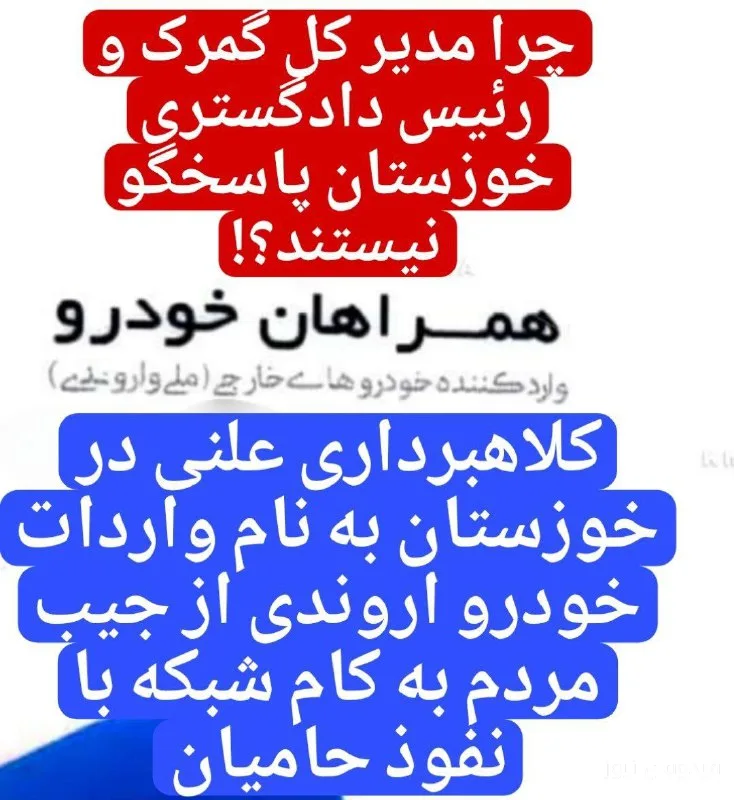
The case of "Car Companions of the Nations" is not just a financial violation; it represents a complex and organized network of deception and infiltration that has ensnared hundreds of Khuzestani citizens over the past eight years.
Deception of Empty Promises
After the company's office was moved to Kianpars Ahvaz, dozens of citizens were deceived by promises such as "delivery of the car at the shipping yard" by paying at least 50% of the price of the Arvand cars. At that time, the registration of Arvand cars had been halted, and the company deliberately concealed this fact.
Key individuals in this deceptive network include several people, including Pedram and Parham Mohammadzadeh and Mohammad Saeedzadeh Zargani, who, in collaboration with local intermediaries, have expanded this fraud.
Judgments and Barriers to Their Implementation
With an increase in complaints from the victims, the case was referred to the first criminal court, and prison sentences of up to 25 years were issued for some defendants. However, the victims claim that the implementation of these sentences has been deliberately halted between the Supreme Court and the enforcement of judgments. They speak of the existence of an influential person related to the mother of one of the famous martyrs and some provincial officials who have supported the defendants.
Additionally, the bankruptcy ruling of the company in the 7th legal branch of Ahvaz and the "disappearance of the case" during the appeal process have raised serious questions.
The victims explicitly state: "Our only demand is the enforcement of the final judgment and the cessation of this network of infiltration that has targeted public trust for years."