Exclusive report by Fidus
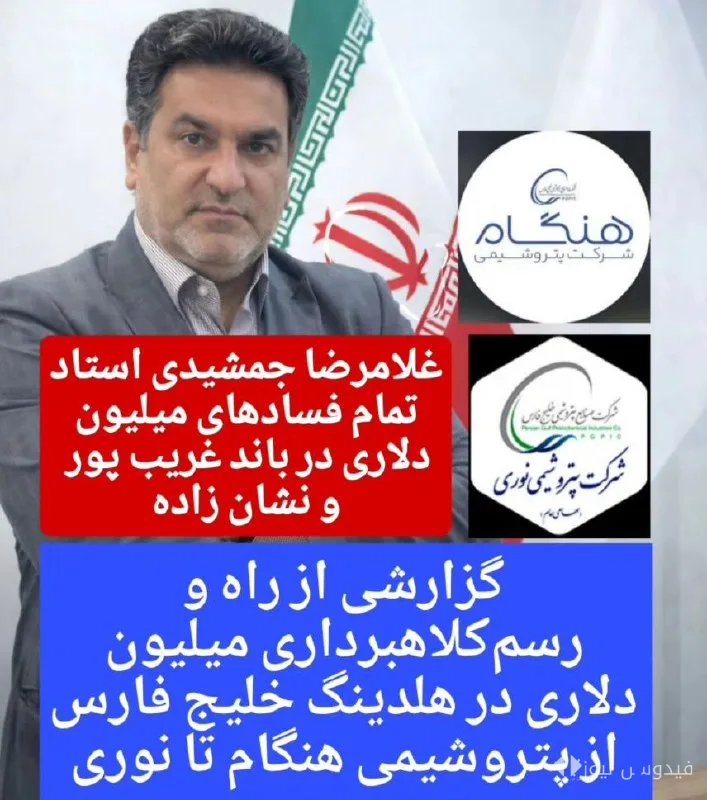
The master of million-dollar corruption, Gholamreza Jamshidi, is the former CEO of Hegmataneh Petrochemical and the current CEO of Nour Petrochemical. The key to understanding the corruption mechanism of the CEO of Nour Petrochemical can be found in a documented action; the awarding of a contract worth nearly 9 million dollars that was executed during Gholamreza Jamshidi's management at Hegmataneh Petrochemical, and the documents are now available. This case is a clear example of circumventing legal formalities and imposing hidden costs on a large industrial complex.
Bypassing Tenders and Hidden Payments
At the center of this affair is Gholamreza Jamshidi; a manager known as one of the supported circles of Khodadad Gharibpour, who, due to being a fellow townsman and compatriot of Hassan Neshanzadeh, the multi-role manager of the Persian Gulf Holding, enjoys a powerful backing. Throughout his years of activity, Jamshidi has gained a special skill in bypassing tenders and redistributing financial benefits, relying on a network of consultants and intermediaries.
However, Jamshidi unilaterally canceled the tender and, citing exceptions in the tender law, entrusted the project to a new contract worth 7.5 million dollars without legal formalities; a contract that is funded from abroad through a German company, and a three million euro advance was also paid to the new contractor. At first glance, the apparent reduction in price may seem like savings, but the reality is quite different.
Hidden Costs and Large Bribes
In the first contract, payments were calculated in rials at the semi-official exchange rate, but in the new contract, the responsibility for currency provision was placed on the employer, and in practice, the basis for calculation has been the free market rate. Thus, the actual cost of the project for Hegmataneh Petrochemical has not only not decreased but has effectively more than doubled. Existing documents also indicate the transfer of at least one million euros in bribes in this transaction; an amount made possible by the direct support of Hassan Neshanzadeh for Jamshidi's deal. This case shows why some managers spend billions to seize key positions in petrochemical companies; because the return on this investment is guaranteed not through sound management but through such contracts.
For more details and a video file, visit the Fidus channel:
Fidus Instagram – Reports and Special Cases