📌Exclusive note from Fidus
A Silence that Fostered Corruption
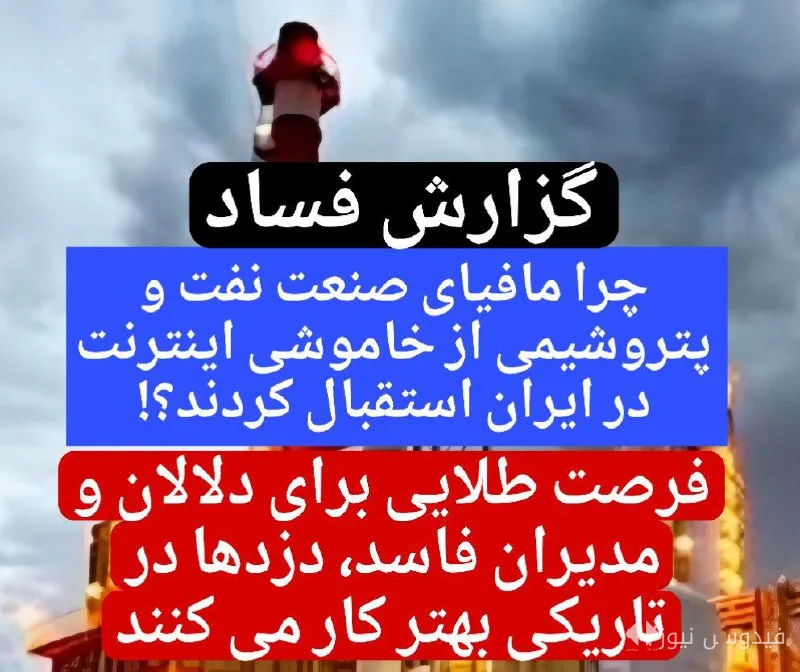
In the past three weeks, widespread internet shutdowns for various reasons disrupted a large part of the daily lives of the people of Iran and paralyzed social, economic, and media communications. However, this critical situation simultaneously became a low-cost and hassle-free opportunity for settling scores, moving financial resources, and advancing some corrupt dealings in the hidden layers of the economy, especially in the petrochemical industry and oil companies.
Hidden Opportunities Amidst the Crisis
The widespread protests in December, which led to the bloody massacre of citizens, effectively created a security and media cover for major corruption flows to finalize many of their unfinished cases away from public scrutiny, independent media, and oversight institutions. In this environment, projects, contracts, and payments that had been contentious for months were resolved with unprecedented speed and in media silence.
Meanwhile, the corruption ring known as the "Zanjan Circle," one side of which is involved in the violations of Refah chain stores and the other side in problematic holdings and contractors like "Fateh Sanat," took advantage of this oversight vacuum. This network was able to organize documents, financial trails, and evidence related to its suspicious activities and reduce the accumulated pressures of recent months.
The Fateh Sanat company also sought to compensate for the problems and controversies of the past two months by moving financial resources and changing payment routes in several major projects, including the development plan for the Bandar Abbas refinery, purchasing a boiler through a German company for projects such as Siraf, Abadan refinery, Zanjan petrochemical, and Bandar Abbas refinery—instead of relying on domestic production—and also a large construction project in Kish.
At the same time, management changes in the Persian Gulf holding and the Tappico holding were made within the framework of hidden allocations of board seats and without public notification. Behind-the-scenes deals and post-sales were completed without media interference.
Ultimately, if the bloody December filled the streets and alleys of Iranian cities with images of slain citizens, the brokers of sanctions, oil, and petrochemicals advanced their work in the shadow of that same violence and repression; standing behind glass buildings, turned away from the lives of the people, and facing their bank accounts.
🔻 More details and video file on the Fidus channel:
📸 Fidus Instagram – Special reports and files