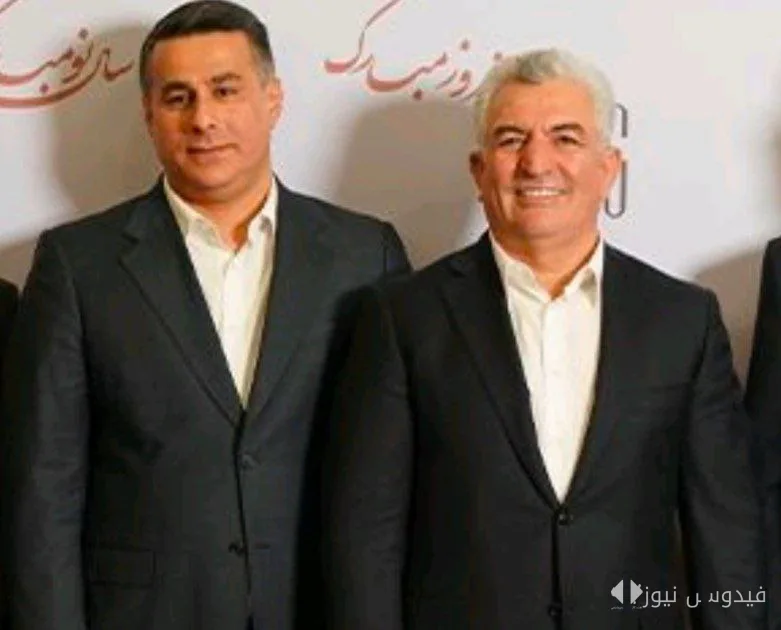
The company "Enerchemistry," which was previously recognized as a loss-making entity with no effective track record, has become one of the influential players in the oil industry's equipment and installation projects after the transfer of its ownership shares to Mohammad Ali Fatehmi, the owner of the "Fateh Sanat" group, and the appointment of Bagher Faraji as CEO.
This transformation has occurred not through technical or executive enhancement, but under the shadow of access to major oil projects and corrupt financial flows. According to obtained information, Bagher Faraji, holding about 20 percent of Enerchemistry's shares, has played a central role in creating a network of intermediaries among oil managers, project experts, and contractors.
Corruption and Patronage Network
The Fatehmi-Faraji network in Enerchemistry has secured dozens of oil projects and contracts by utilizing mechanisms such as circumventing the bidding process, offering low initial prices, and then making technical changes to eliminate competitors, creating a network of shell companies, and collaborating with some quasi-governmental companies, including those affiliated with the Khatam al-Anbiya Headquarters of the IRGC.
This model has led to the transfer of hundreds of millions of dollars in foreign assets to Fatehmi's group, which have been blocked for months under the pretext of sanctions and technical changes, while dozens of oil projects have faced delays, stoppages, or increased costs. The consequence has been the formation of a cycle of patronage, abuse, and capital accumulation for benefiting in other sectors.
The result of this corrupt circulation for Fatehmi, facilitated by Faraji, includes the purchase of several large vessels, a floating hotel, multiple helicopters, large buildings, and tens of millions of dollars in investments in various sectors both domestically and abroad.
This corrupt money has also established political and security connections. Fatehmi claims that influential figures, such as the commander of the IRGC intelligence, are his supporters and fellow townsmen, and connections with parliament representatives, from Asalouyeh to Mahshahr, from Siraf and Bandar Abbas to Abadan and Zanjan, have paved his way.
Internationally, a chain of companies in the UAE, Hong Kong, Germany, Sweden, and South Africa has become active as channels for transferring financial resources and foreign investments in his group. Enerchemistry, which will be subject to detailed project and financial mechanism reviews in upcoming reports, must now be regarded as one of the indicators of structural corruption within the Ministry of Oil.