Labor Crisis in Petrochemicals 'Sajra Gostaran Rajal'; Ten Days of Strike, Zero Days of Accountability
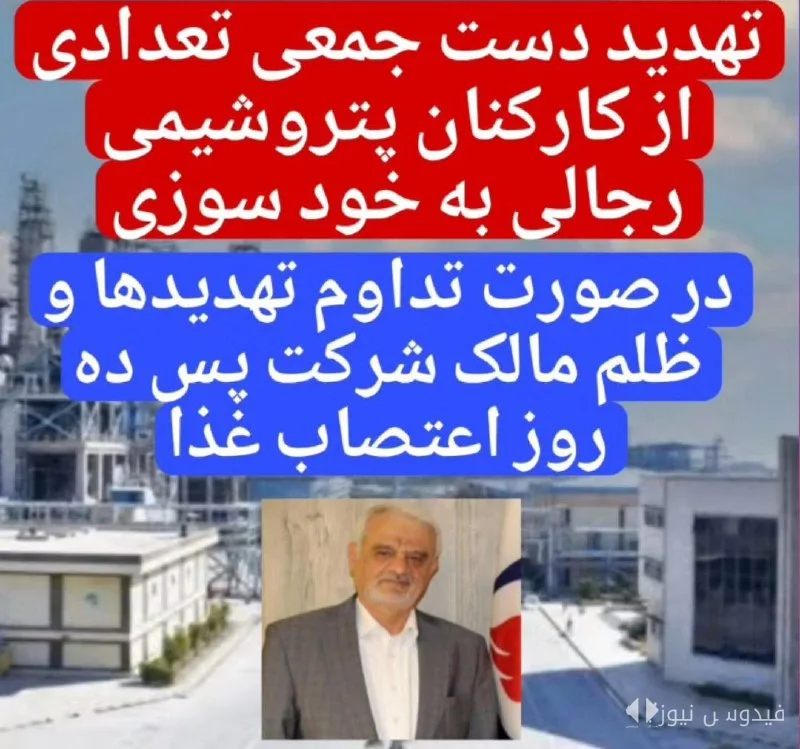
It has been over ten days since the hunger strike of the employees of the petrochemical company 'Sajra Gostaran Rajal'; a company owned by the Rajali brothers and managed by Hamid Reza Rajali. This strike began in protest against wage reductions, continuous threats, and constant managerial pressures. Despite the serious dimensions of the crisis, none of the supervisory and judicial bodies in Khuzestan, Imam Port, and Mahshahr have taken any action so far.
Workers' Warnings and Officials' Silence
Some employees have warned in messages: if the pressures and threats of immediate contract termination continue, some workers will be forced to take collective self-immolation actions. This action is strongly condemned, but the responsibility for ensuring workers' rights lies with the government and oversight bodies.
This crisis is another example of the flawed labor relations structure in the petrochemical industries of the south; a structure that has led to several self-immolations and widespread protests in recent years. Despite the bitter experience of a young person from Khuzestan and a worker from Shadgan self-immolating, the governor of Khuzestan and other officials have remained silent in the face of this crisis.
Why Is No One Accountable?
The main question is: why are the Rajali brothers, who benefit from water, soil, government subsidies, and resources of Khuzestan, able to undermine workers' rights without any restrictions? And why have oversight bodies—from the Special Economic Zone Organization to security, the prosecutor of Imam Khomeini Port, and the intelligence department of Mahshahr—remained silent in the face of these violations?
The repetitive pattern of deprivation of local workers in the Razavi, Imam Port, Arvand, Maroon mixtures, and Laleh complexes shows that structural injustice continues in the region: flying managers and private owners enjoy maximum benefits, while local workers are deprived even of minimum wages.
Meanwhile, the representative of the local people remains completely silent; while the ten-day strike of the workers is directly within his area of responsibility.
Now the serious question is: who is responsible for protecting workers' rights? And how long will this cycle of inequality continue?