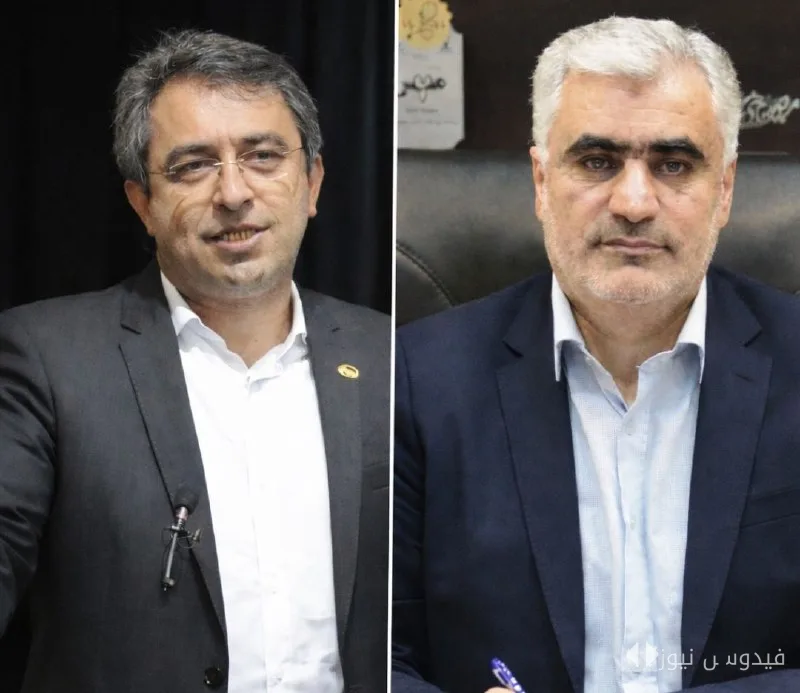
What is currently happening in the managerial structure of Iran's oil and petrochemical industry is more a repetition of a familiar pattern of power shifting within a corruption circuit than it is complex; a pattern that has neither mysteries nor ambiguities in the Islamic Republic. A fresh example of this is the simultaneous appointments and promotions that have once again brought names like 'Neshanzadeh' and 'Mahmoud Aminnejad' to the forefront of the news.
Corruption in Managerial Shifts
While Mahmoud Aminnejad, with multiple corruption cases and documented reports in oversight and security institutions, should have been removed from the management cycle and referred to the judiciary, not only did this not happen, but with the mediation of figures at the highest levels of power, he climbed the promotion ladder one step after another. On one hand, he was appointed as the senior advisor to the CEO of the Persian Gulf Holding, and on the other hand, he took over the management of a company that oversees the largest oil projects in southern Iran.
Aminnejad, who during his management of the Bid Boland gas refinery transferred hundreds of millions of dollars of national assets in suspicious deals with the 'Petronirouyeh Saba' company, and whose personal investments from Tehran to Spain became evident, has now found a new path to access vast oil resources through the direct order of a political figure and family connections.
Continuation of the Corruption Cycle
On the other side of this equation is the name 'Neshanzadeh'; a manager who effectively turned the petrochemical industry into an electoral headquarters for political figures and, with the help of a group of CEOs, formed a gang network that resulted in corruption cases in several major petrochemical companies, including Maroun, Karoun, and Arvand petrochemicals.
According to reports, he is now not only occupying Aminnejad's former chair but is also simultaneously the CEO of the Bid Boland gas refinery, where Aminnejad made his million-dollar income and is now the site of deals for Neshanzadeh and his friends in Khuzestan.
This swapping of chairs is neither reform nor change; it is merely a reproduction of the same cycle that transfers corruption from one table to another, without even pausing for a moment.