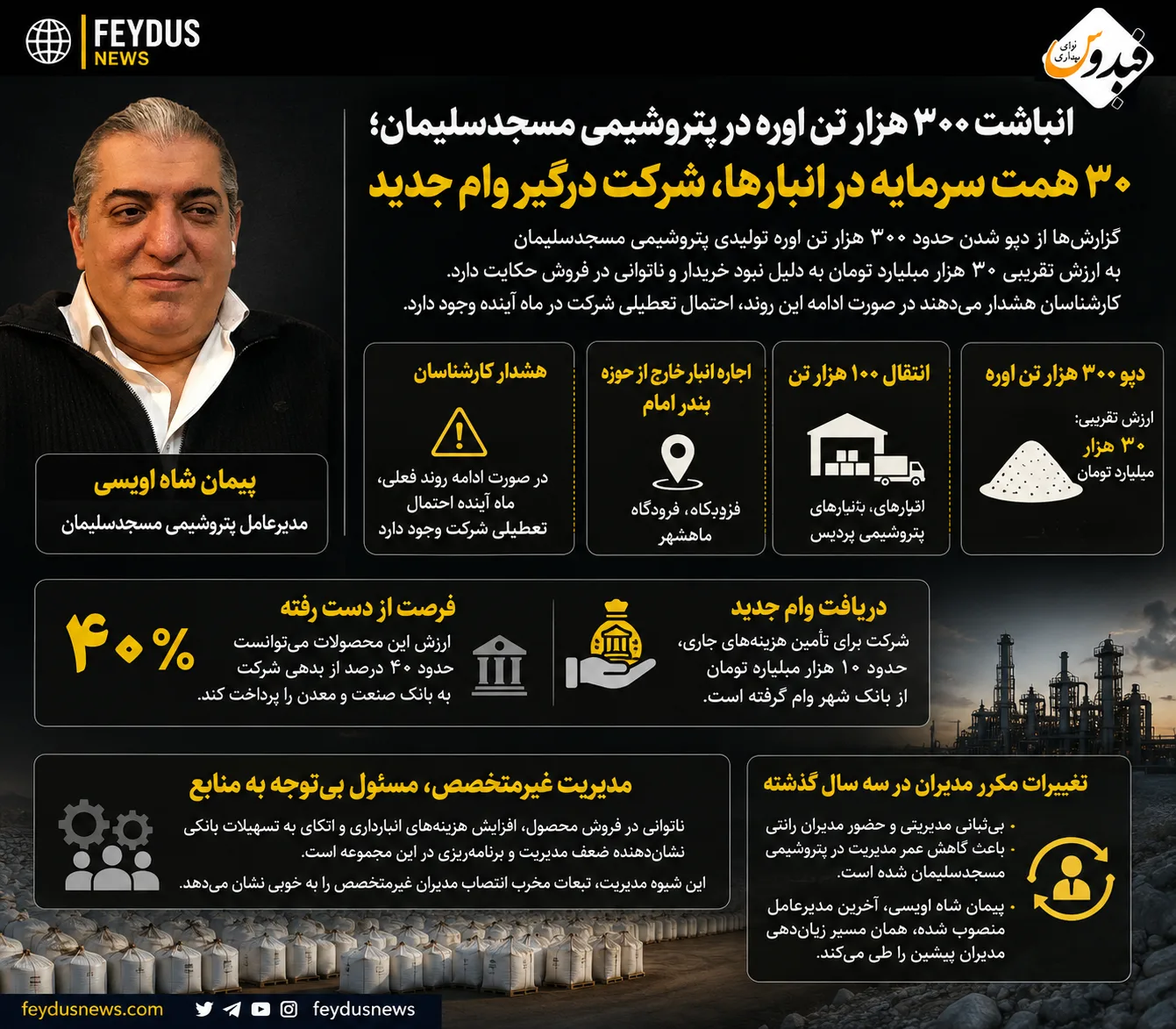
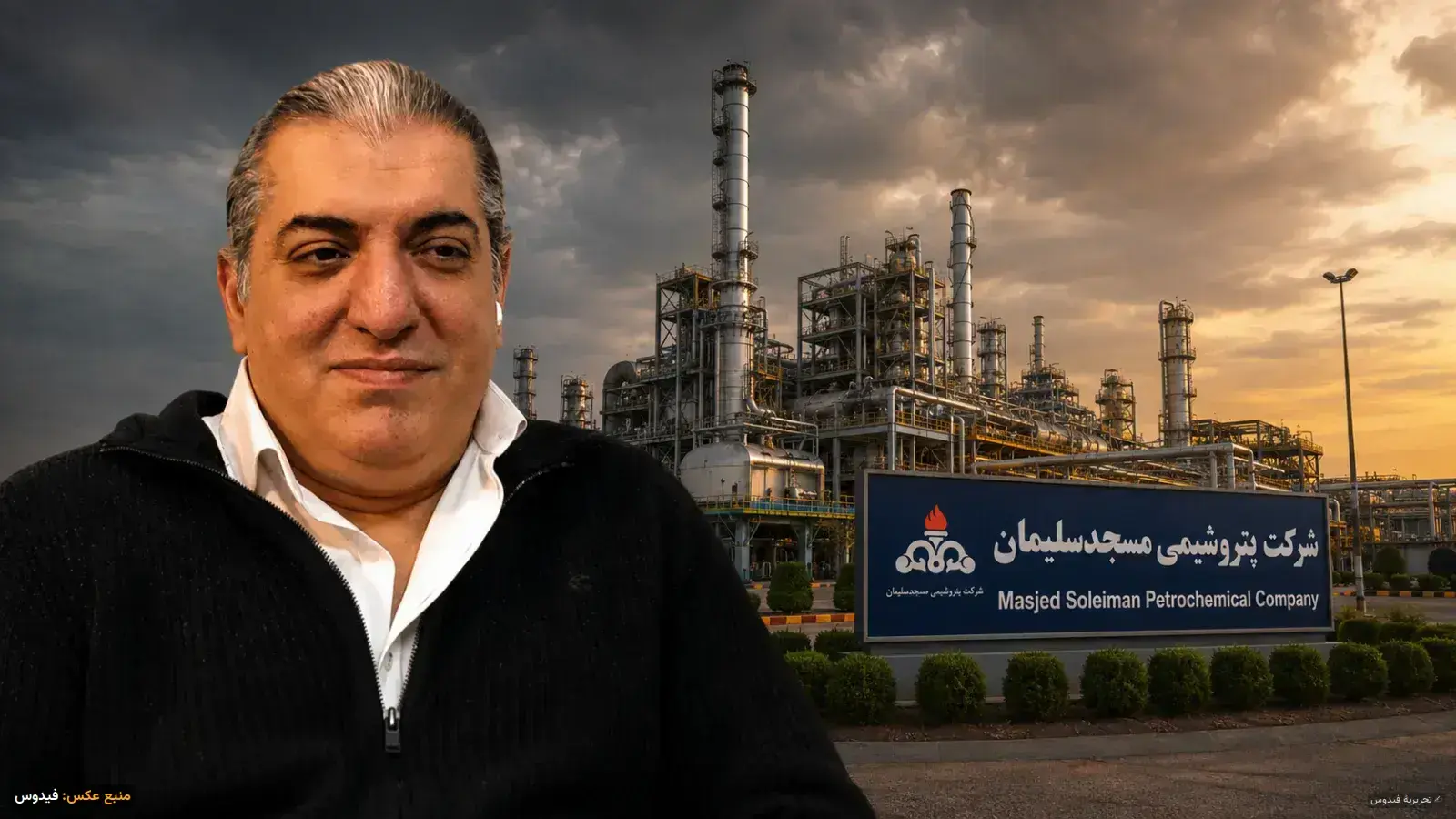
Reports from informed sources indicate that about 300,000 tons of urea produced by Masjed Soleyman Petrochemical have been stockpiled in the company's warehouses and surrounding areas due to lack of demand and inability to sell. Experts warn that this situation could be a serious alarm for the financial and operational status of this petrochemical complex.
Value of Stockpiled Urea and Storage Issues
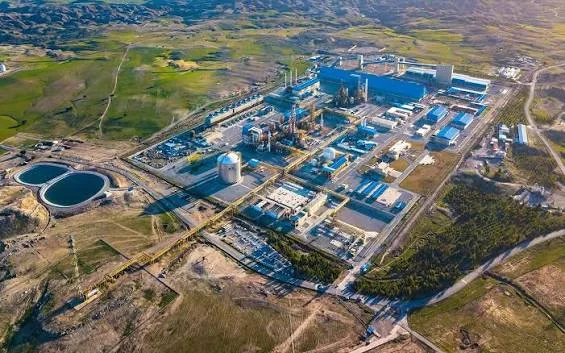
According to available information, the approximate value of this stockpiled urea is estimated at around 30 trillion tomans (30 thousand billion tomans). With the central warehouse capacity of Masjed Soleyman Petrochemical filled, the company's management has been forced to transfer about 100,000 tons of this product to Pardis Petrochemical warehouses. Additionally, for storing another part of the products, warehouses outside the Imam Khomeini Port area and near Mahshahr Airport have been rented.
Challenges Facing Production and Sales
Informed sources say that if the current trend continues and sales problems persist, warehouse capacity will be filled next month, and continued production will face serious challenges. This issue could even lead to the halt of some production activities of this complex. Petrochemical industry experts believe that if this volume of product were sold, the revenue could significantly reduce the company's debts. Estimates show that the value of these products could cover about 40% of Masjed Soleyman Petrochemical's debt to the Industry and Mine Bank.
Liquidity Pressure and Bank Loans
This situation has arisen while reports indicate that the company has been forced to take out about 10 trillion tomans in loans from Bank Shahr to cover its current expenses. Experts see this as indicative of severe liquidity pressure and weak financial resource management within the company. Some experts view the inability to sell products, increased storage costs, and simultaneous reliance on bank loans as signs of weak planning and management in this organization.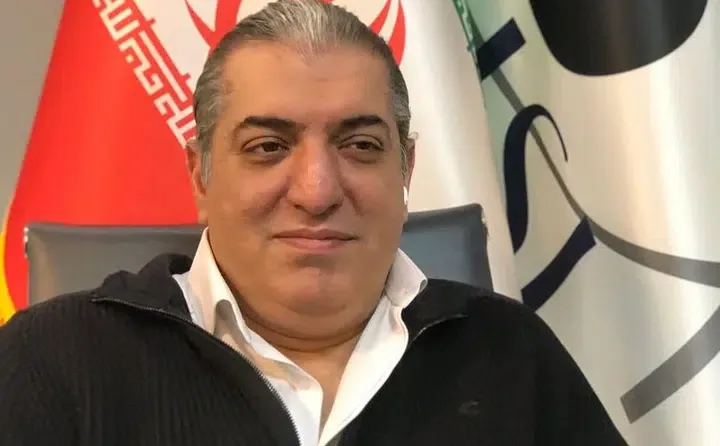
Managerial Impacts and Frequent Changes
Reviewing the managerial trend of this company shows that over the past three years, frequent changes in the CEO position have affected managerial stability. Critics believe that appointing managers without specialized experience in the petrochemical industry has been one of the factors exacerbating the current problems, and Peyman Shah-Oveysi, the latest appointed CEO of this company, whose appointment was influenced by parliamentary representatives, has not yet been able to stop the losses and accumulated problems of this organization. Continuing this trend could have significant negative impacts on the financial performance and future of Masjed Soleyman Petrochemical.