Internal sources indicate that Mostafa Salari's name was also among the serious candidates for the Ministry of Cooperatives, Labor, and Social Welfare in 2024, and then, by Ahmad Meidari's decree, he returned to manage the Social Security Organization for the second time. However, regarding the re-emergence of his name as a successor to Meidari in July 2026, no official announcement has been released by the government, and the reports remain speculative. Additionally, claims related to hosting Hassan Rouhani, Bushehr City Center, the specific 'Patcom' contract, and Salari's personal corruption have not been confirmed with sufficient independent and credible documents; therefore, they have not been included as definitive facts in the report.
Mostafa Salari on the Path to the Ministry of Welfare; From Family Contract Controversies to Social Security Crises
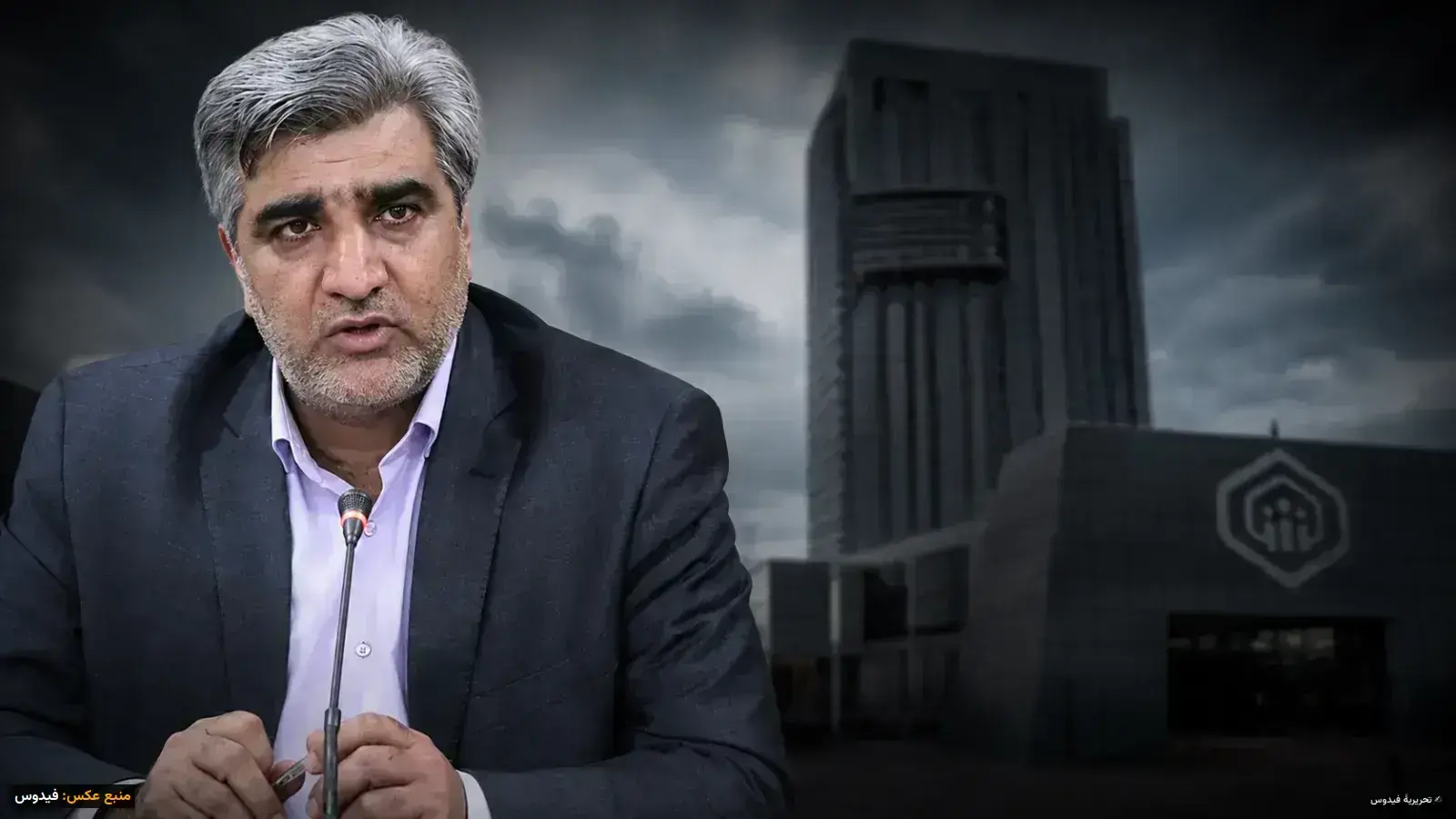
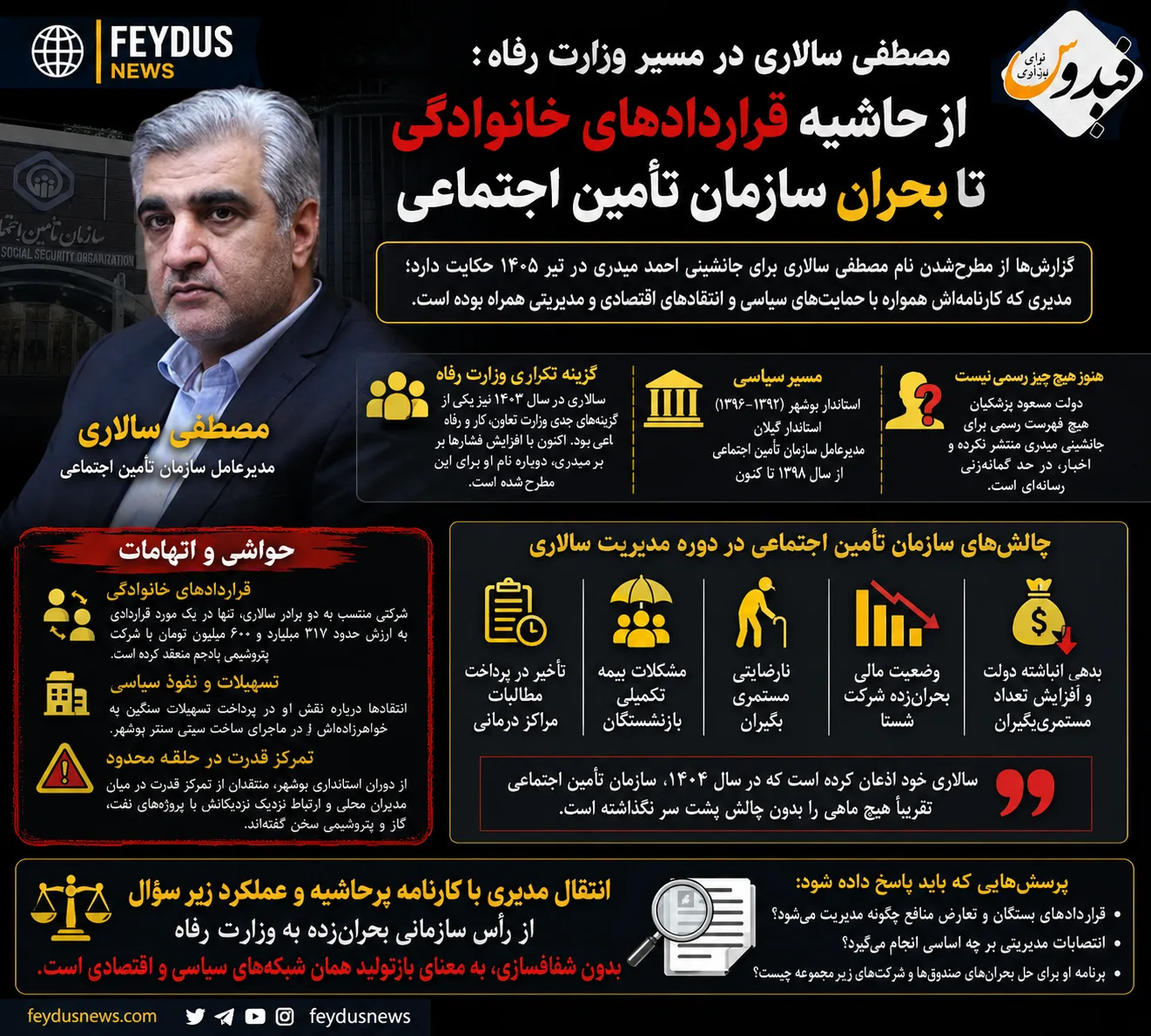
As political pressures on Ahmad Meidari, Minister of Cooperatives, Labor, and Social Welfare, have increased, the name of Mostafa Salari, CEO of the Social Security Organization, has once again been mentioned as a potential successor; a manager whose track record from the governorship of Bushehr and Gilan to managing one of Iran's largest insurance funds has always been accompanied by political support on one hand and economic and managerial criticisms on the other.
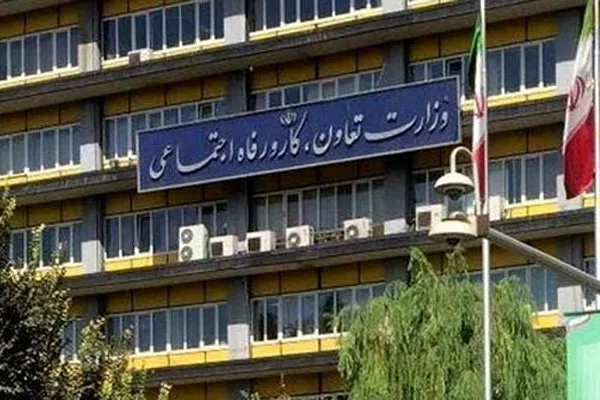
Salari was also one of the serious candidates for the Ministry of Welfare in 2024. At that time, some media reported his name being on the final list of this ministry alongside Ahmad Meidari and Mohammad Kabiri. Ultimately, Meidari was introduced to the parliament, and a few months later, Salari was appointed as CEO of the Social Security Organization for the second time by his decree. Now, unofficial reports suggest that if Meidari is impeached or dismissed, Salari might once again be considered for a ministry that covers the Social Security Organization, Shasta, and a collection of large industrial and financial holdings.
The name of Mohammad Shariatmadari, former Minister of Welfare and CEO of the Persian Gulf Petrochemical Industries Holding Company, has also been mentioned in some speculations. However, by the time of this report's preparation, Masoud Pezeshkian's government has not released any official list for Meidari's potential replacement, and news about alternative candidates is mainly based on political and media hearsay.
Mostafa Salari served as the governor of Bushehr from 2013 to 2017 and then as the governor of Gilan. Critics from his tenure as governor of Bushehr raised questions about the concentration of power within a limited circle of local managers, family relations, and the close ties of his associates with oil, gas, and petrochemical projects. The most significant issue later reflected in the media was the contracts of a company owned or affiliated with Salari's family members with a petrochemical complex and his role in granting heavy loans to his nephew in the construction of Bushehr City Center.
In 2020, several domestic media outlets claimed that a company where Salari's two brothers were on the board had, in just one instance, signed contracts worth approximately 317 billion and 600 million tomans with the Padjam Petrochemical Company. These reports raised questions about potential conflicts of interest and the use of political influence.
Salari's return to the Social Security Organization has also been met with criticisms. Opponents argue that before his first appointment in 2019, he had no direct experience in managing pension funds, social insurance, or extensive investment companies.
In the new term, delays in paying the claims of medical centers, issues with retirees' supplementary insurance, dissatisfaction among pensioners, and the financial situation of Shasta have become focal points of criticism. A critical report in 2025 accused the Social Security management of failing to secure resources for retirees' supplementary insurance.
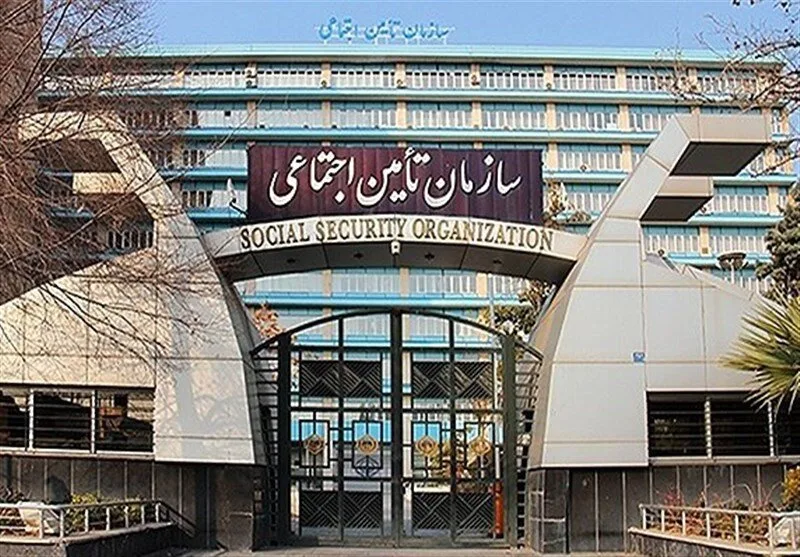
Salari himself has acknowledged that the Social Security Organization in 2025 did not go a single month without challenges. This organization now provides services to approximately 47 million primary and dependent insured individuals and faces heavy monthly expenses, accumulated government debt, and an increasing number of pensioners. The organization's CEO attributes the major sources of problems to factors outside the Social Security structure, arising from economic conditions, political developments, and the non-payment of government debts.
However, critics question how a manager who has not yet managed to sustainably resolve the social security crises, the situation of retirees, and the disarray of subsidiary companies, and whose appointments and dismissals in subsidiary companies have always been problematic, can take charge of a ministry with hundreds of companies and tens of millions of stakeholders.
If Salari's name becomes serious for the Ministry of Welfare, the government and parliament will be compelled to transparently examine not only his plans but also the contracts of his relatives, potential conflicts of interest, managerial appointments, and his actual performance in social security. Transferring a manager from the head of a crisis-ridden organization to a ministerial seat, without accountability for these ambiguities, could lead to the reproduction of the same political and economic networks on a larger scale rather than indicating reform.