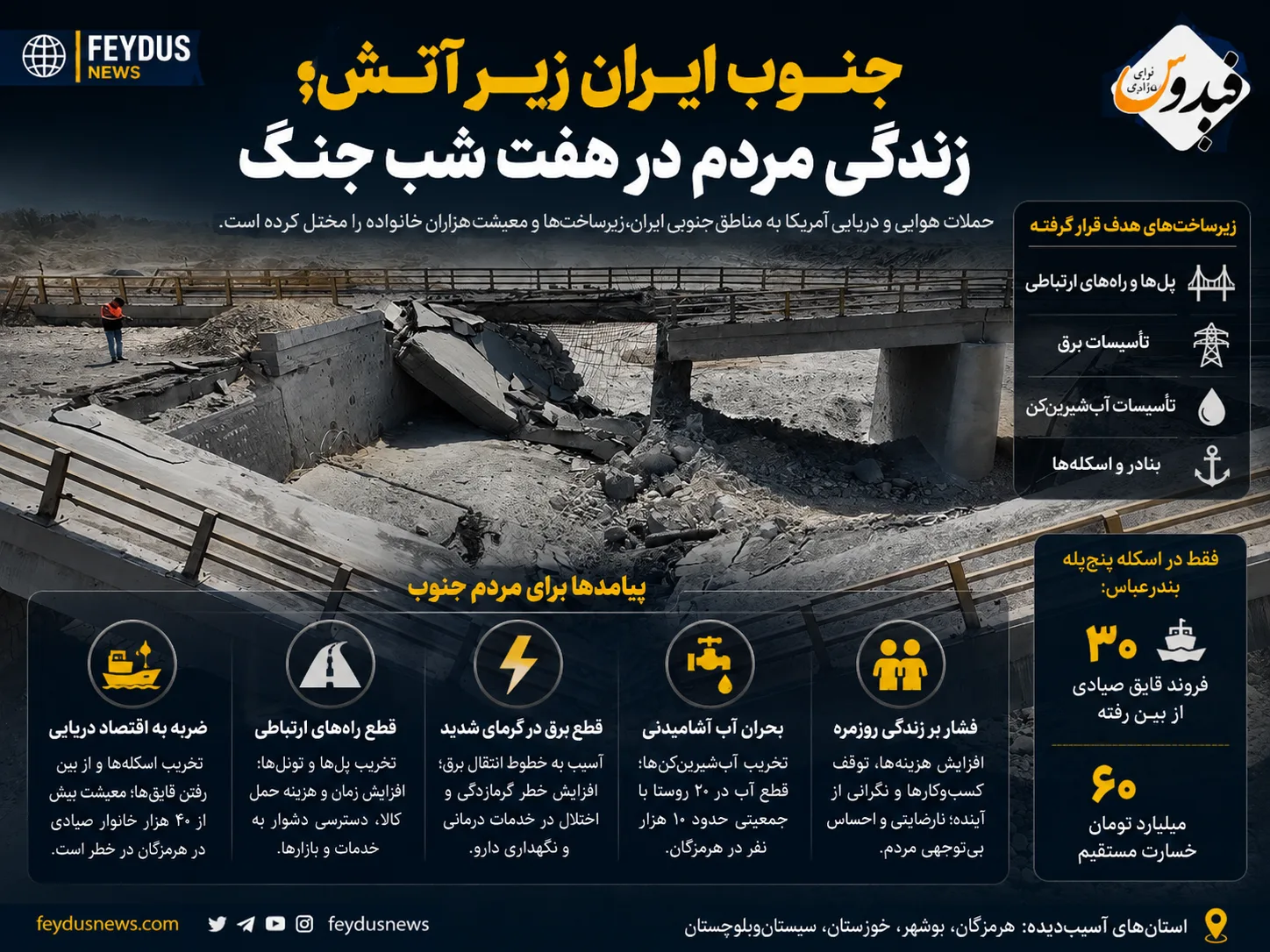
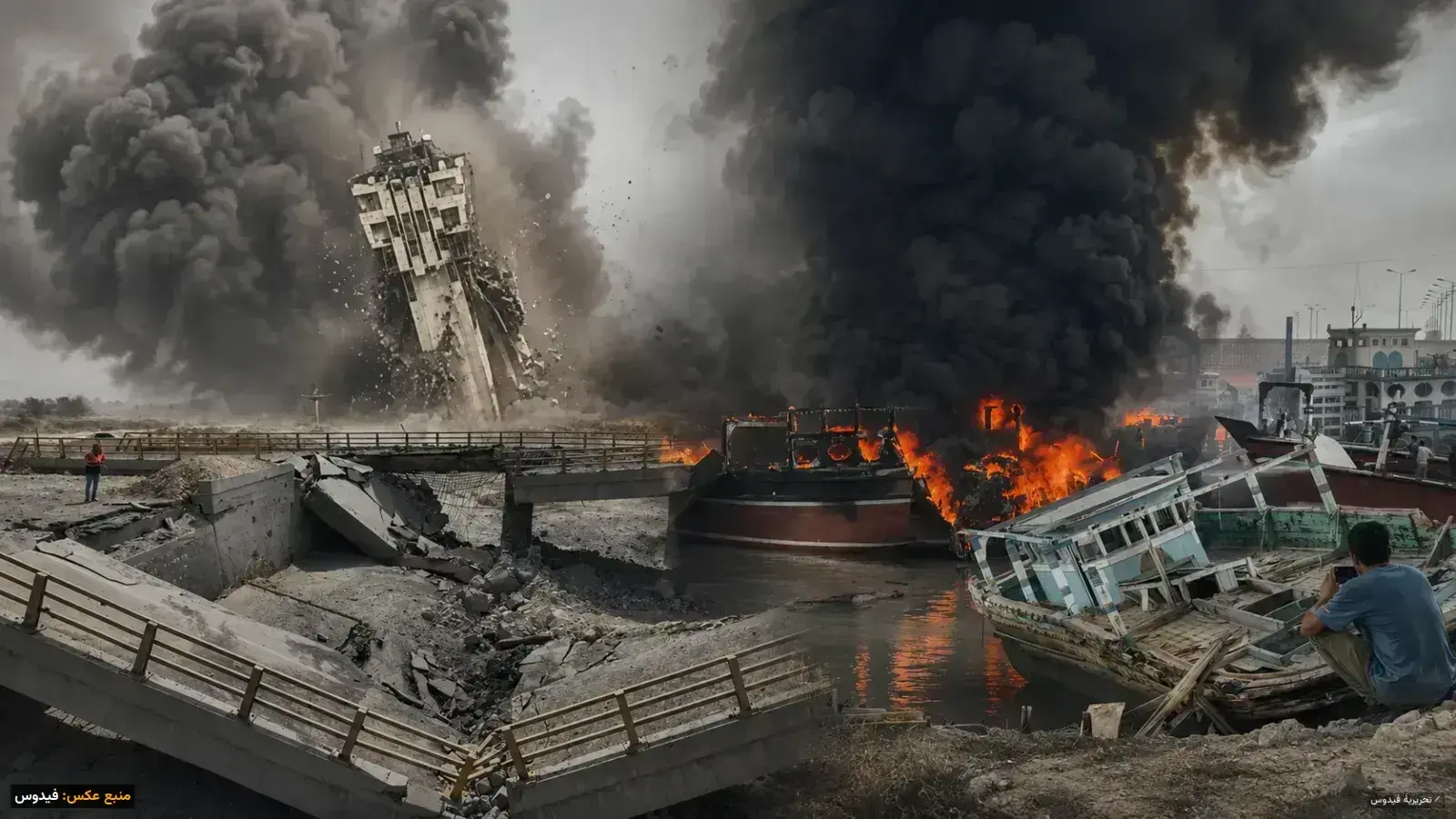
The continuation of U.S. air and naval attacks on southern regions of Iran, after seven consecutive nights, has not been limited to military targets alone. According to published reports, parts of the transportation, energy, water, and port infrastructure have also been damaged. This situation has had consequences beyond the battlefield for the residents of Hormozgan, Bushehr, Khuzestan, and Sistan and Baluchestan provinces, disrupting the daily lives of thousands of families.
Infrastructure Disrupting Lives
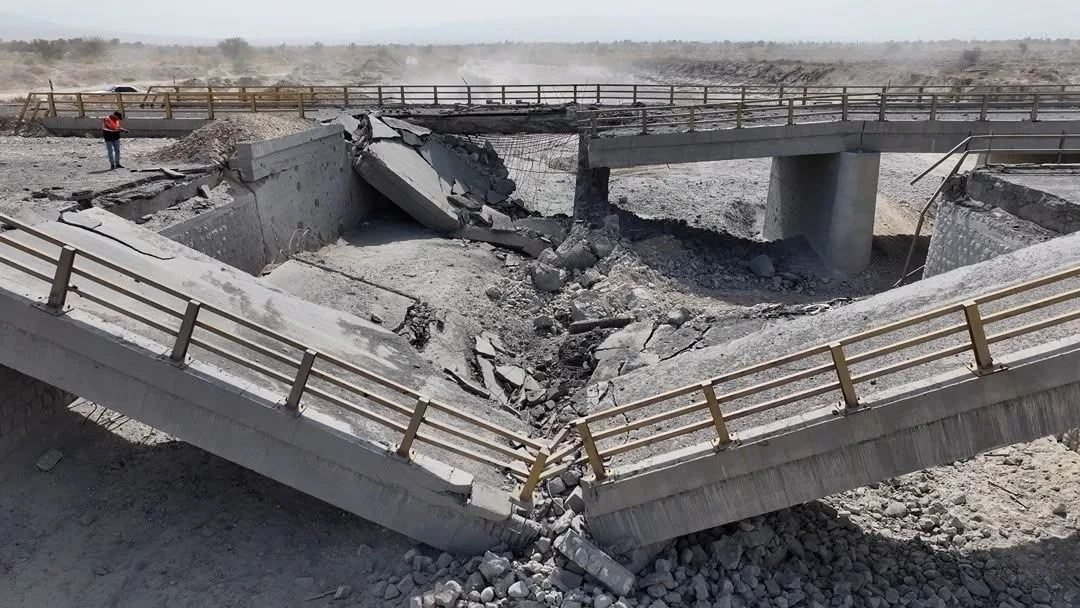
In the latest attacks, in addition to logistical and maritime facilities, some bridges, communication routes, and desalination facilities were also targeted. The closure of the Shahid Mirzaei Tunnel on the Bandar Abbas–Hajiabad axis also indicates that the southern communication network has faced serious damage; an issue that, in addition to limiting the movement of equipment, has made the transportation of citizens and goods more difficult.
Coastal Economy at Risk
The economy of many southern cities is dependent on maritime activities. Fishermen, dhow owners, port workers, seafood sellers, and related jobs have lost part of their income due to reduced port activities and maritime restrictions.
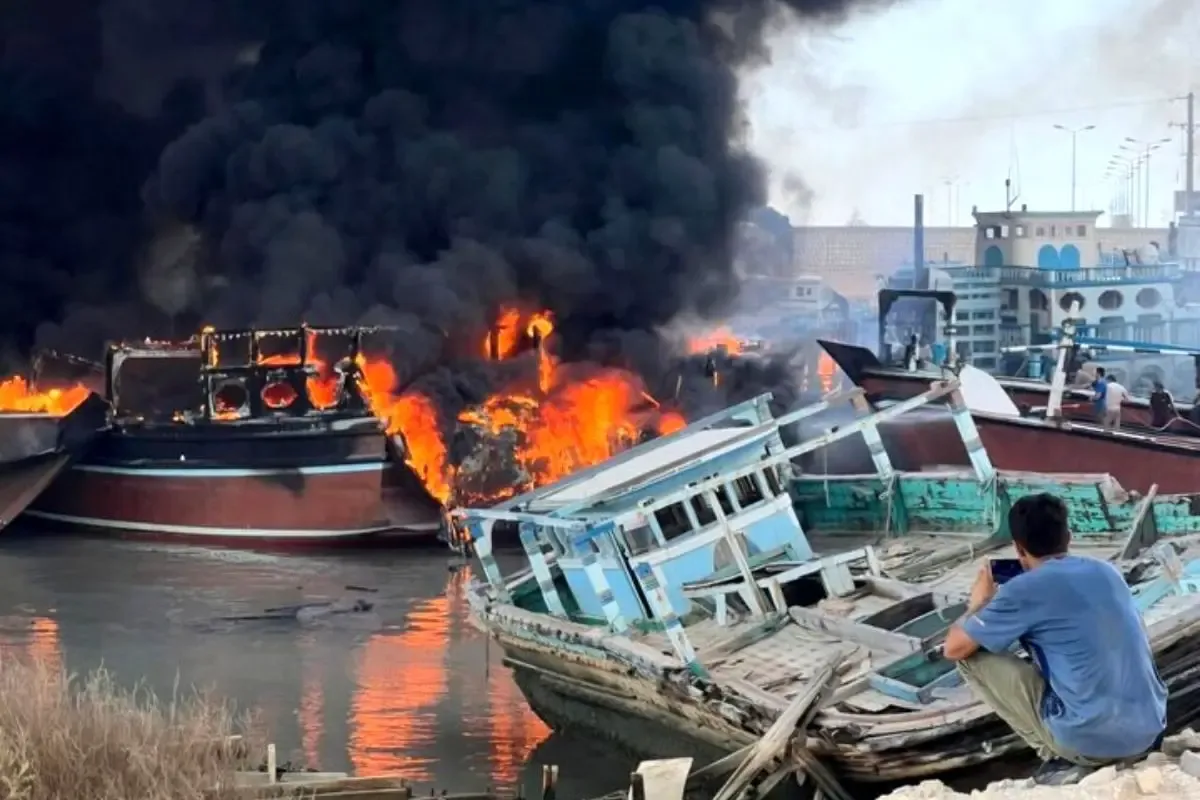
According to local officials, about 30 fishing boats at the Five-Step Fishing Pier in Bandar Abbas have been destroyed due to the attacks; a damage estimated to be worth tens of billions of tomans. Meanwhile, the livelihood of more than 40,000 families in Hormozgan depends on the fishing industry, and any interruption in this sector affects a wide chain of local jobs.
In addition to direct damage to vessels, concerns about insecurity at sea, increased insurance and fuel costs, halted loading, and disruption in transporting marine products have put additional pressure on those active in this field.
Communication Routes and Public Services
The destruction of bridges and roadways has made access between southern cities and villages difficult. The closure of these routes has increased the time and cost of transporting goods, food, medicine, and fuel, and has also limited access to medical and administrative services for residents of some areas.
According to local residents, low-income families, the elderly, and chronic patients have been more affected by this situation, as they are forced to travel longer distances to receive medical or banking services.
Water and Electricity Crisis Amidst Extreme Heat
Simultaneously with the intense summer heat, damage to the electricity network and desalination facilities has made conditions more difficult. The Ministry of Energy has reported damage to parts of the electricity transmission lines, and the Tavanir Company has also begun operations to rebuild the network.
In coastal areas, electricity is not just a welfare service; it is essential for water supply, medicine storage, the operation of medical centers, and coping with extreme heat. Additionally, the destruction of some desalination plants, including in Jask and Bonji, has led to a cut in drinking water for several villages, leaving thousands facing a water shortage.
Beyond Physical Damages
The consequences of these attacks are not limited to the destruction of buildings and facilities. Reduced economic activity, disruption in public services, increased living costs, and concerns about the future have intensified an atmosphere of uncertainty in southern cities.
Alongside livelihood issues, some citizens also express concern about the process of addressing damages and the speed of infrastructure reconstruction. The experience of rebuilding damaged areas in past wars has also led some residents to doubt a quick return to previous conditions.
Overall, the continued damage to transportation, energy, and maritime economy infrastructure has not only pressured the economic capacities of southern Iran but also posed serious challenges to the quality of life, livelihood security, and future outlook of many families living in these areas.