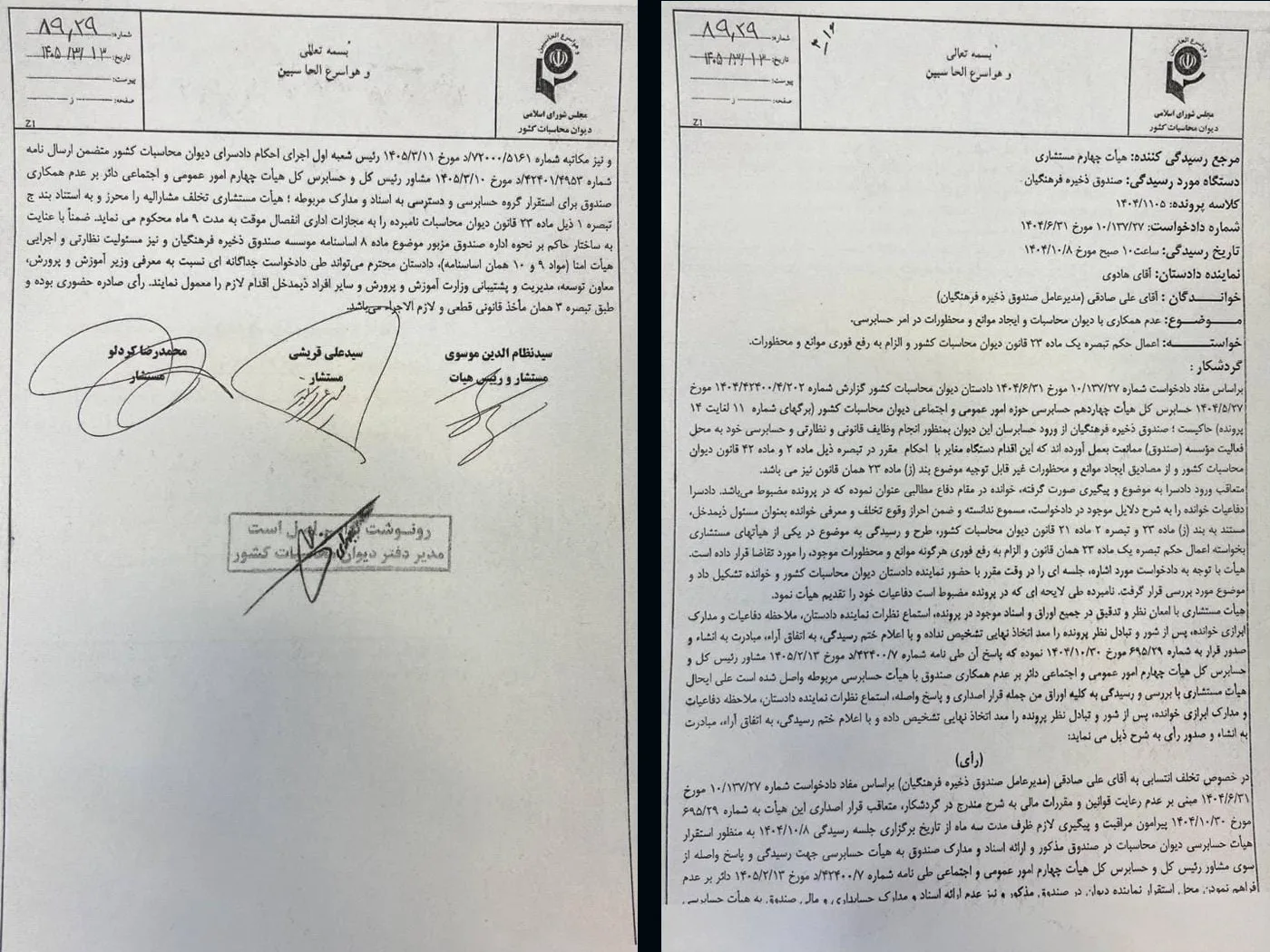

The Court of Audit sentenced Ali Sadeghi, the former CEO of the Teachers' Reserve Fund, to 9 months temporary suspension from government services due to lack of cooperation with auditors and creating obstacles in the auditing process. This verdict was issued by the Fourth Advisory Board of the Court of Audit.
Case Formation and Reasons for Sentencing
The case against this CEO was formed following a complaint by the Attorney General of the Court of Audit and based on a report by the Public and Social Affairs Audit Board. The main issue of the case is the lack of cooperation by the Teachers' Reserve Fund with the Court of Audit's auditors, which includes refusal to provide financial documents and failure to provide necessary access for auditors to perform their legal duties.
The issued verdict states that the Court of Audit's auditors visited the site to conduct supervisory missions and review the financial performance of the fund, but were not provided access to the required documents. This action was identified as creating obstacles and interference in the auditing process.

Review Process and Issuance of Verdict
The advisory board, after reviewing the audit reports, statements from the Attorney General's representative, the defenses of the former CEO of the fund, and other documents in the case, found the attributed violation to be proven and, based on Note 1 of Article 23 of the Court of Audit Law, issued a verdict for his temporary suspension from government services for 9 months. According to this verdict, the convicted individual will not have the right to employment or hold government positions during the specified period.
Review of Responsibility of Other Individuals
The Court of Audit emphasized in another part of its verdict that the potential responsibility of other individuals related to the administration of the fund is also subject to review. Accordingly, it has been announced that the Attorney General of the Court can, upon establishing the responsibility of other individuals, including the Minister of Education, the Deputy for Development, Management and Support of the Ministry, members of the Board of Trustees, the Board of Directors, and other officials related to the administration of the fund, file a separate lawsuit for review and legal decision-making.
Execution of Verdict and Its Consequences
According to existing documents, the issued verdict is declared to be in-person, final, and enforceable. This means that the issued verdict must be executed, and according to the provisions of the verdict, the normal path of appeal is not anticipated. This case has been addressed within the framework of the legal duties of the Court of Audit to supervise the preservation and protection of public assets and resources and to oblige the involved entities to cooperate with the auditors of this institution.