
Recent appointments in some executive bodies and state companies, especially in the province of Kohgiluyeh and Boyer-Ahmad, have once again turned the issue of meritocracy and the selection of managers into one of the main topics of public discussion. At a time when the government emphasizes the necessity of selecting managers based on expertise, experience, and avoiding recommendations and relationships, some of the appointments made have raised questions about adherence to these principles.
Controversial Appointments
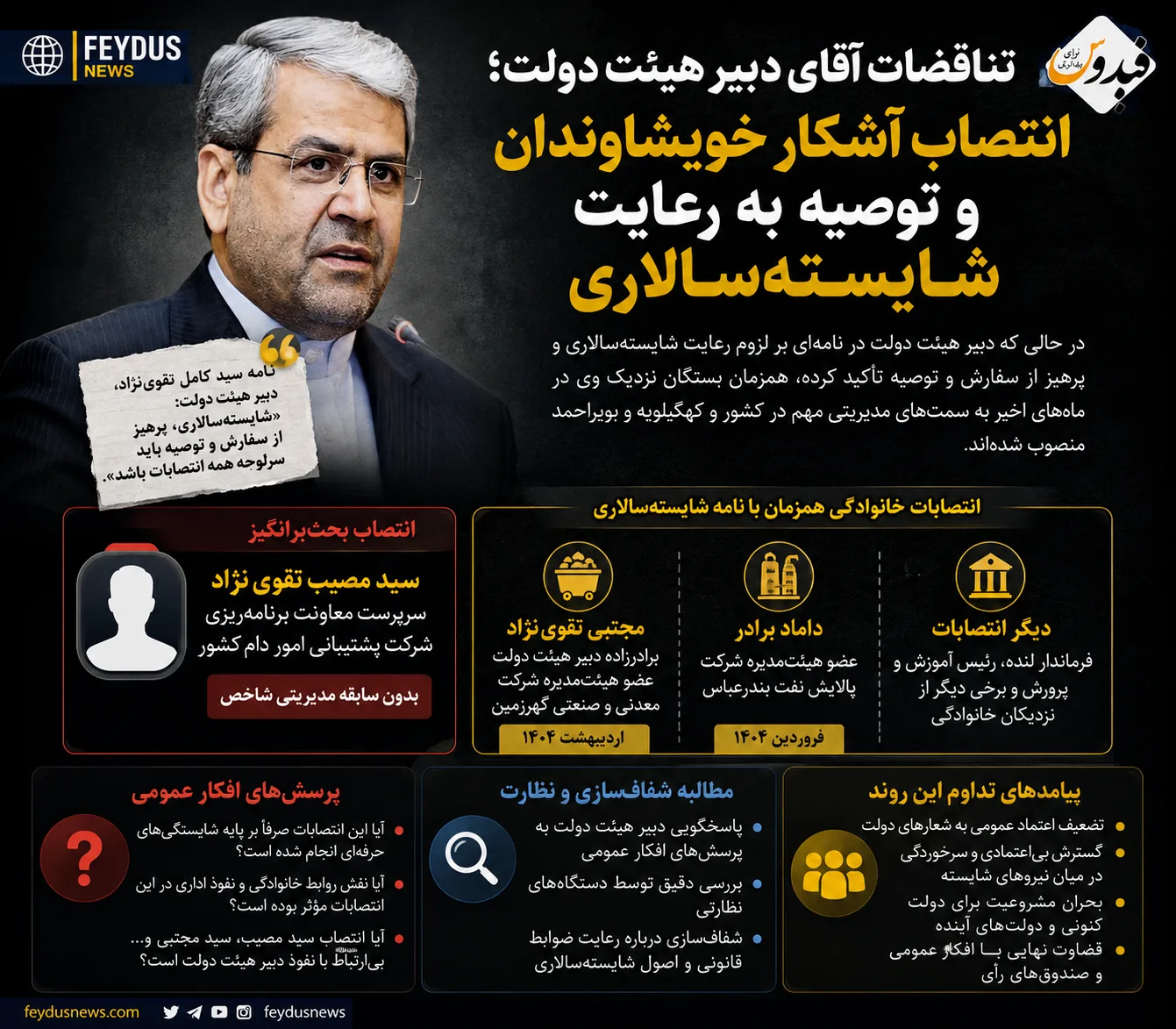
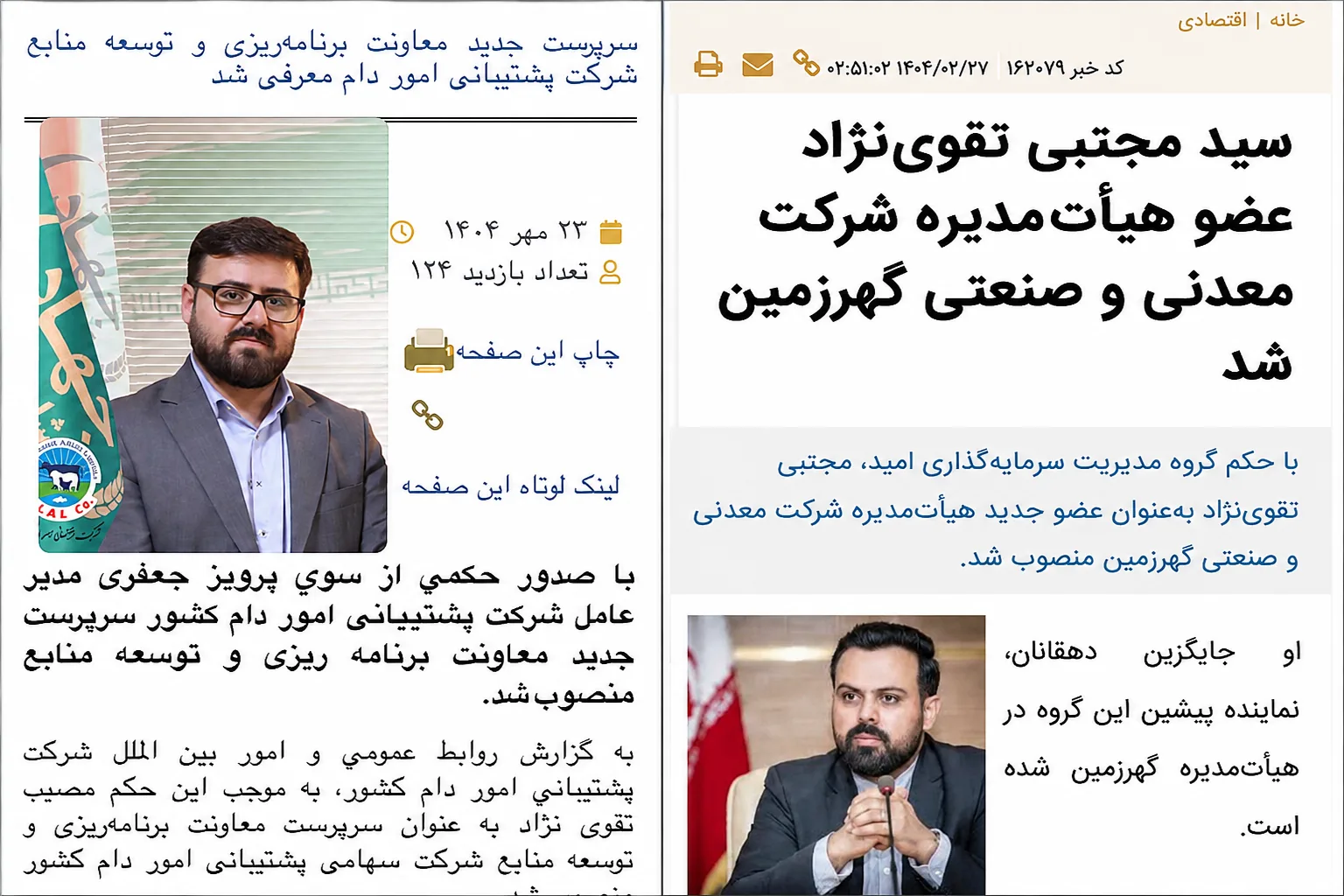
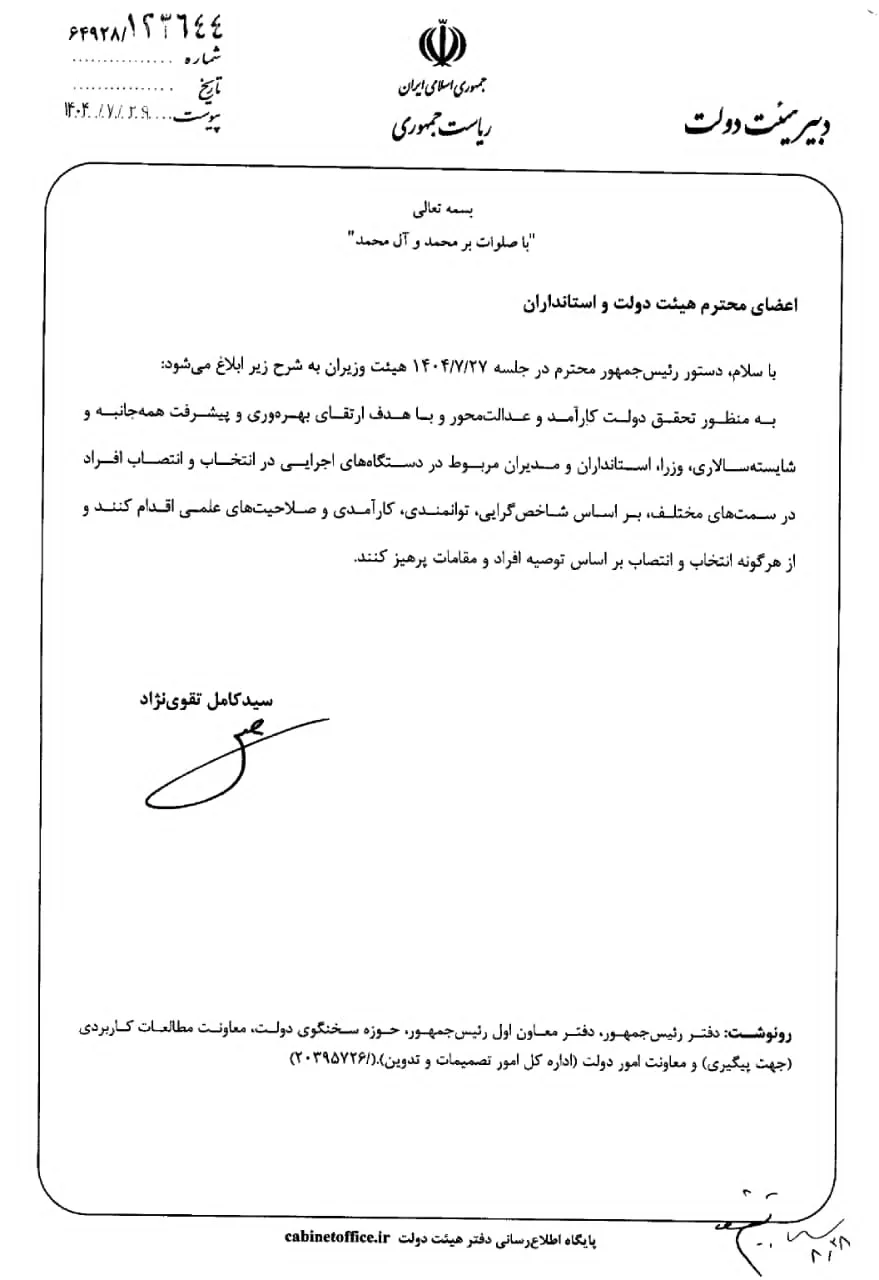
Among these cases is the appointment of "Seyed Mosib Taghavi-Nejad" as the acting deputy for planning at the Livestock Affairs Support Company; an appointment that critics believe was made without notable managerial experience and just a few days before the publication of a letter by "Seyed Kamel Taghavi-Nejad," the Secretary of the Cabinet, regarding the necessity of observing meritocracy and avoiding recommendations.
Contradiction Between the Meritocracy Letter and Family Appointments
Critics believe this letter faces serious questions when at the same time, some close relatives of the Secretary of the Cabinet have also been appointed to managerial positions in recent months. Accordingly, it is stated that "Mojtaba Taghavi-Nejad," the nephew of the Secretary of the Cabinet, joined the board of directors of the Goharzamin Mining and Industrial Company in May, and his brother's son-in-law was appointed to the board of directors of the Bandar Abbas Oil Refining Company in April. The appointment of the governor of Landeh, the head of education, and some other close family members are also mentioned.
This issue has led to the public questioning whether these appointments were solely based on professional merits or if family relationships and administrative influence also played a role.
Demand for Transparency and Involvement of Oversight Bodies
Critics of this process believe that the repetition of such appointments could challenge public trust in the government's slogans about meritocracy. They argue that in a province like Kohgiluyeh and Boyer-Ahmad, many specialists and government supporters are still deprived of managerial opportunities, while some managers' relatives are appointed to important positions in a short time.
In this regard, there is also a demand for the government and the Secretary of the Cabinet to respond to public questions about the possible role of family relationships in these appointments, and for oversight bodies to thoroughly examine these cases and clarify the observance of legal regulations and meritocracy principles.
Critics believe that the continuation of such a process, if the existence of nepotism or influence is proven, could not only weaken social capital but also affect public trust in the mechanisms of government appointments; a matter that ultimately leaves the judgment to public opinion and citizens.