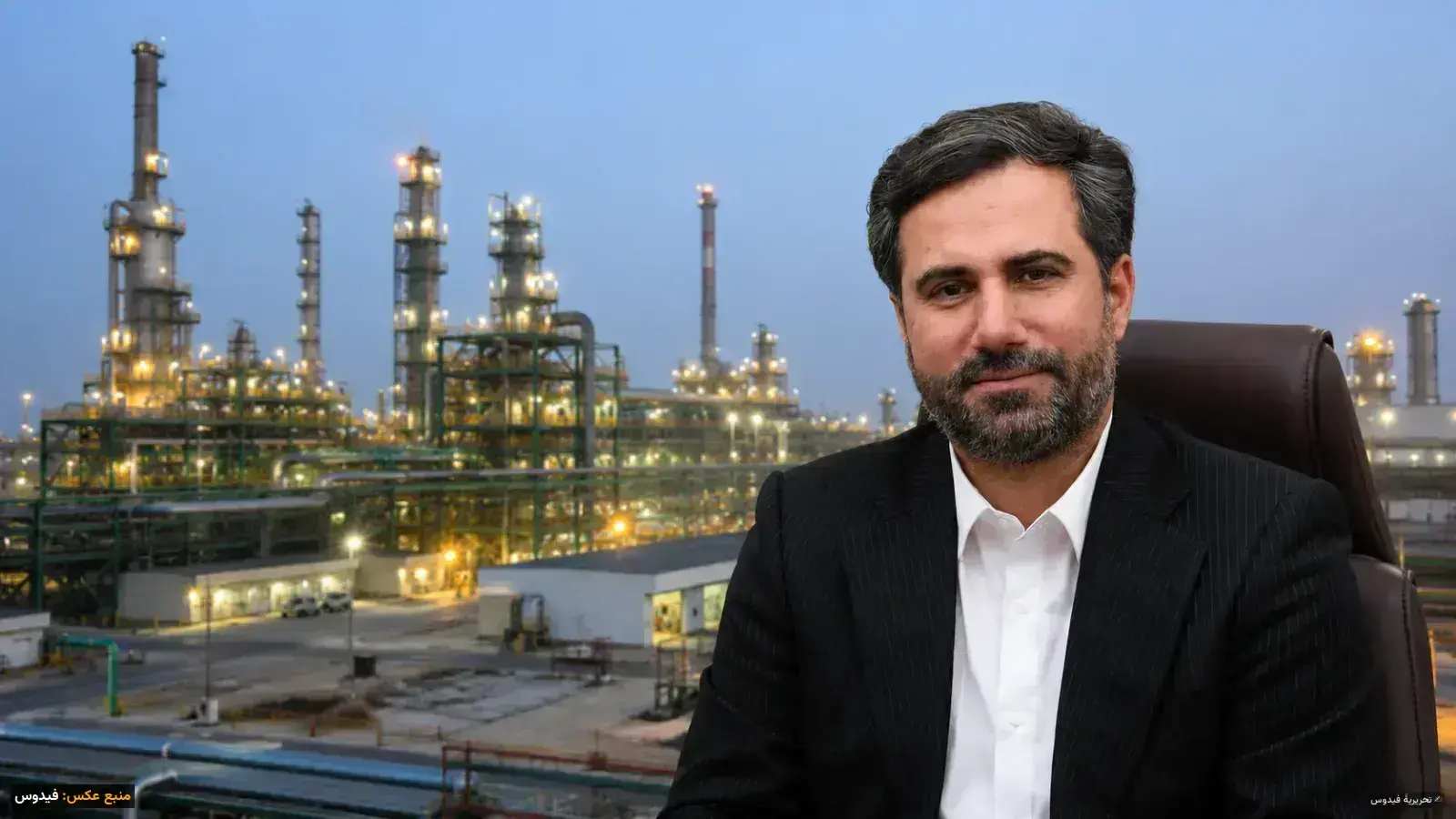

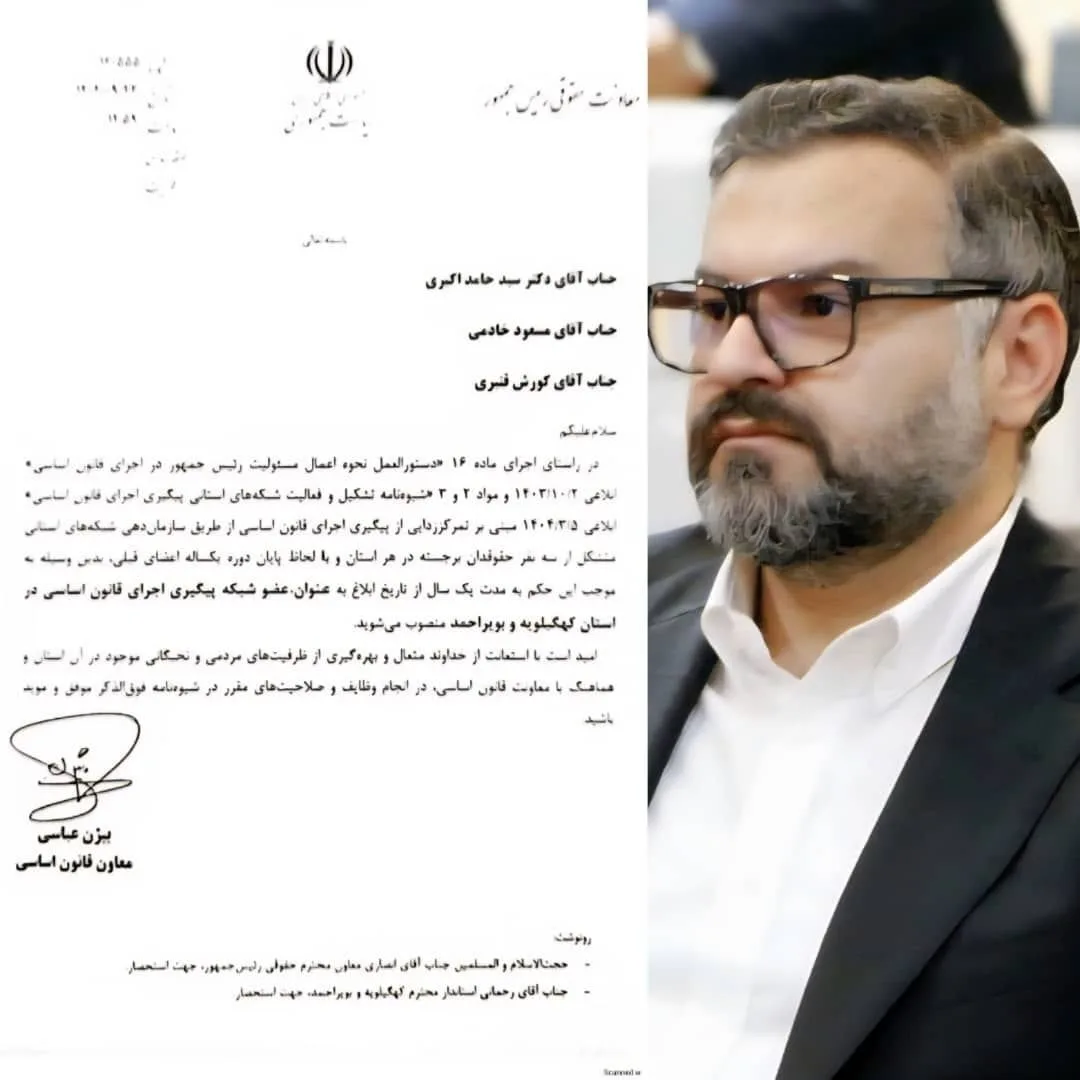
Continuing the exposure of family appointments in the government, one of the controversial cases relates to the appointment of Seyed Hamed Akbari to the board of directors of Bandar Abbas Oil Refining Company. This appointment seems to have been primarily influenced by his familial connection to Seyed Kamal Taghavi Nejad, the Cabinet Secretary.
Family Connections and Appointments
Hamed Akbari, the brother-in-law of the Cabinet Secretary, has been placed in this position, indicating the extensive circle of family appointments in the fourteenth government. Informed sources believe these appointments are a new method of bribery by industrial managers to upper-level officials to create a protective shield against their weak performance and managerial corruption.
The Role of the CEO in the Appointment
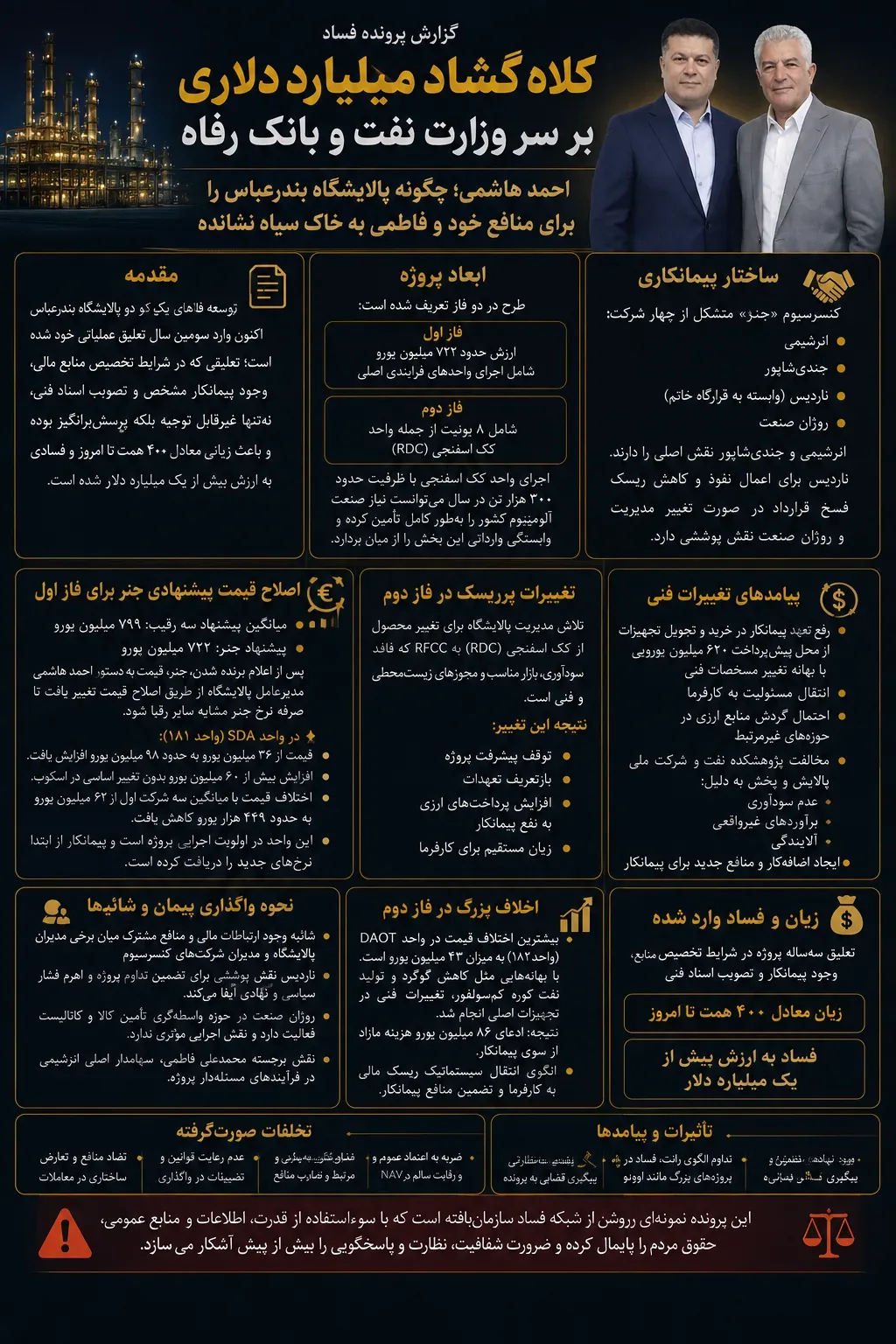
In this particular case, informed sources at Bandar Abbas Oil Refining Company have stated that this appointment was made with the direct support of Ahmad Hashemi, the CEO of the company. Hashemi explained this choice by emphasizing the necessity of having strong lobbies within the government. The importance of these political lobbies becomes clear when we remember that Hashemi was one of the executive arms of the largest economic corruption cases in recent years.
Economic Corruption Cases
Hashemi, by awarding contracting and equipment purchase contracts to Mohammad Ali Fatemi, owner of Enershimi Company, and unnecessarily altering the second phase of the refinery development project, facilitated corruption exceeding one billion euros. Previously, Feydus had addressed the vast corruption angles of this project and the financial relationship between Hashemi and Fatemi in several special reports, questioning at the time who in the government and other upper-level institutions played the role of supporter and cover for such cases.
Click here to read the full report on Bandar Abbas Refinery corruption on Feydus
Overlooking by Regulatory Bodies
The important question is why regulatory bodies and the heads of the three branches, who continuously speak of the necessity of meritocracy in the country's executive body, have turned a blind eye to this improper practice by high-ranking government figures. This issue dates back to the long-standing tradition of turning the boards of large state-owned companies into a backyard for political and family dealings, and it seems the silence of senior officials in the face of this cycle is due to the normalization of dividing positions among managers and their associated circles.