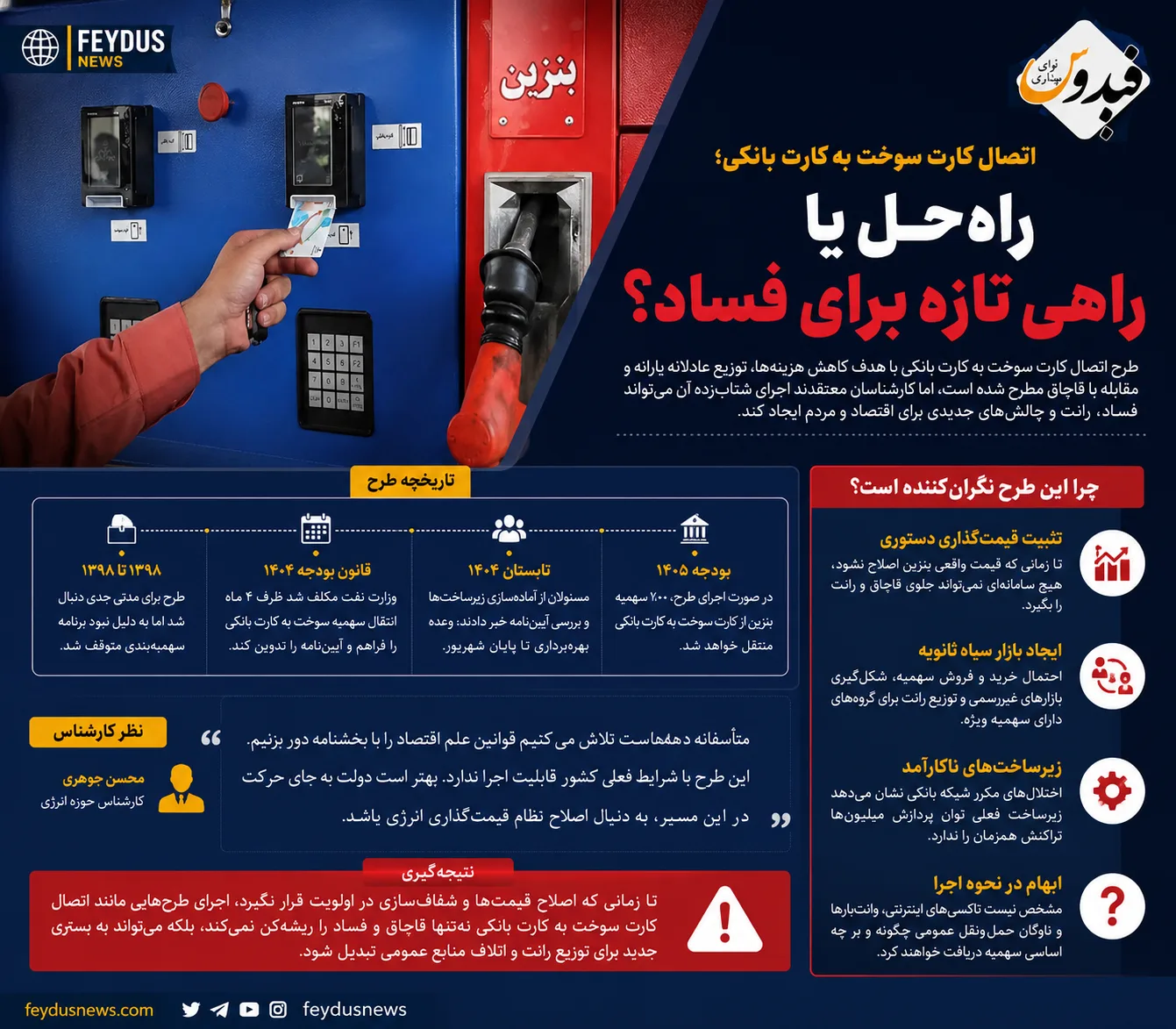
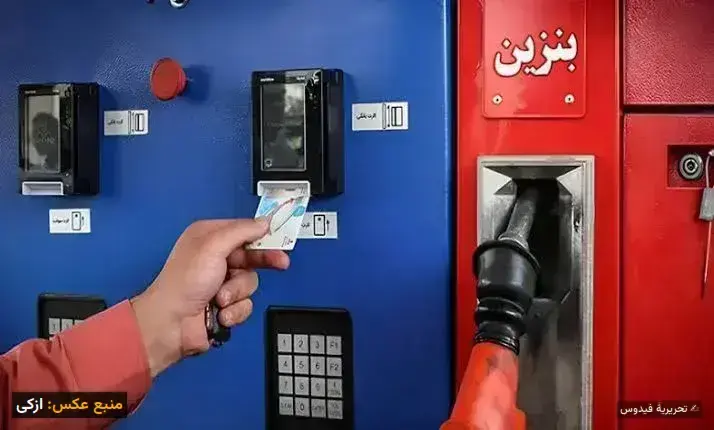
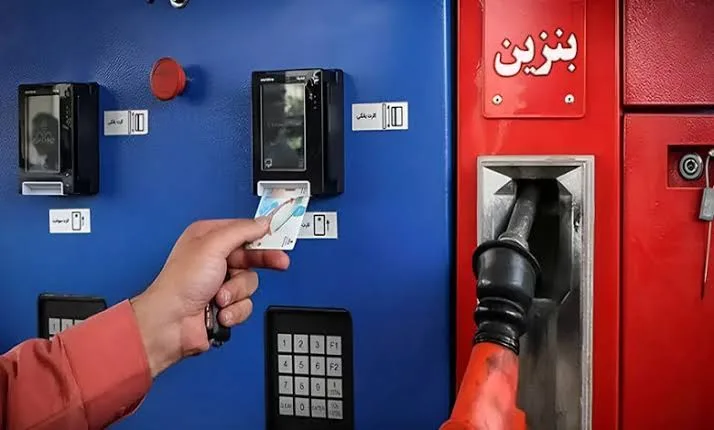
The proposal to link fuel cards to bank cards has been introduced with the aim of reducing costs, distributing fuel subsidies fairly, and combating smuggling. However, in practice, this proposal could become a platform for expanding corruption and complicating the subsidy distribution system. Past experiences have shown that whenever the government resorts to administrative and directive solutions instead of fundamentally reforming pricing policies, not only have the main problems not been resolved, but new forms of corruption have also emerged.
History and Implementation Challenges
This proposal was first introduced a few years ago but was halted due to a lack of infrastructure and dependence on the quota system. Even now, despite the legal mandate in the budget, the executive regulations and necessary infrastructure are not fully ready, and officials are postponing its implementation to the future. These repeated delays indicate that decision-making is based more on administrative requirements than on technical readiness.
Mohsen Johari, an energy sector expert, believes that the root of such proposals lies in the government's refusal to reform the energy pricing system. According to him, when gasoline is offered at a price much lower than its real value, the creation of rent, smuggling, and misuse becomes inevitable, and no new system or tool can eliminate this economic incentive.
Potential Consequences
Linking bank cards to fuel quotas could create new avenues for profiteering. If special quotas are considered for groups like internet taxis, vans, or transportation fleets, the likelihood of quota buying and selling, the formation of informal markets, and the distribution of rent will increase. In such conditions, instead of eliminating corruption, only its form changes.
Infrastructure Problems
The country's banking infrastructure is also not yet stable enough. Repeated disruptions in the banking network have shown that transferring millions of fuel transactions to this platform can cause congestion, disruptions at stations, and public dissatisfaction. Therefore, until economic reforms are prioritized, implementing such proposals will not only fail to solve the smuggling issue but will also increase the likelihood of expanding corruption, rent-seeking, and public distrust.