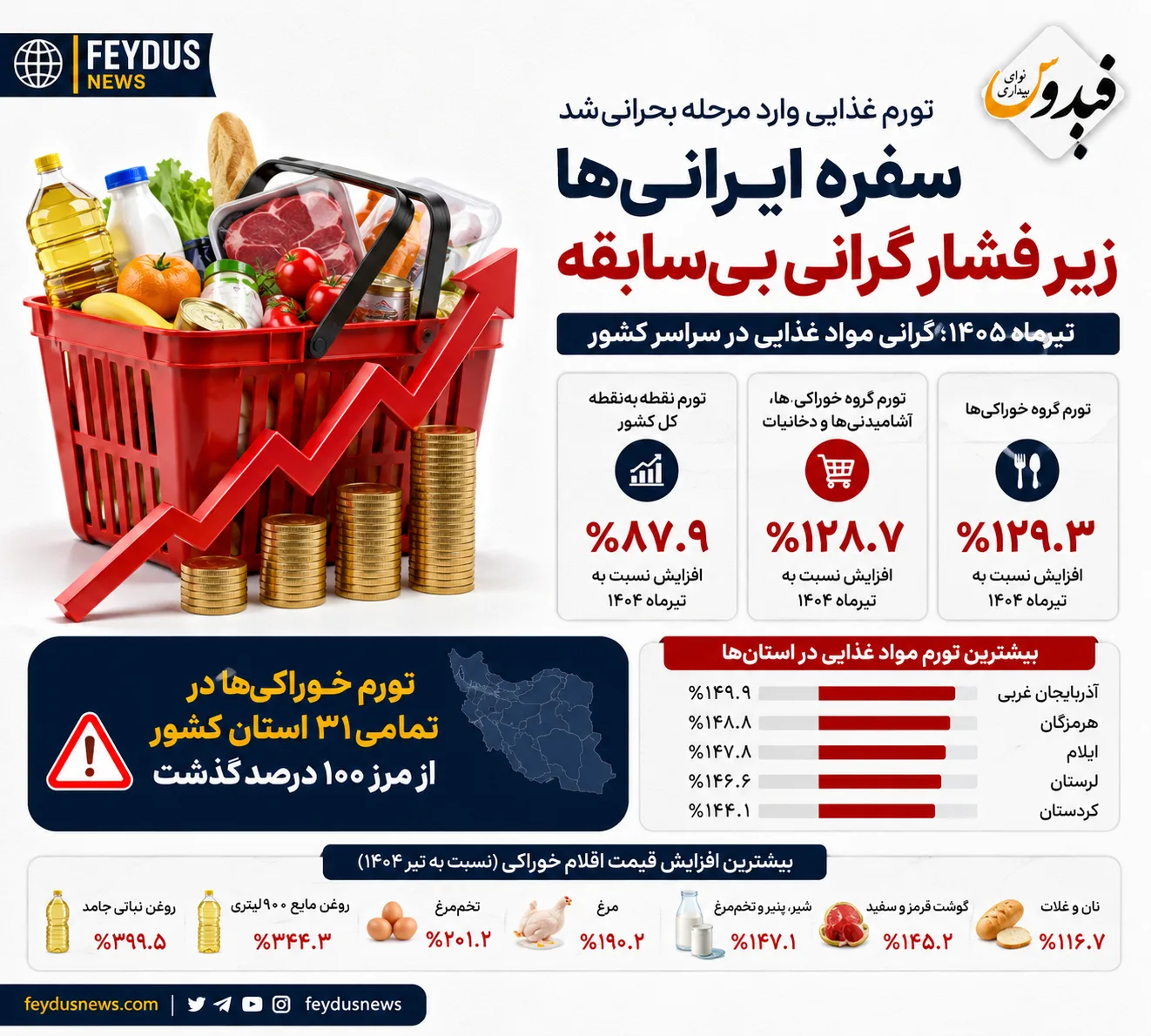
The latest economic statistics indicate that the inflation crisis in Iran has moved beyond general price increases and is now directly targeting household food security. Data from July 2026 shows that while the point-to-point inflation rate for the entire country has reached 87.9%, food group inflation has exceeded 129%; meaning the cost of purchasing food has more than doubled on average compared to last year.
Widespread Price Hikes; No Province Spared from Food Inflation
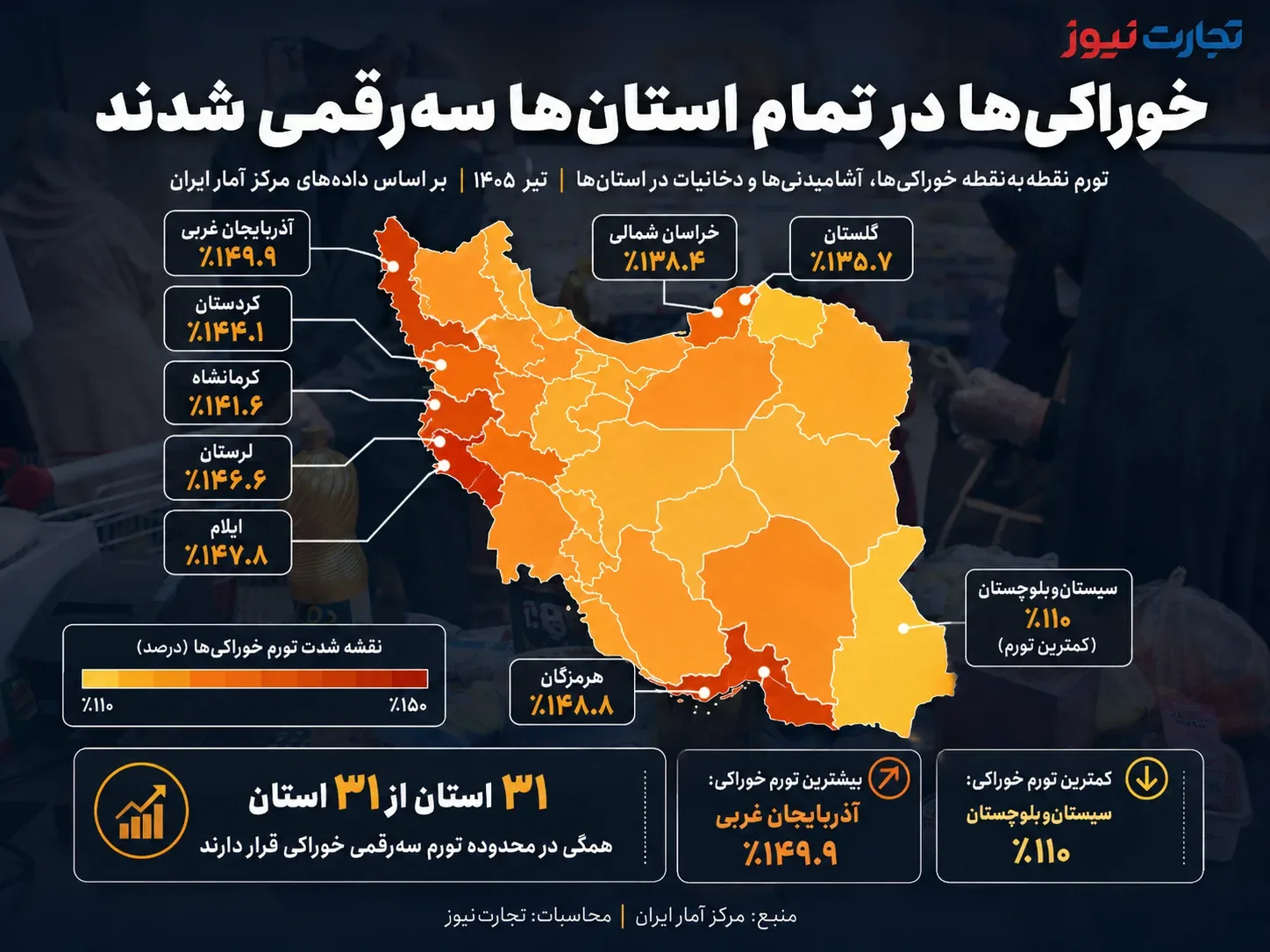
One of the most significant points of this report is the widespread triple-digit food inflation across the country. For the first time, all 31 provinces of Iran have experienced more than a 100% increase in food prices. West Azerbaijan, Hormozgan, Ilam, Lorestan, and Kurdistan are at the top of the provinces that have recorded the highest food price increases. Conversely, lower inflation rates in some provinces do not necessarily indicate improved conditions but may result from reduced purchasing power and household consumption decline.
Oil, Meat, Dairy, and Bread; The Main Focus of Price Surges
Market details show that the highest price increase is attributed to edible oils; both liquid and solid oils have become several hundred percent more expensive than last year. Following this, eggs, chicken, meat, dairy, imported rice, and even items like pasta and canned tuna have experienced price increases far exceeding general inflation. This trend indicates that price hikes are no longer limited to non-essential goods and have encompassed almost all main components of household food baskets.
Bread No Longer Cheap
As many households in recent years have turned to consuming more bread to compensate for the removal of meat and dairy, the renewed increase in bread prices has intensified economic pressure. Although official rates for various types of bread have been announced, in many bakeries, actual prices are significantly higher than the approved rates; a situation that has increased the cost of securing even the simplest meal.
Smaller Meals and Growing Nutritional Concerns
Estimates show that the cost of securing a minimum food basket for each person has reached around eight million tomans per month; a figure that does not align with the income of a large portion of Iranian households. In such circumstances, the first reaction of families is to eliminate or reduce the consumption of foods with higher nutritional value; a trend that could lead to increased malnutrition, reduced protein and vitamin intake, and ultimately harm public health. Experts believe that until fundamental factors such as liquidity growth, budget deficits, currency fluctuations, and investment weaknesses are controlled, there will be no clear prospect for sustainably controlling food inflation.