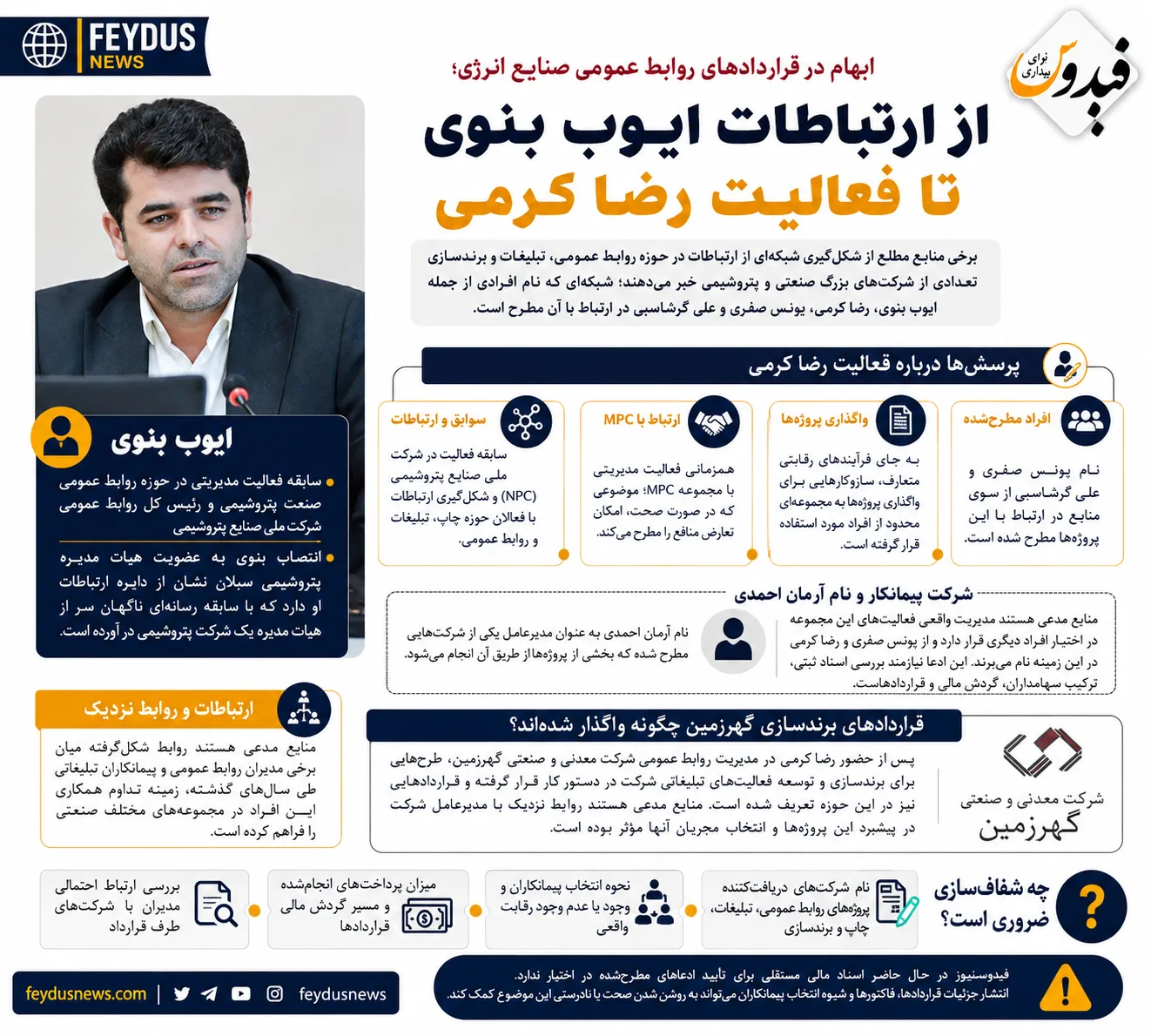

Some informed sources report the formation of a network of connections in the public relations, advertising, and branding sectors of several large industrial and petrochemical companies. According to sources, this network includes individuals like Ayoub Banavi, Reza Karami, Younes Safari, and Ali Gerashabi.
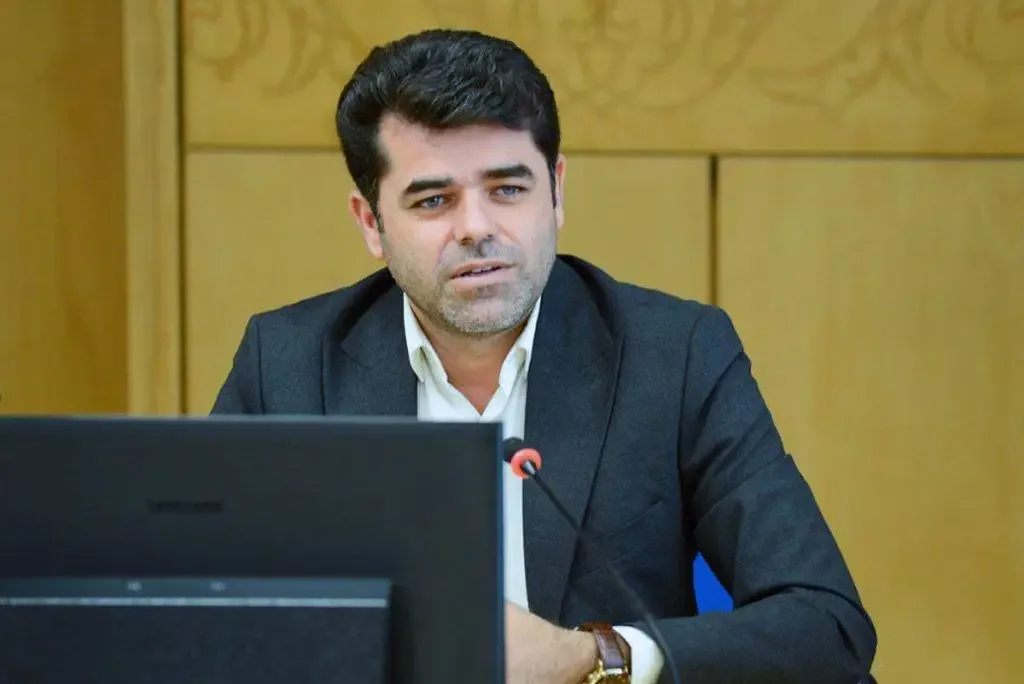
One of the figures mentioned in this context is Ayoub Banavi. He has a managerial background in the public relations sector of the petrochemical industry and has served as the head of public relations for the National Petrochemical Company. Informed sources have called for an investigation into the awarding of advertising and public relations projects during his tenure and the connections between a group of contractors and activists in this field with the public relations managers of large companies through Banavi's orders and influence.
Banavi's appointment to the board of directors of Sabalan Petrochemical indicates his network of connections, which suddenly brought him from a media background to the board of a petrochemical company.
Questions About Reza Karami's Activities
Another part of the information presented concerns Reza Karami, the current public relations manager of Goharzamin Mining and Industrial Company. According to informed sources, Karami previously had experience working at the National Petrochemical Company (NPC) and from that time formed connections with several activists in the printing, advertising, and public relations sectors.
These sources also claim that Karami, simultaneously with his managerial activities, had working relations with the MPC group; a matter that, if true, requires examining the legal aspects and potential conflicts of interest.
According to the information provided, in some public relations and advertising projects, instead of following conventional competitive processes, mechanisms have been used to award work to a limited group of individuals. The names Younes Safari and Ali Gerashabi are among those mentioned by sources in connection with these projects.
Sources also claim that some costs related to printing, advertising, and public relations services have been invoiced to companies at amounts higher than the actual cost. Feydus currently does not have independent financial documents to confirm this claim, and the publication of contract details, invoices, and the method of selecting contractors could help clarify the truth or falsehood of this matter.
Contractor Company and the Name Arman Ahmadi
In another part of the received information, the name Arman Ahmadi is mentioned as the CEO of Radman Pak Energy Company through which some of the mentioned projects are carried out.
However, sources claim that the actual management of this group's activities is in the hands of other individuals, naming Younes Safari and Reza Karami in this regard. This claim also requires examining the company's registration documents, shareholder composition, financial turnover, and concluded contracts, and merely raising it by sources cannot prove ownership or benefit of the named individuals.
Another issue emphasized in the provided information is the close connection of this group with Ayoub Banavi. Sources claim that the relationships formed between some public relations managers and advertising contractors over the past years have facilitated the continuation of cooperation of these individuals in various industrial groups.

Currently, one of the most important questions relates to the advertising and branding projects of Goharzamin Mining and Industrial Company. According to informed sources, after Reza Karami's presence in the public relations management of this group, plans for branding and expanding the company's advertising activities have been put on the agenda, and contracts in this area have been defined. Sources claim that close relationships with the company's CEO have been effective in advancing these projects and selecting their executors.
In such circumstances, clarifying the amount of public relations and branding contracts, the names of the companies receiving the projects, the method of selecting contractors, and the amount of payments made could resolve a significant portion of the existing ambiguities.
Additionally, the mentioned sources claim a significant change in the economic status of some individuals active in this network over the past two to three years. What can be examined in the current situation is the path of contracts and company payments. Publishing the list of public relations, advertising, printing, and branding contracts of Goharzamin and other related companies, determining the contractor selection process, and examining the potential connection of managers with the contracted companies could answer the question of whether the projects were awarded in a transparent and competitive process or if a limited network of individuals benefited from these contracts.