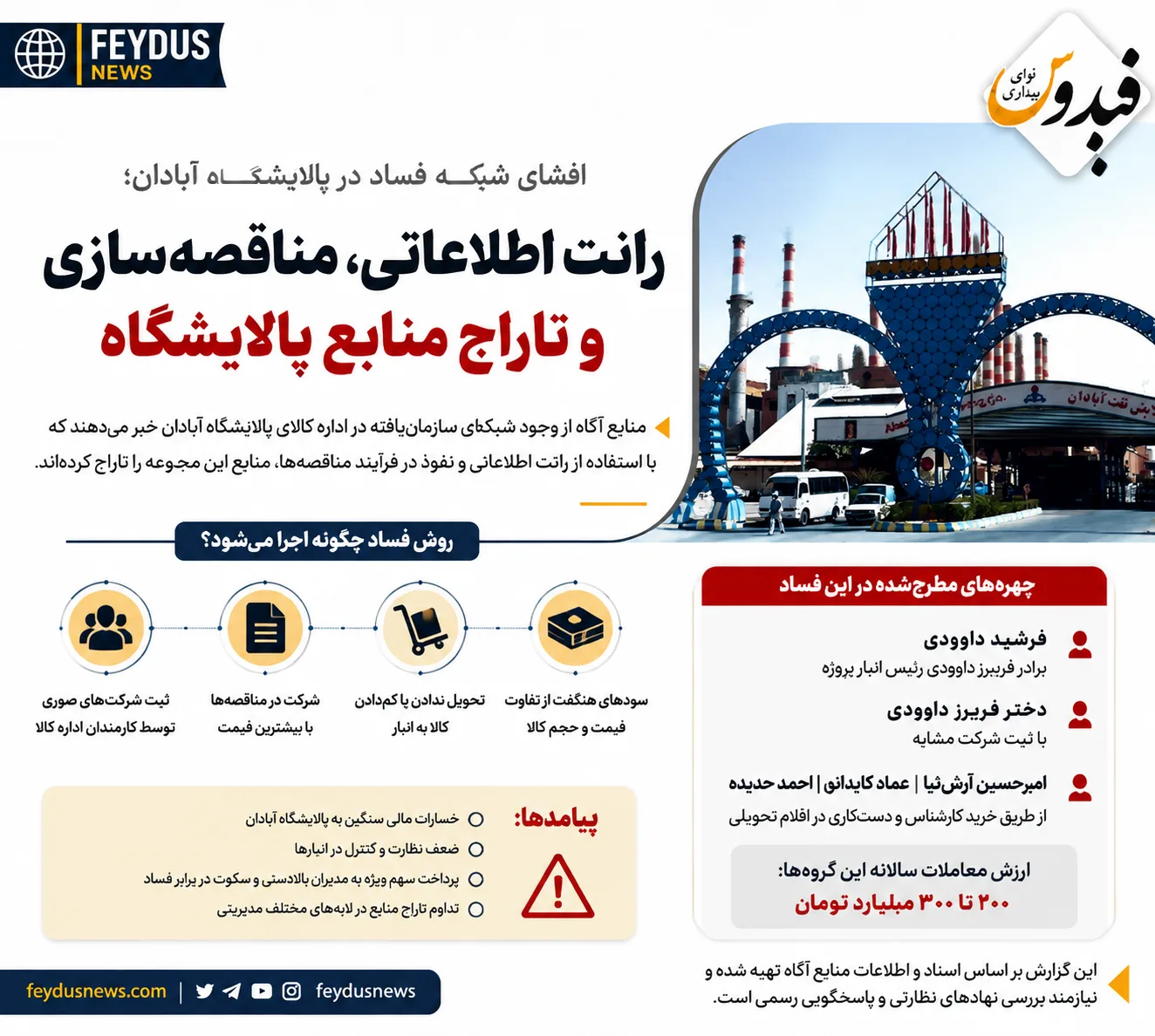
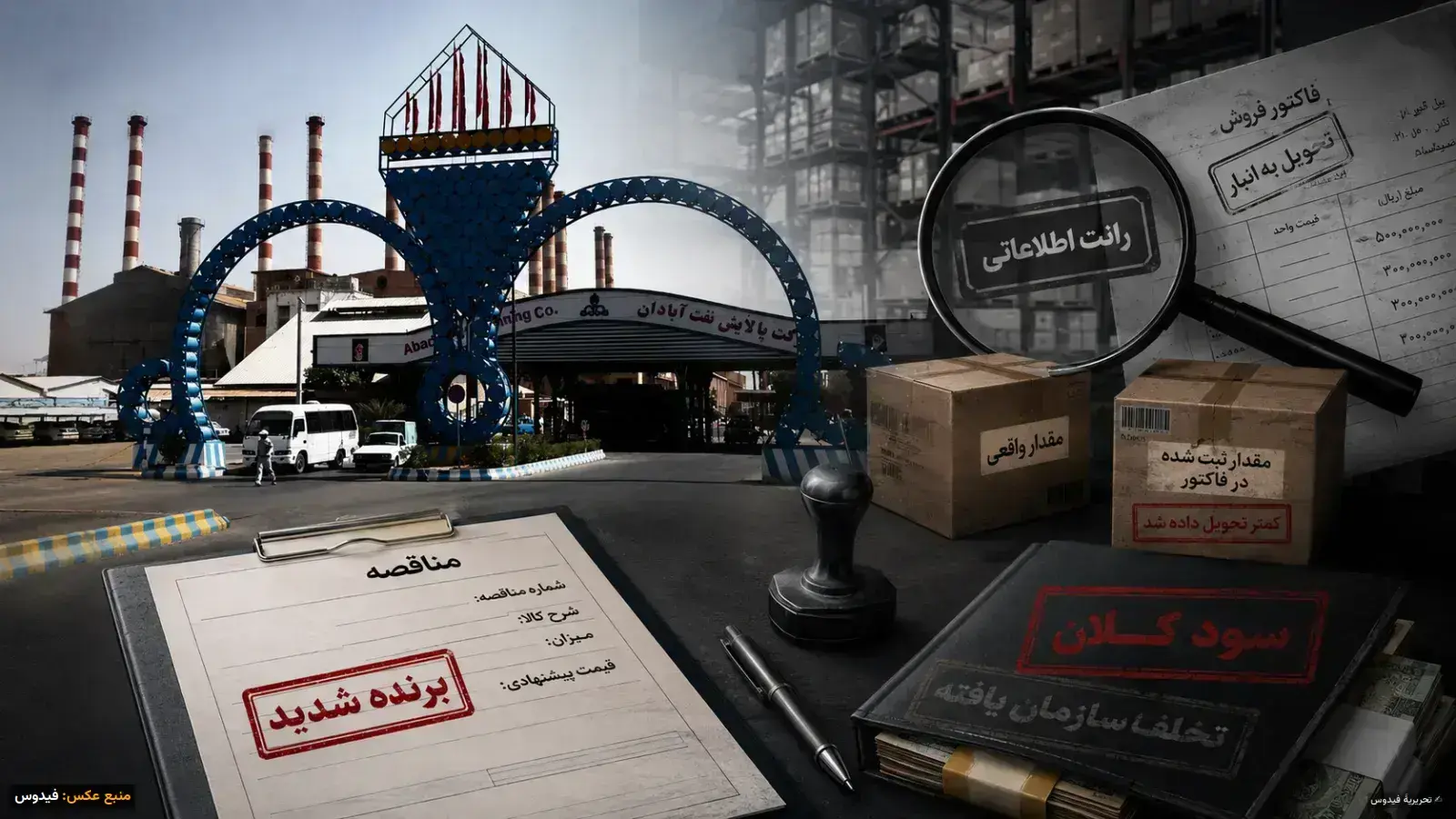
Some informed sources in the Abadan refinery have reported the existence of an organized network in the goods department of this complex. According to them, by using access to internal information, connections with bidding processes, and knowledge of warehouse conditions, they have exploited the refinery's resources.
According to these reports, several employees of the goods department have registered private companies and entered procurement processes, using information related to files, warehouse needs, and details of companies participating in tenders. Informed sources claim these individuals, aware of competitors' conditions and proposal details, have won some tenders with higher prices and subsequently, through delays in delivery, reduction of delivered items, or discrepancies between invoices and goods received in the warehouse, have gained significant profits.
Allegations and Role of Key Individuals
These sources have also claimed that due to the connection of some individuals with supervisory sections and internal structures of the refinery, a thorough review of these companies' performance has faced challenges, and the case has even reached higher inspection levels in the oil industry.
In one of the mentioned cases, the name Farshid Davoodi, brother of Fariborz Davoodi, a project warehouse official at Abadan refinery, has been raised. According to the allegations, Farshid Davoodi, by registering a supply company, has taken over part of the sales to the refinery warehouse, and due to the lack of precise control in the delivery process, some items have been delivered in quantities less than those stated in the documents.
Some documents referenced by sources also show that Fariborz Davoodi's daughter has registered a company with similar activities; an issue that, according to these sources, requires thorough investigation by regulatory bodies.
Financial and Managerial Impacts
Continuing these reports, individuals like Amirhossein Arashnia, Emad Kaidano, and Ahmad Hadideh have also been mentioned. Informed sources claim companies associated with these individuals annually supply goods worth approximately 200 to 300 billion tomans for the refinery, and in some cases, by altering the quantity or type of delivered goods, these entities have gained significant profits.
According to these claims, weaknesses in internal controls, potential conflicts of interest, and lack of effective oversight over purchasing and delivery processes have paved the way for financial damages to the Abadan refinery.
Informed sources also claim that the silence of some managers and higher levels against these violations has allowed this network to continue its activities.