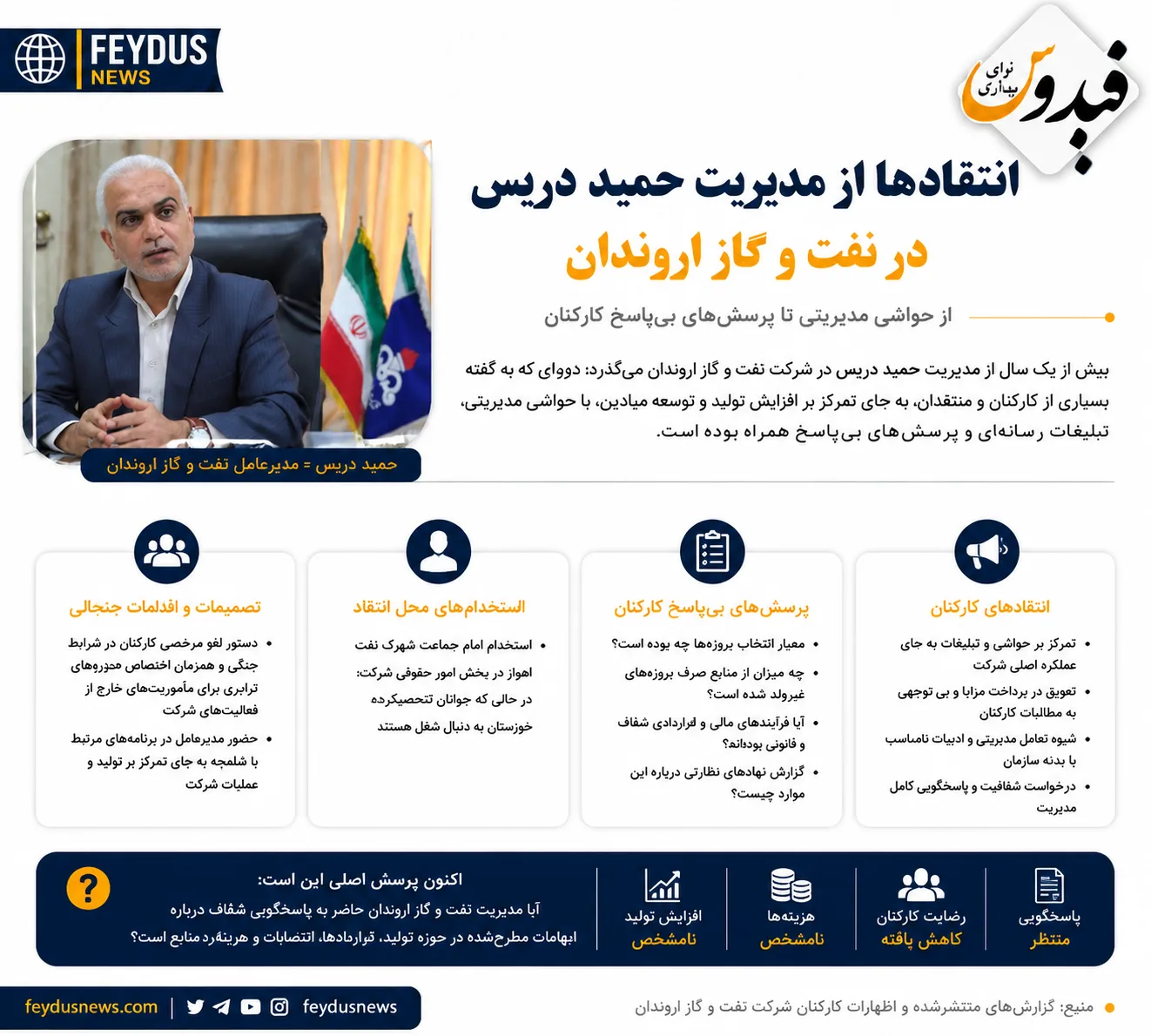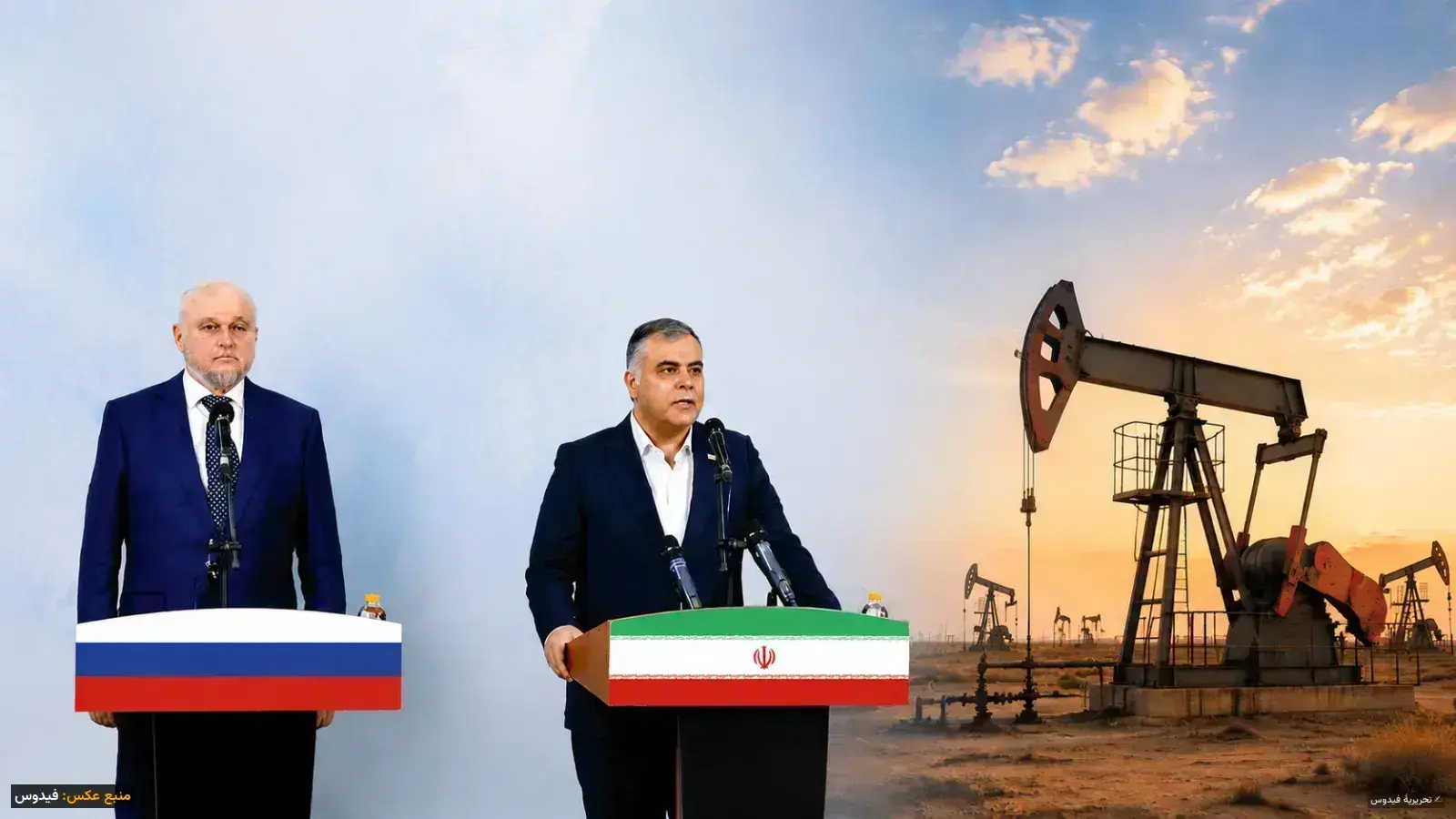
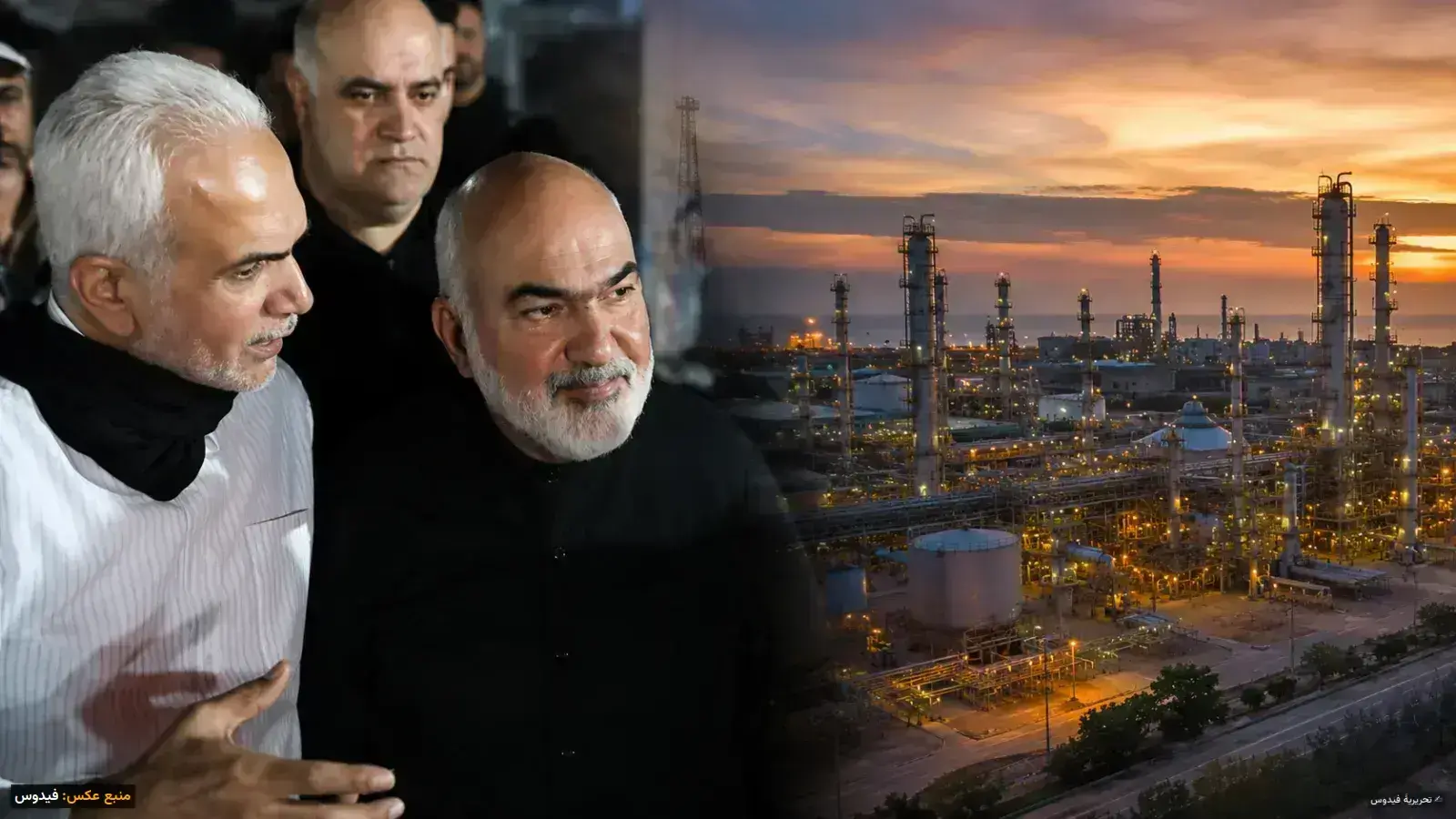
More than a year has passed since Hamid Deris took over as CEO of Arvandan Oil and Gas Company; a period which, according to some employees and critics, has been more associated with managerial controversies, media promotions, and a series of unanswered questions than with indicators such as increased production, field development, operational performance improvement, and enhancement of human capital.
Some employees of this company, criticizing the prevailing management approach, believe that the internal atmosphere of Arvandan has been accompanied by increased dissatisfaction, decreased organizational trust, and numerous complaints about human resource management over the past months. According to these individuals, delays in the payment of certain benefits, dissatisfaction with the way of interacting with employees, and neglect of the demands of operational forces are among the issues raised among employees.
Criticism of Management Decisions
One of the criticisms raised about Deris's managerial performance is the decision-making process regarding the company's executive priorities. Some employees claim that at a time when the country's oil and gas industry faces the necessity of increasing production and maintaining operational stability, decisions have been made that require further explanation and clarification.
According to some internal sources, Deris issued an order to cancel employee leave during production meetings, citing wartime conditions, only to later decide to halt the activities of some forces and allocate the company's transport vehicles for missions outside of ongoing activities. Critics see this action as contradictory to the stated policies about the necessity of maintaining the company's operational readiness and have demanded explanations about the reasons and necessity of this decision.
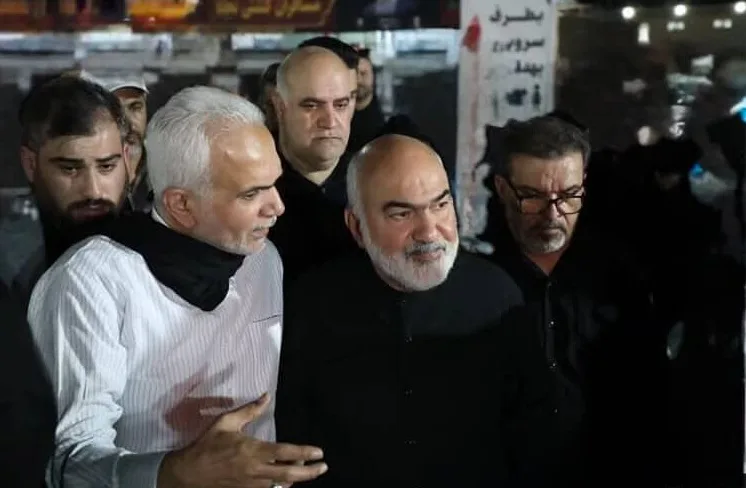
Visit of Khuzestan Governor to Arvandan Oil and Gas Moukeb
Additionally, some employees have criticized the CEO of Arvandan Oil and Gas for participating in programs outside the company's main mission, including activities related to Shalamcheh, and believe that management's focus should be primarily on production, field development, solving employee problems, and enhancing the company's productivity.
Unanswered Questions from Employees
Alongside these issues, criticisms have also been raised regarding the recruitment and employment of personnel. Some critics claim that at a time when many educated young people in Khuzestan are struggling to find suitable job opportunities, the appointments and recruitments made in the company require more thorough review and transparency. Among the issues raised is the hiring of the Imam of the Ahvaz Oil Town in the company's legal affairs section, with critics questioning the process and criteria of this recruitment.
On the other hand, the issue of contracts, projects, and the expenditure of company resources has also become one of the main axes of criticism. Some activists and employees in the oil industry have demanded explanations about the execution of certain projects, concluded contracts, cases of bypassing formalities, and the effectiveness of plans for which questions about their necessity or economic output have been raised.
Critics are demanding clear answers to questions such as: What were the criteria for selecting Arvandan Oil and Gas Company projects? How much of the company's resources have been spent on projects that have had a direct impact on increasing production and field development? Have all financial and contractual processes been conducted in accordance with legal regulations and with transparency? What do oversight bodies report about the company's financial and contractual performance?
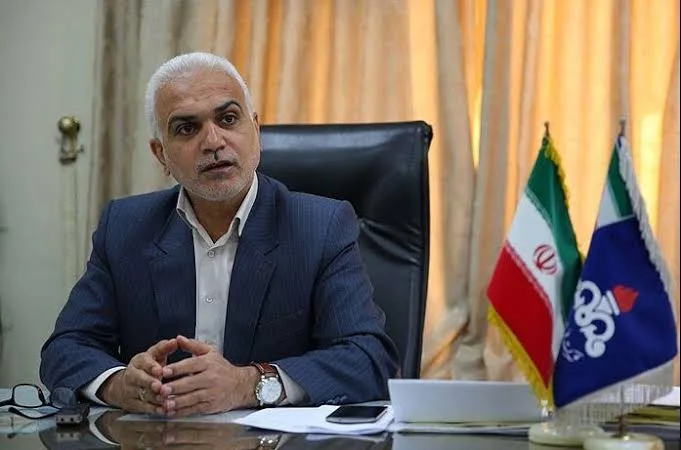
Some employees also believe that during the current management period, a significant portion of managerial effort has been spent on media activities, publishing images and promotional news, and managing public opinion; while in their view, the main criteria for evaluating a manager in the oil industry should be the achievement of production and development goals and employee satisfaction.
The manner of management's interaction with the organization's body is also another axis of criticism raised. Some employees believe that the managerial language and manner of dealing with forces should be commensurate with the status of a specialized and strategic entity like Arvandan Oil and Gas Company, and maintaining the dignity, motivation, and psychological security of employees should be prioritized.
The main question now posed by critics is whether Arvandan Oil and Gas management is willing to provide a fully transparent response to the ambiguities raised about its performance in production, contracts, appointments, resource expenditure, and human capital management.
Arvandan Oil and Gas Company and its CEO have not yet provided an official response to these criticisms, and the company's response could play an important role in clarifying various aspects of these issues.