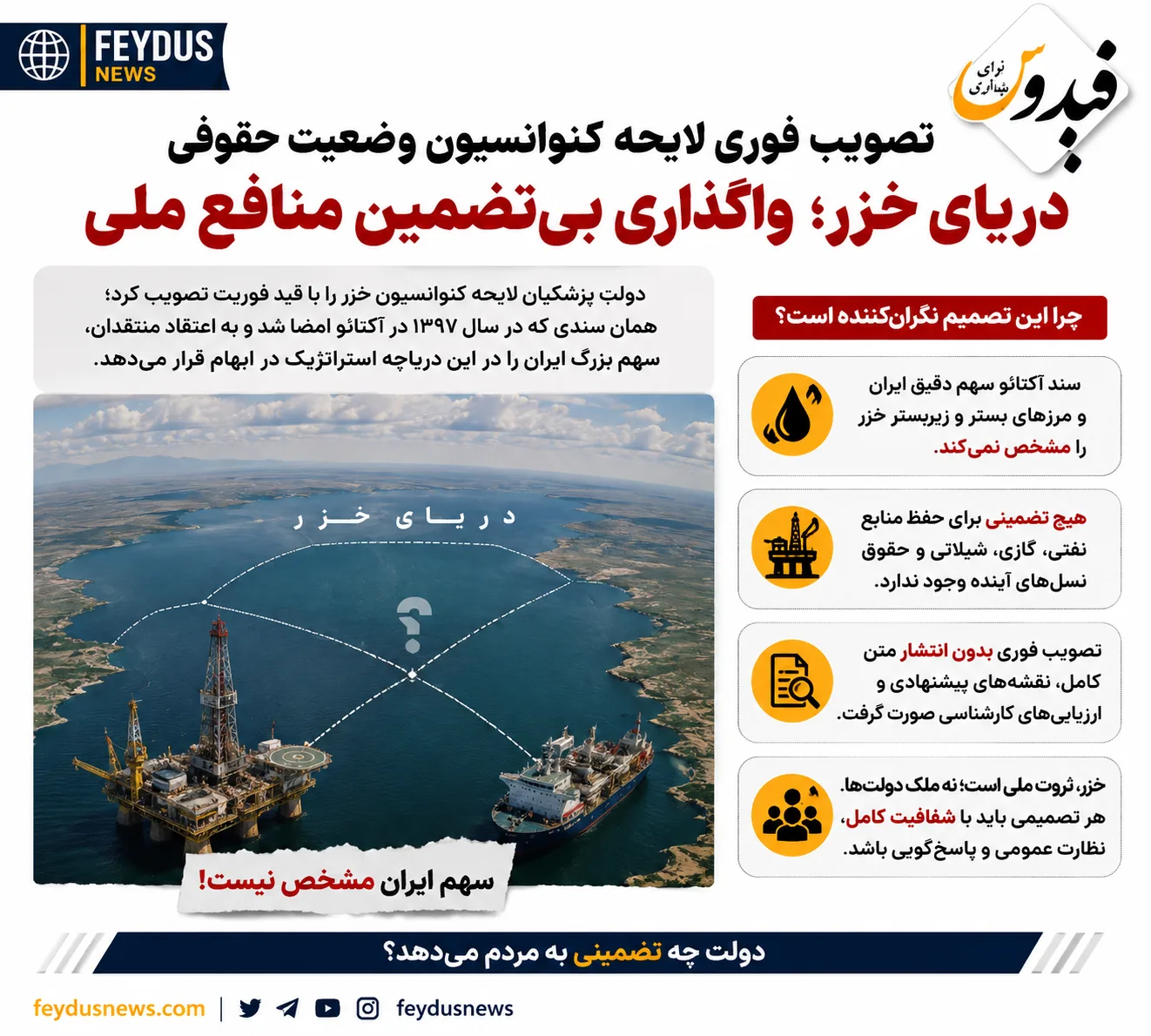
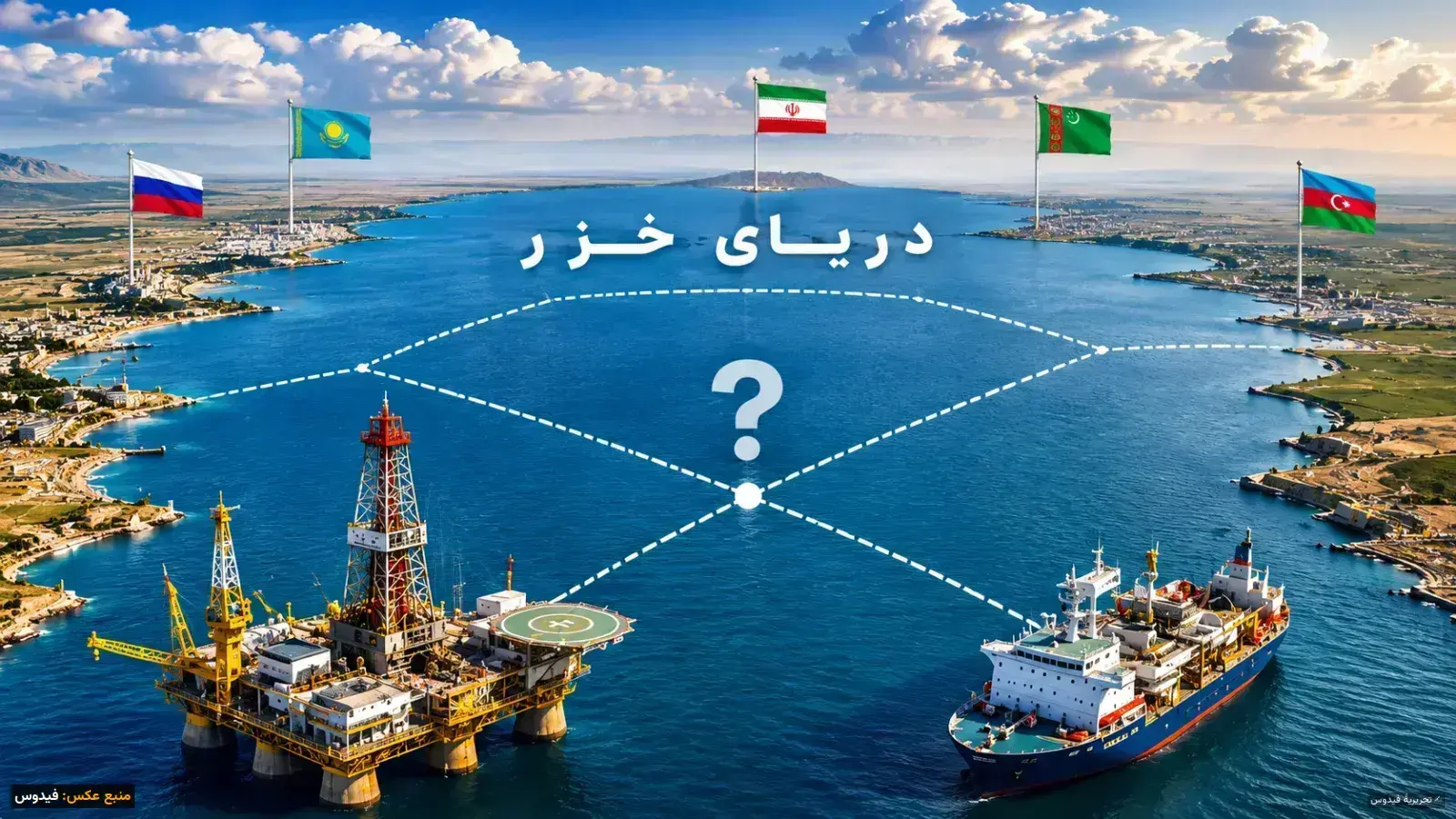
The urgent approval of the bill to join the Caspian Sea Legal Status Convention by the government of Masoud Pezeshkian has once again brought one of the most sensitive cases of Iran's foreign policy and national interests to the forefront of the news. In recent days, this issue has been met with widespread reactions and criticisms from experts, legal scholars, and political activists. According to the government, this bill is the same document signed in 2018 at the Aktau Summit during Hassan Rouhani's administration and is now sent to the parliament for legal procedures.
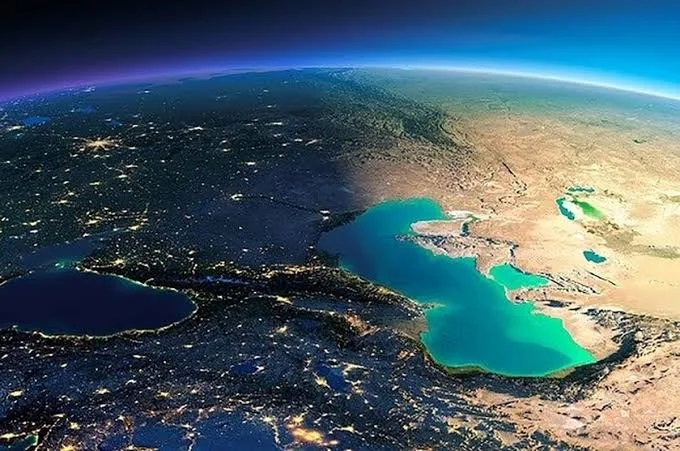
Unanswered Questions About Iran's Rights
Critics believe the main flaw of this convention is that it does not specify Iran's exact share of the Caspian Sea, nor does it define the boundaries of the seabed and subsoil. Therefore, the question arises as to what guarantee the urgent approval of such a document provides for preserving Iran's rights in exploiting the vast oil, gas, fisheries, and other economic capacities of the Caspian.
In past years, the signing of the Aktau Convention also faced numerous criticisms, with some experts warning that any agreement on the Caspian's legal regime without precisely defining the borders and shares of countries could harm Iran's interests in the future. Now, with the reintroduction of this bill, the same concerns have resurfaced, and many are calling for the publication of the full text of Iran's considerations, proposed maps, and related expert reports.
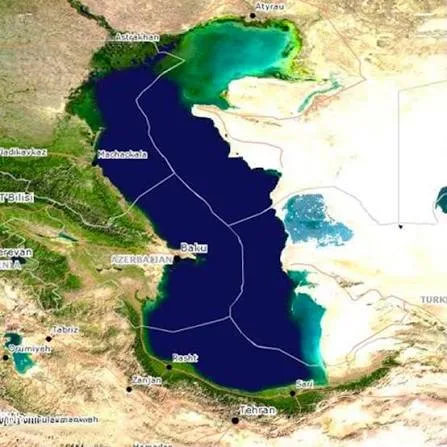
The Necessity of Transparency and Comprehensive Review
In the public sphere, some compare this agreement to historically disadvantageous contracts; although from a legal perspective, some specialists believe such a comparison requires a detailed examination of the differences in international law and maritime delimitation mechanisms. Nevertheless, even critics who do not use this comparison emphasize a common point: no decision should be made about the fate of one of the country's most important strategic resources without complete transparency, public information, and comprehensive review in parliament and specialized forums.
The Caspian Sea is not just a body of water; it is part of the national wealth and heritage of future generations of Iran. Therefore, it is expected that before finalizing this process, the government will transparently explain what benefits the approval of this convention brings to the country and what mechanisms are anticipated to protect Iran's historical and economic rights in this sea.