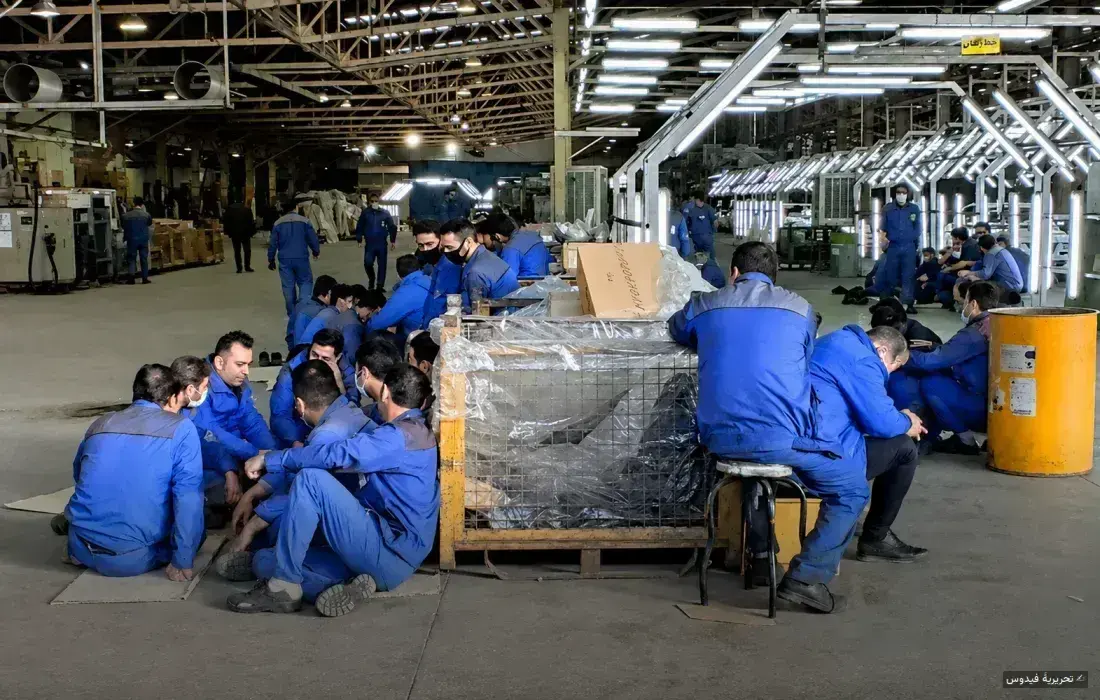
The exit of about 630,000 people from industrial employment has sounded the alarm for production. This forced migration has reduced the industry's share of employment compared to other economic activities. Experts believe that the grinding recession, energy imbalance, and increased uncertainty have reduced the ability to attract labor.
Changes in the Industrial Labor Market
The Iranian industrial labor market in spring 1405 has faced a gradual change in the position of the production sector within the country's employment structure. This sector, which has always been considered the engine of value creation, increased productivity, and sustainable employment, now occupies a smaller share of the workforce.
In contrast, the service sector is attracting human resources at a faster pace. Although the growth of service employment in many developed economies is a natural result of technological changes and productivity enhancement, in Iran's economy, this shift seems more to reflect the increasing pressures on production and the reduced capacity to absorb labor in industrial enterprises.
Decrease in Industry's Share of Employment
A review of the past few years shows that this change is not merely a seasonal fluctuation or a short-term consequence of recent developments. The industry's share of national employment, which generally ranged from 33 to 34 percent in previous years, has decreased to 31 percent this spring. This decline coincides with the loss of about 630,000 job opportunities in the industrial sector and indicates the gradual weakening of one of the most important drivers of economic growth. This is while the industry, unlike many service activities, in addition to creating direct employment, generates a chain of job opportunities in mining, transportation, trade, technical services, and downstream industries. Therefore, any retreat can have consequences beyond the labor market and impact investment, productivity, and the country's economic growth.