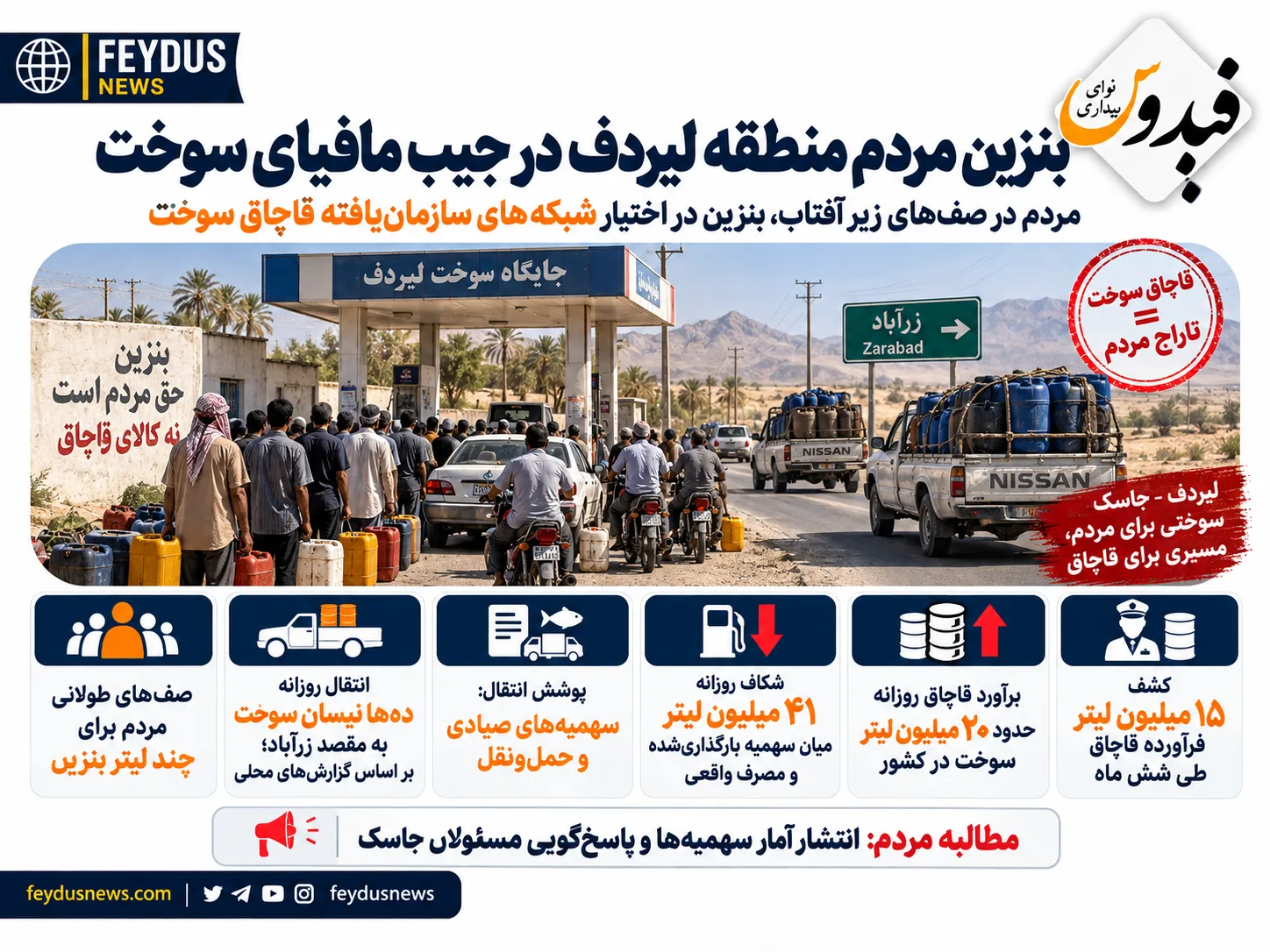
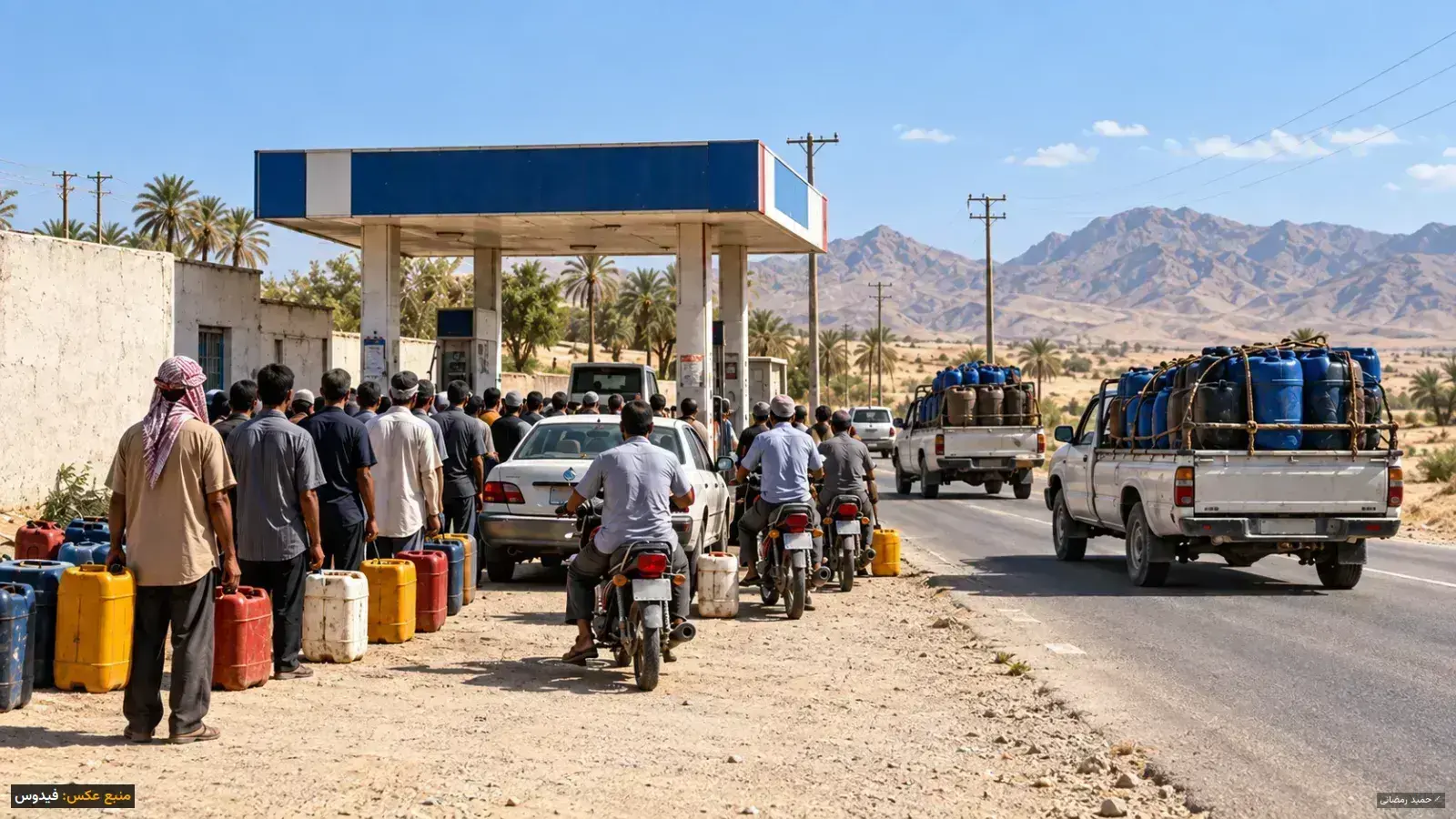
In Lirdaf, Jask County, people queue for hours under the sun for a few liters of gasoline, while the same subsidized fuel is transferred with the coordination of local officials and station owners under the guise of "fishing" and "transportation quota" to Zarrabad and other areas. This is a small example of a massive underground economy that has been consuming Iran's fuel for years and pouring it into the pockets of networks close to the Islamic Republic government.
The daily gasoline quota in this area has created an opportunity
for the people's gasoline to be distributed illegally in other areas. According to the announced plan, the first ten days of the month should see the distribution of fishing fuel and general fuel, and from the eleventh day to the end of the month,
the quota for ordinary people's fuel should be provided. However, in Lirdaf, the stories tell a different tale:
people wait for hours in the scorching southern heat for a meager amount of gasoline, while
simultaneously several vehicles transport fuel to Zarrabad and other areas under the
pretext of "fishing" and operate legally under the quota cover.
Among the locals, the name Abdulhadi Asadpour the political, security, and social deputy of Jask governorate, is repeatedly mentioned as one of the factors of inequality and corruption in the issue of fuel distribution and smuggling, intensifying the speculation that the current smuggling practice is being carried out purposefully by executive and governmental institutions.
A Brief History of Fuel Corruption; From Southern Borders to Shadow Oil Networks
Fuel smuggling in Iran is a direct product of subsidy policy and governance corruption. For years, the officials of the Islamic Republic have announced that about 20 million liters of fuel are smuggled out of the country daily, a figure that is neither transparent nor based on published data, but clearly shows how large the "fuel leakage" from the official system is.
In the past six months, Iran's border guards have announced the discovery of 15 million liters of smuggled oil products in various parts of the country; alongside 1,200 firearms that were passing through the same smuggling networks. This simultaneous presence of fuel and weapons shows that fuel smuggling is not just an "economic violation" but part of organized networks that target both security and economy simultaneously.
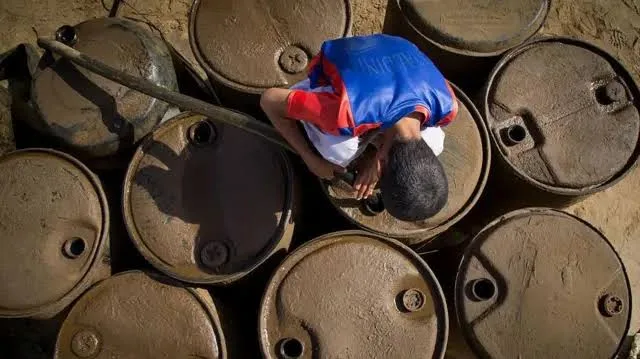
The Faulty Structure of Fuel Distribution; From Fuel Cards to Fishing Quotas
The issue is not just the "smuggler"; the issue is the system design that before the three-tier fuel price reform in 2025, daily loaded the equivalent of 172 million liters of quota on fuel cards, while the actual consumption was about 131 million liters, meaning tens of millions of liters of "quota gap" that are easily directed towards informal markets and smuggling.
In such a system, fishing, transportation, and fuel quotas for deprived areas, instead of being tools of justice, become tools of rent. In Lirdaf, these very quotas are the pretext for the daily transfer of dozens of fuel-laden Nissans to Zarrabad without the people knowing where and how their "real quota" is being consumed. When oversight is not transparent, people's reports are ignored, and meetings behind closed doors replace public accountability, the result is clear: the people's fuel is not their right; it is a personal and network privilege.
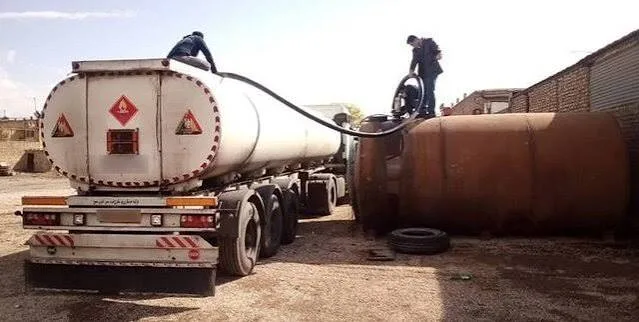
People Under the Sun, Networks Under Government's Shadow
At the micro level, the people of Lirdaf are suffering; at the macro level,
Iran's economy is hemorrhaging. Long queues under the sun, closure of small businesses,
increased transportation costs, and public disillusionment with government efficiency are the direct consequences of this corruption pattern. In the deprived southern regions, fuel is not just a consumable good, but a condition for survival; when
this condition for survival becomes rent, the feeling of injustice turns into social anger.
The Lirdaf and Jask case is a clear example of organized corruption in energy distribution. The exact repetitive pattern: fuel quotas, instead of reaching the people, go to rent networks, and local and central collusion is evident: from the county's political deputy to station owners, they are links in a chain that, with a lack of transparency: people do not know where their quota goes?