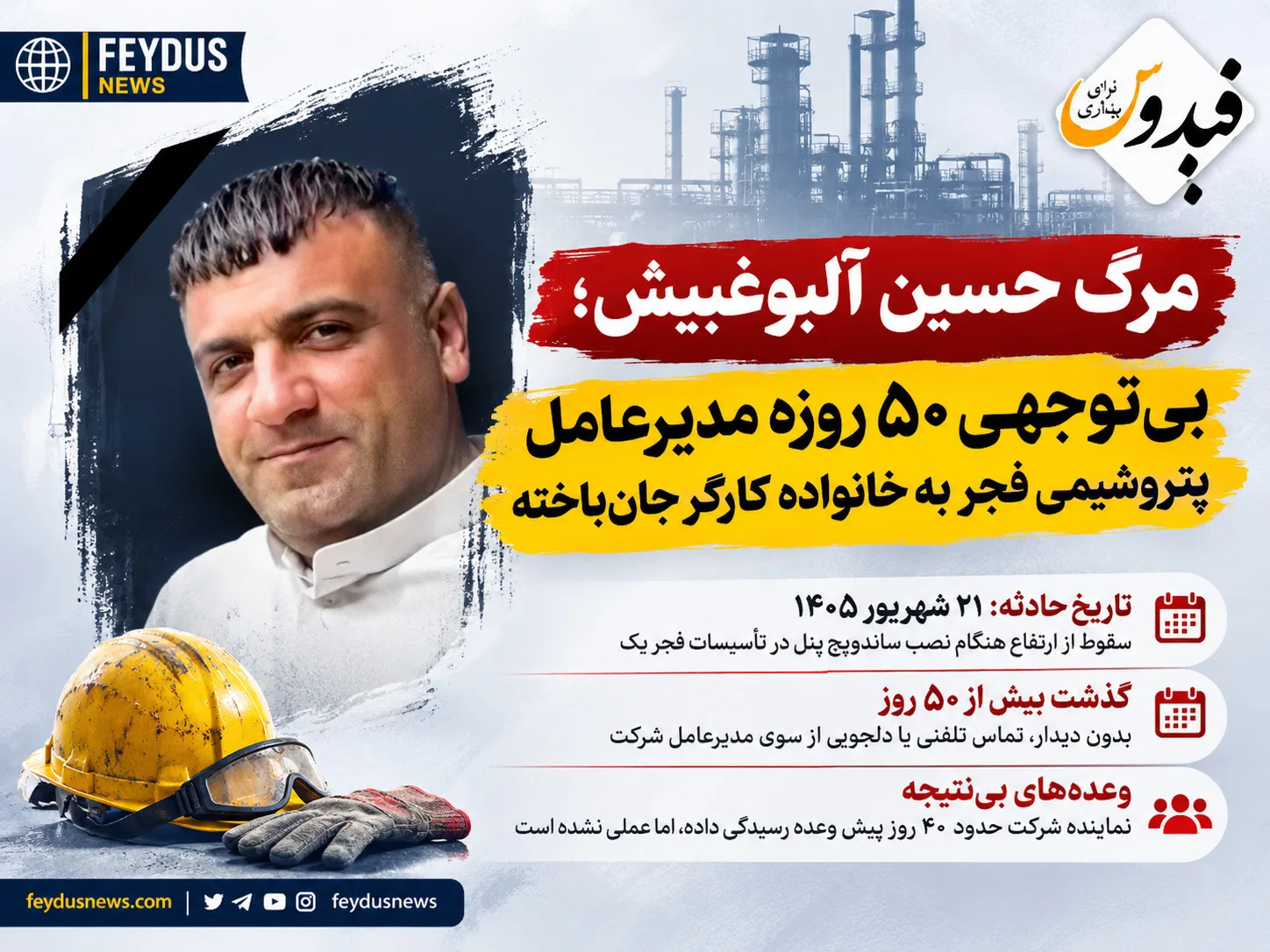
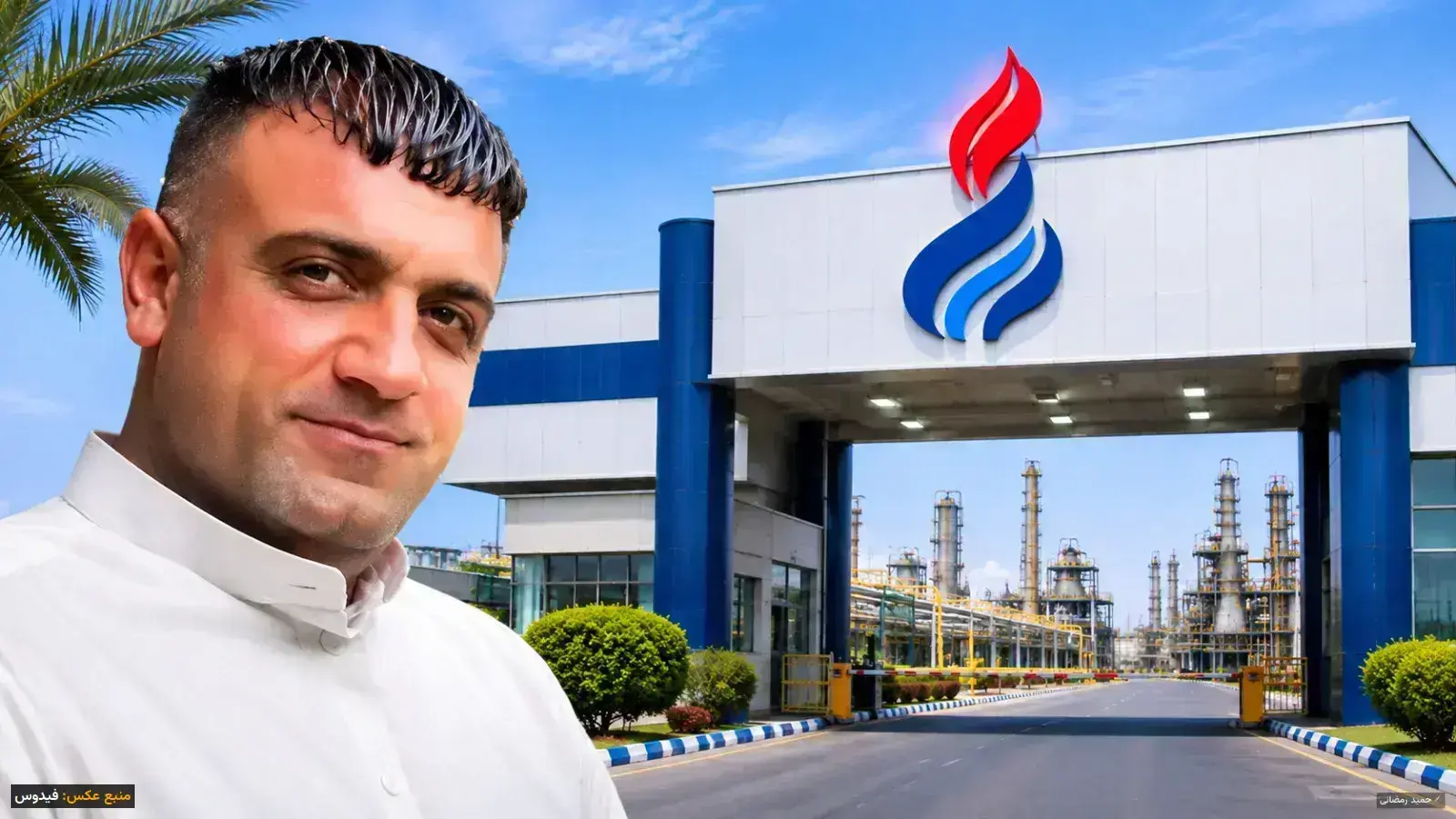
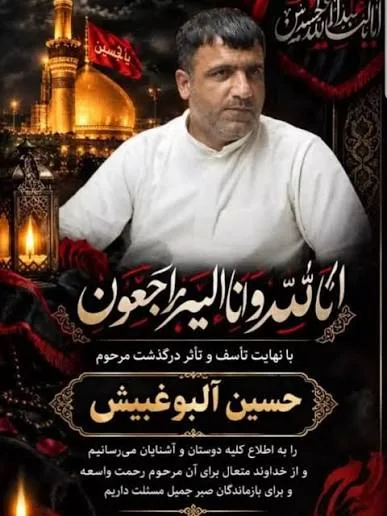
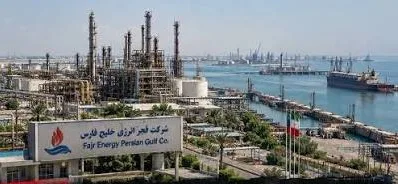
More than 50 days have passed since the death of Hossein Alboghbish, a project worker at Fajr Energy Persian Gulf in the Mahshahr Petrochemical Special Economic Zone; however, Mohammad Ahmadzadeh, the CEO of this company, has neither visited the grieving family of this worker to console them nor even made a phone call. Simultaneously, promises made by the company's representative to address the family's issues have, according to received information, not been fulfilled.
On Saturday, 21 Shahrivar 1405, while performing operations to install sandwich panels on the roof of one of the Fajr One utility facilities, Alboghbish suffered an accident due to a fall from height and lost his life.
Ebrahim Piraiesh, executive secretary of the Workers' House of Bandar Imam and Mahshahr, confirmed the occurrence of this incident and the working conditions of the deceased worker in an interview with ILNA news agency. The public relations department of Fajr Energy also announced that the incident occurred at 16 and 19 minutes, and Alboghbish passed away after being transferred to a medical center.
With more than 50 days having passed since this incident, what now stands out alongside questions
about workplace safety is the manner in which the company's management has dealt
with the family of a worker who lost his life while on duty.
According to information provided to Feydus, Mohammad Ahmadzadeh, the CEO of Fajr Energy Persian Gulf, has not once visited the home of Hossein Alboghbish's family during this entire period. Feydus sources also say that no phone call has been made by the CEO to express condolences and directly follow up on the survivors' situation. Meanwhile, the family of the deceased worker, in addition to bearing the loss of a member, is facing difficult family conditions, and one of Hossein Alboghbish's children has a disability.
In such circumstances, the expectation from the management of a large industrial complex is not merely to issue a condolence statement or delegate the matter to administrative staff. Meeting with the family, listening to their problems, and actively pursuing the rights of the survivors are among the most basic ethical and professional responsibilities of managers in the face of a fatal workplace incident.
Company Representative's Promises and Family's Expectation for Attention
Another part of the information received by Feydus shows that about 40 days ago, a person named Rashidi, an employee of Fajr Energy, visited the home of Hossein Alboghbish's family on behalf of this organization.
During this visit, he made promises about addressing the family's issues and following up on their situation, but several weeks later, these promises have yet to yield a specific result.
The issue is not merely about a ceremonial visit. In fatal industrial accidents, direct management contact with survivors can facilitate the pursuit of legal rights, assess the family's immediate needs, and prevent their uncertainty.
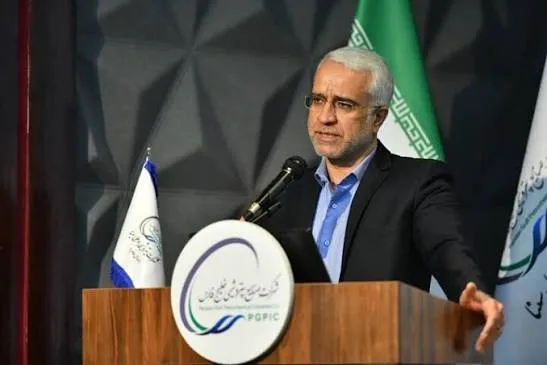
The main question for Mohammad Ahmadzadeh is why, after more than 50 days since the death of one of the workers employed in the company's projects, he has not personally taken action to learn about the family's situation.
Does the CEO of Fajr Energy know about the living conditions of the survivors and the situation of the worker's disabled child? What specific actions have been taken to support them, and why have the promises made by the company's representative, according to received information, not yet been fulfilled?
The CEO's Responsibility Goes Beyond Issuing a Condolence Message
The death of Hossein Alboghbish also raises questions about compliance with safety requirements for working at heights and the supervisory responsibility of Fajr Energy.
In the company's initial statement, there was no clear explanation about the exact cause of the fall, personal protective equipment, work permit for working at heights, and the result of safety reviews.
Although investigating the cause of the incident and determining potential personal responsibility requires specialized and legal attention, the ethical responsibility of management towards the family of the deceased worker is independent of the outcome of these investigations.
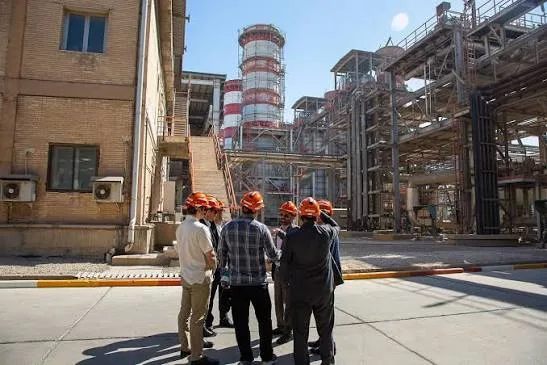
Even in situations where the direct responsibility for project execution lies with the contractor, the main company cannot overlook the importance of addressing the situation of the family of a worker who lost his life in its facilities.
From this perspective, the criticism directed at Mohammad Ahmadzadeh's performance is not limited to his absence in a single meeting; the issue is the level of attention the senior management of an industrial complex pays to the human consequences of an incident that took the life of one of its employed forces.
Feydus, based on received information, demands clarification on the actions taken by Fajr Energy to support Hossein Alboghbish's family, the status of the promises made, and the result of the investigation into the cause of the incident.
Mohammad Ahmadzadeh and Fajr Energy management must explain what practical steps they have taken in the past 50 days to address the survivors' situation and why not even a direct call or personal visit has been made by the CEO to the family of this worker.
The death of Hossein Alboghbish should not be limited to merely recording an incident in the company's administrative reports. His family has the right to know what factors led to the incident, what measures have been taken to prevent its recurrence, and what responsibility the management of the organization where the family head lost his life has accepted to support the survivors.