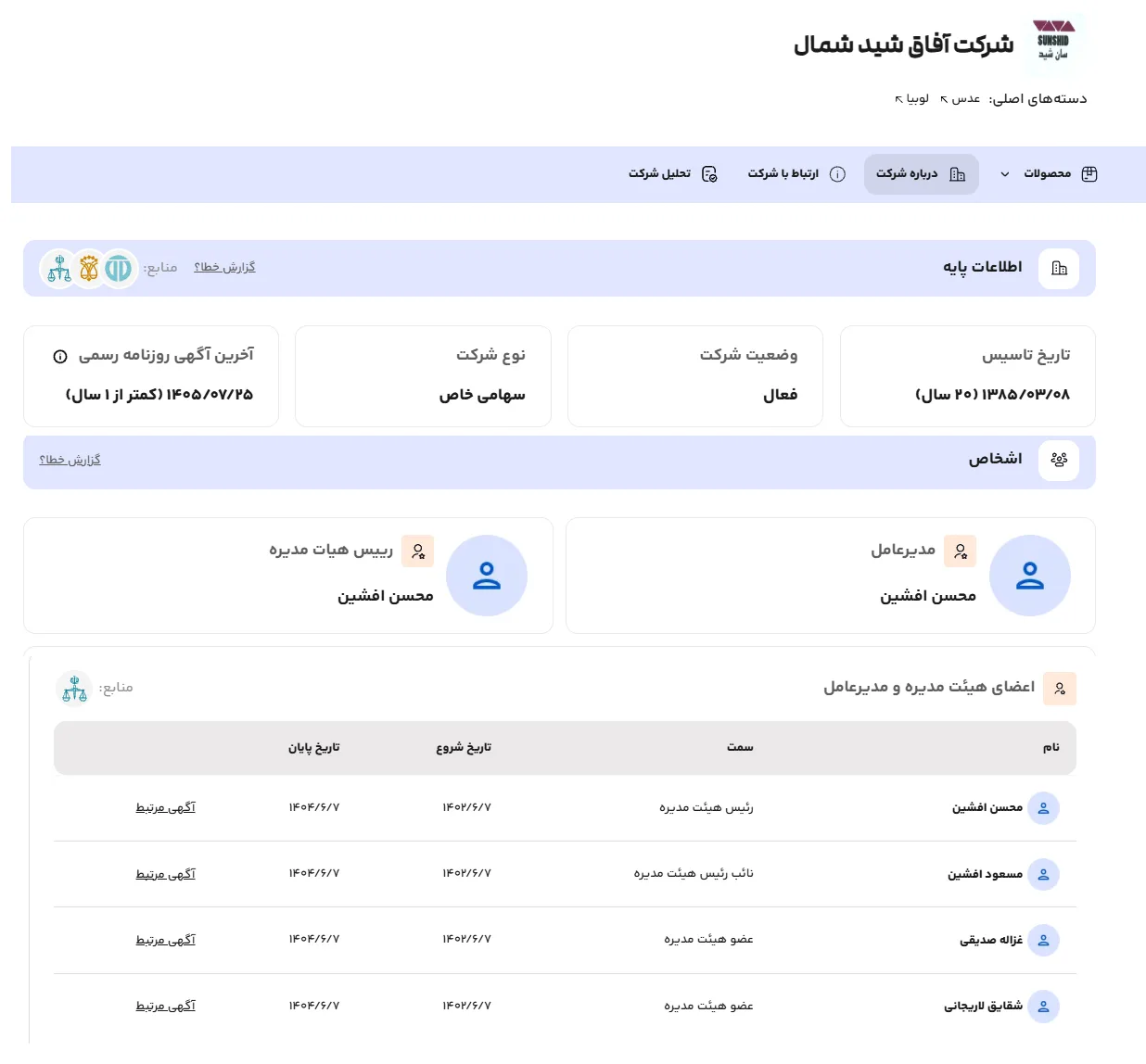
Mohsen Afshin, director and owner of Afagh Shid Shomal company, despite having a military court conviction and being banned from trading, has once again been at the center of a major rice supply deal; a deal with a subsidiary of the Ministry of Agriculture Jihad that led to his conviction and that of five others for organized smuggling.
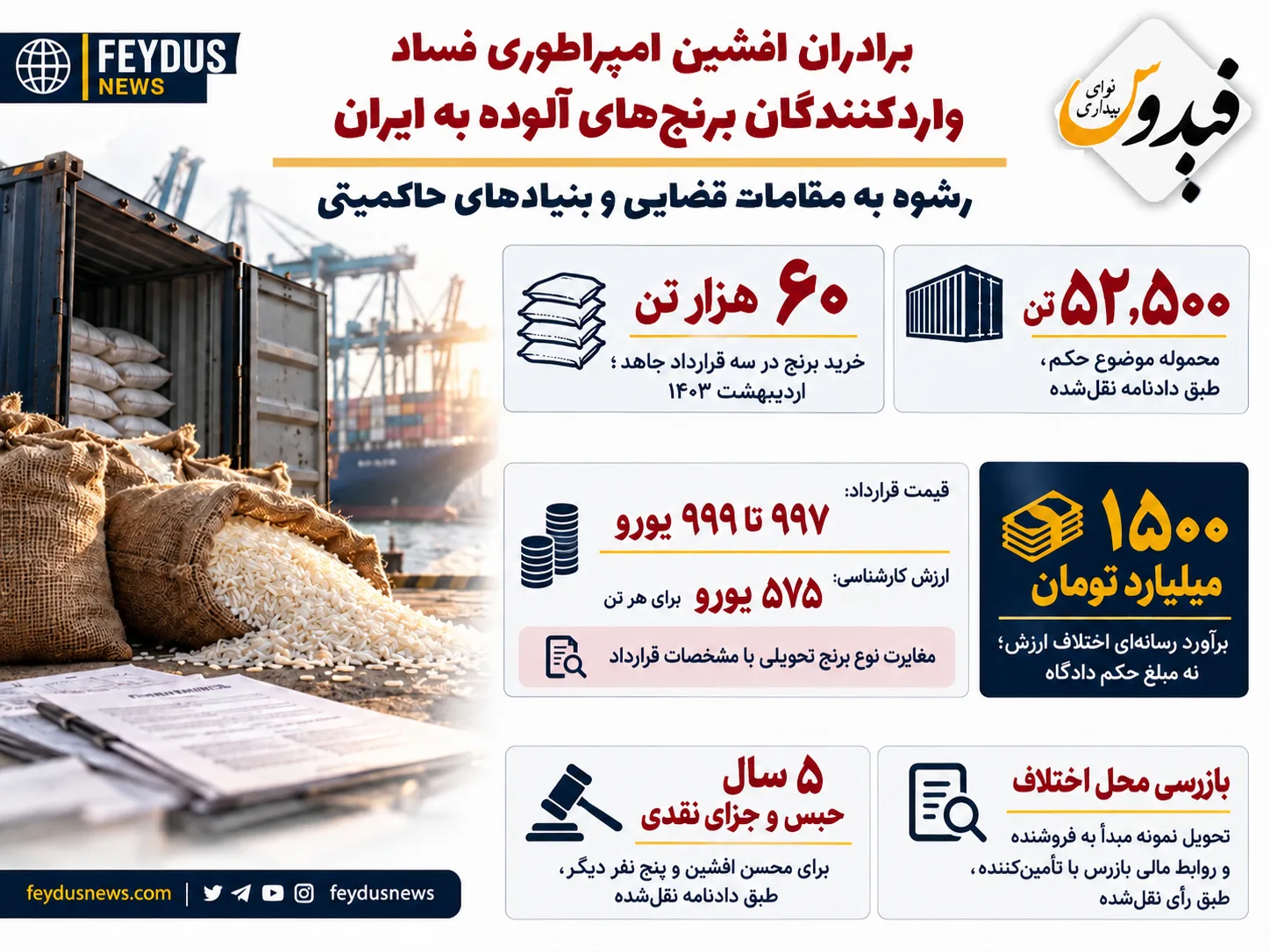
This is while the names of Afshin's brothers, Mohsen and Masoud, have been linked to a 1500 billion toman corruption case involving the import of contaminated rice during the thirteenth government. The brothers have expanded their empire in the import of Indian rice and contracts with a network of military and governmental institutions, backed by special relations with the judicial network.
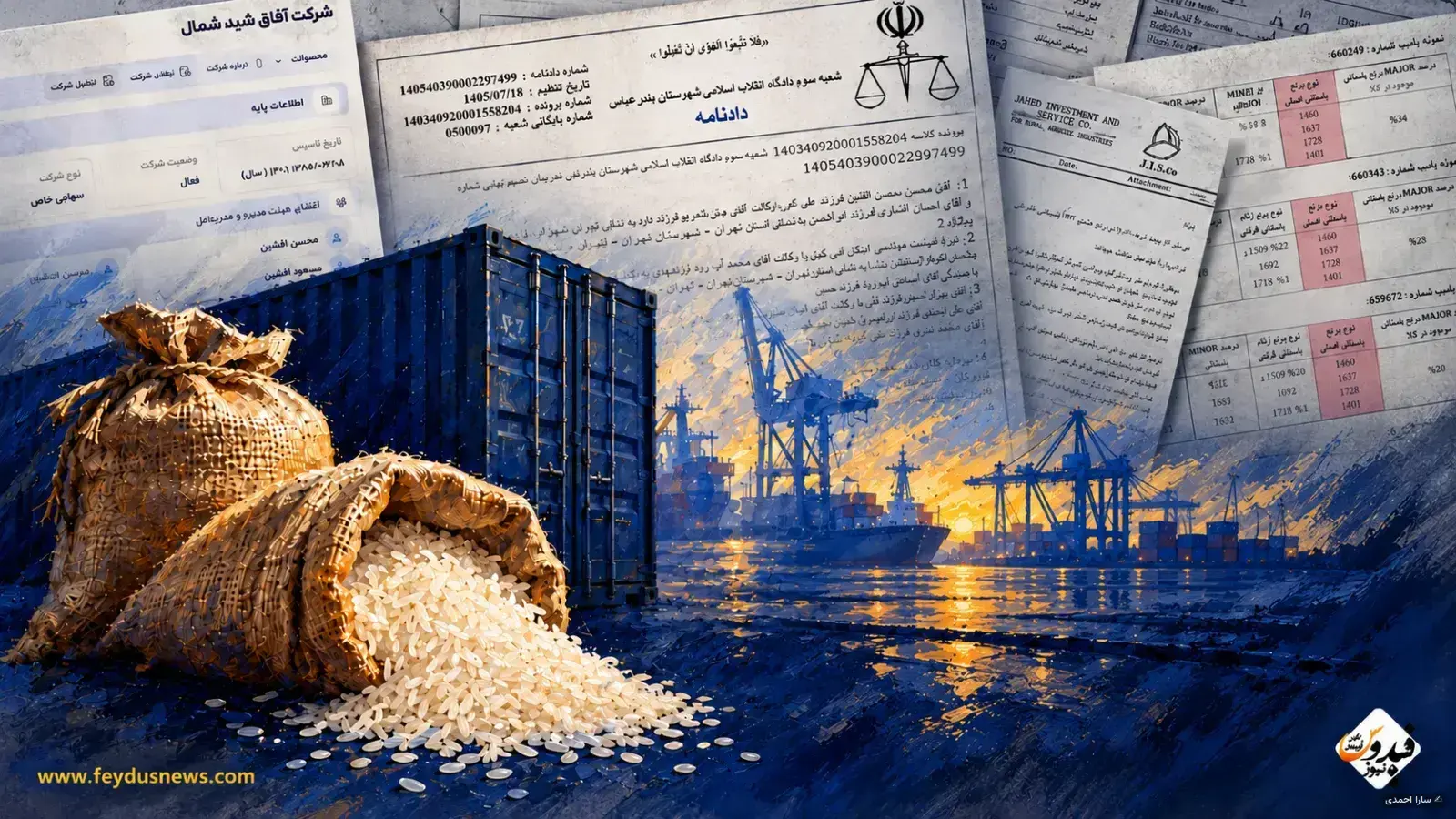
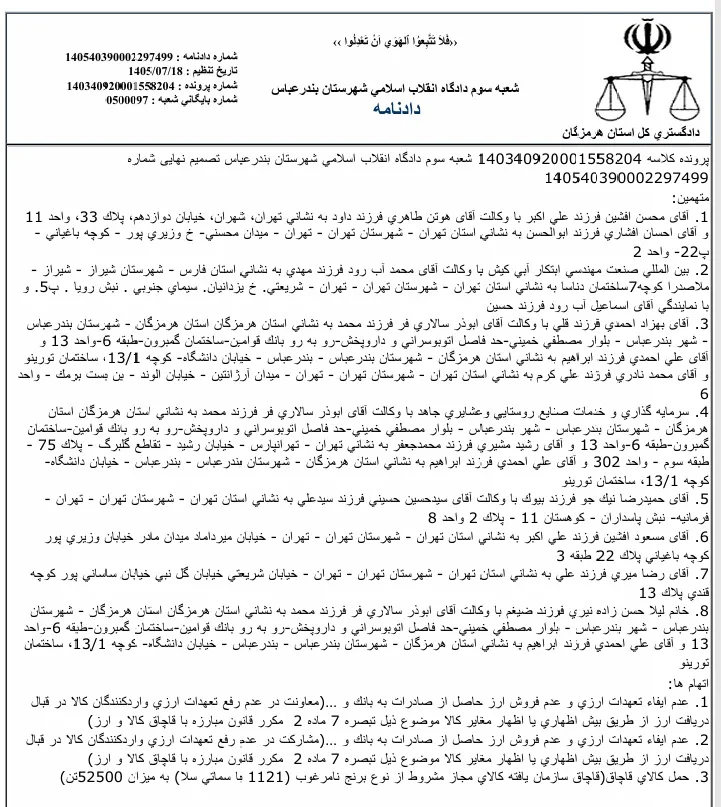
The ruling from the third branch of the Bandar Abbas Revolutionary Court provides a picture of Afshin's unofficial but effective presence in contracts, meetings, and the import process; a presence that the court did not overlook, with his brother's name as the official representative of the seller.
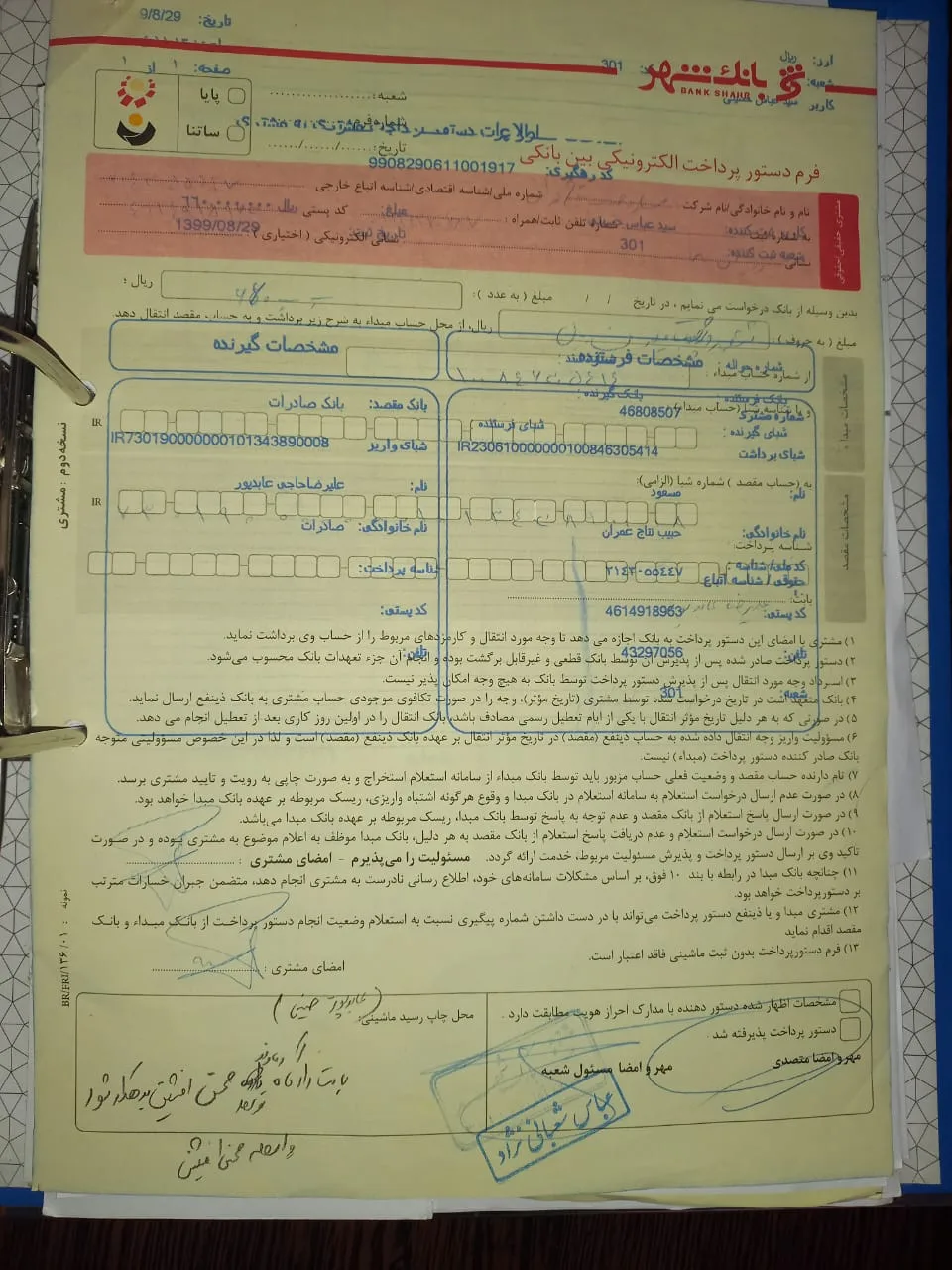
Alongside this case, information received by Fidus highlights the name of Seyed Abbas Hosseini; the Afshins' lawyer in the rice case, who is introduced in information sent by informed sources as the "Deputy Prosecutor for Government Employees." The payment for the blacksmithing of Hosseini's villa near Amol from the account of Elsa Afshin, Mohsen Afshin's daughter, takes the financial relationship and arrangements beyond a mere attorney-client relationship.
Informed sources have said that Hosseini has taken on the task of judicial coverage for Afshin in various cases by establishing connections with some judiciary judges and has been Afshin's liaison with judicial officials in various cases.
Prohibition on Paper, Presence in the Deal
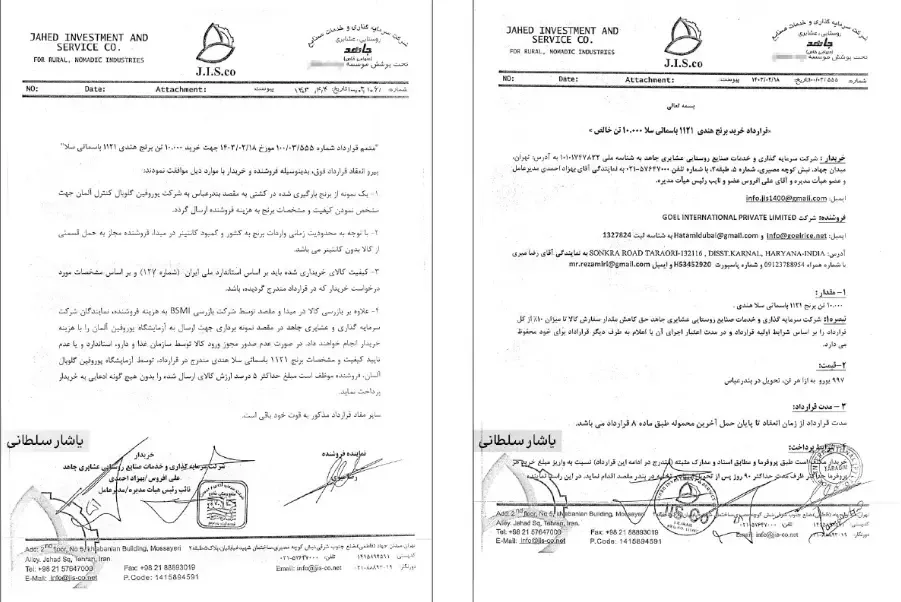
The Investment and Services Company Jahad Rural and Nomadic Industries, affiliated with the Institute of Jahad Independence of the Ministry of Agriculture Jihad, signed three contracts in May 2024 to purchase a total of 60,000 tons of Indian Basmati 1121 rice. The price per ton, depending on the contract, was set at 997 or 999 euros. Masoud Afshin, Mohsen's brother, was the representative of one of the Indian selling companies, and Reza Miri represented the other two companies.
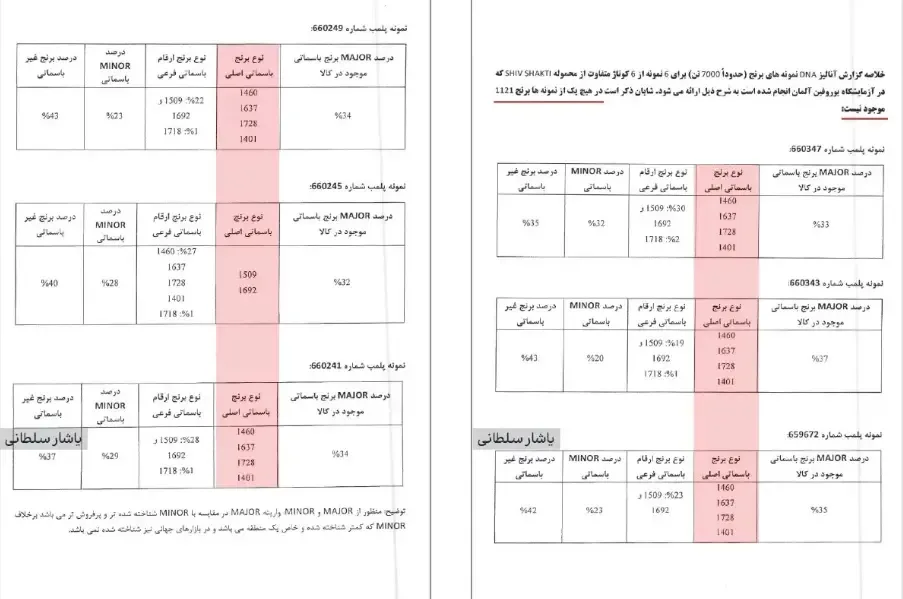
However, the delivered rice did not match the purchased goods. The expert opinion cited in the ruling described the examined samples as mostly a mix of non-Basmati rice and other types of Basmati. The expert-assessed price of the delivered goods was 575 euros per ton; a significant gap from the contract price. The ruling concerns 52,500 tons of the shipment.
In this process, Mohsen Afshin was not merely the brand name on the bags. The ruling mentions his presence in meetings at the Ministry of Agriculture Jihad, following up on the shipment's fate, and accompanying the inspection trip to India. Correspondence cited by the court also shows that he attended related meetings without having an official position in the contract. The court examined this situation within the framework of "shadow management."
Afshin's history in supplying rice for major buyers is not limited to the Jahad deal. The ruling, citing a special inspection report from the presidency, mentions the sale of about 40,000 tons of substandard rice to Etka in 2021. Information from the Fidus source extends his activities to supplying goods for military complexes and those related to the holy shrines; sectors where contracts and payment paths need separate scrutiny.
1500 Billion Toman Corruption
The dimensions of this deal were publicized before the verdict was issued. On December 16, 2024, Hekayat Gilan, by republishing a report by Yashar Soltani, reported efforts to obtain a distribution permit for a shipment that a retest showed had serious discrepancies with the purchase specifications. This report introduced the price difference between the purchased rice and the delivered goods as the source of the "1500 billion toman corruption" estimate; a figure that is a media estimate of that period and should not be equated with the value of the goods subject to the ruling or the court's fine.
The connection point of these management decisions to Mohsen Afshin is his presence in a deal where the official representatives of its sellers were Masoud Afshin and Reza Miri. The ruling, in addition to Mohsen Afshin's unofficial presence in meetings, speaks of the lack of examination of participants' qualifications, the failure to obtain guarantees for the proper execution of the contract, and the destruction of the envelopes of the losing bidders. Therefore, the issue is not only the delivery of different rice; the process of selecting the seller and maintaining competition documents is also questioned.
This history places Afshin's relationship with Hosseini in a clearer context: we are facing a deal that has previously been warned about in the media, with the records of one of its influential figures being mentioned in judicial documents, and yet, its administrative path has continued. Judicial connections should clarify whether these relationships have influenced a specific decision; especially alongside the received information about the payment of Hosseini's personal expenses from Afshin's child's account.
Inspection Whose Independence Was Questioned
One of the most sensitive connections in the case is Mohsen Afshin's relationship with Hamidreza Nikjou, the then-CEO of the Inspection Company Ebtikar Abi Kish. This company was responsible for inspecting goods at the origin; the very stage that should have prevented the shipment of goods that did not match the contract.
According to the ruling, the samples taken at the origin were handed over to the selling company to be sent to the laboratory. Entrusting the sample to the transaction's beneficiary undermines independent control over its transfer path. The discrepancy between the origin and destination test results has highlighted the importance of this very weakness.
The court's ruling also refers to Nikjou's inspection history at the "Tose'e Pakhsh Kalaye Hafte Iranian" company, where Shaghayegh Larijani, Mohsen Afshin's wife, is introduced as the CEO. The transfer of a property from Afshin to Nikjou is also mentioned in the ruling. These relationships have been among the evidence the court considered in evaluating collusion and the role of individuals.
On the other side of the chain, part of the shipment was resold to a group related to Afshin. The ruling reports the sale of about seven thousand tons of rice to a company with a shadow management attributed to him and the non-settlement of about 80 billion tomans of its amount by the time mentioned. Thus, Afshin's role in the court's narrative is seen both in the supply of goods and in connection with one of the subsequent buyers.
Such a structure extends the review of transactions beyond the import contract: the resale price, credit conditions, the reason for the remaining debt, and the responsibility of the managers who transferred the goods are all part of the accountability of the resources of the Jahad company.
Hosseini and the Costs Paid by the Afshin Family
Seyed Abbas Hosseini, along with Houtan Taheri, is introduced in the ruling as the lawyer for Mohsen Afshin, Masoud Afshin, and Reza Miri. His presence in defending the three main individuals of the case is a clear and documented relationship; however, the information received about the cost of his villa presents another dimension of these relationships.
In the note regarding Hosseini, the payment for the blacksmithing of the villa from the account of "Elsa Afshin, Mohsen Afshin's daughter" is mentioned. The importance of the matter lies in the source of the payment and its use: a personal expense for Hosseini, from the account of a member of the Afshin family.
The third branch of the Bandar Abbas Revolutionary Court has sentenced Mohsen Afshin and five other individuals to five years in prison and a fine for organized smuggling. In the currency charges section, acquittal has been issued for several defendants, including the Afshins. This is the result of buying various judges. This issue brings some senior judicial officials into the picture.
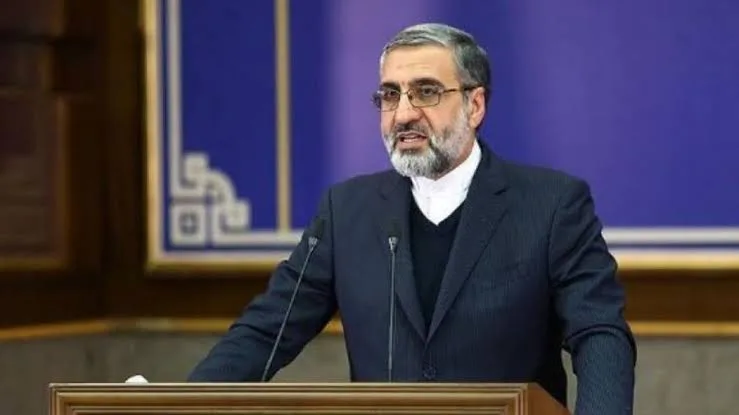
From Gholamhossein Esmaeili, the then-spokesperson and head of the Prisons Organization, to some dismissed judges like Ali Safari and Ebrahim Dejpasand, as well as Heshmatipour, former heads of the Tehran Province Judiciary, who have been linked to the Afshin network through Abbas Hosseini according to obtained documents.
One of the axes of corruption in this network is the issue of receiving currency from the banking network belonging to Bank Mellat under the guise of Afshin's office secretary, which in one instance included 5 million dollars. This issue, alongside various contracts with religious institutions such as the Alavi Foundation and the Foundation of the Oppressed, in the form of car and coin payments in exchange for receiving contracts, indicates that Afshin's activity range is the result of a circle of relationships with influential institutions within the governing body.
The Afshin case places the issue of continued access to large contracts after a conviction history before supervisory bodies. The responsibility of purchasing managers, the inspector's relationship with the supplier's family, the resale of goods to a related group, and the source of payment for Hosseini's villa expenses are specific components of this review. Accountability for these matters must be accompanied by contracts, account transactions, and traceable decisions.