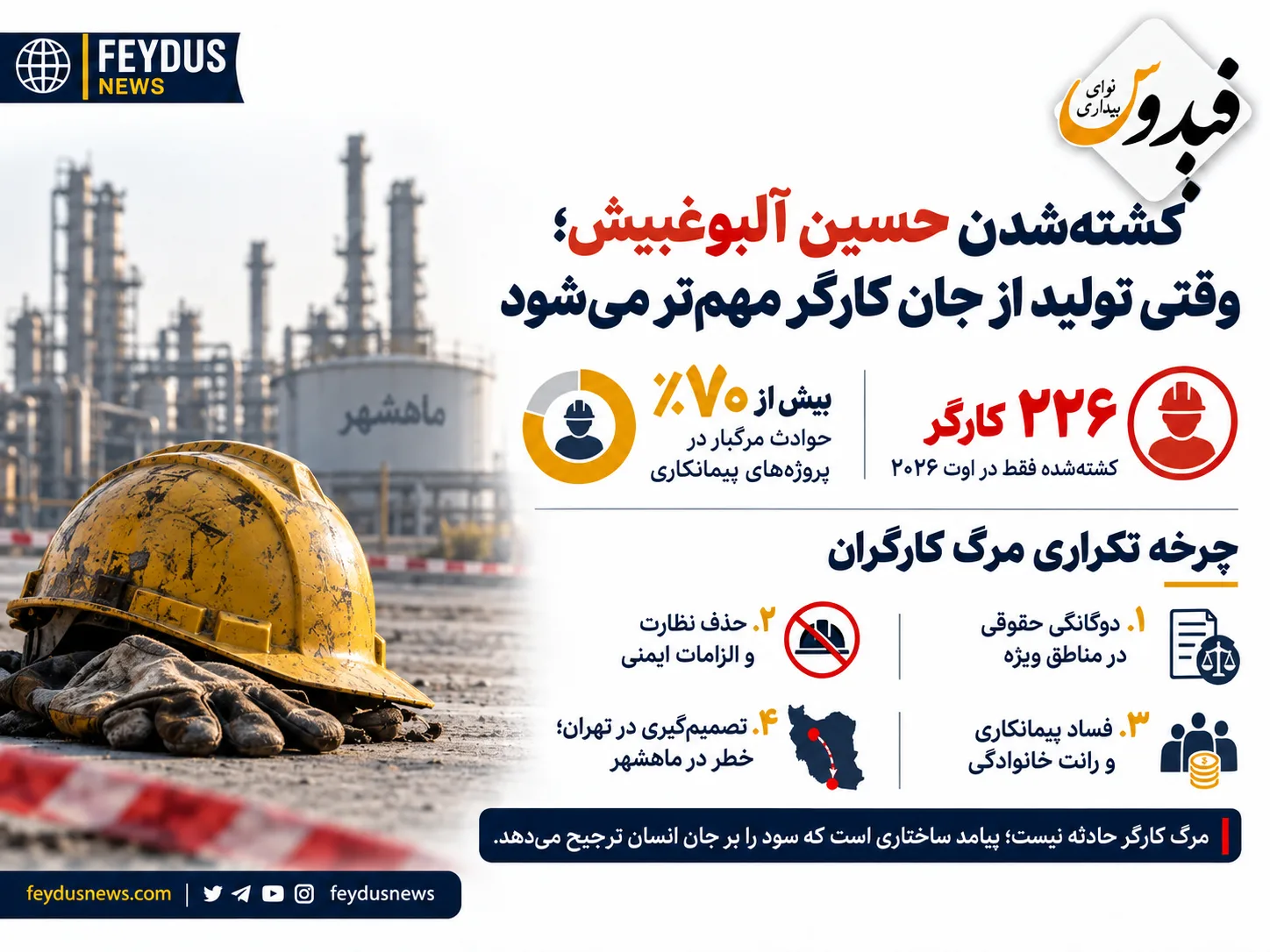

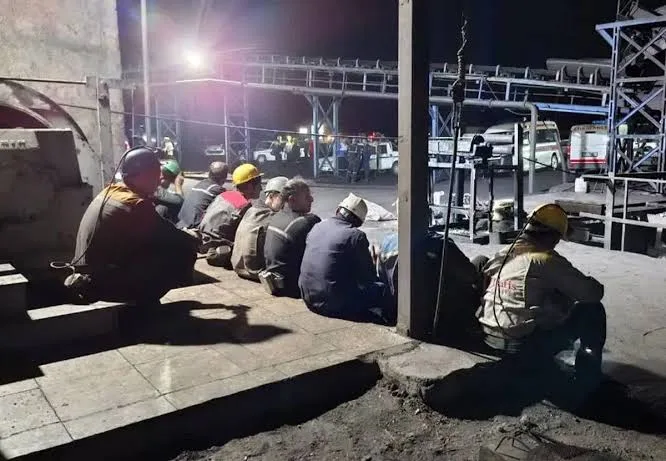
The passing of Hossein Albughabish, a project worker at Fajr Energy Khaleej Fars, once again unveiled a bitter reality: in the Mahshahr petrochemical hub, where billions of dollars circulate, a worker's life remains the cheapest component of production. Condolence messages from managers flying in from Tehran, who are the real culprits of this worker's death, are repeated, yet there is no action against those responsible from the prosecutor, no clarification of the accident's cause from the labor department, and no real support from the governor and the freeloading representative in parliament for the victim's family. This, along with the history of corruption and insecurity in Iran's oil industry, shows how a flawed structure has turned workers' deaths into an "organized murder."
The Repetitive Cycle of Death; From the 1990s to Today
The death of workers in Iran's oil industry has a long history. Since the 1990s, with the expansion of special and free zones, a large part of petrochemical units were excluded from full labor law coverage, and this "legal duality" is one of the main factors in the increase in work accidents. The gradual elimination of contractors' safety certificates from government tenders, which has intensified in recent years, has turned safety from a preventive to a reactive state, according to experts, meaning the supervisory body only intervenes when a worker has died and does not do much else.
According to data from the Workers' Safety and Health Council, in August 2026 alone, at least 226 workers in Iran died while working, a statistic that shows workers' deaths are not accidents but a structural trend.
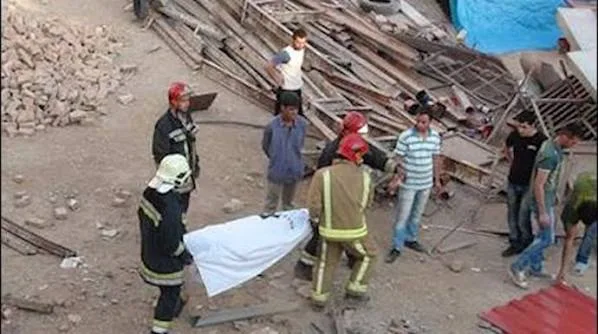
Mahshahr; Petrochemical Hub or Human Minefield?
Mahshahr, Iran's largest petrochemical cluster, has long faced the paradox of development: decisions are made in Tehran, while danger and pollution are in Mahshahr. Official reports show that the 2026 attacks completely disabled Fajr Utilities 1 and 2 and over 50 units were shut down, but even before the war, this region struggled with safety crises, contractor corruption, and structural discrimination.
Albughabish's colleagues said: "Safety first, then work is just a slogan; if work progresses, even if a hundred workers die, insurance pays. This is the managers' logic.", "All the hard work is on the workers' shoulders with the lowest wages; the flying manager only sends condolence messages.", "A day laborer works ten hours, but a manager with a hundred-million salary works 15 days and has 15 days off.", "My wife had a stroke due to air pollution, they said since it wasn't an accident, no compensation is given." These public testimonies confirm the same structural gap: the worker is on the front line of danger, the manager on the front line of profit...!
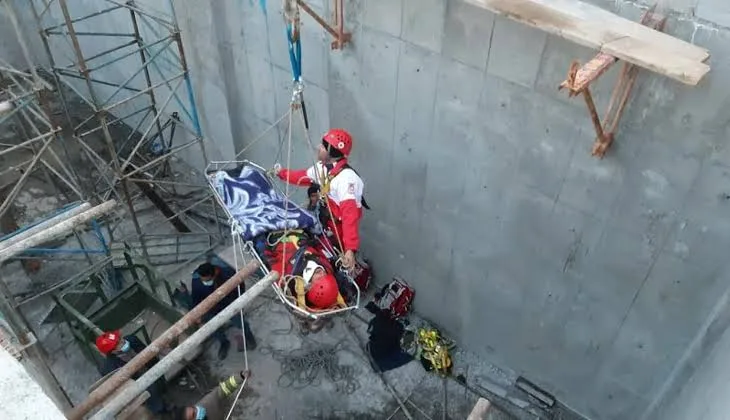
Contractor Corruption; From Family Patronage to Exclusion of Local Forces
In many comments from the people of Mahshahr, there is explicit talk of "nepotism", "rent-seeking", "bribery", and "preferential hiring". These statements are consistent with official reports: the concentration of decision-making in Tehran, unregulated privatizations, and the presence of non-specialized holdings have created power networks that have made hiring, contracting, and even safety subject to relationships, not law, resulting in the exclusion of local forces and turning regional workers into "cheap and replaceable labor". As one worker wrote: "I worked for five years, they laid us off in two months and immediately brought someone to replace us."
Human Consequences; Death, Disease, Rightlessness
The death of Hossein Albughabish is just one example. In recent years, multiple cases of poisoning, suffocation, falls, explosions, and diseases caused by industrial pollution have been reported. Over 70% of fatal accidents occur in contracting projects, and Iran, despite joining the International Labour Organization, has still not been able to implement safety standards.
Why does this situation continue? Four main factors reproduce the cycle of workers' deaths: 1. Legal duality in special and free zones 2. Elimination of safety oversight and turning safety into a "production obstacle" 3. Contractor corruption and family patronage 4. Concentration of decision-making in Tehran and neglect of the local Mahshahr community, which they colonized. This structure has turned workers' deaths not into an accident but into an organized murder resulting from poor policymaking.
The death of Hossein Albughabish and dozens of other workers in Mahshahr is the direct result of a structure that prefers profit over human life. Until safety oversight is restored, rent-seeking contracting is reformed, special zones are removed from legal duality, and managers are held accountable, workers' deaths will continue, whether in times of war or peace. That is the issue.