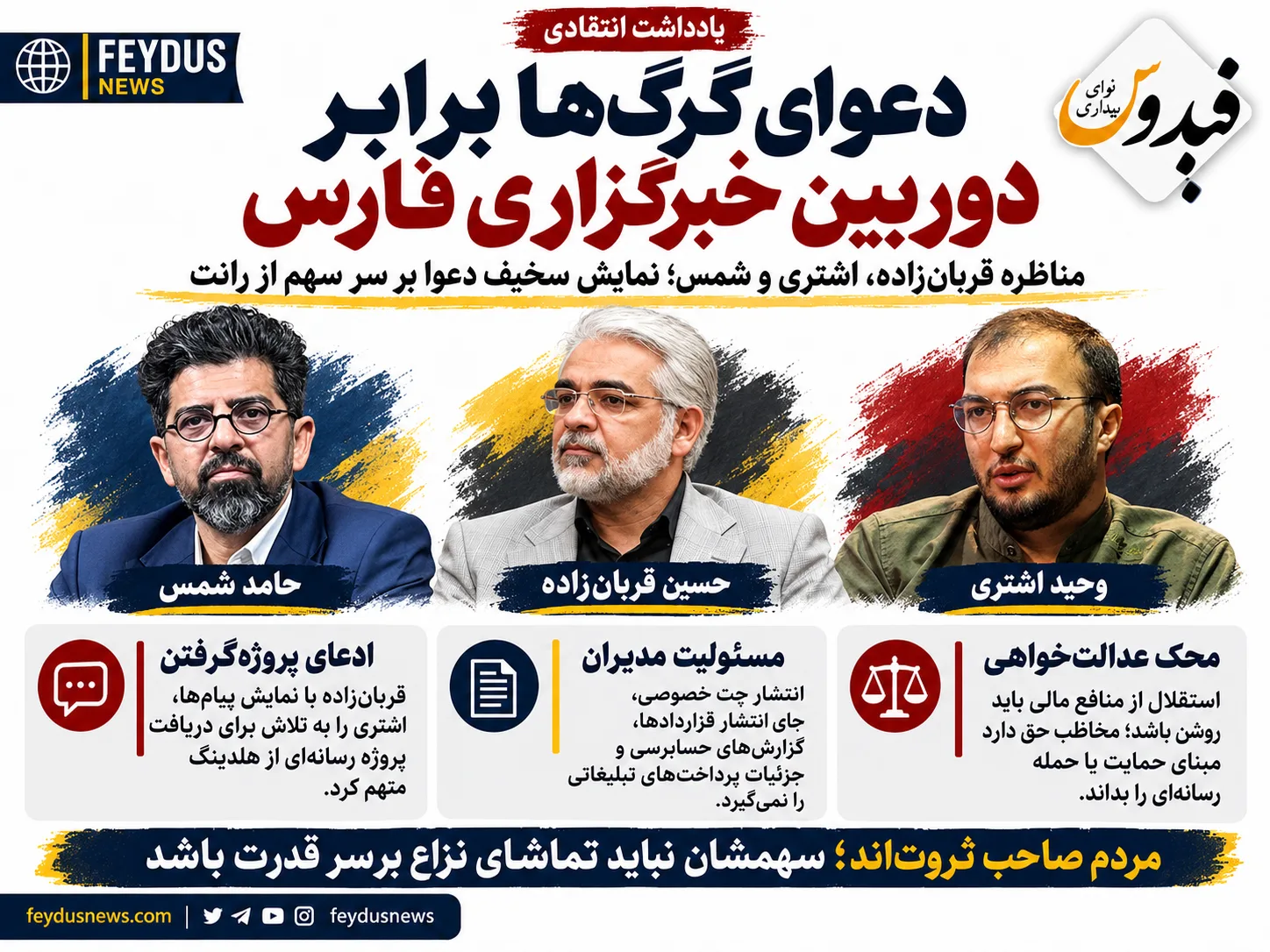
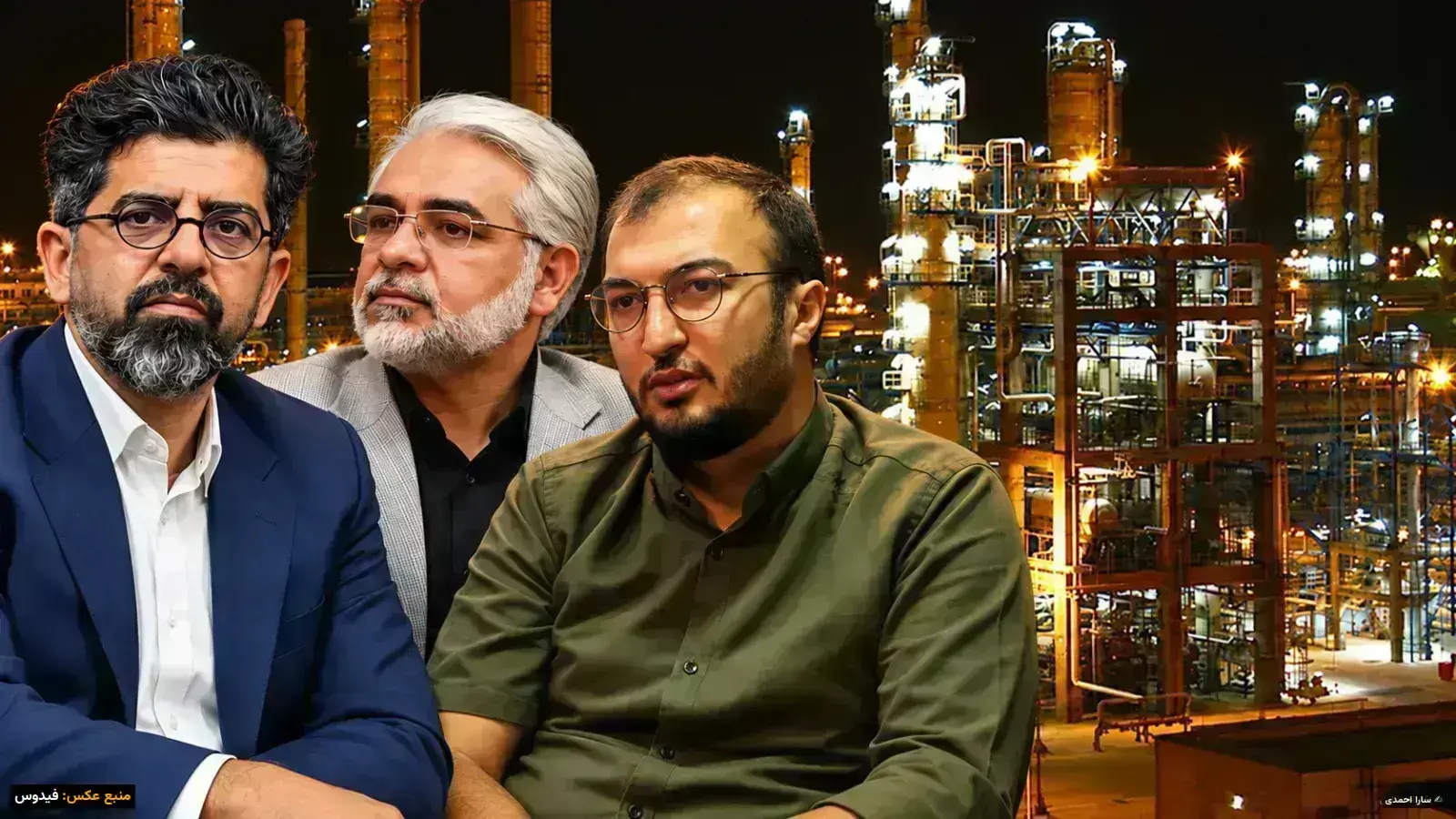
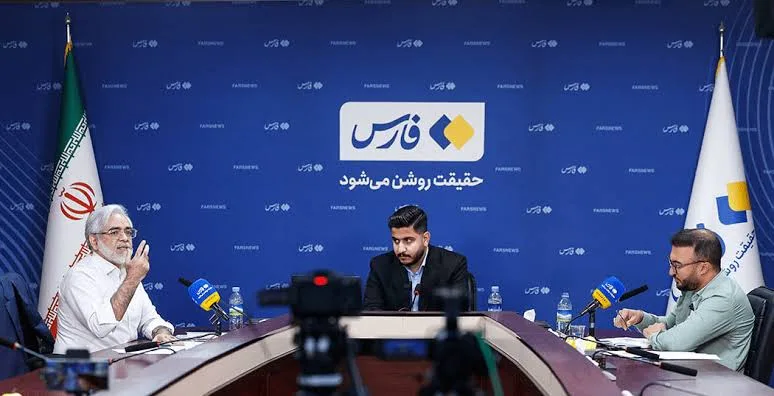
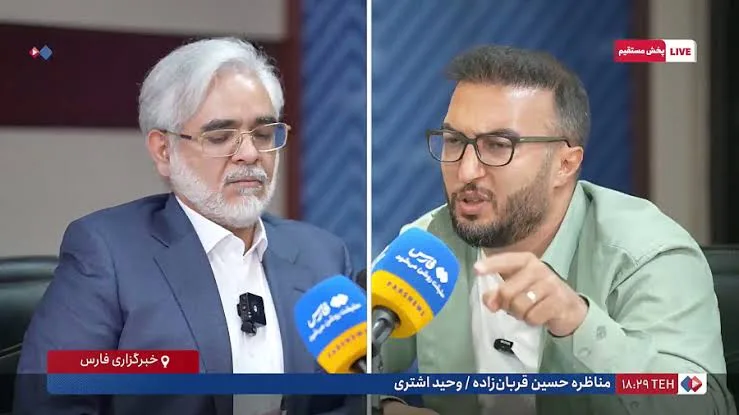
The debate between Hossein Ghorbanzadeh and Vahid Eshtari at Fars News Agency, in parts, turned into a vulgar display of settling scores; a display where the demand for accountability regarding public wealth was lost beneath the sound of mutual accusations.
In
one of the most controversial parts of this confrontation, Ghorbanzadeh displayed messages, accusing Eshtari of trying to secure projects from the holding; a claim that received widespread attention.
According to the narrative presented, the subject of correspondence with Hamed Shams, the public relations manager of the holding, was media cooperation in support of Mohammad Shariatmadari. This very claim, independent of the outcome of verifying the authenticity and completeness of the messages, raises a fundamental issue: where is the line between public criticism and bargaining for shaping the image of managers?
Hamed Shams Against the Model He Himself Is a Product Of
Hamed Shams' appearance on the line also added to the vulgarity of the whole display. Shams tried to portray himself as a manager opposing extortion and corrupt media lobbying, while his track record and career path clearly resulted from the same model within the framework of his seemingly media activities.
A manager who initially paved his way by attaching himself to the circle of corrupt reformist managers, and in cases like forcing petrochemical companies to participate in useless exhibitions where Shams had a share, or ordering cooperation with media outlets close to him, follows the same pattern that Shams accuses Eshtari of.
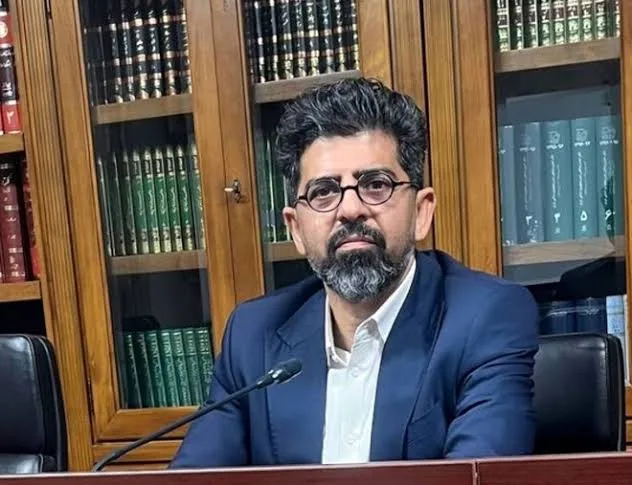
On the other side of this vulgar display is Ghorbanzadeh. A manager known as the broker and intermediary for Mohammad Shariatmadari for large corrupt currency contracts and the appointment of managers through seat-selling within the holding's subsidiaries. His involvement in a series of corrupt currency contracts within the holding's subsidiaries, such as contracts with Bidboland Gas and Oil Company and Nouri Petrochemical and other affiliated entities, reached a point of exposure where he is considered one of the arms and agents of developed corruption in this large holding under Mohammad Shariatmadari's management.
Ghorbanzadeh cannot simply turn the display of these correspondences into evidence of the integrity of his management team. Someone who holds responsibility in the economic power structure must first answer for their own domain before demanding accountability from critics. Publishing a media activist's message does not replace publishing contracts, audit reports, criteria for selecting contractors, and details of advertising payments. No manager is exempt from explaining their performance and that of their colleagues by showing the potential contradiction of a critic.
On the other hand, Eshtari cannot consider the credibility of justice-seeking as a perpetual asset immune to scrutiny. If a financial cooperation proposal for supporting a manager has been made, the time, subject, proposed amount, and its relation to subsequent positions must be clarified.
The audience has the right to know on what basis media praise or attack is formed. Justice-seeking is credible when its independence from financial interests is measurable; otherwise, the risk of turning revelations into a tool for increasing bargaining power devours public trust.
However,
the difference in the scale of responsibilities should not be hidden under the noise of this clash. Holding managers influence decisions whose consequences can be worth thousands of billions of tomans. In such dimensions, even a limited error in pricing, contractor selection, or contract execution can cause significant damage. The potentially small amount of a media project does not justify misconduct; just as raising it does not make reviewing large contracts unimportant.
Sensitivity to public money must persist from the smallest payment to the largest transaction.
If managers truly want to fight corruption, they must provide the possibility to review decisions and payments. Fighting corruption does not begin and end with selecting a message to hit a rival; it must reach a mechanism that also subjects the managers' close associates to oversight.
The
bitterness of the Fars display lies here: people are the owners of wealth, but their share is often watching the quarrel of those who have access to decision-making centers. The metaphor "wolf fight" describes a situation where share-seeking replaces accountability, and public interests are worn down by the teeth of internal power competitions. The desirable end of this story is not the victory of Ghorbanzadeh or the defeat of Eshtari; it is the clarification of the money path. As long as documents do not replace the display, this clash will be more of a sign of competition over access to the table of power than a defense of integrity.