

Performance of Divestitures in 2025
The report from the Privatization Organization shows that the performance of divesting state companies and assets in 2025 was below the target set in the budget law. It was predicted that the government would earn 215 trillion tomans from the sale of state companies. However, the actual revenue from this source was about 157 trillion tomans. Thus, only 73% of the predicted revenue in the budget was realized, and about 58 trillion tomans of the government's expected resources were not met.
Utilization of Divestiture Revenue
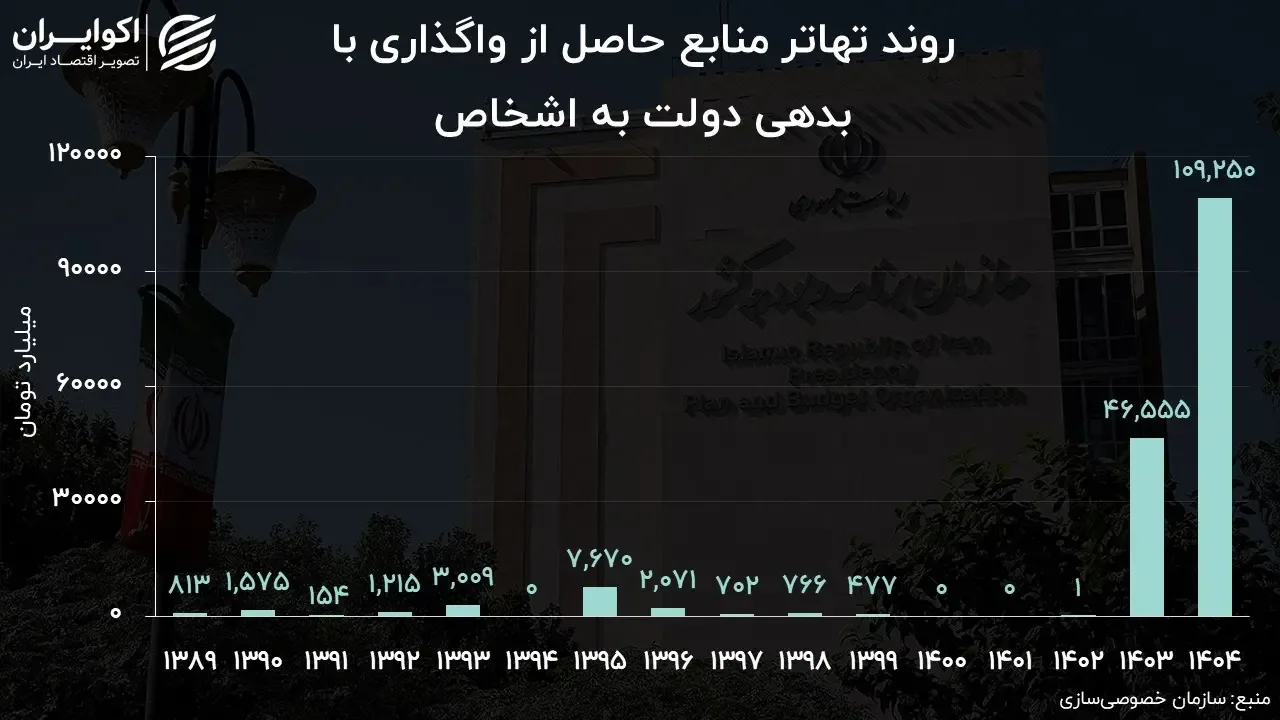
The most important finding of the report relates to the utilization of revenue from divestitures. Of the total 157 trillion tomans of realized revenue, only about 30% entered the state treasury as cash resources. In contrast, more than 109 trillion tomans of the divested assets were used to settle government debts. Settling debts means that instead of paying its debts in cash, the government transferred ownership of part of its assets or shares of state companies to creditors.
Increase in Divestitures for Debt Settlement
The report from the Privatization Organization shows that the volume of asset divestitures for debt settlement in 2025 reached the highest level in the past 16 years. This indicates that a large portion of the divestitures was used to reduce the government's accumulated debts rather than providing new resources for the general budget. Using asset divestitures for debt settlement, although it can reduce some of the government's financial obligations, does not create new cash resources to cover budget expenses.
Difference Between Asset Value and Cash Resources
The difference between the value of divestitures and the cash resources entering the treasury is one of the most important points of the 2025 performance report. The realization of nominal revenue from divestitures does not necessarily mean an increase in the government's usable resources. This situation highlights serious challenges in government financial management and the need for structural reforms in the management of public assets and liabilities.