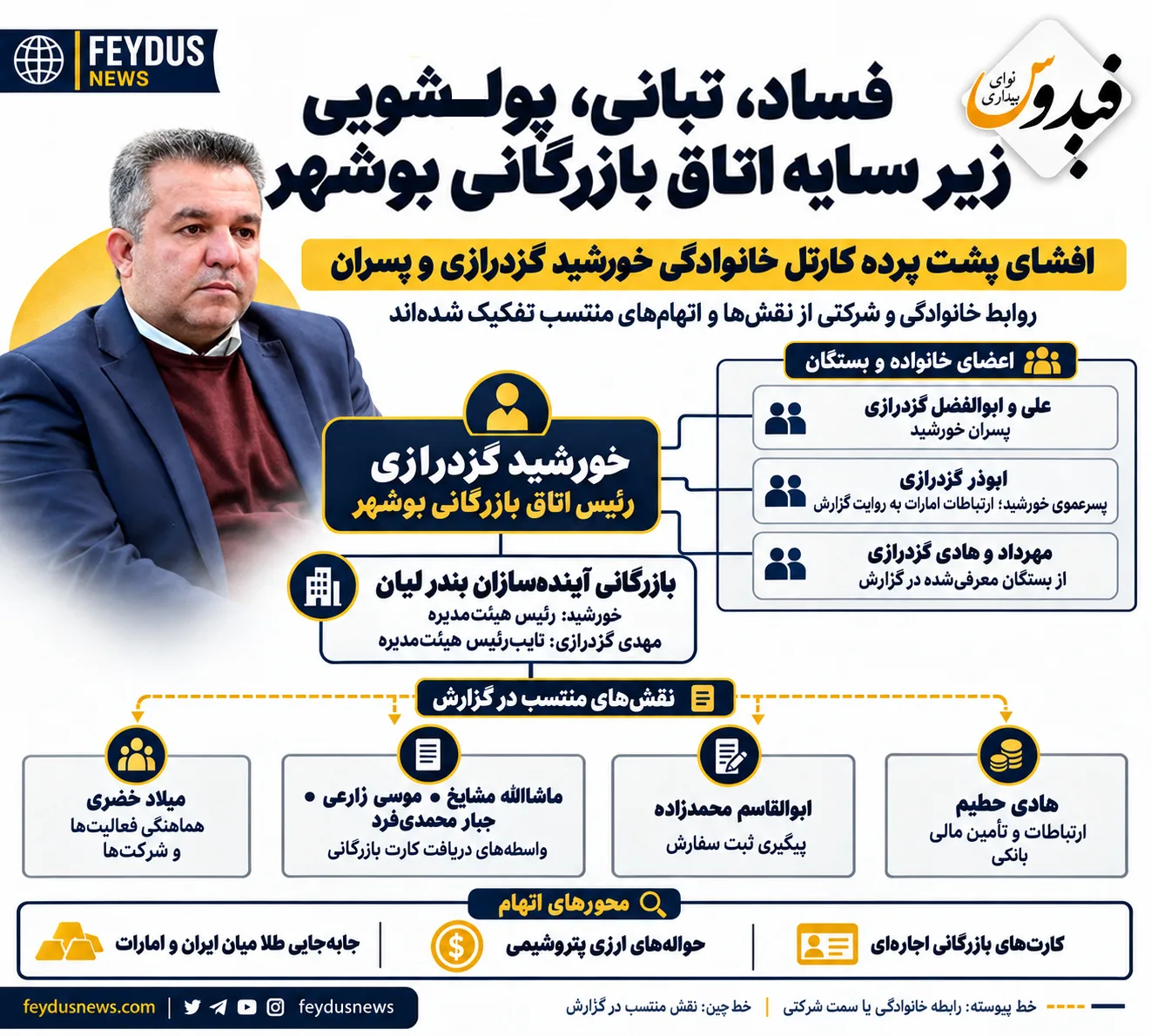
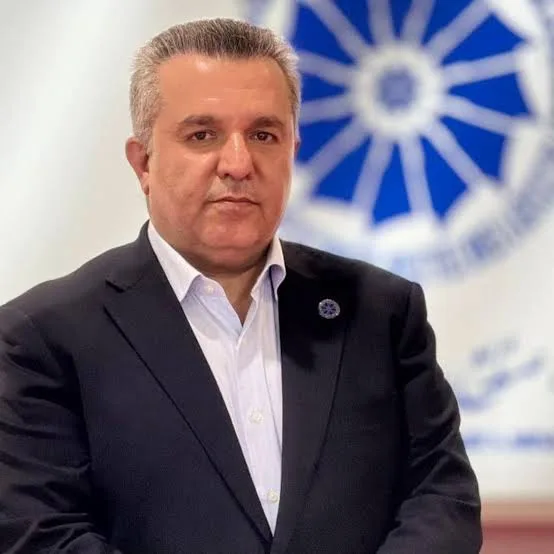
The exposure of corruption related to the use of rented commercial cards, petrochemical currency transactions in the form of money laundering, and gold transfers between Iran and the UAE places Khorshid Gazdarazi, the head of the Bushehr Chamber of Commerce, his sons, and several of his close associates at the center of a family cartel that controls this collusion and dirty money transfer network.
Khorshid Gazdarazi; Ali and Abolfazl, his sons, have played a central role in the discussed currency and trade activities, and Abuzar Gazdarazi, the cousin of the head of the Bushehr Chamber of Commerce, advances part of this network's connections in the UAE. This highlights the purposeful arrangement of family members in Iran and the UAE to enable the network to serve as a bridge for currency transfer in an underground and unofficial layer.
The diversity of family members' activities in remittance transactions, goods imports, and precious metals trade is a path where each part of it in the economic structure of the Islamic Republic is a platform for the black trade of dirty money that cannot be done without the intervention of security and military institutions. Therefore, it can be understood that maintaining the presidency of the Bushehr Chamber of Commerce is not possible without the permission and connection of the Gazdarazi family with security institutions.
Considering the exposure of the trustee network pattern, the main question about the Gazdarazi family cartel should also be how the financial sources of these transactions were provided, who took on their commitments, and who benefited from their profits.
Khorshid Gazdarazi's position in the Chamber of Commerce doubles the importance of accountability. The presidency of an institution representing economic activists creates a public responsibility towards its members. When the economic activities of the president and his close associates are subject to accusation, clarifying the boundary between personal interests and institutional powers is necessary to maintain the chamber's credibility.
Rented Cards and Money Trail in Bank Accounts
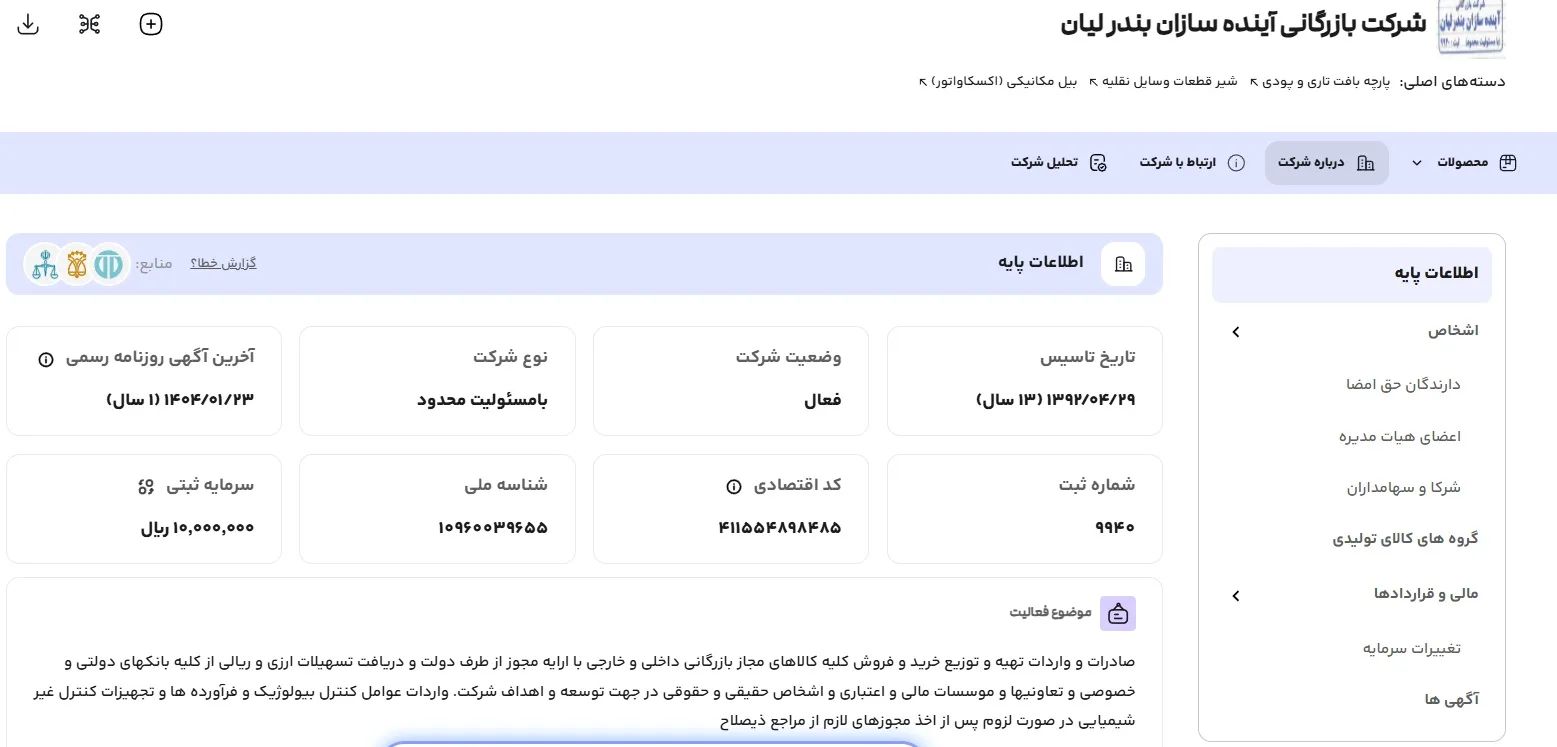
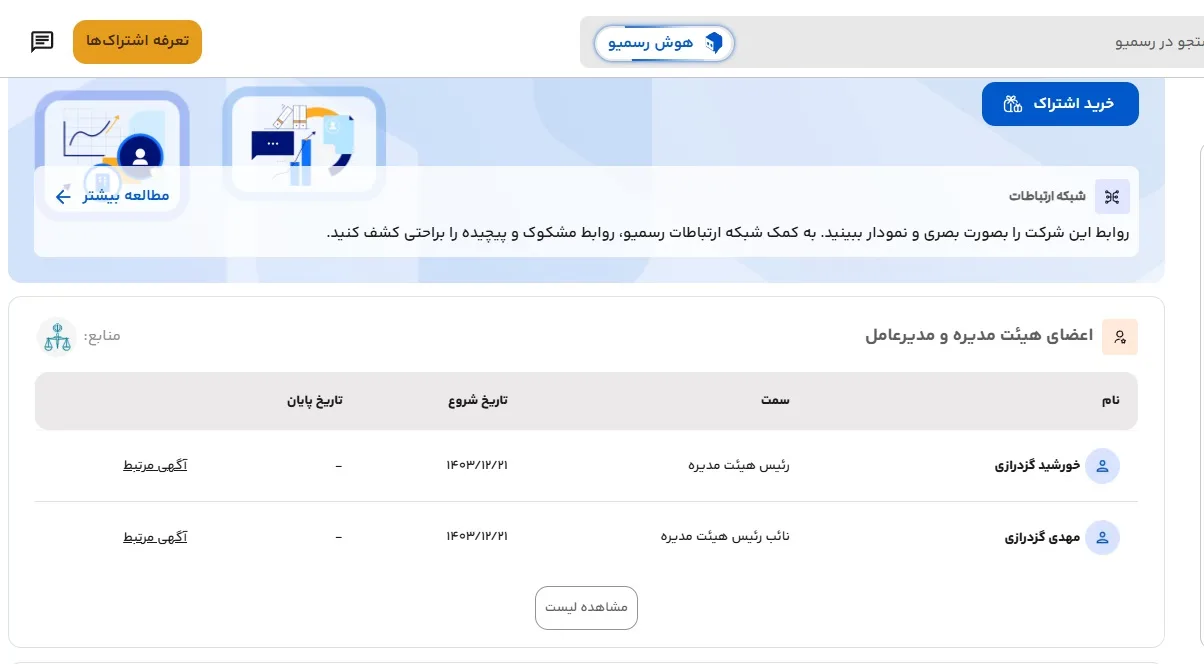
Images of registration documents in the possession of Feydus News show Khorshid Gazdarazi as the chairman of the board of directors of the company "Bazargani Ayandeh Sazan Bandar Lian" and Mehdi Gazdarazi as the vice-chairman. The start date of both positions is recorded as the 21st of Esfand 1403. The company was established in Tir 1392, and its activities include export and import, buying and selling goods, and receiving currency and rial facilities.
This corporate presence raises a specific question about conflict of interest: what mechanism ensures that the connections and facilities of the Chamber of Commerce do not turn into an advantage for companies related to its managers? The answer should be seen in the regulations, decisions, and transactions that can be examined. The title of representing the private sector does not remove the responsibility of explaining commercial interests from the shoulders of managers.
According to informed sources, one of the alleged activity axes was conducting transactions with the commercial cards of other individuals. In this narrative, the nominal cardholders did not have real control over imports, and the provision of money, order registration follow-up, and currency use were carried out by other individuals. Such a situation, if verified, can create a gap between the name owner and the benefit owner; a gap that places tax and currency responsibility on one person and the trade profit on another.
The path to investigating this claim passes through bank accounts. Identifying the individual who provided the rial funds for currency purchase or bank deposit, along with examining order registration and clearance documents, can identify the real operators of the transaction. Focusing solely on the cardholder's name is not enough to clarify this chain. Responsible institutions must determine where the money came from, to whom the goods were delivered, and in which account the proceeds from sales have been deposited.

In this context, documents regarding a tax debt of over 86 billion of the company "Aseman Far Shomal Siraf" and the expiration of its commercial card in 1399 have been raised. Such a matter during Gazdarazi's presidency of the Bushehr Chamber of Commerce may be a glimpse of the network of fake transactions with expired commercial cards that have been made possible under the guarantees of the chamber's presidency.
Petrochemical Remittances, UAE Route, and the Fate of Cases
Informed sources have also noted that Ali and Abolfazl Gazdarazi were arrested in connection with multi-billion violations in the field of petrochemical currency remittances and gold smuggling, and their case was closed after paying large bribes and negotiating through inspectors of the Ministry of Industry, Mines, and Trade and judicial and security officials of Bushehr province. This once again highlights the strong possibility of the Gazdarazi family's connection with the security corruption rings of Bushehr province.
Another member of this family network is Abuzar Gazdarazi, whose role as an intermediary in the UAE, currency remittance transfers, gold and silver trade, and involvement in cigarette smuggling are listed among his records, making him an important figure in the body of this family corruption ring alongside his kinship with Khorshid Gazdarazi.
The Growth Path of a Family Amid Corruption
Reviewing the personal history of Khorshid Gazdarazi reveals the rapid growth and collusion-based corruption of the family. Close associates of the Bushehr Chamber of Commerce presidency say he started his activities in the 1370s with a high school diploma, working as a laborer and moving goods on motorboats, and through a relative named Namdar Mohammadi-Fard, entered the Bushehr customs. After leaving this job, he worked for a while in the office of Hossein Shafiei, another relative, as a service worker; then he went to the office of Mashallah Ghodousi and later worked in the office of Morteza Hamidavi.
According to this narrative, in the early 1380s, the then customs supervisor of the province facilitated Gazdarazi's acquaintance with an Afghan trader residing in Dubai; a trader introduced as the representative of Marlboro cigarette distribution in the Middle East and also the representative of Total oil imports. The import of these two goods was carried out through Gazdarazi, and the increase in transactions resulting from their clearance facilitated his connection with Hadi Hatim, a then manager of Bank Mellat in Bushehr province.
Purchasing a ship from Japan, bringing it to Iran, and registering the vessel under the name "Namavaran" in partnership with Hatim is a change in Gazdarazi's trade path. The vessel remains under the ownership of these individuals but operates under a foreign flag; an action taken to avoid paying taxes and insurance obligations.
Gazdarazi's entry into car imports in the mid-1380s and the use of rented commercial cards and activity from 1397 in the field of NIMA currency remittances is the stepwise expansion of the Gazdarazi family's activity network. According to documents, the use of the Bushehr Chamber of Commerce's capacity has made this possible. Despite having two personal and corporate commercial cards, Gazdarazi did not conduct the desired transactions in his name or that of his sons and relatives, but used rented cards from needy individuals.
Ali Gazdarazi, in this narrative, is introduced as the second person in the group and the manager of the family's economic activities. His marriage to the daughter of a local resident of the UAE and holding a ceremony with nearly a hundred guests sent from Bushehr to Dubai and accommodating them in a hotel was aimed at building the family network in the UAE, which today is the main key to money laundering trade based on this path.
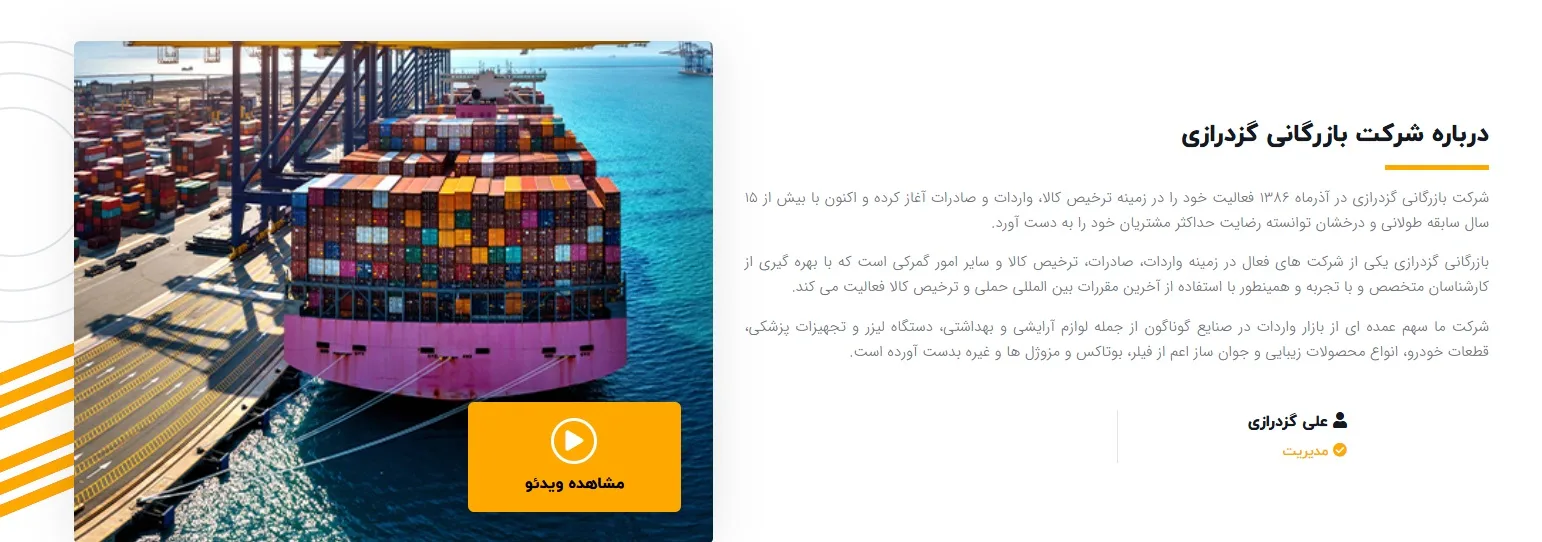
Owning the company Bazargani Gazdarazi under his management indicates his role in the family's import, export, and customs affairs. Also, the compulsion to cooperate with this commerce by the Bushehr Chamber of Commerce with the special rent of Khorshid has made the network's influence dependent on the presidency of the Chamber of Commerce.
Abolfazl, Abuzar, Mehrdad, Hadi, and Mehdi Gazdarazi are other family members, each of whom leads a part of the currency transfer network, gold, or transactions aimed at money laundering. A circle that, in less than six years from a young age, each has reached a massive fortune that is in the form of properties in Iran and other countries.

Key Figures Outside the Family Circle
Milad Khezri, the son of Khosrow and an employee of Khorshid Gazdarazi's office, is the coordinator of the collection in the documents. He is responsible for holding information and secrets of the cartel's activities. Managing cover companies that are the place for transactions related to money laundering has created a position for Khezri at the level of the Gazdarazi family's secret vault.
In the section related to intermediaries for obtaining commercial cards, the names Mashallah Mashayekh, Mousa Zarei, and Jabbar Mohammadi-Fard are mentioned. These individuals, with the support of Khorshid Gazdarazi, apply for the cards. Abolqasem Mohammadzadeh is also introduced as the person responsible for order registration follow-up in the Organization of Industry, Mines, and Trade. In the banking section, Hadi Hatim, as one of the managers of Bank Mellat in the center, and also the management of Bank Sepah in Bushehr province are mentioned. The role of this group is to facilitate banking affairs and orders related to transactions.
To this list, two other names should be considered as tools for network development and covering for the Gazdarazi's dirty transactions: Ali Rajaei Firouzabadi and Masoud Shekarani, each under the same pattern of leading paper companies in the middle layers of the developed Gazdarazi corruption ring.

The Presidency of the Bushehr Chamber of Commerce, an Opportunity to Facilitate the Corruption Network's Affairs
The alleged mechanism begins with obtaining a commercial card in the name of unqualified individuals and providing their account balance. According to narratives, the depositor of money into the cardholder's account is the first clue to identifying the real operators of the transactions. In the next stage, a commodity is identified that its owner imported without receiving NIMA currency and with free currency, but no order registration was made for it. Then intermediaries, with a financial offer, transfer the goods through a peace letter to the name of a rented commercial cardholder; a card that, according to this claim, is in the possession of Khorshid or individuals related to him.
After the nominal transfer of goods, the collection's agents visit the relevant unit in the Ministry of Industry, Mines, and Trade for order registration and then follow up on the currency allocation process in the bank. The documents mention a 35% deposit and the payment of the rial equivalent for NIMA currency purchase, emphasizing that identifying the providers of these funds can clarify the role of the main operators. The result of this pattern is the exploitation of NIMA currency, tax evasion with rented cards, avoidance of potential customs deductions, and the acquisition of illicit wealth.
The history of economic cases in Bushehr increases sensitivity to monitoring the province's trade. In a report published in Bahman 1393, the customs supervisor of the province confirmed 480 billion rials of embezzlement, equivalent to 48 billion tomans, in Bushehr customs. In that case, the involvement of four customs employees and fifteen customs brokers and clearance agents was mentioned. The name Gazdarazi does not appear in the text of this news, but the case shows that examining trade violations should include the connection between employees, intermediaries, and transaction owners.
In such a context, the claim of different treatment with the family of the Chamber of Commerce president raises a question about the performance of supervisory institutions. Have the raised reports been reviewed? Have the accounts and currency commitments of related individuals been addressed? If there has been a case, what was its outcome? The answers to these questions must be specific and traceable.
Simultaneously, a narrative published about Saeed Zarrinfar, the former deputy governor of Bushehr, reports his arrest and subsequent release in the UAE. A security figure whose release, according to the narrative of documents, was conditional on providing information about money laundering networks, especially the section related to the Bushehr Chamber of Commerce and the Gazdarazi family. This proves the presence and activities of the Gazdarazi family in the UAE.
Khorshid Gazdarazi and responsible institutions must explain the raised accusations. Clarifying corporate interests, transaction paths, and the fate of possible investigations is the minimum accountability towards the chamber members and the people of Bushehr. The credibility of the Chamber of Commerce is maintained with clear accounts and uniform law enforcement. No economic position should prevent the examination of family interests or serve as a shield against accountability demands.