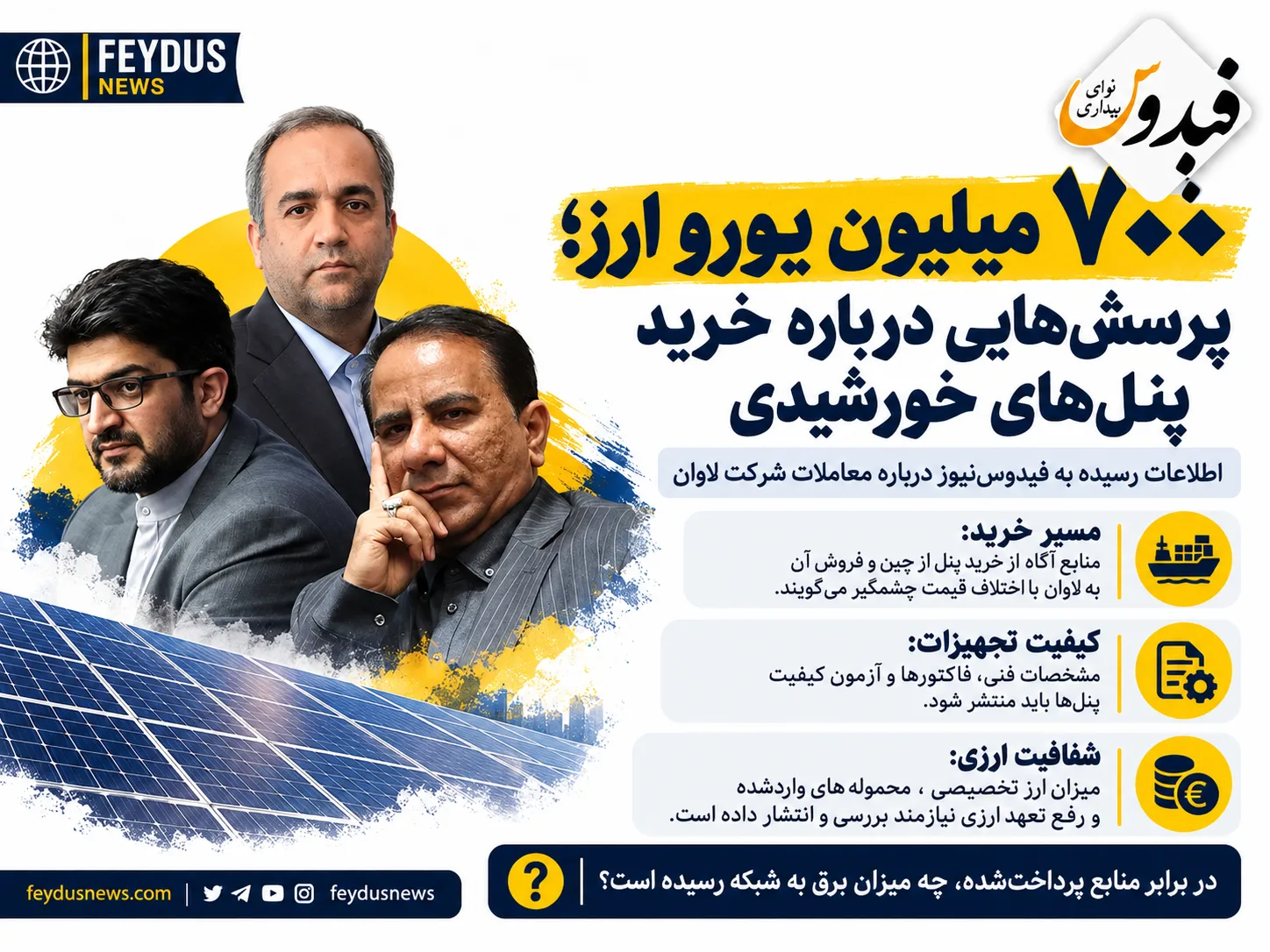
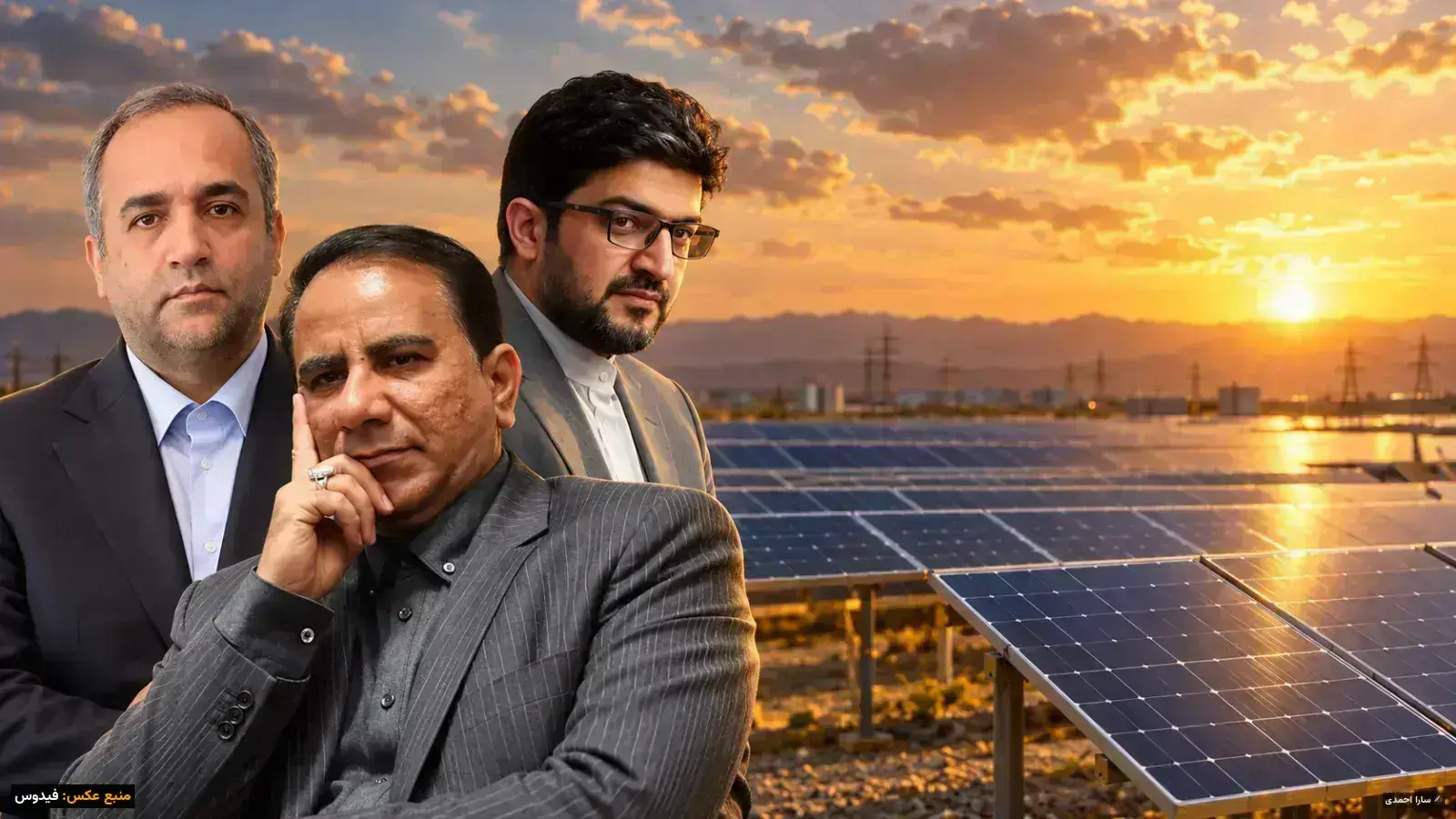
Information received by Feydus News indicates widespread corruption in the purchase of solar panels for the "Lavan Oil, Gas and Energy Development Group". Informed sources say panels were purchased from China with low quality and high prices and then sold to Lavan at much higher prices.
The names of Hossein Rahmati, Nima Faraji, and Jafarzadeh, CEO of Lavan, are mentioned in the information related to these transactions.
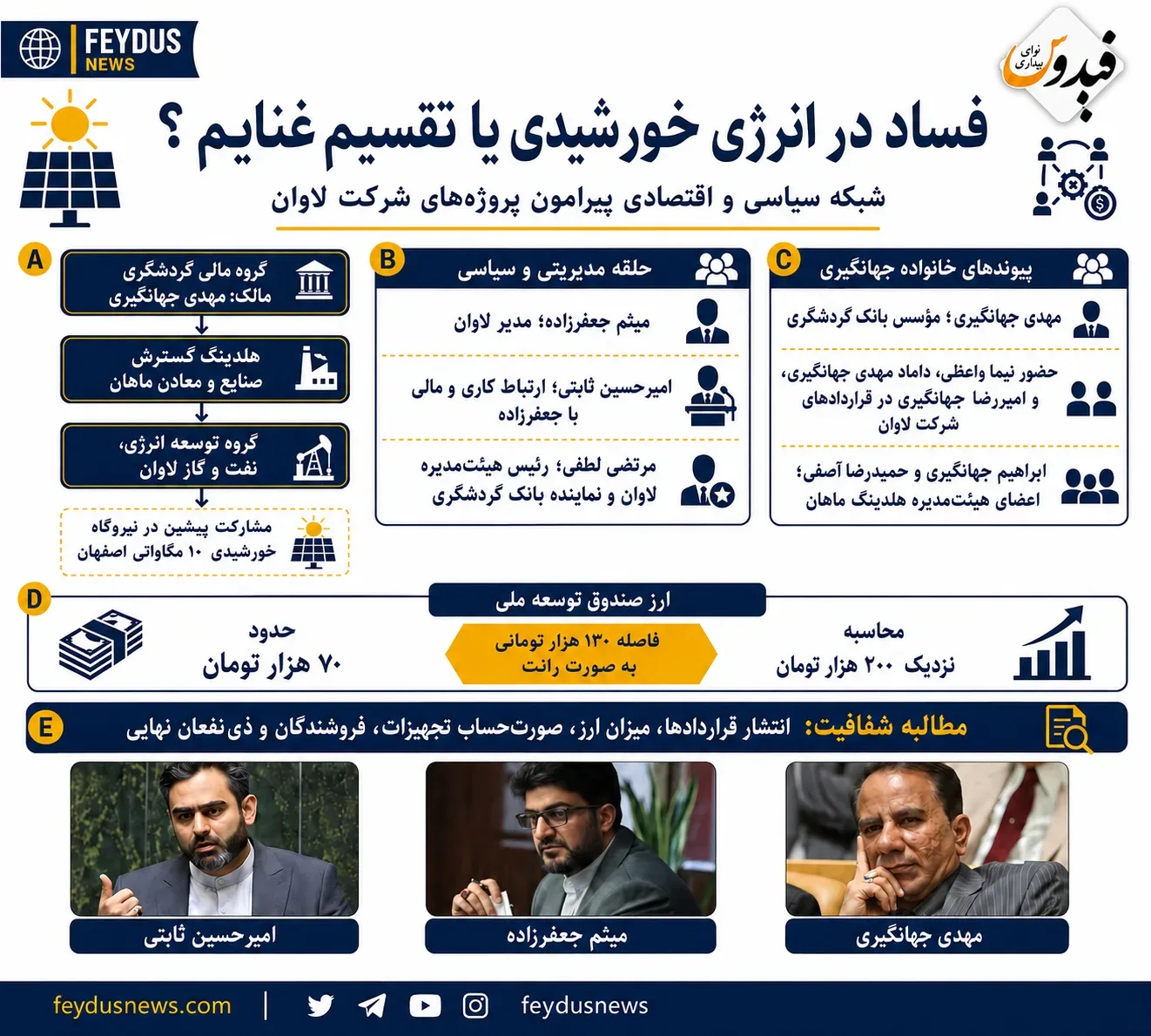
The importance of this case goes back to Lavan's position in the economic set associated with the Tourism Bank. The bank and the Tourism Financial Group have spoken about investment plans in thousands of megawatts of solar power. Mehdi Jahangiri, head of the Tourism Financial Group, emphasized the continuation of this investment at the inauguration of the 3-megawatt Kashmar power plant, and CEO Jafarzadeh stated that the performance criterion is the actual capacity connected to the grid. Now, the same criterion should be applied to equipment costs, panel quality, and project financial resources.
Lavan Company is a subsidiary of Mahan Industries and Mines Development Holding and is affiliated with the Tourism Financial Group, which indicates the deals made within the Tourism Holding and the Negin Tourism Holding under the management of Rahmati.
How did the panels reach Lavan?
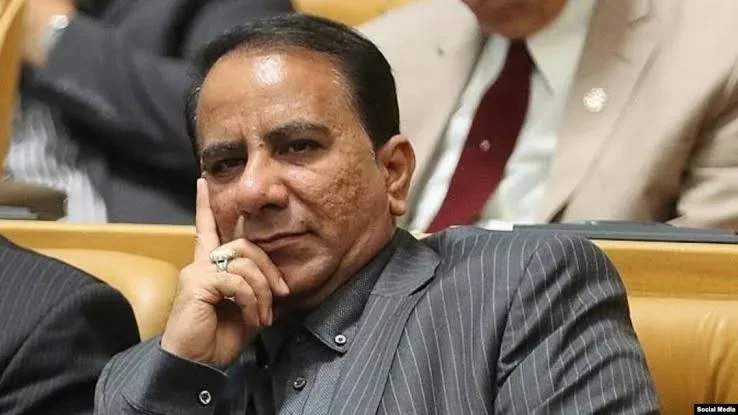
According to information available to Feydus News, the sensitive part of the transactions lies between the foreign purchase of panels and their sale to Lavan Company. Informed sources name Hossein Rahmati and Nima Faraji in the equipment supply route and say the selling price of the panels to Lavan had a significant gap with their purchase price from China. Questions are also raised about the quality and efficiency of the purchased equipment.
Clarifying this part is not difficult: the name of the foreign manufacturer and seller, the technical specifications of the panels, the purchase invoice, the domestic sales contract, and the quality test results should be placed alongside each other. In that case, it can be seen which company benefited from the price difference and whether the delivered panels match the specifications stated in the contract. Lavan and the Tourism Bank have not yet released details about this purchase chain in the available information of this report.
Alongside these transactions, the names of Mohammad Arshadi and Mostafa Taghvaei have also been mentioned in the information received regarding connections around Lavan. Investigating their potential roles requires the publication of organizational positions, contracts, and decision-making minutes regarding the selection of suppliers. The responsibility for answering lies primarily with the managers who approved the purchase and the individuals who were the company's contract parties.
The 700 Million Euro Question; Renewable Energies as a New Feast for Mafias
Another part of the information received by Feydus News relates to the allocation of 700 million euros for the import of solar panels in the context of government support for renewable energies. Informed sources say there is no proportion between the allocated currency and the imported goods, and part of the currency was sold in the Dubai market instead of supplying equipment. They also speak of the possibility of using stored goods in customs to settle currency obligations if the registered order information is changed.
This issue indicates that renewable energy has become a widespread corruption feast involving government and banking managers or various energy sector holdings. Arash Najafi, head of the Energy Commission of the Iran Chamber of Commerce, has reminded it is unclear who is behind the sale of solar panels who insistently intends to sell these panels. There are likely specific commercial interests behind this story, and perhaps some are seeking profit from selling solar panels.
The answer to this issue lies with the Central Bank, the Ministry of Industry, Mine and Trade, and customs. These institutions must publish the list of currency recipients, the date and amount of each allocation, the order registration ID, the specifications of imported shipments, and the status of currency obligation clearance. Until these data are compiled, the financial dimensions of the case and the relation of the 700 million euro figure with Lavan's specific contracts will not be clear.
Economic and Political Links
A previous report by Feydus News examined the structure of companies related to Lavan and the presence of figures close to the Jahangiri family. In the same report, questions were raised about Jafarzadeh's working relationship with Amirhossein Sabati and the potential role of these connections in introducing contractors. The main issue here is not the political positions of individuals; it must be determined who played a role in selecting the seller, approving the price, receiving financial resources, and settling currency obligations.
The potential use of Lavan projects from the National Development Fund resources also requires an answer. If the fund's credits or banking resources have been allocated to panel purchases, the amount paid, exchange rate, collateral, and repayment plan must be announced. Any abnormal increase in equipment prices can affect the cost of power plant construction and the return of these resources.
Lavan and the Tourism Bank can answer the questions of this case by publishing purchase contracts, import documents, quality control reports, and project cost statements. The final criterion is the same as emphasized by the CEO of Lavan: for the money paid, how much equipment of what quality was imported, and how many megawatts of electricity have been connected to the grid?