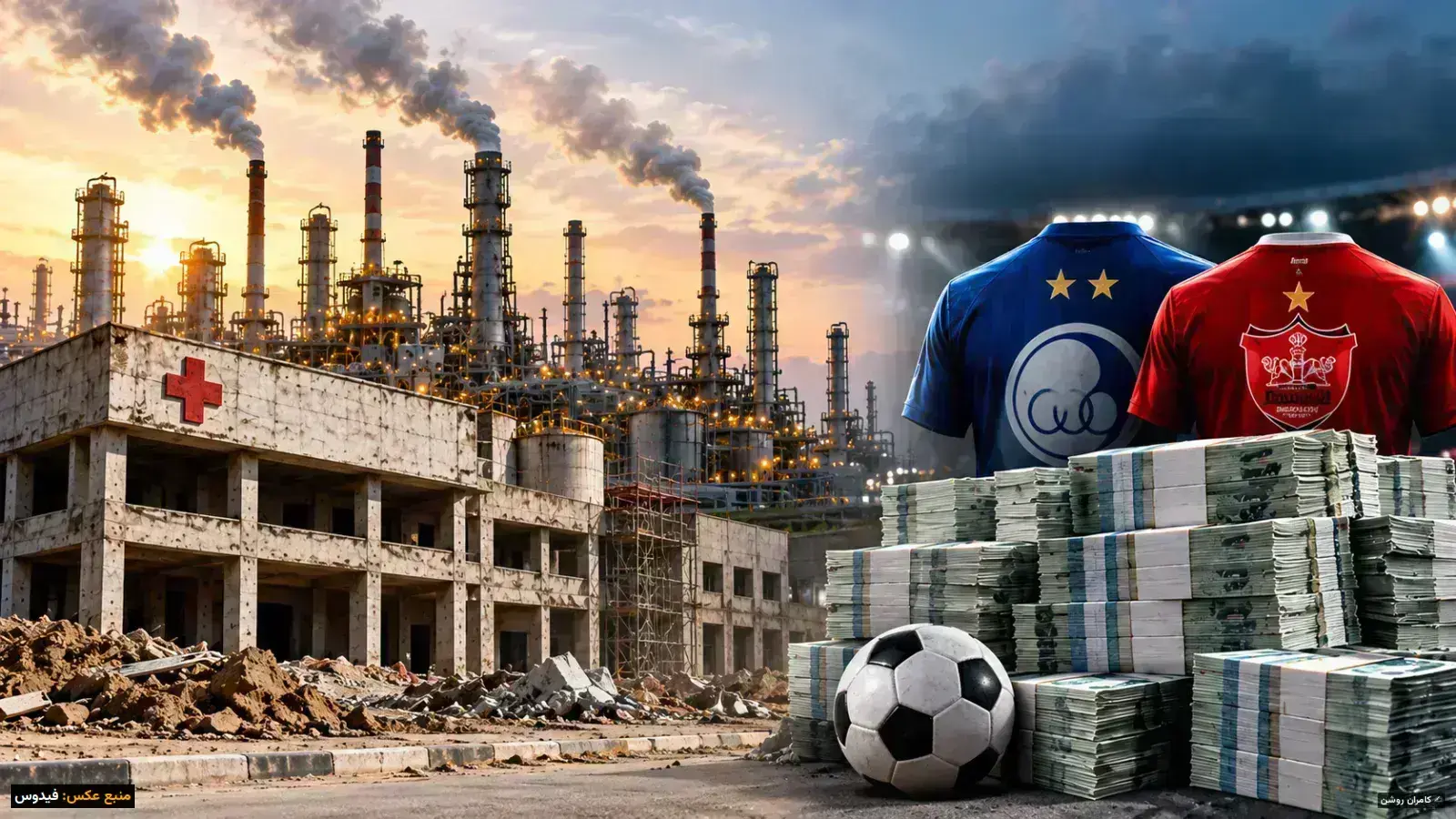
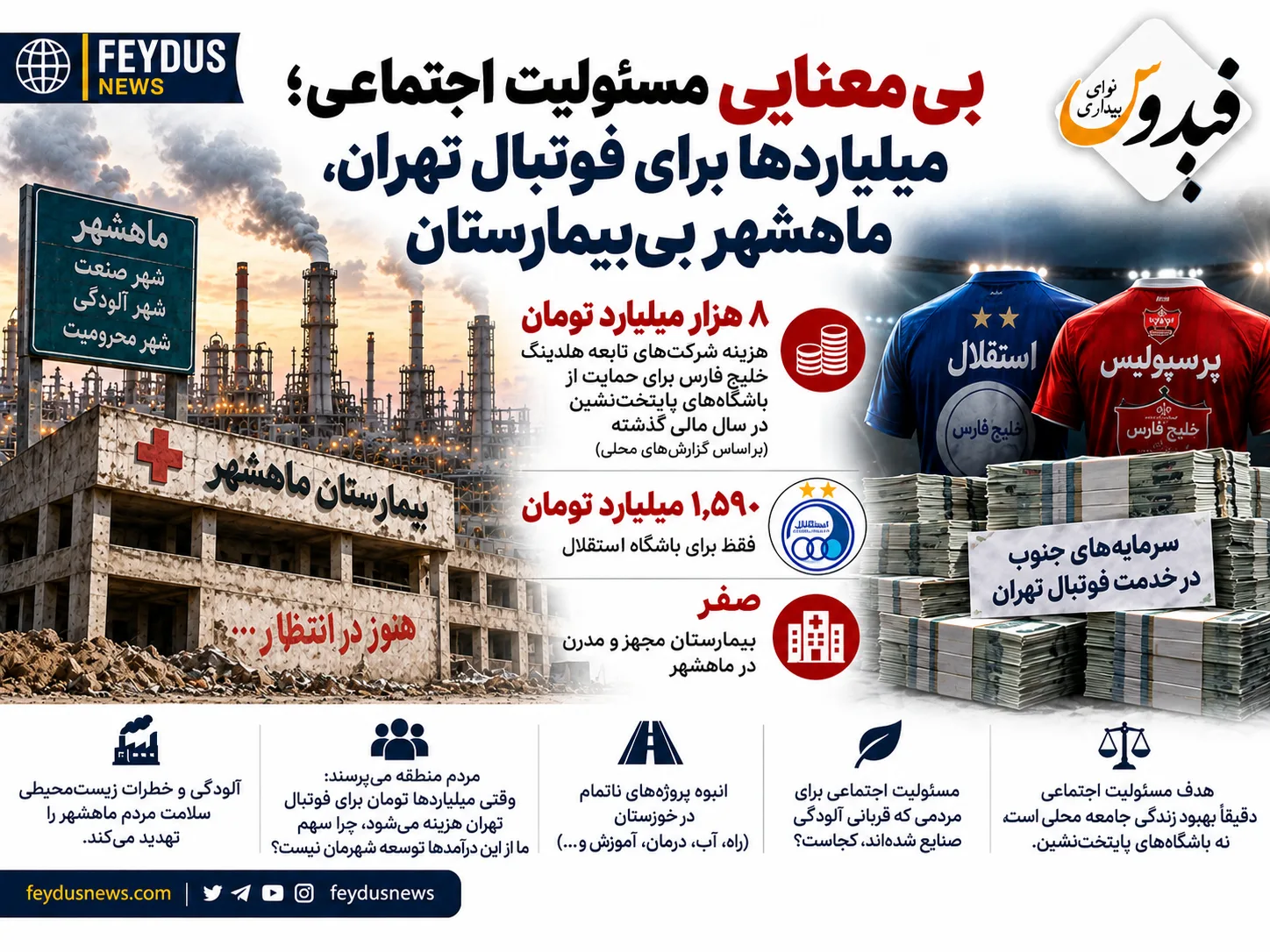
Mahshahr, a city located on one of Iran's wealthiest industrial zones, with the skyline of petrochemical chimneys, massive tanks, export docks, and multi-billion-dollar complexes, still faces a shortage of healthcare infrastructure. Meanwhile, industrial and petrochemical companies are spending billions of tomans to support football in Tehran. Some reports estimate the support costs for capital-based clubs in the last fiscal year at around 8 trillion tomans.
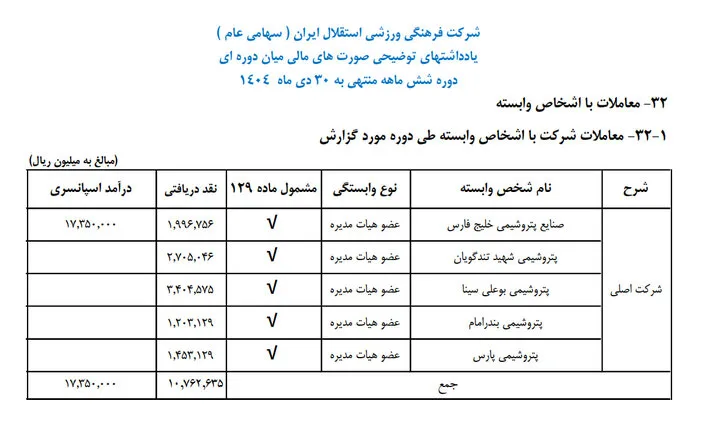
For example, Esteghlal Club earned nearly 1,772 billion tomans from sponsorship and advertising out of approximately 1,793 billion tomans in operational revenue, with about 1,735 billion tomans coming from the Persian Gulf Petrochemical Industries Company. These figures raise a fundamental question: How can the financial resources from companies whose major facilities and production are located in southern Iran be allocated to Tehran football, while the host community continues to demand hospitals, healthcare, roads, water, environment, and other essential infrastructure?
Tehran Football; The New Destination for Southern Industries' Money
The transfer of Esteghlal's ownership to a consortium of companies from the Persian Gulf Petrochemical Industries Group sparked debate over the spending priorities of this group. Mohsen Paknejad, the Oil Minister, stated in December 1403 that he did not know why the Persian Gulf Holding entered this field and emphasized that these resources could have been invested in other productive structures. Ebrahim Rezaei, the representative of Dashtestan, also criticized the holding's approximately 1,500 billion toman expenditure on Esteghlal, linking this issue to the social responsibility of industries in host areas.
The management of the Persian Gulf Holding later announced that Esteghlal's expenses are not paid from the "social responsibility" budget and that the holding views the club economically with the aim of profitability. However, this explanation does not necessarily address the concerns of the southern population. The issue is "investment allocation priority" in a group where a significant portion of its economic value is produced in the southern regions of the country. When billions of tomans can be provided for a football club, why should the financing of vital projects in host cities remain stuck for years between promises, agreements, and gradual implementation?
Mahshahr; A Hospital Whose Need is Acknowledged by the Industry Itself
The contradiction becomes more serious when we look at Mahshahr's healthcare situation. In June 1402, an agreement for the construction of an accident and burn hospital in Mahshahr was signed with the participation of Amir Kabir Petrochemical. The then-CEO of this company explicitly stated that the presence of petrochemical industries and the risk of industrial accidents were the reasons for the region's "urgent need" for such a hospital. This means that the industry itself has acknowledged that the extensive concentration of petrochemicals in Mahshahr creates special healthcare needs.
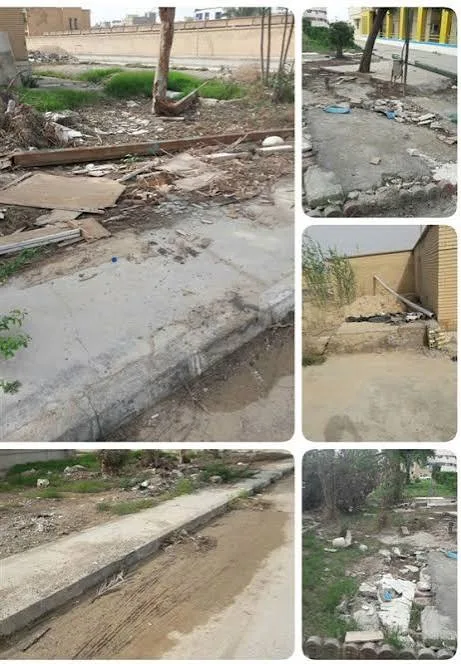
Of course, it cannot be said that petrochemical companies have not spent anything in the region. The Strategic Council of the Special Zone announced 75 development, educational, healthcare, and support projects in Mahshahr, Bandar Imam, Chamran, and Taleghani Town for 1403, and actions such as repairing the cooling system of Navid Hospital have been carried out. Razi Petrochemical has also participated in equipping medical centers and providing ultrasound devices. Bandar Imam Petrochemical has announced that it is responsible for about 27 to 30 percent of the region's social responsibility projects and has participated in water supply projects.
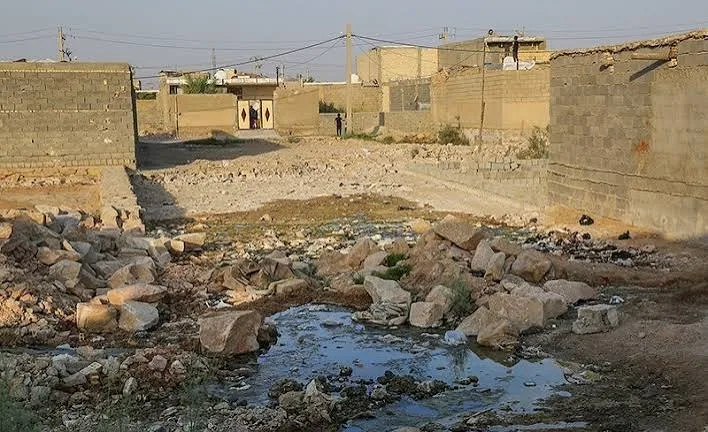
However, critics' issue is precisely the comparison of scales. Repairing a chiller, purchasing a few medical devices, or implementing scattered projects, although necessary and defensible, do they match the scale of income and social and environmental impacts of one of the country's largest petrochemical hubs? This question is especially important in a region where industrial pollution is a real concern. Even the opening of the Mahshahr Environmental Education and Monitoring Center with equipment for measuring water and soil pollutants was carried out with an emphasis on the special importance of such a center due to the presence of large petrochemical industries.
Who is Social Responsibility For?
The very philosophy of social responsibility in oil and petrochemical regions is here. The local community is not just a neighbor to a factory; it also bears the costs of industrial development: pressure on water resources, air and soil pollution, risks of industrial accidents, heavy traffic, land use changes, and pressure on urban infrastructure. The Deputy Oil Minister and CEO of the National Petrochemical Company had previously emphasized that one of the industry's most important responsibilities is to pay attention to "local communities in the region" and that the social responsibility budget should be spent purposefully.
Therefore, the question of the people of Mahshahr is not so complicated: If the industries located in the south can provide thousands of billions of tomans for professional football in Tehran, why shouldn't the creation of healthcare, environmental, road, and urban infrastructure matching the scale of those industries' activities be a top priority? Mahshahr is not against football; the issue is the fair distribution of development benefits. A city that has endured years of smoke, pollution, industrial risks, and social consequences of wealth production expects its share of this wealth to be more than limited employment, a few scattered projects, and repeated promises.
Perhaps this is why today the most important demand is not just the construction of a hospital, but the publication of a transparent account: Exactly how much income and profit have the companies based in Mahshahr and their holding companies made in the past five years, how much have they spent on professional football and activities outside the host areas, and in contrast, how much of their resources have been allocated to hospitals, pollution reduction, water, roads, schools, and infrastructure in Mahshahr and other southern cities?
The answer to these few numbers can show whether "social responsibility" in the oil and petrochemical industry is truly responsibility towards the host community or a title from which the share of people living next to the chimneys is much less than the share of the capital's football.