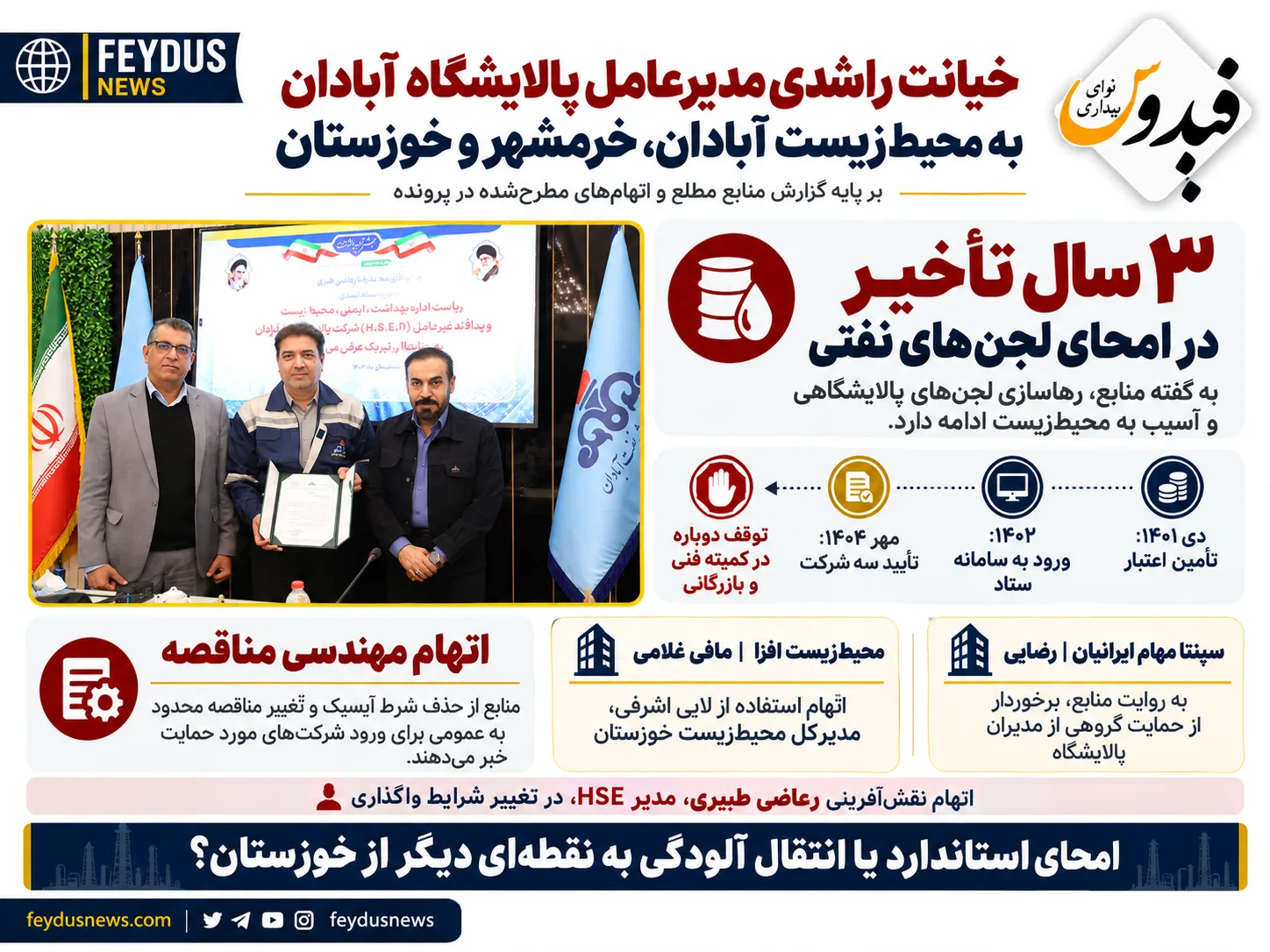
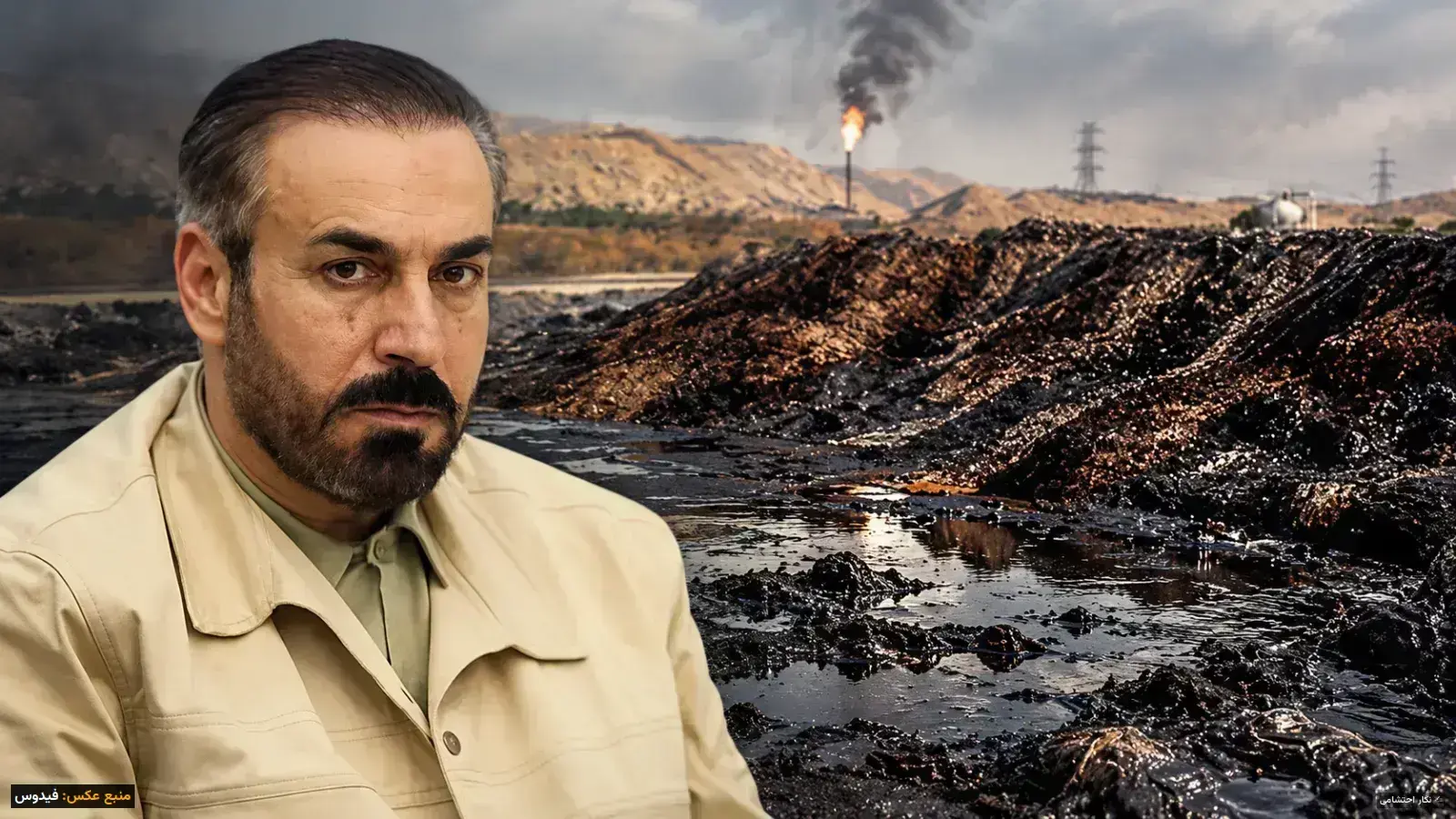
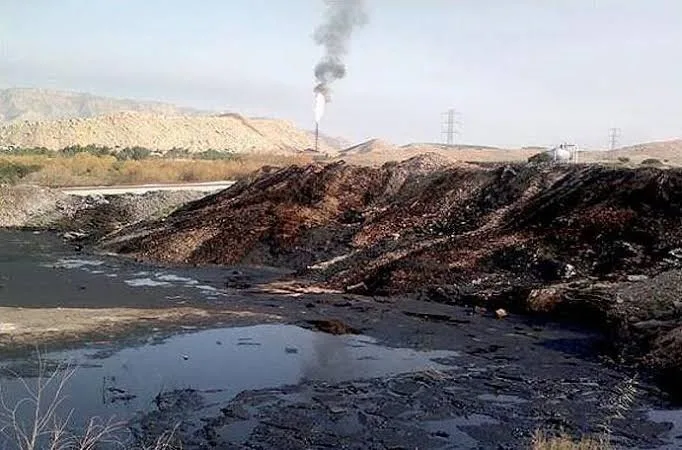
The project for the treatment and disposal of oil sludge at the Abadan refinery, after three years of delay and repeated halts in the transfer process, has still not reached a conclusion; a delay that, according to informed sources, has continued with the release of refinery sludge and damage to the environment. The main question now is the responsibility of the refinery managers regarding the waste that has been pending disposal for years, with its consequences affecting the people of Abadan, Khorramshahr, and the environment of Khuzestan.
Environment Waiting for Resolution of Dispute Over Interests
According to informed sources, having the ISIC code from the country's comprehensive environmental system was a set requirement for companies bidding on the project. The environmental nature of the plan also required that the contractor be selected based on technical ability, relevant licenses, and the ability to perform standard disposal.
However, according to the received narrative, the tender was held several times and then canceled or renewed. The allegation against a group of former refinery managers and experts is that they hindered the project's progress due to not sharing in the benefits of the transfer. If this narrative is true, the dispute over contract interests has stopped the execution of a plan whose necessity was to prevent ongoing environmental damage.
Finally, in October 2025, after some individuals were removed from their responsibilities, three companies approved by the HSE,
the refinery's environment, and the county's environment were introduced to the board of directors. The board also issued a resolution for holding a limited tender; a decision that could have opened the path for executing the project.
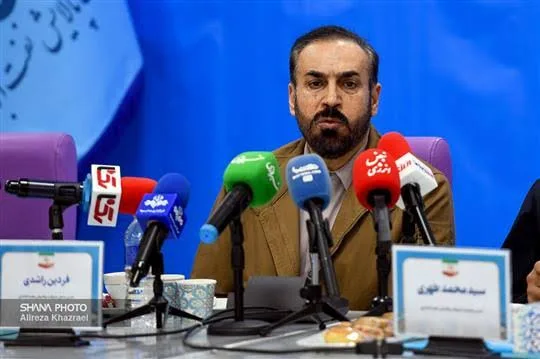
But according to received information, the case was once again, this time for 20 days, halted in the technical and commercial committee. The reason attributed to this halt was the absence of companies desired by some managers in the list of approved ones. Thus, even technical approval and the board's resolution could not end the uncertainty.
Rashidi's responsibility, as CEO of the Abadan refinery, is raised at this point: why has a project with such environmental necessity, despite funding and passing part of the approval stages, still not been executed? The refinery management must explain how the sludge has been stored or moved during these halts and what assessable actions have been taken to prevent their release.
Three Years of Delay; Now Concern Over Transfer to Non-Specialized Companies
After this long hesitation, informed sources report a change in tender conditions and efforts to pave the way for transfer to two specific companies. According to them, removing the requirement of having an ISIC code and changing the tender from limited to public has served to introduce options that were not previously on the list of approved companies.
In this narrative, the name of the company Mohit Zist Afza, managed by Ms. Mafi Gholami, is mentioned with the allegation of having the lobby of Ashrafi, Director General of Khuzestan Environment. The other option is Sepanta Maham Iranian Company, managed by Mr. Rezaei, which sources introduce as having support and connections with a group of refinery managers.
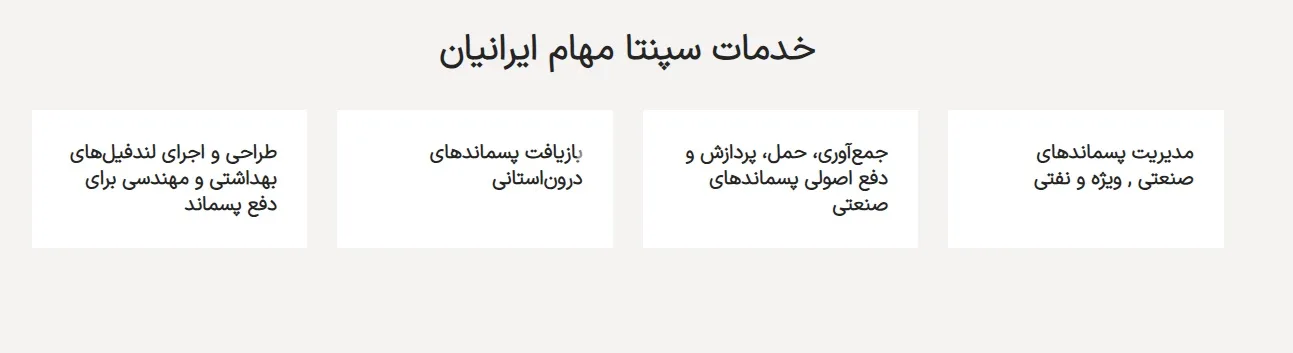
Additionally, Raazi Tabiri, the manager of the HSE, is accused of advancing the change in transfer conditions according to the wishes of this group. These are the allegations raised by the case sources, and the official result of the tender or the verification of the companies' technical qualifications is not specified in the provided information.
However, the main concern is clear: if the project is entrusted to a company lacking the necessary technical ability, what guarantee is there that the collection of sludge from the pond will not lead to its transfer and release at another point in the province? The end of the work must be measured by standard treatment and disposal, with the ability to track the transport route, processing location, and final fate of the waste.
After three years, the people of Abadan and Khorramshahr have the right to know who is responsible for this delay and on what basis the executor is chosen. Publishing the records of the halts, the reasons for changing the tender conditions, and the selected contractor's technical documents is the first step in accountability. A project defined to control pollution should not become a new link in the continuation of the same pollution through relationship-based transfers.