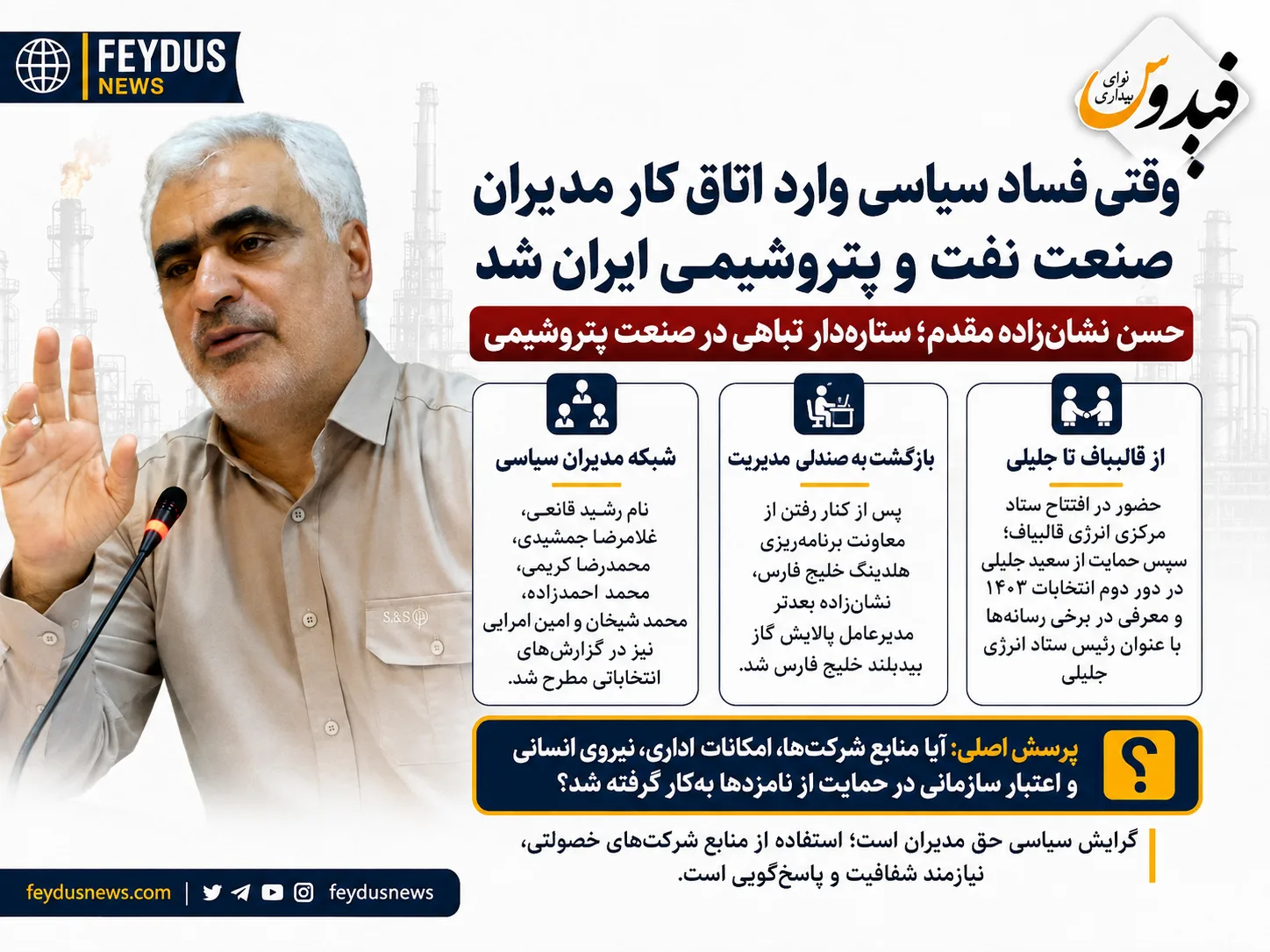
The presence of a group of senior managers from Iran's oil and petrochemical industry in the presidential election campaigns of 2024, was one of the most controversial examples of the entry of managers from large economic semi-governmental enterprises and major oil and energy holdings into political competitions; an event that from the very beginning raised the question of where the boundary lies between the "personal political inclination" of managers and the use of position, influence, and resources of large state and semi-governmental companies.
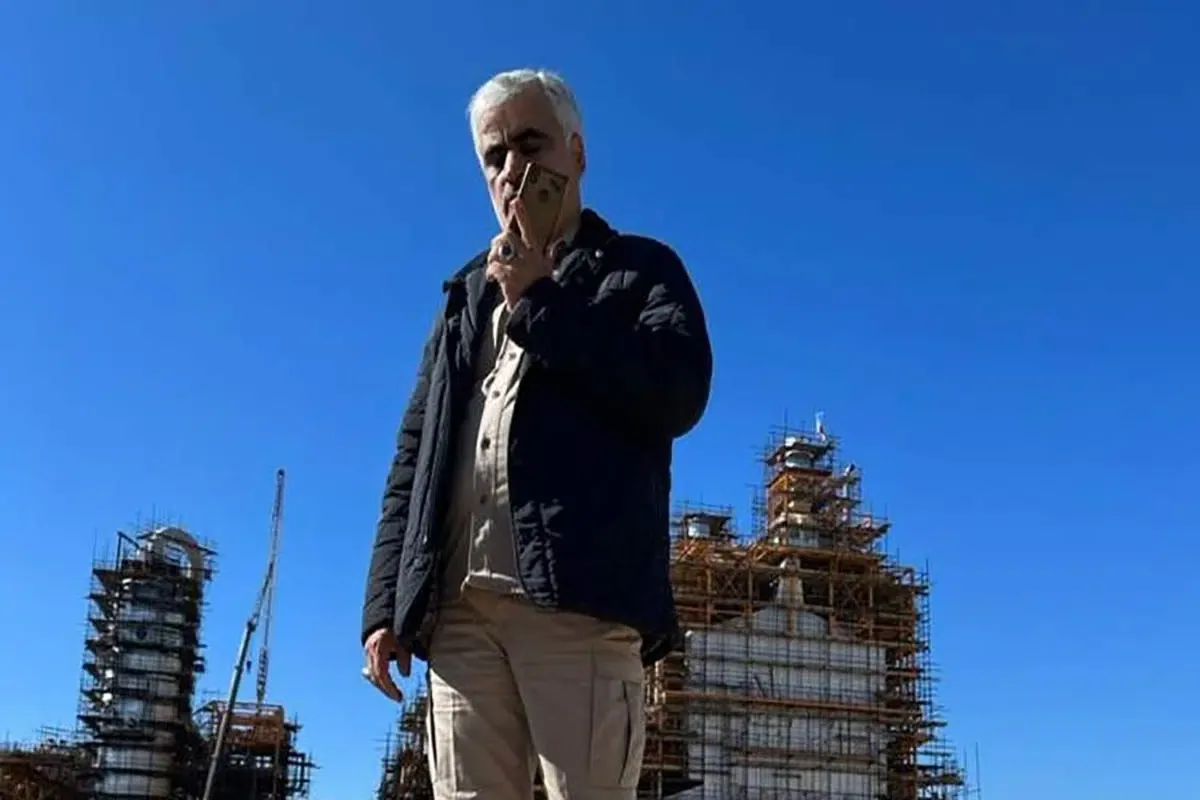
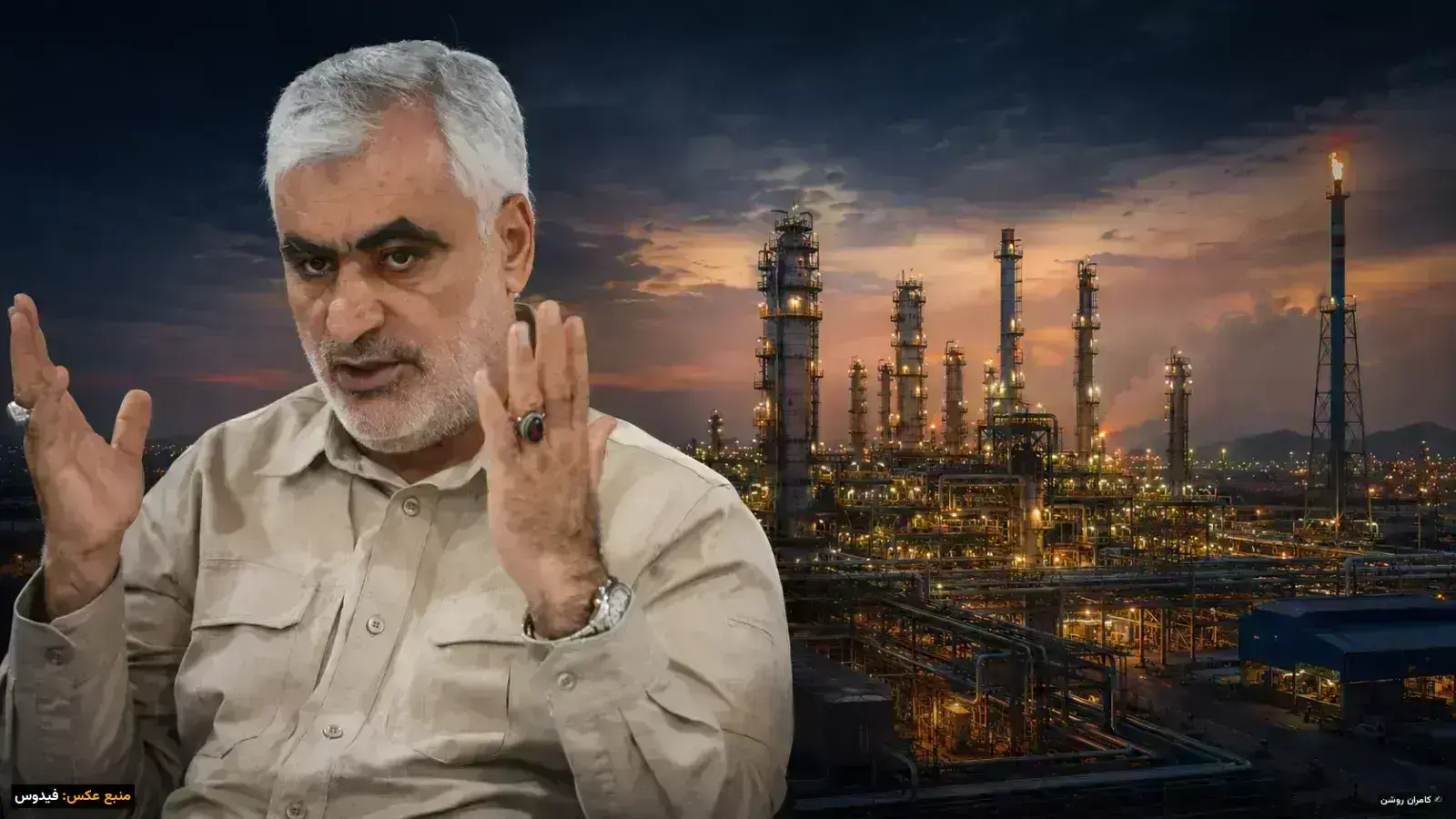
One of the main figures in this matter was Hasan Neshanzadeh Moghadam; a manager who at that time was the Deputy of Planning and Business Development of the Persian Gulf Petrochemical Industries Company and later became the manager of Bidboland Gas Refinery in the Persian Gulf.
The review of reports published during the election shows that Hasan Neshanzadeh initially attended the opening ceremony of the Central Energy Headquarters of Mohammad Bagher Ghalibaf. In media reports related to this ceremony, his name appeared alongside several current and former managers and officials of the oil and energy industry.
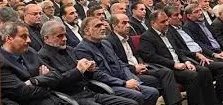
After Ghalibaf's elimination in the first round and the advancement of Masoud Pezeshkian and Saeed Jalili to the second round, specialized petrochemical industry media reported on the official support of Hasan Neshanzadeh and the group of managers who had set up election headquarters with him, for Saeed Jalili. Later, some specialized media referred to him as the "Head of Jalili's Energy Headquarters".
However, the issue was not limited to one manager. In reports published during that period and in the months following the election, the names of several other managers in the petrochemical industry, including Rashid Ghaanei, Gholamreza Jamshidi, Mohammad Reza Karimi, Mohammad Ahmadzadeh, Mohammad Sheikhan, Amin Amraei, and others, were mentioned in connection with supporting election candidates.
This event was significant because these individuals were not ordinary political activists, but managers of companies, some of which had billions of dollars in financial turnover, projects, contracts, tenders, and human resources at their disposal. This led to the question in the industry whether the political support of these managers was merely a personal choice or was intended to be a tool for maintaining managerial positions, gaining political support, and influencing future appointments.
Turning Petrochemical Companies into ATMs for Election Headquarters
Some media even made claims about financial assistance from petrochemical groups to election headquarters or pressure on managers to support specific candidates. The significance of the matter increased when some managers present in these political networks later found themselves at the center of critical reports regarding managerial performance, contracts, or financial issues.
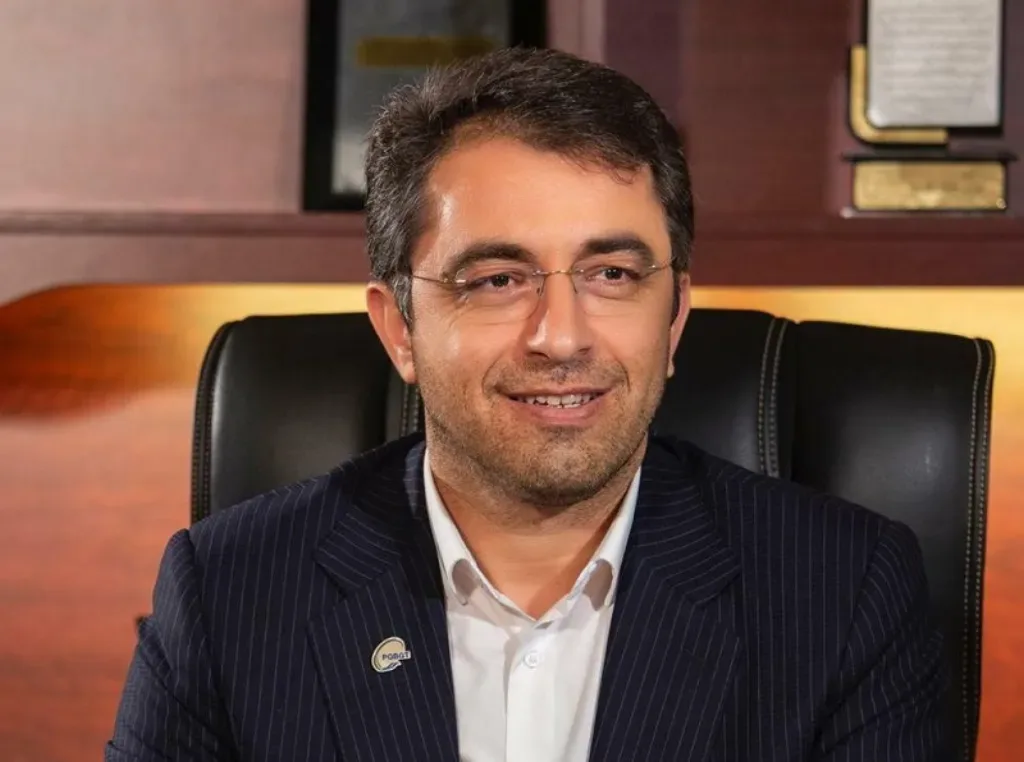
For example, regarding Mahmoud Aminnejad, the former CEO of Bidboland Gas Refinery, reports about violations and managerial ambiguities were published that even led to a legal complaint against a journalist. Reports based on financial statements and the status of subsidiary projects and widespread financial corruption were also published regarding Hasan Neshanzadeh, Amin Amraei, and Abbas Karimi.
The juxtaposition of these records with the open presence of managers in election headquarters raises a serious question about the relationship between politics and economic management in the petrochemical industry.
After Masoud Pezeshkian's victory, Hasan Neshanzadeh temporarily lost his position in the Planning Deputy of the Persian Gulf Holding, and Mahmoud Aminnejad replaced him as the head of Masoud Pezeshkian's Energy Headquarters. However, this departure was not permanent, and Neshanzadeh was later appointed as the CEO of Bidboland Gas Refinery in the Persian Gulf; one of the important companies with large projects in southern Iran.
This appointment once again revived the discussion about the relationship between political support and managerial positions. Some specialized media claimed that the support of political currents played a role in his return to an important managerial position. However, the main issue goes beyond Hasan Neshanzadeh or any other manager.
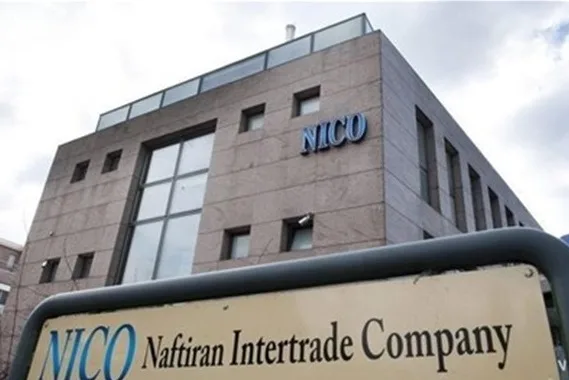
Corruption Records from NICO to Energy Holdings
Iran's oil and petrochemical industry has a long history of linking politics, massive financial resources, and opaque networks. The petrochemical trading corruption case, NICO company in the transfer of oil resources, and later the issue of "trustees" have shown how the lack of oversight and political and security misuse of oil money circulation can lead to the loss of public resources.
The organized entry of managers from large oil and petrochemical companies into election headquarters, in such a structure, cannot be considered merely a normal political event.
Of course, managers, like other citizens, have the right to have political inclinations, but when the CEO or deputy of a large semi-governmental holding enters the election competition with a managerial title and position, it must be clear whether the company's resources, administrative facilities, human resources, and organizational credibility have been used in this path or not.
In Iran, however, there is neither a transparent mechanism for declaring conflicts of interest nor is information usually published about the costs and financial connections of semi-governmental enterprise managers with election headquarters.
Therefore, the 2024 elections can be considered one of the most public examples of the entry of petrochemical industry managers into political competition; a trend in which Hasan Neshanzadeh was one of the main symbols and starred figures.