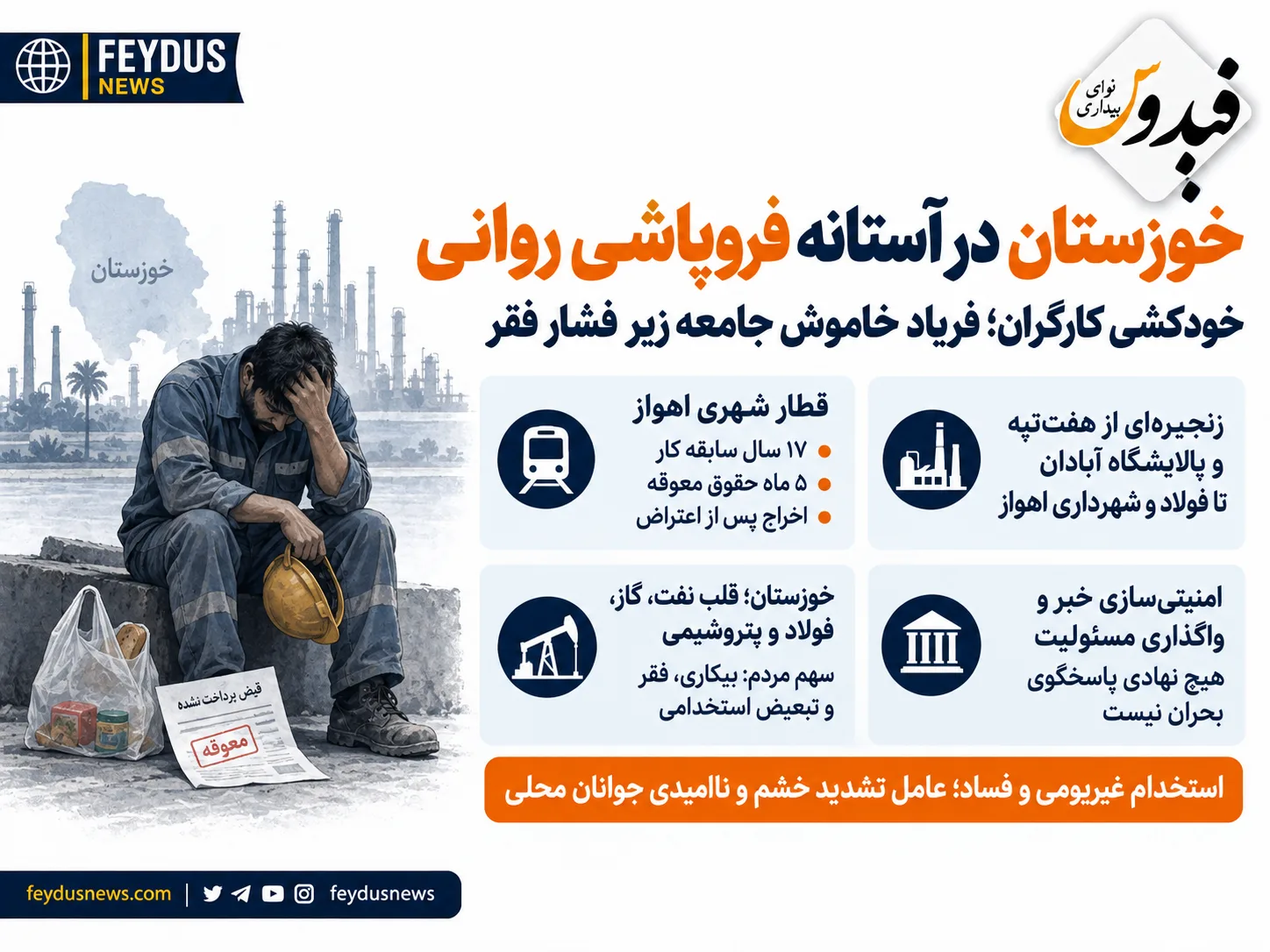
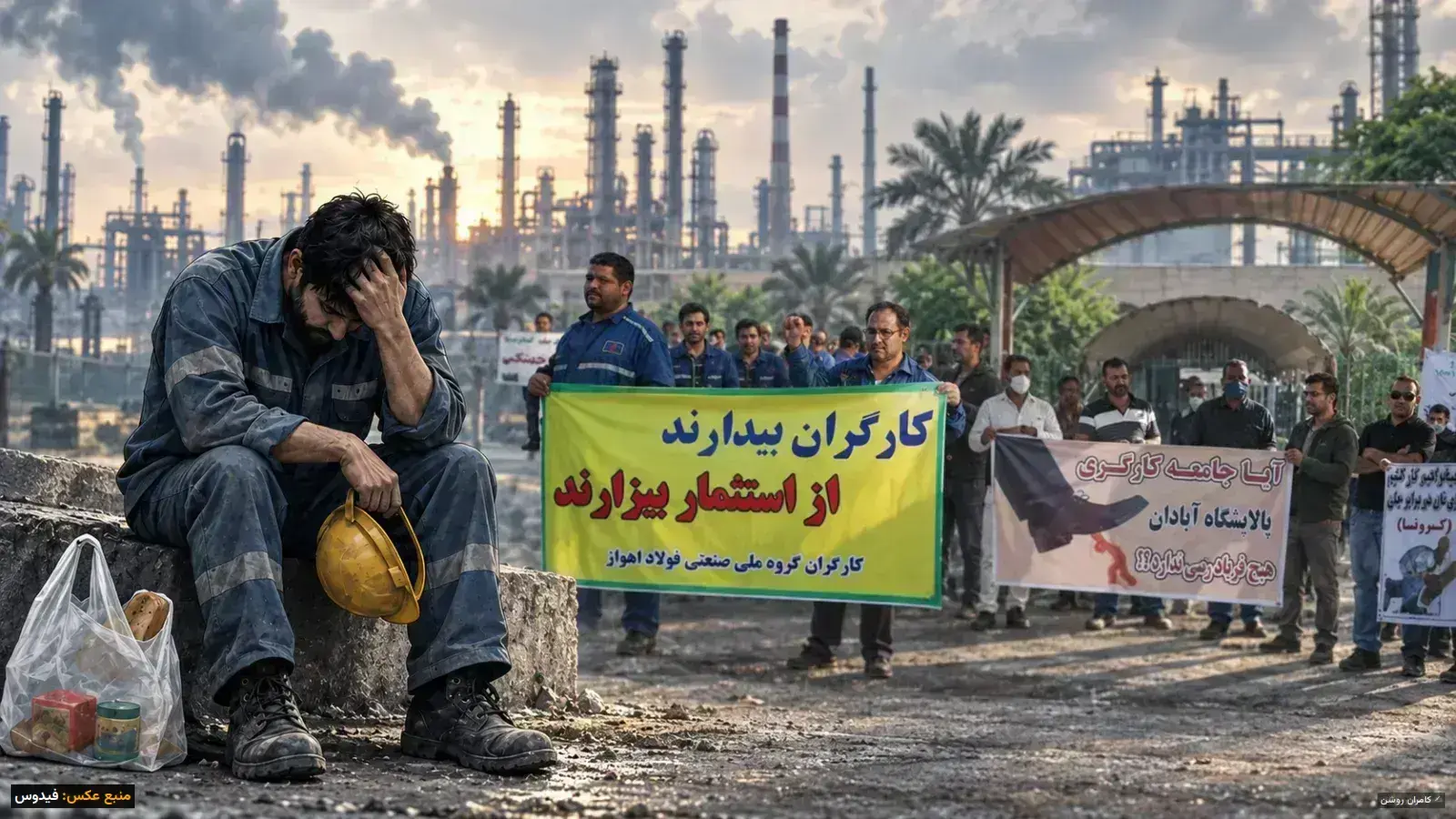
The self-immolation of a metro worker in Ahvaz is the latest link in a chain that extends from Haft-Tappeh and Abadan Refinery to the steel industry and Ahvaz Municipality; a province sitting on a treasure of oil, gas, steel, and petrochemicals, yet many of its people face unemployment, overdue wages, employment discrimination, and hopelessness.
On the morning of Sunday, September 6, in front of the Ahvaz Municipality, the voice of a worker was heard once again only when he put his life at risk. A worker in his 40s, who had been a guard for the Ahvaz metro project for 17 years, set himself on fire after months of enduring overdue wages and sudden dismissal.
According to ILNA, this worker, along with his colleagues, had gathered in front of the municipality to demand five months of unpaid wages; however, the contractor's response to their protest was his dismissal along with four other workers. The next day, he went to the municipality to follow up on his job status and demands, and after receiving no response, he resorted to a desperate act. Bystanders extinguished the fire, and he was hospitalized in Taleghani Hospital in Ahvaz with burns. This worker is the head of a household and father of two children.
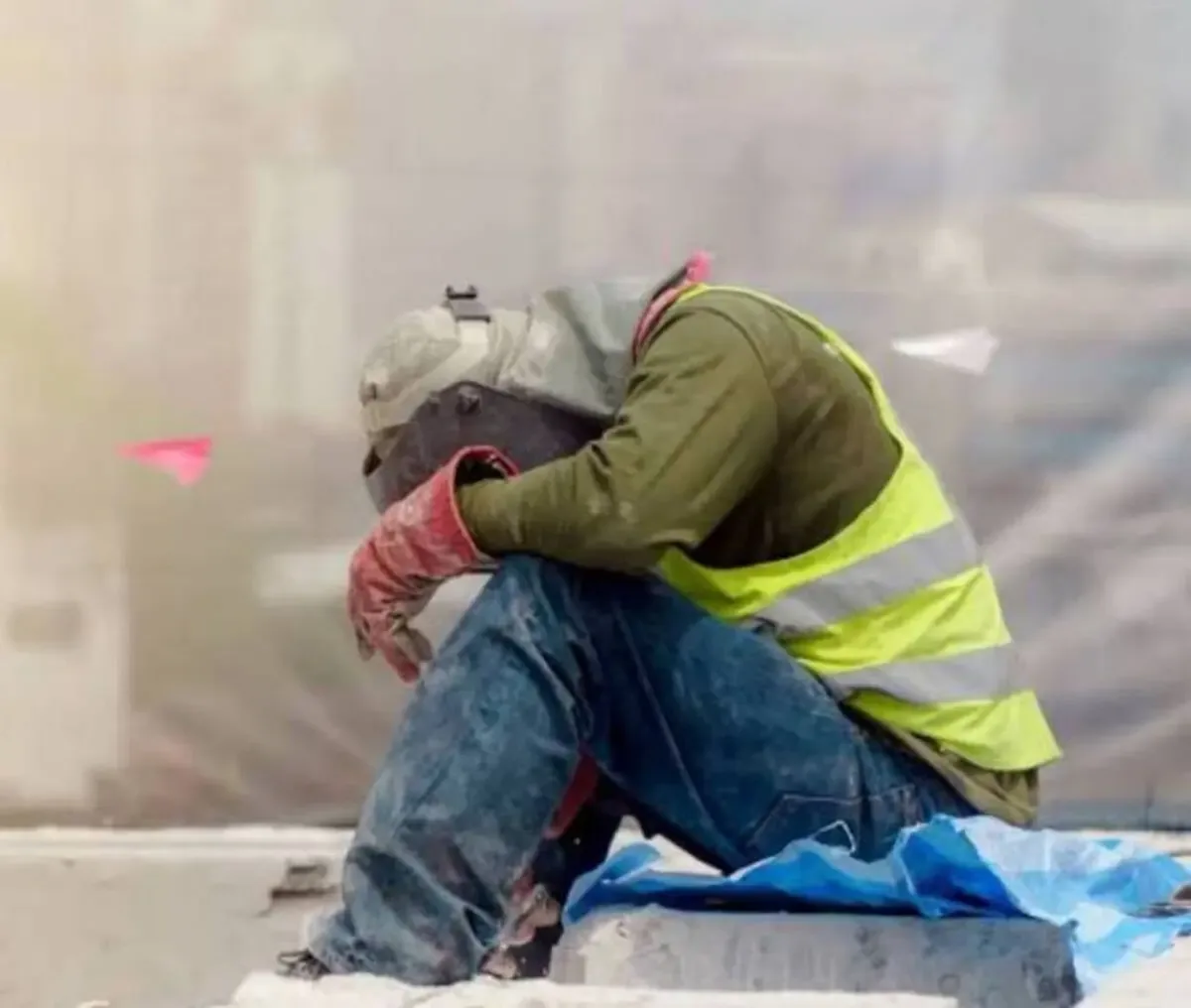
The issue cannot be reduced to an individual worker's decision or a dispute between a contractor and human resources. Five months of work without receiving wages, especially for a household head whose job security is destroyed with a single order, is a form of structural violence. In such a situation, the worker first loses income, then a sense of security, and finally hope for the future.
A Chain Continuing from Haft-Tappeh to Ahvaz
The metro incident is not the first warning in Khuzestan. In March 2018, Ali Nagdi, a seasonal worker at Haft-Tappeh sugarcane with about 27 years of experience, ended his life after fruitless pursuit of wage and insurance claims. His colleagues said workers' wages were months overdue, and their retirement insurance premiums were unpaid.
In December 2020, the death of Reza Al-Kathir, a 24-year-old who had worked at Haft-Tappeh for a while, was reported. His relatives cited unemployment, the difficult family situation, and job loss as pressure factors on him; although the Shush prosecutor denied his employment relationship with the company. The contrast between the family's and labor unions' narratives on one side and the quick judicial response to absolve the company on the other is an example of the old game of shifting responsibility.

In August 2023, media reported the suicide of a 35-year-old daily wage worker in the Abadan Refinery maintenance section after being dismissed. His family cited poverty, lack of money, and unemployment as the background for this incident; an event near one of Iran's oldest and wealthiest oil centers. This trend became more apparent in 2024. According to published reports, Raad Silavi, a worker from Gheyzaniyeh, died after being dismissed from work. Shortly after, Kamal Baldi, a former worker at Ahvaz Steel Industries, ended his life after about a year of unemployment and financial pressure. He was 26 years old, married, and father of a child, and had to temporarily migrate to Iraq to find work.
During the same period, two Razi Petrochemical workers attempted suicide in protest against wage cuts and being prevented from entering their workplace, but were dissuaded by others. In November 2024, Ahmad Al-Khamis, a municipal terminal services worker in Ahvaz, took his life after 22 years of work following a sudden dismissal.
The self-immolation of Kamal Baldi, a 20-year-old from Ahvaz, following the municipality's attempt to demolish his family's business site, also became a symbol of accumulated anger and a sense of helplessness among Khuzestan's youth. Although each of these incidents has different individual backgrounds, the repetition of factors such as dismissal, unemployment, poverty, administrative humiliation, and unanswered protests cannot be considered coincidental.

A Wealthy Province with Impoverished People
Khuzestan is one of the most important centers for the production of oil, gas, steel, petrochemicals, electricity, and agricultural products in Iran and is considered the second-largest provincial economy in some calculations. However, this province has been among the critical provinces in unemployment, deprivation, and economic misery indices for years.
According to data published by the Statistics Center, Khuzestan in spring 2024 with an unemployment rate of 11 percent and a point-to-point inflation rate of 35.6 percent, recorded a misery index of 46.6 units. The province's unemployment rate later that year was reported to be around 12 percent; a significant gap from the national average. These figures do not fully reflect underemployment, daily wage work, temporary contracts, and young people who have given up on finding jobs and left the labor market.
The fundamental question is: how can a province that produces a large portion of the national wealth not guarantee job security and the minimum livelihood for a worker who has spent 17 years of his life on an urban project? Where is the revenue from the oil, petrochemical, and steel industries spent, and why are its effects not seen in sustainable employment, healthcare services, transportation, education, and public welfare for the province's people?
Alongside this contradiction, numerous reports about corruption in contracts, contracting, tenders, managerial appointments, and intermediary networks in Khuzestan's industries have been published. Large financial resources that could have been spent on the province's development and improving people's lives are trapped in opaque structures, and the worker at the end of the chain has to gather even to receive wages he has already earned.
Non-local Employment and the Anger of Local Youth
Another focal point of dissatisfaction is the recruitment of non-local workers in large companies, leaving the youth of surrounding areas deprived of job opportunities. In recent months, numerous gatherings have been held in Hoveyzeh, Mahshahr, and villages around Ahvaz demanding the employment of local workers.
A young person who breathes the refinery and petrochemical smoke, endures water shortages, pollution, heat, and environmental degradation, but remains outside the company doors during recruitment, experiences discrimination not as a statistical concept but in his daily life. When job opportunities are influenced by connections, recommendations, non-transparent quotas, and political networks, educational qualifications and skills also lose their value. The result is an accumulation of anger that sometimes manifests in street protests and sometimes in psychological collapse.
Security Approach to News Instead of Solving the Crisis
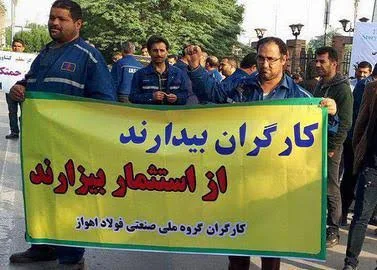
The reaction of part of Khuzestan's executive management to labor protests has often focused on controlling the news. The history of summoning, arresting, and banning protesting workers from Haft-Tappeh and Ahvaz National Steel Group shows that an issue with an economic and labor nature has repeatedly been met with a security response.
This approach is also evident in dealing with the media in the form of pressure to remove news, threats of lawsuits, and restricting local journalists. It seems the main issue is not the occurrence of a human tragedy; it's the publication of its news. However, silencing the media does not pay overdue wages, does not reinstate dismissed workers, and does not create jobs for unemployed youth.
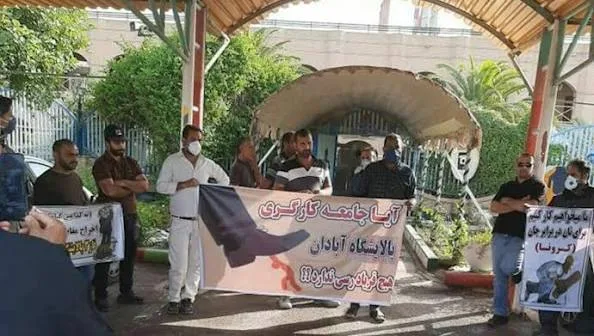
Alongside securitization, provincial managers pass responsibility between the municipality, contractor, labor department, judiciary, parent companies, and central government. The municipality blames the contractor, the contractor talks about not receiving dues, and executive bodies present themselves as lacking authority. In the end, everyone explains, but no one takes responsibility.
The action of the Ahvaz metro worker is not a "personal incident"; it is a warning sign for a society where even working does not guarantee survival and family support. Khuzestan needs more than any statement or meeting to immediately pay wages, reinstate dismissed workers, ensure transparency in contracting contracts, prioritize the real employment of local workers, combat corruption, and provide broad access to mental health services.
If managers once again reduce the issue to an administrative dispute and overshadow the news with security pressure, they have only hidden the problem. The fire that was lit in front of Ahvaz Municipality had already flared up in the lives of thousands of Khuzestani families; the fire of poverty, discrimination, unemployment, and unanswered protests.