
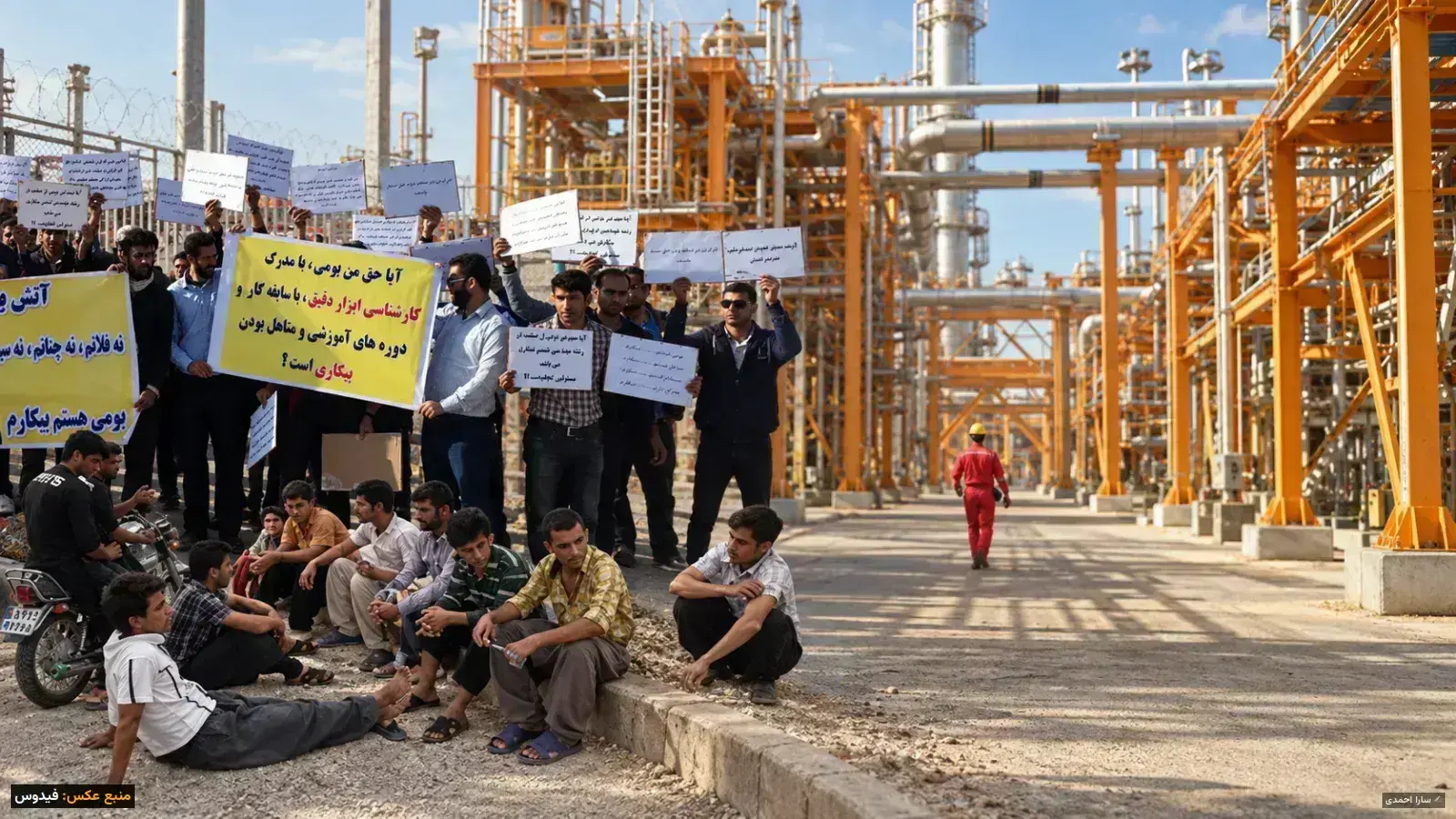
Bushehr province sits on one of the world's largest energy reserves; from the South Pars gas field and the petrochemical complexes of Asaluyeh and Kangan to the Kharg oil terminal, nuclear power plant, commercial ports, and marine industries. Yet, many of the youth of the province find their share of this wealth to be standing at the gates of companies, temporary contracting jobs, or migrating to other provinces. This contradiction is no longer explained by a lack of resources; the issue is a management structure that has turned public opportunities into private privileges..
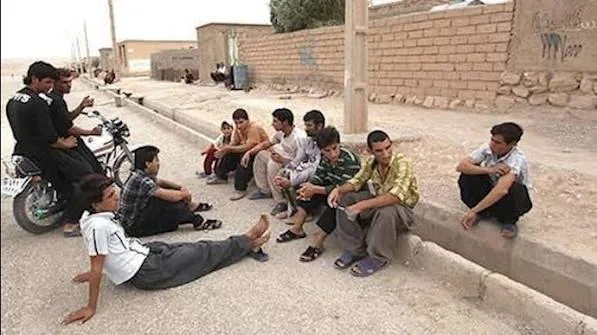
A review of media reports and public reactions on social networks shows that "non-local employment," "nepotism," "custom appointments," "non-transparent tenders," and "neglect by representatives" are the most repeated keywords in the protests of the people of Bushehr. The youth ask how a province that provides a large portion of Iran's oil, gas, and petrochemical revenue is still facing crises in creating stable jobs, equipped hospitals, reliable water, and urban infrastructure?
Statistics that Hide the Reality of Unemployment
Provincial managers usually try to normalize the situation by citing the official unemployment rate; however, this rate does not reflect the whole reality. A young person who has become discouraged after months of job searching, a graduate who has turned to street vending or scattered online work, and a worker who only works for contractors a few months a year are not necessarily counted as unemployed in official statistics..
In the cities and villages around Asaluyeh, Kangan, Jam, Dayyer, and Dashti, people see the smoke of flares, industrial pollution, and the comings and goings of workers in energy facilities every day, but many local families have no choice but to repeatedly visit the offices of officials and representatives to get a job for an educated young person. The protest of the head of the Chah-Mobarak city council about the employment situation of the youth, describing it as a shameful situation, is just one of the public reflections of this dissatisfaction..
On Bushehr's social networks, stories are shared about ambiguous employment tests, changing recruitment conditions, preference for recommended personnel, and the assignment of specialized and service jobs to non-locals. Even the implementation of local employment quotas has sometimes become a point of contention: Who exactly is considered local, and which institution verifies the local status?
When Employment and Contracts Become Tools of Influence
Administrative corruption does not always mean the direct exchange of money. Appointing an unqualified manager, employing relatives and recommended personnel, designing tenders for a specific contractor, remaining silent on contract overdraws, and eliminating critical staff are also forms of corruption. In Bushehr, the concentration of hundreds of oil, petrochemical, service, transportation, catering, and manpower supply contracts has created a large network of economic interests..
In such a structure, a signature can create a multi-billion toman contract, and a recommendation letter can change the course of an individual's employment. This power, when combined with weak oversight, ineffective local councils, and representatives engaged in appointment share-seeking, diverts job opportunities from the path of merit. Protests by Bushehr residents against the petrochemical industries in the region in recent years indicate increasing injustice and inequality in this province.
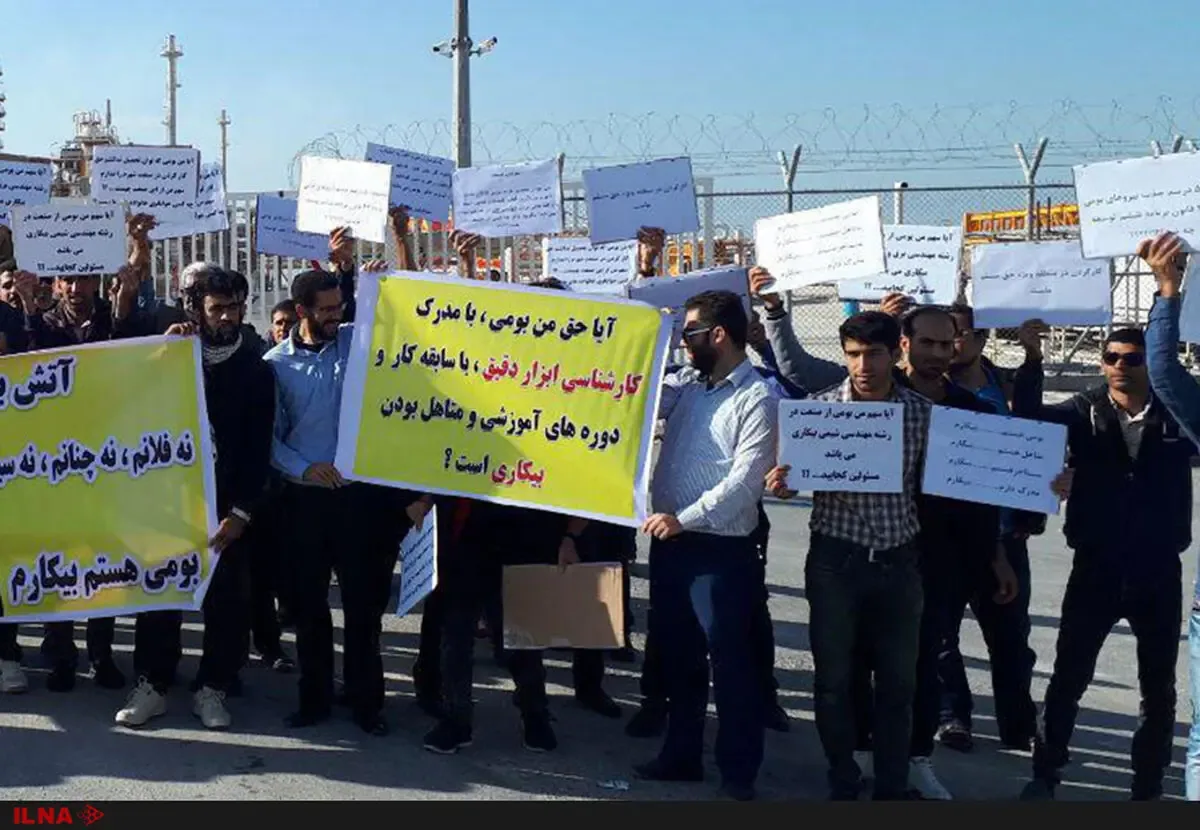
The people of Bushehr have repeatedly accused the province's representatives of spending part of their efforts on interfering in the appointment of managers and distributing opportunities among close circles instead of structurally defending local employment. The result is the formation of a two-tiered economy: a limited group has access to management, contracts, and secure employment, while the majority must choose between unemployment, contracting jobs, and migration..
The case of hundreds of unfinished projects in counties like Dashti is another sign of this governance crisis. A project starts, the budget is spent, managers take souvenir photos, but the building, road, or facility remains half-finished for years, and the cost of completion multiplies..
A Province in Need of Transparency and Administrative Health, Not New Promises
Bushehr's employment crisis will not be solved by holding a few meetings, launching a platform, or announcing a new quota. The first necessity is the public release of the list of local and non-local employees of major industries, the results of employment tests, the names of contractors, contract amounts, and reports on the implementation of social responsibilities by oil and petrochemical companies..
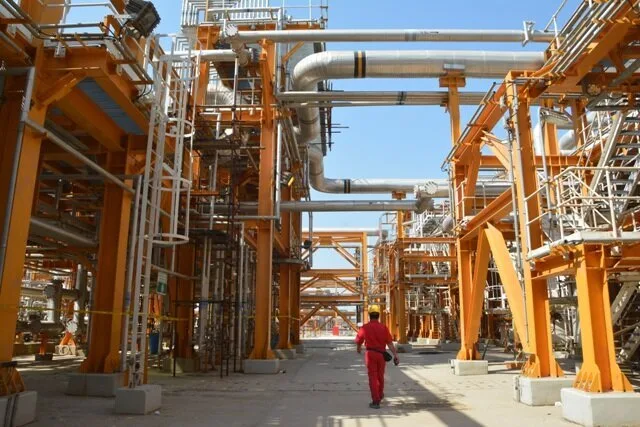
The province's representatives must also clarify which managers they have been involved in appointing, who has been employed on their recommendation, and what the real share of polluted and deprived counties from the energy industries' revenue has been. Oversight bodies must also examine service contracts and out-of-regulation employment instead of selectively dealing with whistleblowers..
Bushehr is not a poor province; it is a wealthy province with an unjust opportunity distribution system. The unemployment of its youth is not due to a lack of investment but is the result of policies that have placed public wealth in the hands of managerial, contracting, and political circles. Until employment and contracts are freed from the grip of influence networks, the flames of South Pars will not be a sign of development for many of Bushehr's youth, but a reminder of a share that burns before their eyes every day..