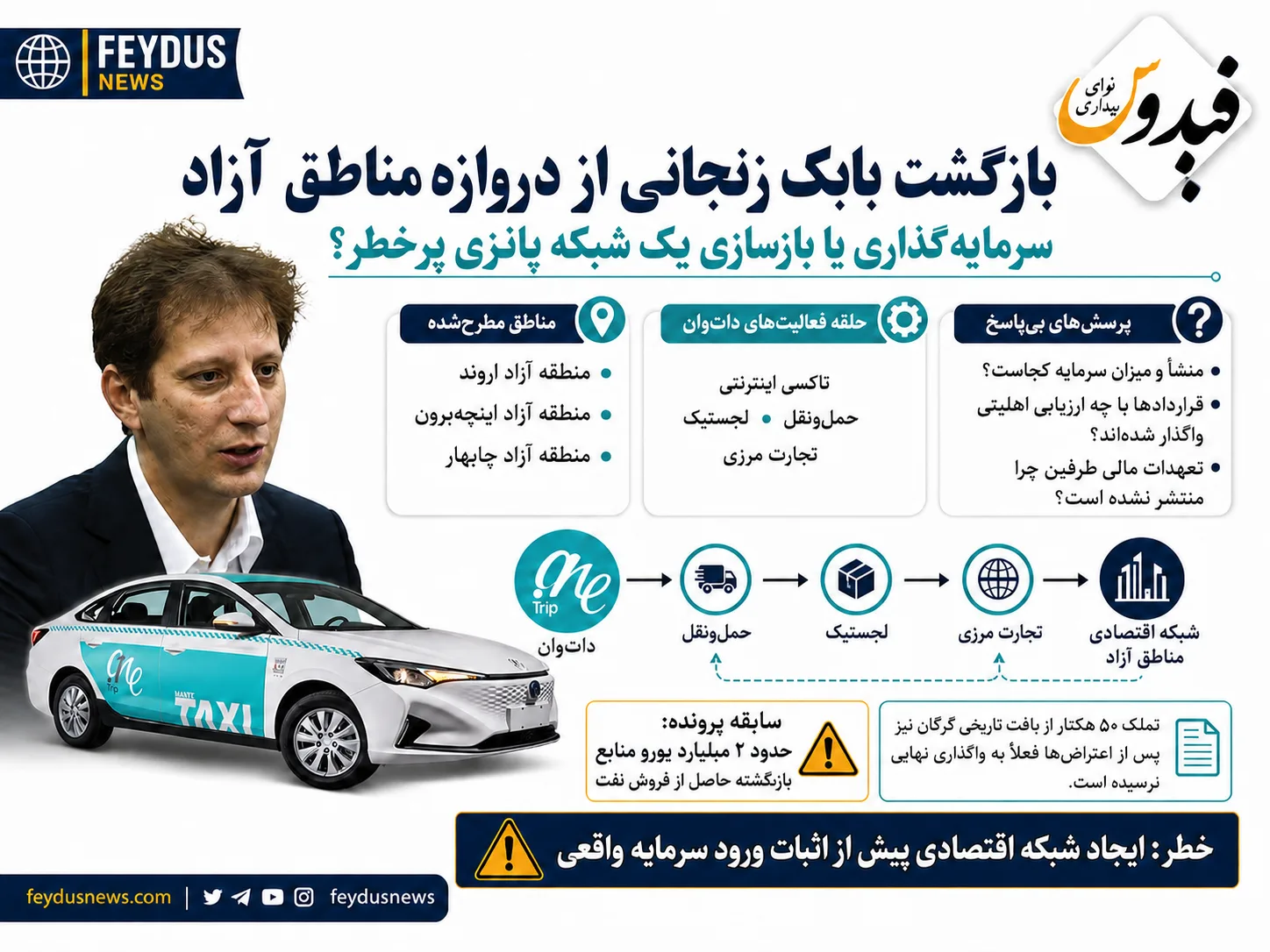
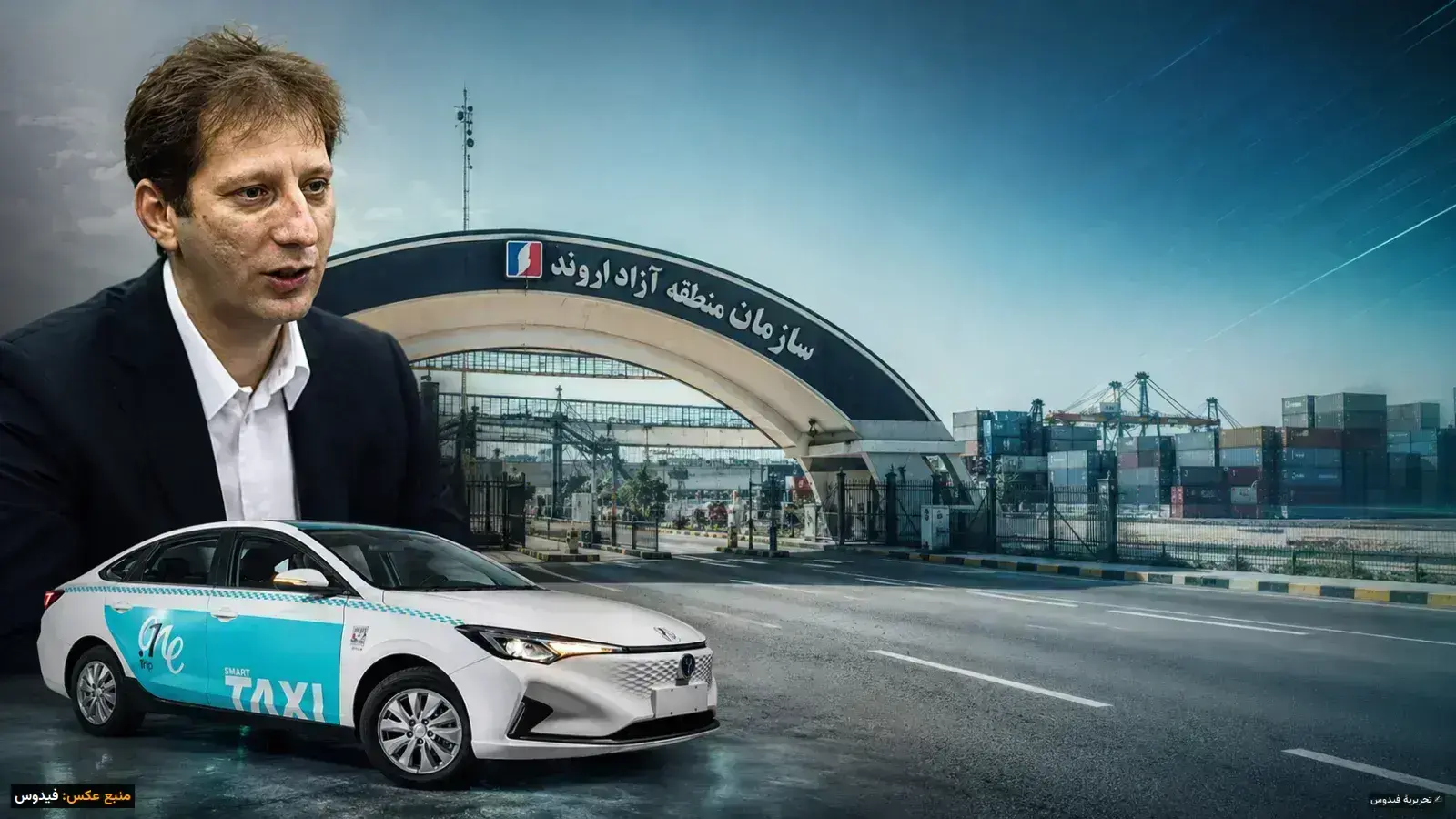
The reappearance of Babak Zanjani in Iran's economy, this time under the name 'Dot-One Value Creation Group', has reached the free zones. These zones, due to their customs, tax, registration, and trade advantages, can be a suitable ground for the formation of extensive and less transparent economic networks. Recent news indicates that Dot-One has started its activities in the Arvand Free Zone and is simultaneously reviewing or implementing plans to be present in Incheh Borun and Chabahar.
In the Arvand Free Zone, Dot-One's internet transportation fleet has started operating in Abadan, Khorramshahr, and Minushahr. The Arvand Free Zone Organization has also published Zanjani's statements about the economic and logistical capacities of this region. Simultaneously, he has announced the transfer of Dot-One taxis to the Incheh Borun Free Zone and the employment of local drivers in Gorgan and Gonbad-e Kavus. In Chabahar, Dot-One has also issued a call for recruiting drivers, and reports suggest the potential presence of this group in the Rimdan border terminal project.
Investor or Network Builder
Thus, the name Dot-One has so far been associated at least with the free zones of Arvand, Incheh Borun, and Chabahar; although the details of the contracts, the amount of capital brought in, the method of granting licenses, and the financial commitments of the parties have not been publicly disclosed. This lack of transparency increases concerns about the gradual transfer of part of the transportation, logistics, and economic activities of the free zones to an entity managed by someone with Babak Zanjani's background.
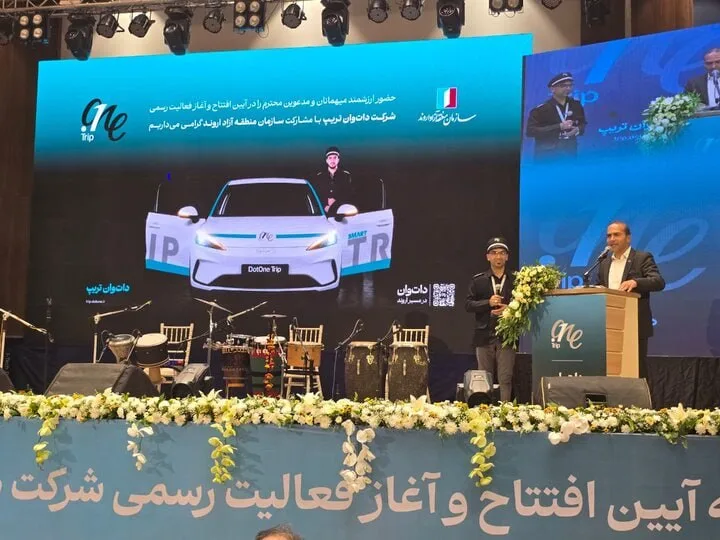
The issue is not just the entry of hundreds of taxis or the launch of a transportation app. Free zones are gateways for imports, exports, transit, warehousing, company registration, and financial transactions. A company that simultaneously controls transportation networks, logistics, financial services, and border trade effectively gains access to part of the region's economic infrastructure.
Zanjani previously operated by creating a network of interconnected companies, banks, exchange offices, and domestic and international transportation companies. His legal case was tied to the non-return of approximately two billion euros from oil sales proceeds. The judiciary later announced that his identified assets were transferred to settle debts to the country, and shares of 17 companies belonging to him were transferred to the National Iranian Oil Company.

For this reason, reintroducing Zanjani as someone who is supposed to bring 'capital' into the free zones without disclosing the source of capital documents is unacceptable. The CEO of Avan Rail in 1404 stated that Zanjani is not a shareholder of Dot-One, but his foreign investments are being transferred to Iran through companies he previously collaborated with. This explanation, instead of clarifying, raised more questions about the real owner, the source of funds, and the legal structure of Dot-One.
From Free Zones to the Historic Fabric of Gorgan
The simultaneous development model of dozens of companies and large projects, before a real and auditable flow of capital is proven, can take on the characteristics of a Ponzi-like structure: the credibility of one project backs the next, investment promises replace definite capital, and a network of contracts, licenses, and public assets forms around a brand. Of course, legally labeling Dot-One as 'Ponzi' requires financial documents and official investigation; however, structural similarities make independent auditing essential.
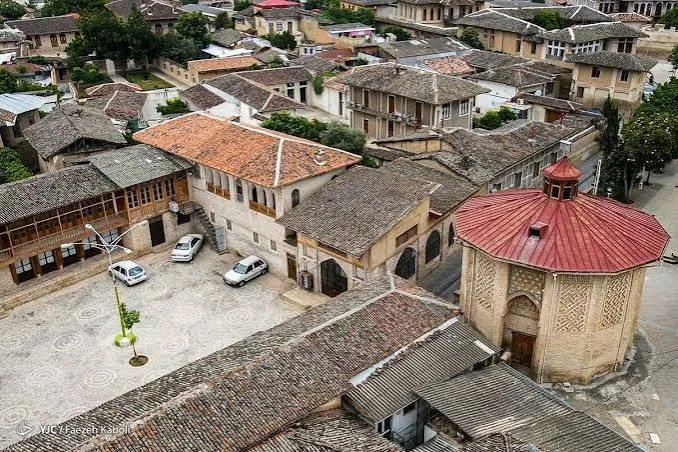
Alongside these movements, news of Zanjani negotiating to acquire and revive about 50 hectares of the historic fabric of Gorgan also caused a stir. The Director General of Golestan Cultural Heritage confirmed the visits and plan reviews but later emphasized that no final transfer has been made and any action must comply with ownership and cultural heritage regulations.
The widespread protests and sensitivity regarding the transfer of part of the country's first registered historic fabric have apparently halted or delayed this plan, at least in the current situation; however, no document about Dot-One's definite withdrawal has been published.
The main question now is: On what basis do the managers of the free zones grant Dot-One access to public resources and economic licenses? If new resources have entered the country, their source, amount, and transfer route must be announced. Otherwise, there is a risk that instead of receiving investment, the free zones may host the reconstruction of a network whose potential failure costs will remain on the shoulders of the government, local people, and public assets years later.