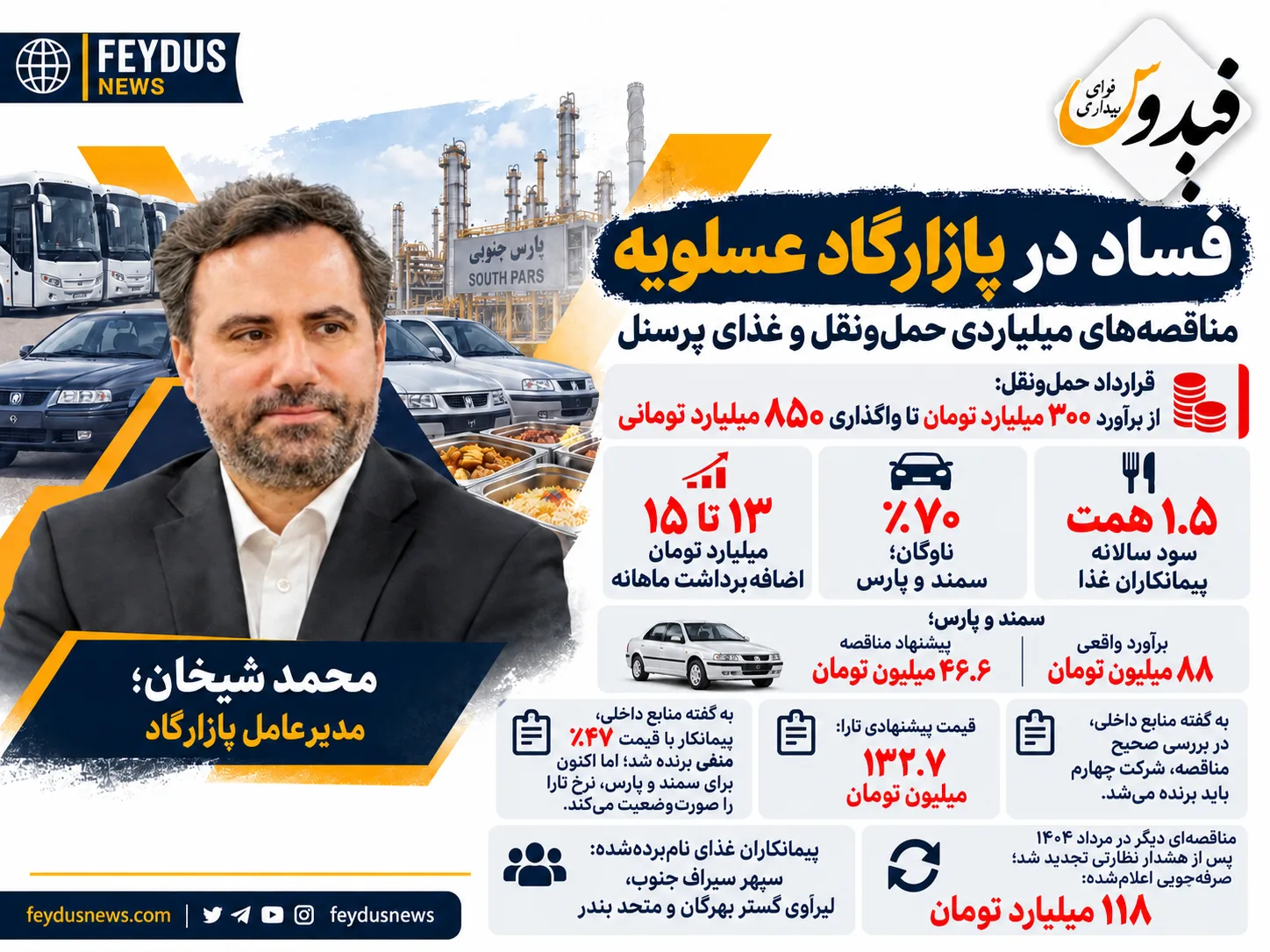
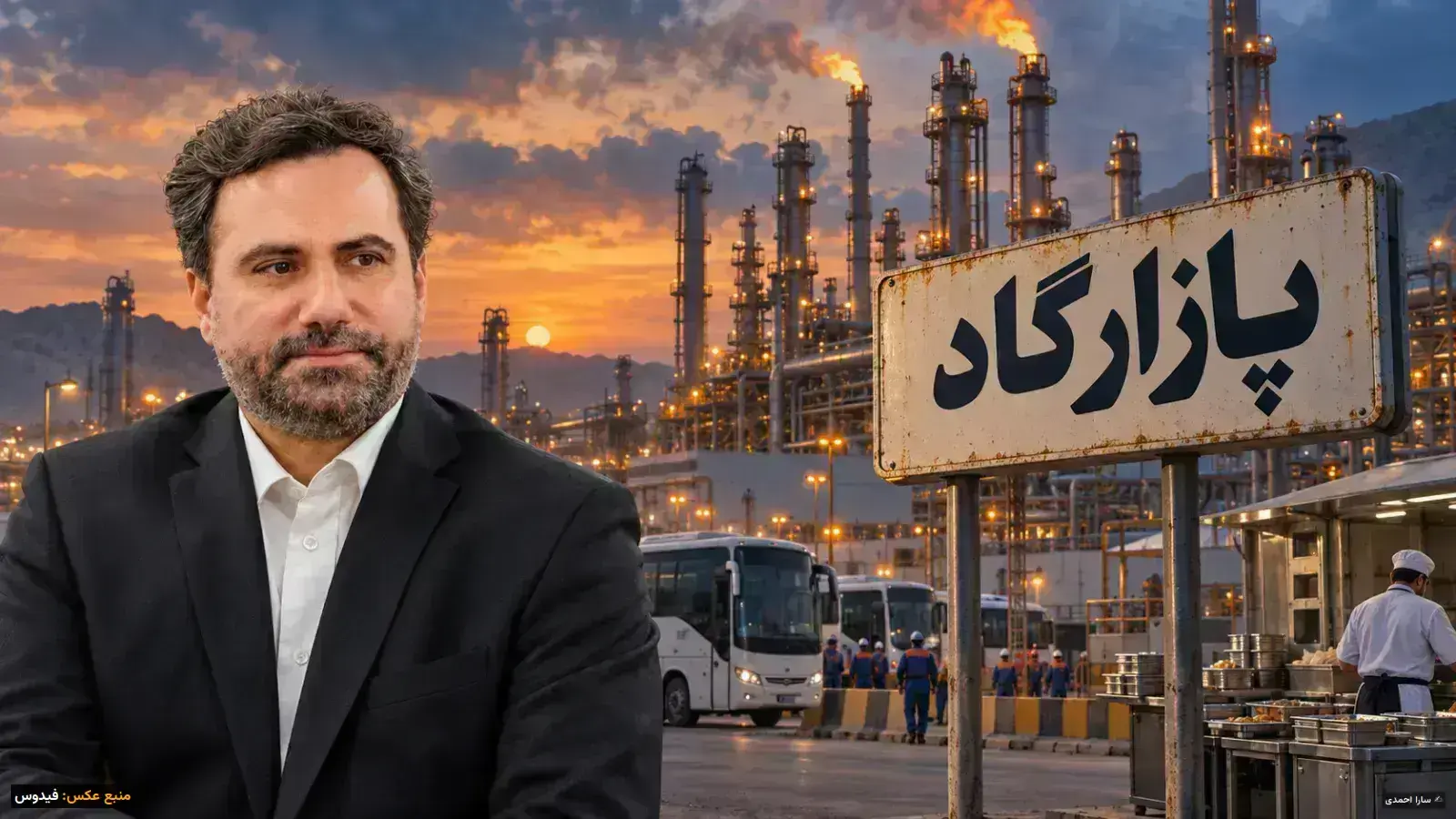
In the heart of Iran's energy region, where billions of dollars of national capital flow, the non-industrial operations company Pazargad in Asaluyeh has become a new hub of organized corruption, tender manipulation, and widespread purchase of oversight institutions. Field investigations, employee testimonies, and financial documents show how a transportation contract estimated at 300 billion tomans eventually reached 850 billion tomans with the contractor supported by managers, and how the same network creates a monthly overdraw of 13 to 15 billion tomans from public resources.
A Brief History of Corruption in Asaluyeh; From the 2000s to Today
Corruption in the South Pars region has a long history. Since the 2000s, with the expansion of oil and gas projects, fake tenders, cover companies, food and transportation contracts, and networks of influence linked to security institutions gradually formed. In recent years, official reports show: The National Inspection Organization announced on ISNA news agency in August 1404 that in one of the tenders in Asaluyeh, unconventional proposals led to a supervisory warning and the tender was renewed, an action that saved 118 billion tomans for the government.
The "Naftiha" media in September 1404 reported on 2.5 trillion tomans of corruption in food contracts and efforts to reinstate disqualified contractors, and the Mehr news agency also reported the conclusion of a 10 to 15 year legal case in Asaluyeh, indicating chronic structural corruption in this area. This history shows that corruption in Asaluyeh is not a temporary incident but a consistent and recurring pattern of government management in Iran's oil industry.

Pazargad Transport Contract; A Classic Example of Tender Manipulation
According to information provided by a member of the Pazargad transaction commission, the story of the transport contract began as follows: Initial company estimate: 300 billion tomans and internal expert estimate: 1 trillion tomans, and in the final contract awarded to the contractor (Alireza Rafiei): 850 billion tomans. Well, in the tender, vehicle pricing was done as follows:
* Contractor's proposed price for Tara: 132,700,000 tomans
* Proposed price for Samand and Pars: 46,600,000 tomans
* Company's real estimate for Samand and Pars: 88,000,000 tomans
The contractor won with a 47 percent negative price for Samand, but now charges 175 percent more than the real price and effectively receives the Tara price for Samand and Pars vehicles, while 70 percent of the fleet consists of these cheaper vehicles.
This mechanism is a clear example of tender fraud, price manipulation, and collusion between managers and contractors. According to internal sources, if the tender had been properly reviewed, "the fourth company" should have won.
The Role of Sheikhan and the Board of Directors; Buying Oversight and Silencing Warnings
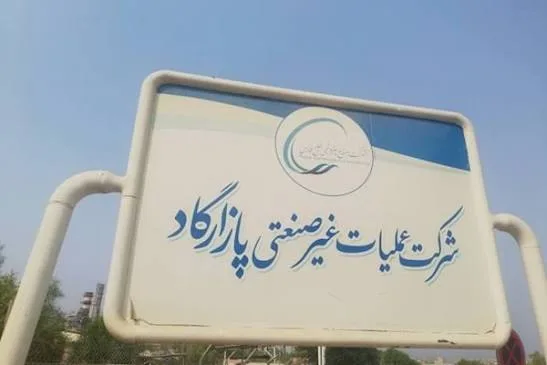
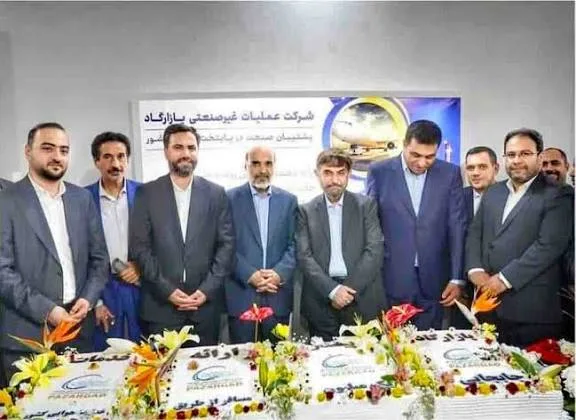
Reports indicate that , the CEO of the non-industrial operations company Pazargad, using a network of relationships and support, has managed to nullify supervisory warnings and silence employee reports, paving the way for suspicious contracts.
In this context, the case of Sheikhan is now in the hands of a judge named Ramin, and according to employee testimonies, a person with the same name has recently been appointed in the company, said to be the brother or son of the judge. This appointment, considered a judiciary privilege, raises concerns about judicial influence in the proceedings.
Restaurants; Hidden Corruption in Food Contracts
Three food contractors in Pazargad, Sepehr Siraf Jonoob, Liravi Gostar Behragan, and Motahed Bandar, have received billions of tomans from contracts in recent years. These contractors, previously disqualified, have tried to re-enter the cooking and distribution cycle with the support of influential individuals, a cycle that generated 1.5 trillion tomans in annual profits for them.
This part of the corruption shows the link between financial and political networks in Asaluyeh, networks that even after official disqualification, still seek to return to lucrative contracts.
From Resource Waste to Employee Security Threats
The consequences of this widespread corruption can be expressed as the monthly waste of 13 to 15 billion tomans from public resources, increased operational costs for oil companies, reduced trust among employees and experts, and threats to the job security of employees who report corruption. This issue has led to the formation of networks of influence that even bypass the judiciary.
This situation is an example of structural corruption in the Islamic Republic, corruption that not only devours national resources but also contaminates oversight institutions, turning them into tools of cover-up and guardians of thieves.
Why Does This Case Matter?
The Pazargad case has national significance due to several features: very high financial volume, direct connection to the oil and gas industry, presence of networks of influence in the judiciary, repetition of the corruption pattern in food, transportation, and construction contracts, and the ineffectiveness of supervisory warnings. These factors provide a clear picture of how government tenders are turned into tools for transferring public resources into the pockets of specific individuals.
Corruption in the non-industrial operations company Pazargad is not just an administrative violation but an example of systematic corruption, organized collusion, and political influence at the heart of Iran's oil industry.
From the 850 billion transport contract to the network of food contractors, from buying oversight to suspicious appointments, all show that Asaluyeh has become a battleground for power networks to seize national resources.