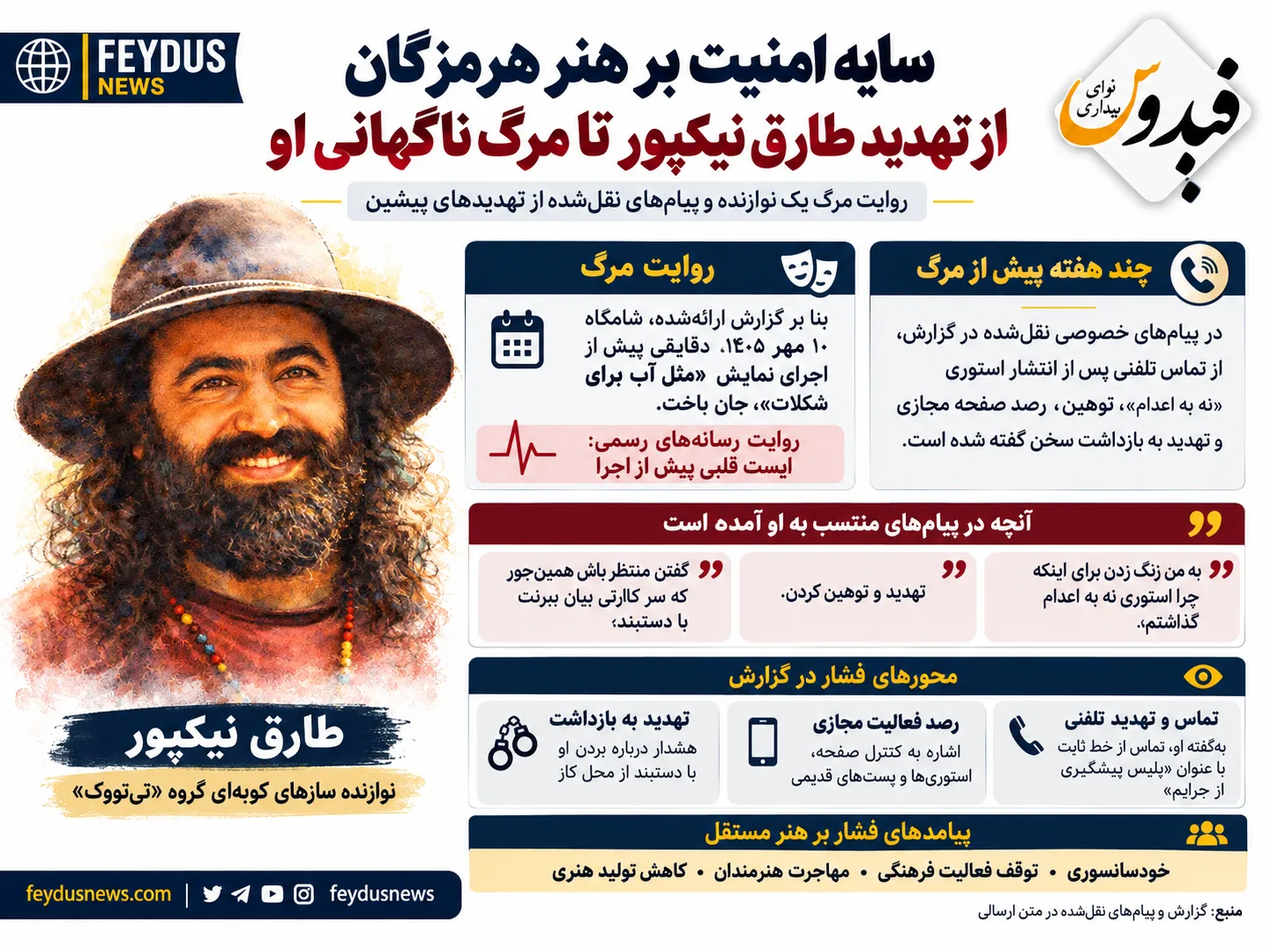
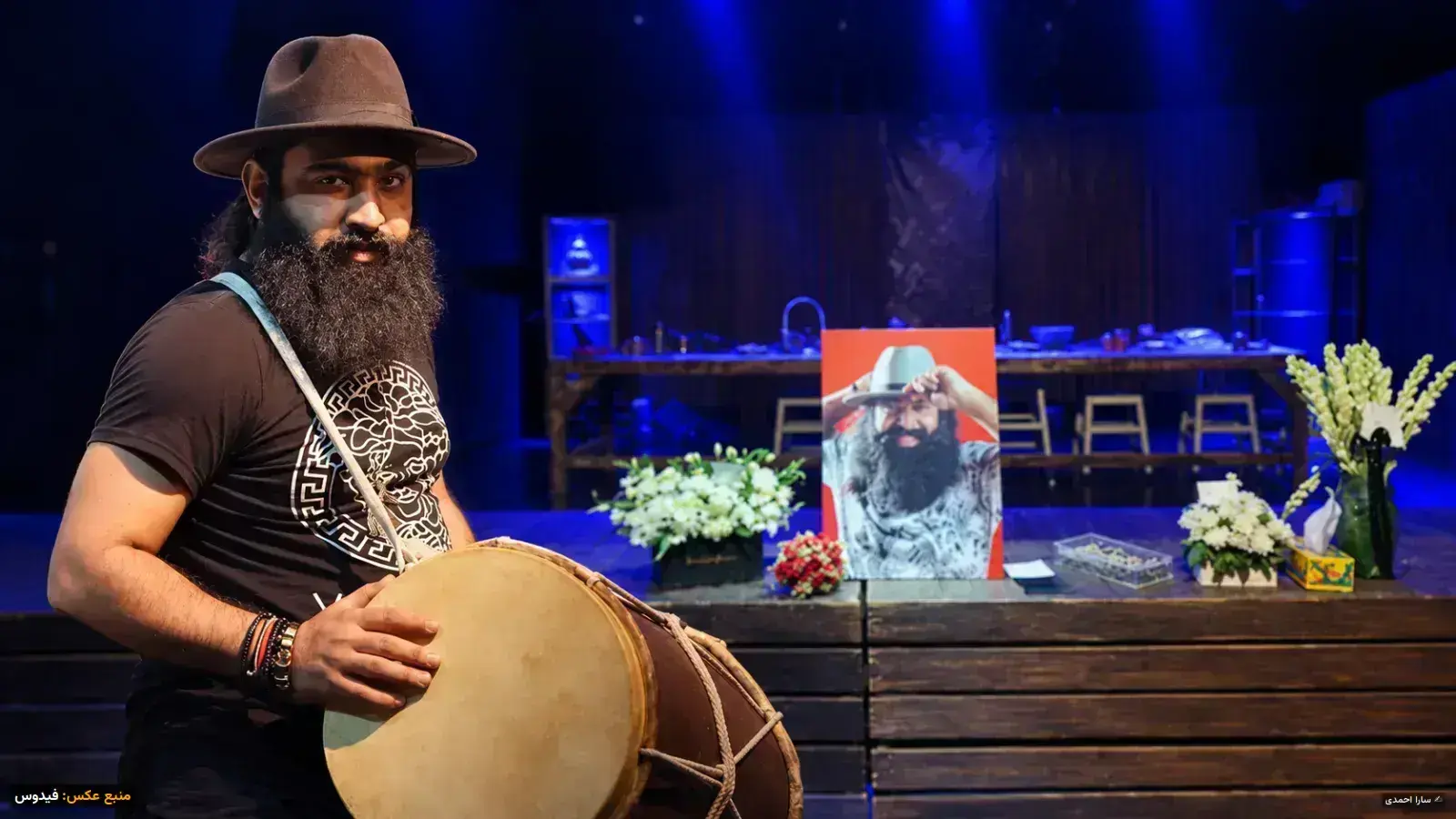
Taregh Nikpour, a percussionist of the theater group "Titoovak," suffered a heart attack and passed away on the evening of the tenth of Mehr 1405, moments before the performance of "Like Water for Chocolate." Iran's official media, from Khabar Online to Mehr, presented a unified narrative: they reported "death due to heart attack".

These messages indicate that Nikpour was not only under surveillance but also that his online activities, workplace, and even old posts were monitored, and he was warned that his arrest was "certain.".
Security Pressure in Hormozgan; From the Security Council to Threatening Artists
Nikpour's death in such a context is not just a "heart attack"; it is a symbol of the psychological and security pressure on artists.
Silence, Self-Censorship, and Gradual Elimination of Artists
The murder of Taregh Nikpour has consequences beyond an individual loss. In recent years, many artists from Hormozgan and southern Iran have spoken of imprisonment, torture, confiscation of property, security pressure, phone threats, unofficial summons, and monitoring of virtual activities. These pressures have led to widespread self-censorship, forced exile of artists, cessation of independent cultural activities, and a sharp decline in artistic production.
This trend is part of a larger pattern: the gradual elimination of independent artists and their replacement with figures approved by security and cultural institutions.
Although Taregh Nikpour's murder was described as a "heart attack" in official media, his private messages show that this death should be re-read in the context of security pressure, direct threats, and the cultural suppression environment in Hormozgan. This case is not only the story of one artist but a symbol of the situation of artists in today's Iran; a situation where the line between "natural death" and "death due to security pressure" becomes more ambiguous every day.