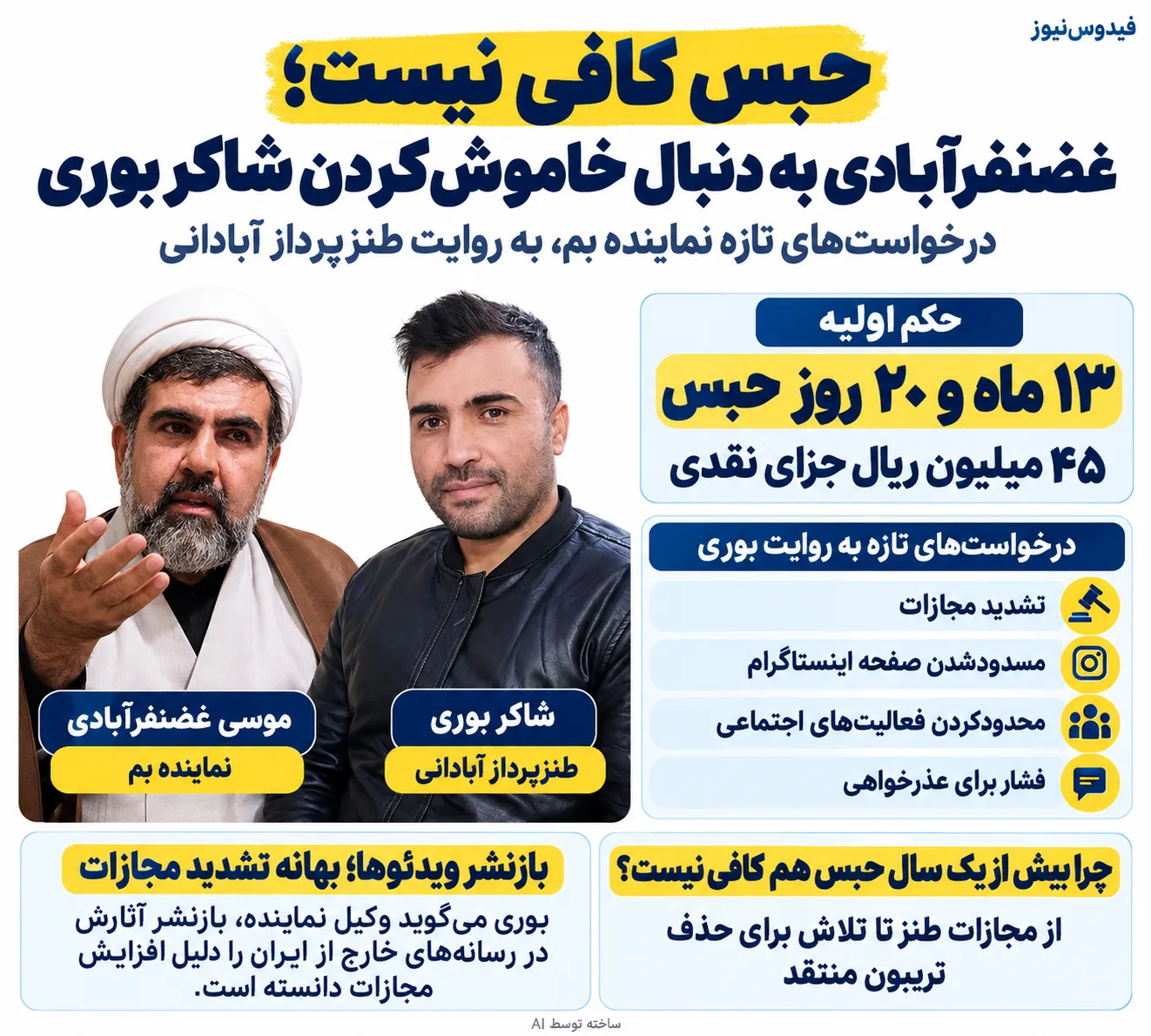
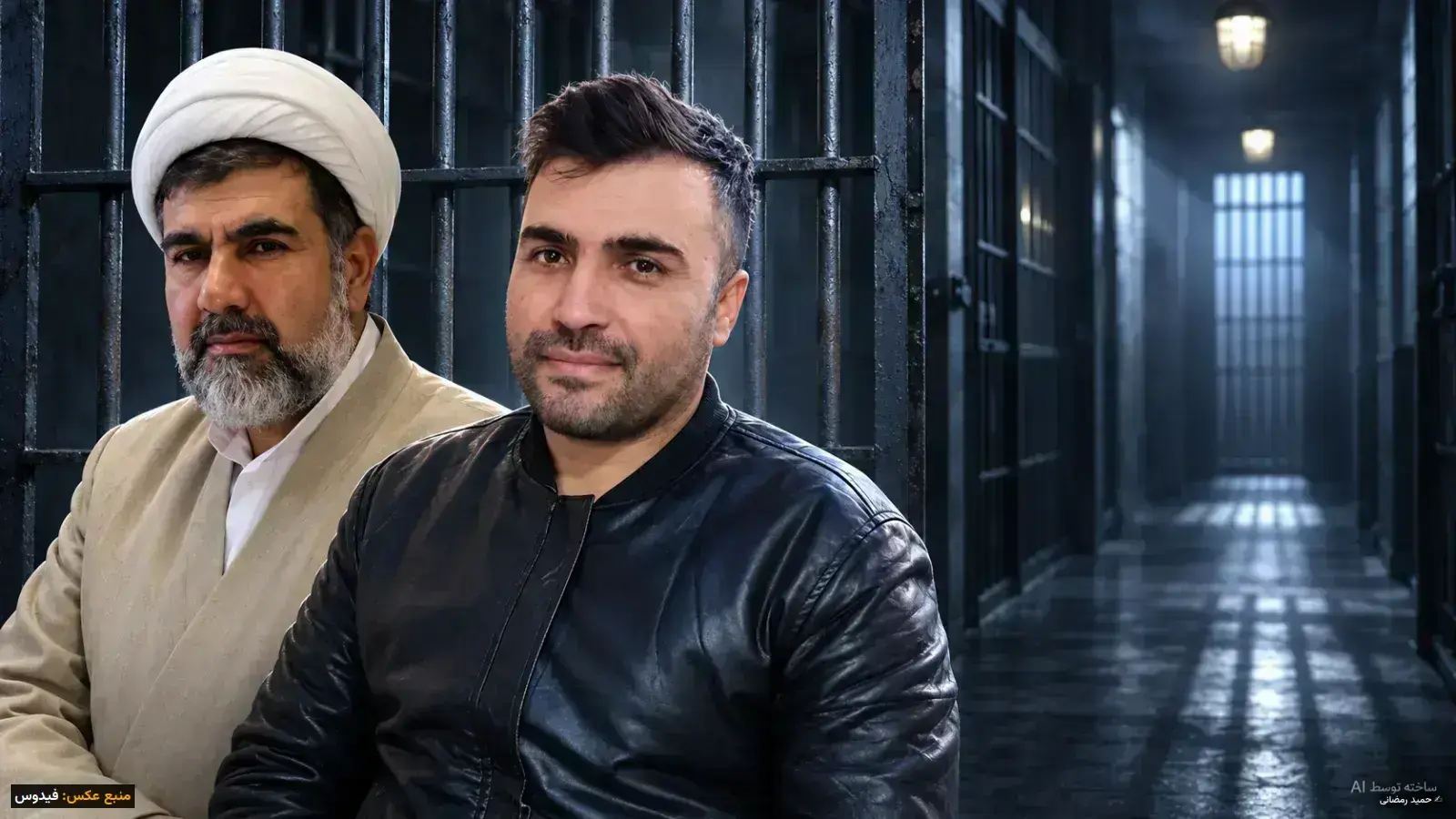
The representative of Bam, according to the Abadani satirist, has called for increased punishment, closing the Instagram page, and exerting pressure for an apology. The issuance of a 13 month and 20 day prison sentence for Shaker Bouri, the Abadani satirist, apparently did not satisfy Mousa Ghazanfari's demand. Bouri says the lawyer of the Bam representative has submitted a new brief to the appeals court, requesting an increase in punishment, blocking his Instagram account, and restricting his social activities. According to Bouri, these restrictions are intended to force him to apologize; a demand that turns the confrontation with a satirist into an attempt to extract a public surrender from him.
The initial verdict was issued in a case filed with Ghazanfari's complaint and related to the publication of a video. Branch 101 of the Abadan Criminal Court 2 sentenced Bouri for "spreading lies with the intent to harm others through computer systems" to 13 months and 20 days of imprisonment and for "insulting a member of parliament" to a fine of 45 million rials.
A Representative Who Does Not Settle for Prison
The requests Bouri cites from the new brief clarify the scope of pressure: imprisonment, increased punishment, silencing the platform, and social restrictions. In this approach, even a prison sentence is not the end of the confrontation; the satirist must also lose the ability to continue his activities and connect with his audience.
For Bouri, the Instagram page is a place to publish his works and connect with people who follow his satire. The request to block this page directly targets the future of his activities. A representative who himself has access to the parliament's platform and extensive media resources, according to Bouri, has demanded the closure of his critic's personal platform. This inequality reveals the true face of the case: using judicial tools to push back a voice that those in power cannot tolerate hearing.
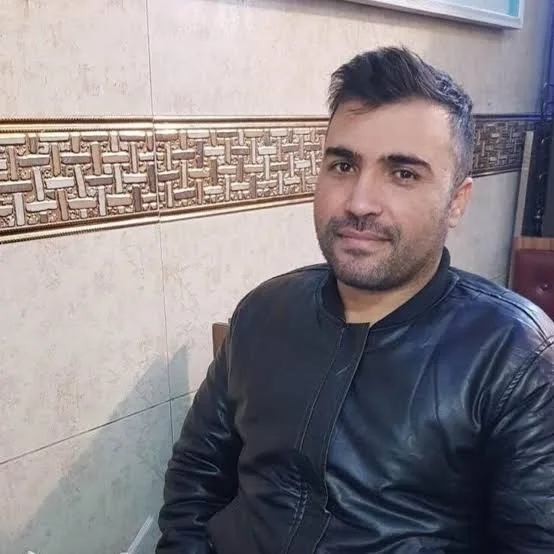
According to Bouri, the lawyer of Ghazanfari has also cited the republication of his videos in foreign media as a reason for increasing the punishment. Such reasoning places the responsibility for a media's decision on the shoulders of the video creator. The public release of a work and its republication in another media outlet is not in itself a sign of collaboration or coordination; however, in this narrative, the wider dissemination of the satirist's voice has become a factor for harsher punishment.
The request to exert pressure for an apology is even more telling. What credibility does an apology have if it is extracted under the threat of imprisonment and social deprivation? This demand, if it appears in the brief as Bouri narrates, shows that the complainant's goal is not merely to respond to a specific content; he wants the critic to retreat before power and to display this retreat.
From Threatening Protesters to Silencing Satirical Platforms
Ghazanfari's background makes this confrontation clearer. As the head of the Tehran Revolutionary Court during the December 2017 protests, he warned that those arrested from the third day onwards would face harsher penalties. He also raised the possibility of charging some detainees with "moharebeh" (enmity against God); statements that, before the cases were even heard, reinforced an atmosphere of threat and intimidation.
This perspective is also seen in his positions on women. Ghazanfari has advocated for the use of facial recognition cameras to identify women without hijab and deprive them of social rights, suggesting cutting off services related to the national ID card. Turning public services into a tool for punishing citizens shows that, in his view, social deprivation is a means to enforce compliance.
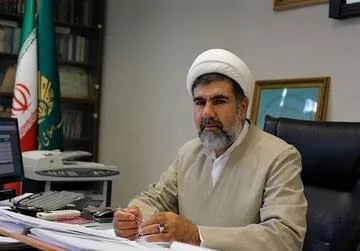
He has also taken an openly hostile stance towards Instagram. In the parliament, Ghazanfari called this network a "graveyard of the beliefs of many young people" and criticized the expansion of the internet and the management of foreign messaging platforms. Now, according to Bouri, the same perspective is pursued in the form of a request to close a satirist's page.
The case of Shaker Bouri poses a direct question to the representative of Bam: why is a sentence of more than a year in prison not enough? What is the relationship between insisting on increasing punishment and removing the critic's platform with the responsibility of representing the people?
What emerges from Bouri's narrative is an attempt to impose a comprehensive cost on critical satire; a cost that starts with imprisonment and extends to social deprivation and forced apology. A representative who demands this level of punishment and restriction in response to satire reveals more than anything his own capacity to tolerate criticism.