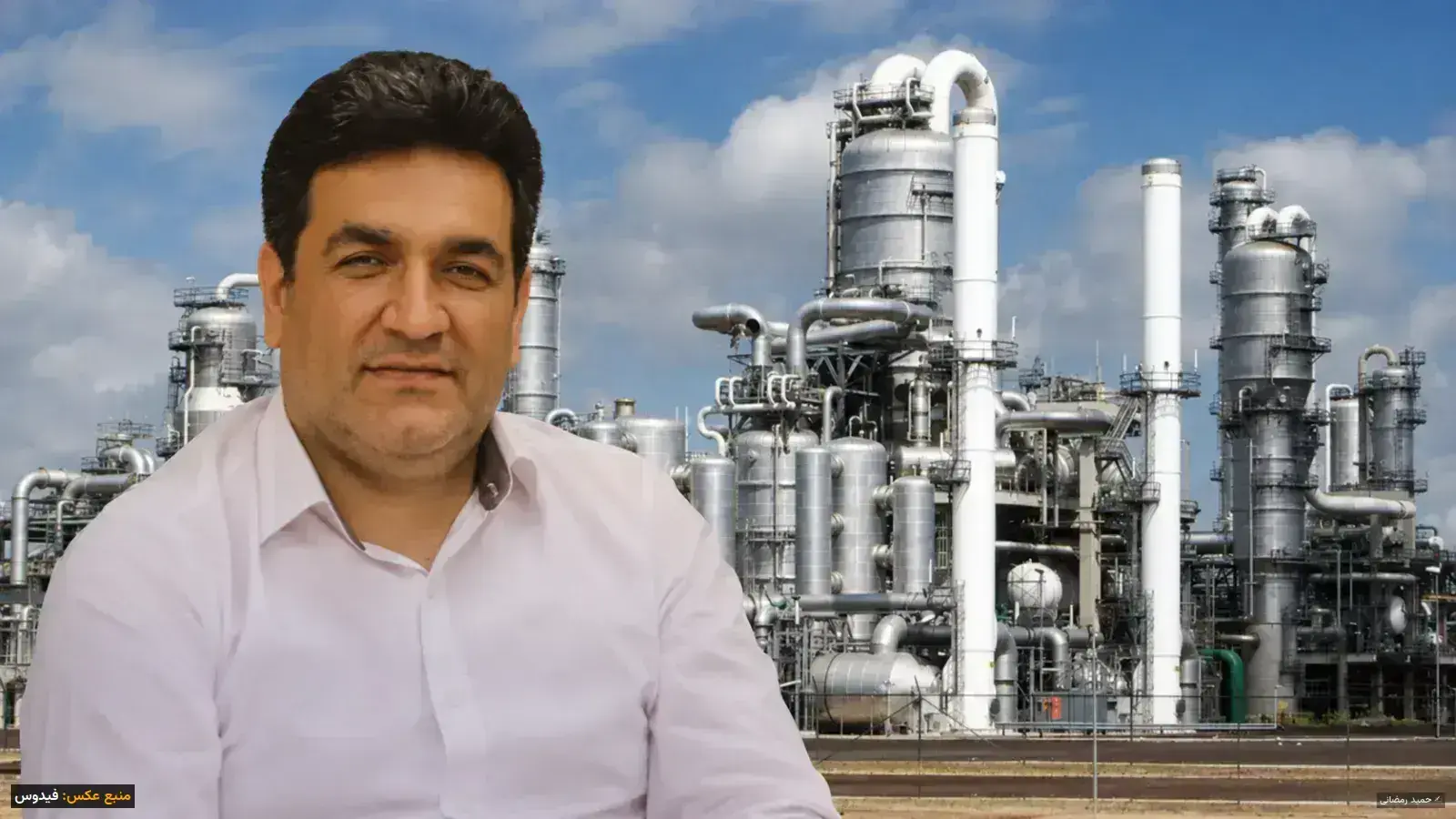
In recent weeks and months, the name Gholamreza Jamshidi, CEO of Nouri Petrochemical, has been seen more than ever in the specialized media of Iran's oil and petrochemical industry; a presence that a significant part of it is not in the form of independent reports, but with the publication of positive news, notes, interviews, and reports about "record-breaking", "successful management", "innovation", and "profit growth".
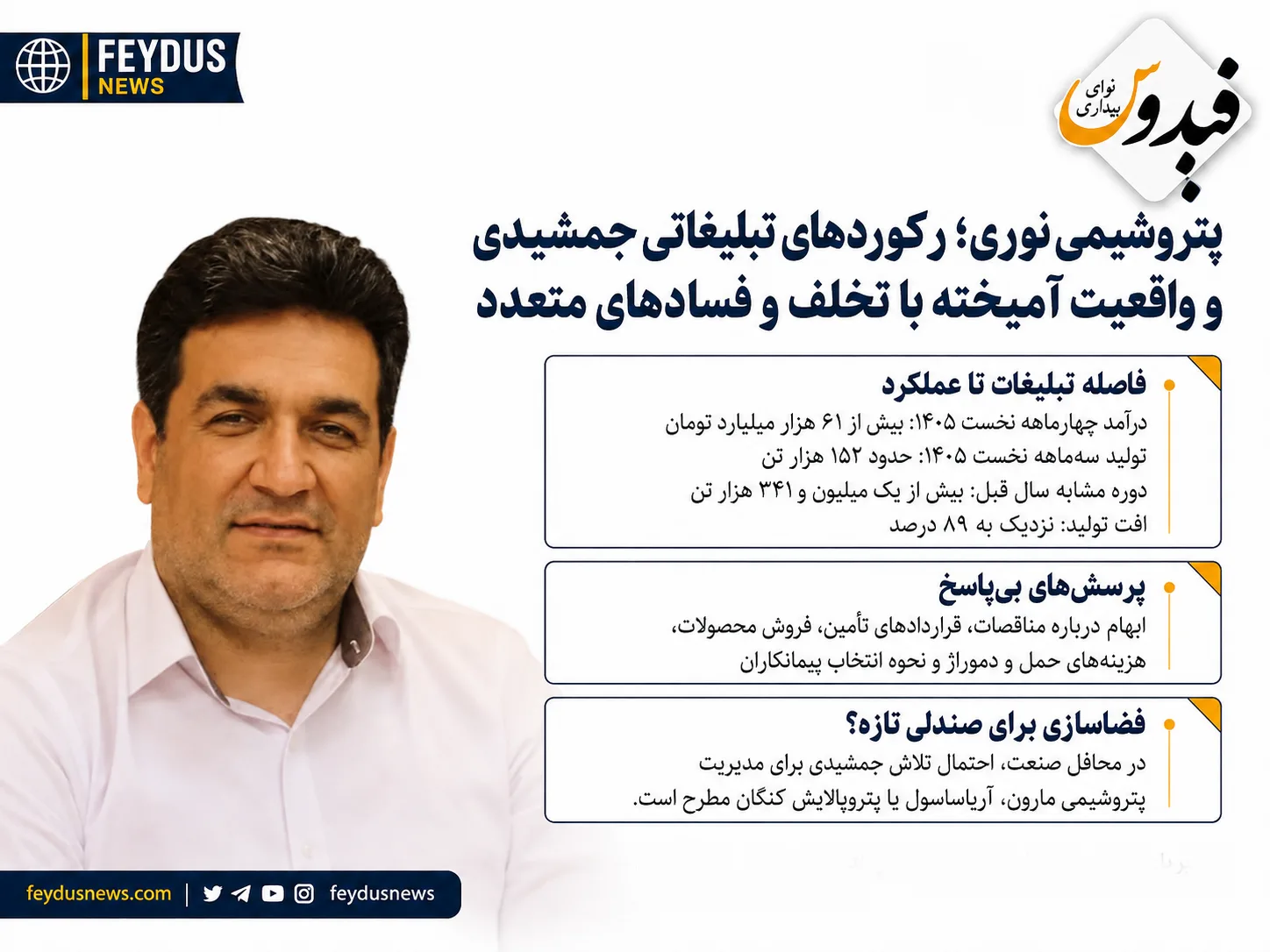
Regarding the CEO of Nouri Petrochemical, only in the past few months, reports with titles such as "Year of Record, Growth and Leadership Stabilization in Aromatics", "Driver of Innovation and Transformation in Iran's Petrochemical Industry" and "Narrative of Nouri Petrochemical Epic in War" have been published. In one of these reports, the revenue for the first four months of the year 1405 of Nouri Petrochemical was announced to be more than 61 trillion tomans. Media close to the industry have also mentioned the growth of exports, increased profitability, and progress in the Euro 6 diesel project as achievements of Jamshidi's management.
However, a closer examination of these data shows that the image of Nouri Petrochemical is not as uniform as presented in some promotional reports.
For example, one of the published reports
about the performance of the first three months of 1405 acknowledges that
Nouri's production in this period decreased to about 152 thousand tons;
while in the same period last year it was more than one million and 341 thousand tons; a decline of nearly 89 percent. The company attributed this decrease to war, feedstock cut, and utility limitations, while simultaneously emphasizing increased export revenue and profitability. This stark contrast between the sharp drop in production volume and the extensive promotion of "dazzling performance"
indicates that evaluating the company's management performance requires examining indicators beyond public relations headlines.
Alongside this promotional atmosphere, in recent months, critical content has also been published about Jamshidi's managerial background on social networks, especially some Telegram channels and media. One of these channels has raised claims about the method of product sales during his tenure and the selection of certain customers and transactions.
Regarding Nouri Petrochemical, questions have also been raised
about tenders, supply contracts, product sales, transportation and demurrage costs, and the method of selecting contractors in industry circles. Additionally, a complaint against Jamshidi regarding "changing the tender result by" in the Persian Gulf Holding is still open, and although his misconduct case in the Economic Crimes Court has been suspiciously left unresolved.
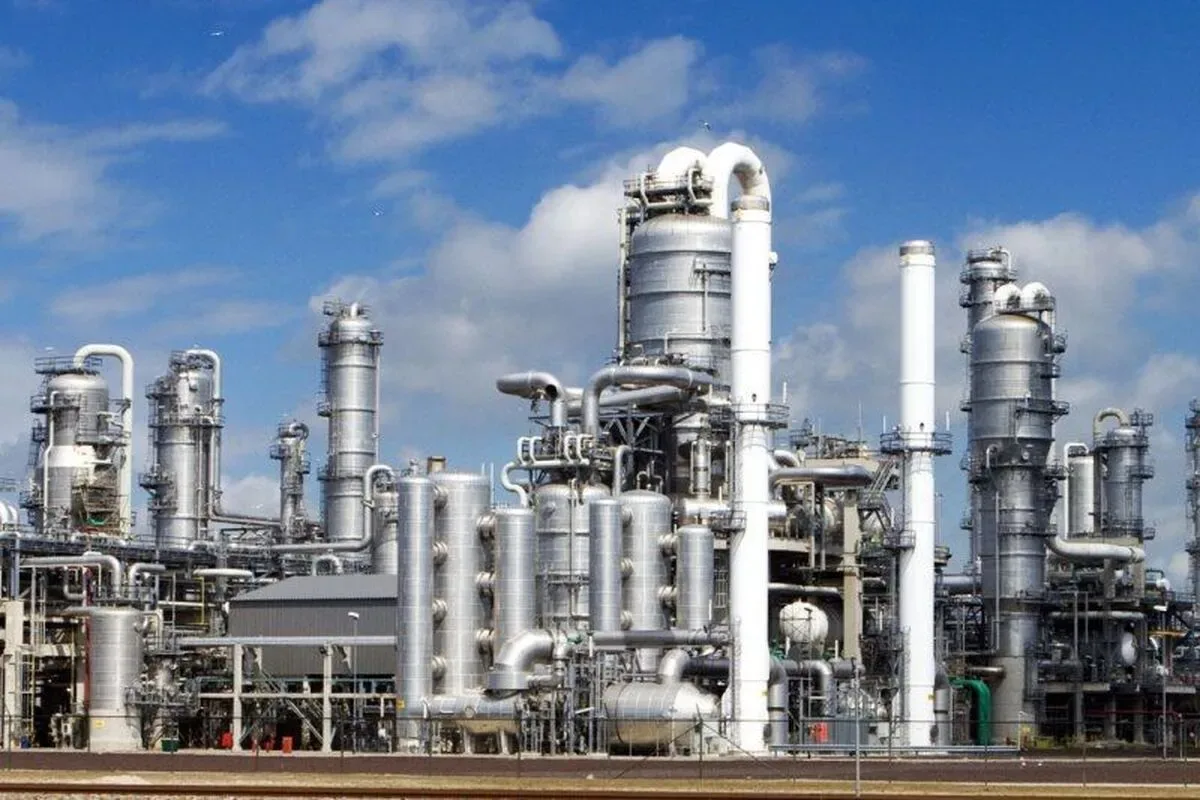
On the other hand, Nouri Petrochemical is a publicly traded company and part of its financial performance information and legal claims are published in the Codal system. Available information shows that the company has had both legal claims and disclosures related to tenders and auctions in recent years.
Meanwhile, the increased media presence of Jamshidi has raised another question in the petrochemical industry: Is this wave of information dissemination merely part of Nouri Petrochemical's public relations false atmosphere policy or a prelude to a managerial reshuffle?
In some industry circles, it has been speculated that Jamshidi may be seeking to manage one of the other major petrochemical companies, and the names of companies like Arya Sasol, Maroon, or Kangan Petrochemical complexes have also been unofficially mentioned.
The current reality is that Gholamreza
Jamshidi CEO of Nouri Petrochemical, with a high volume of
praiseworthy news about his management and the existence of numerous unanswered questions and corruptions
about his managerial periods, is a figure that tops the list of problematic managers in the oil and
petrochemical industry.