The formation of a multi-layered network in parts of the Ministry of Defense, the Armed Forces Social Security Organization (SATA), and its affiliated economic companies has turned this military structure into a hub of economic mafia expansion using security capacities.
A network that, by interfering in the appointment of energy industry managers, exerting security pressure, fabricating cases, and introducing contractors, has diverted the course of contracts and the sale of petrochemical products to the benefit of a limited circle.
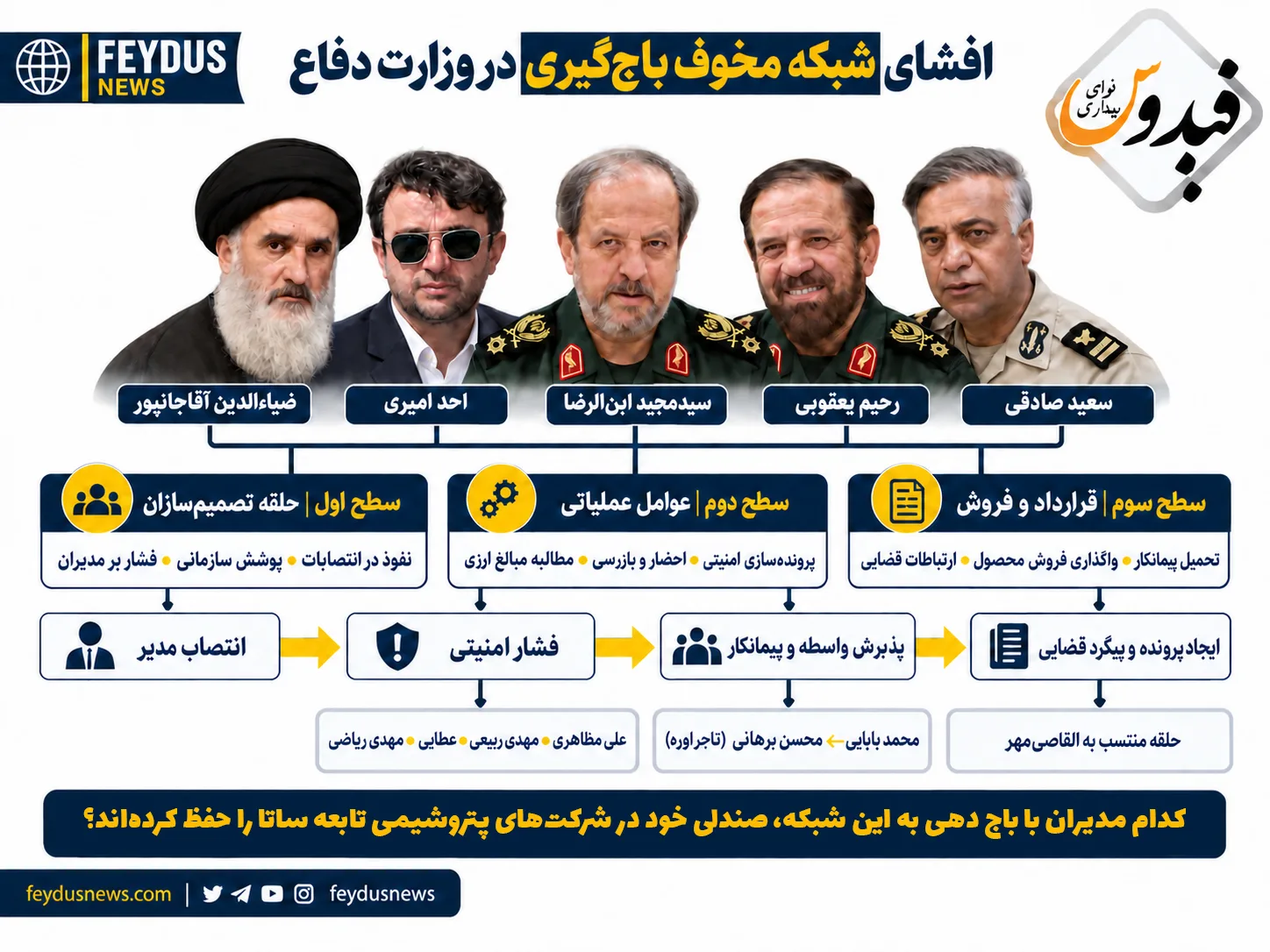
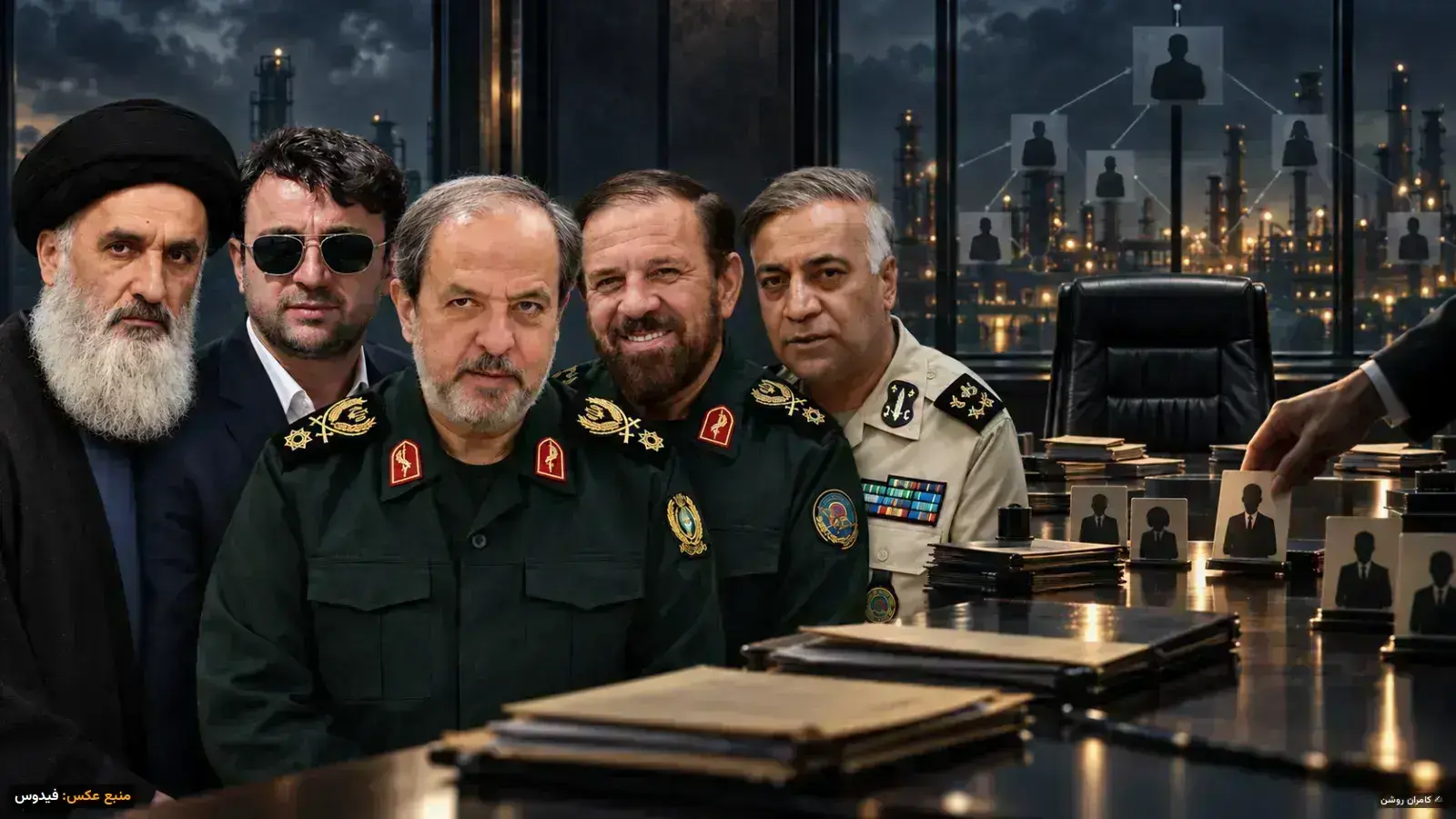
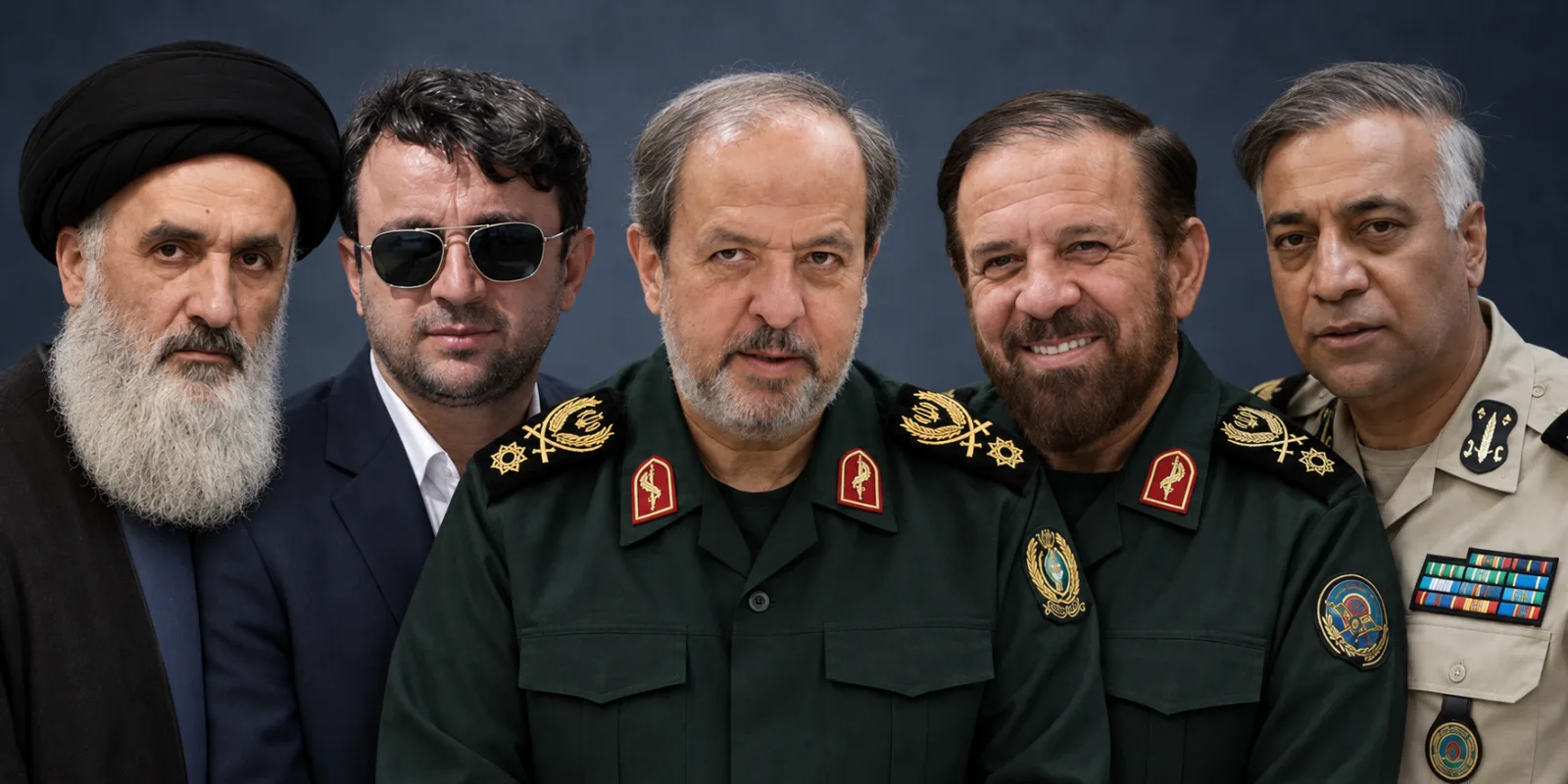
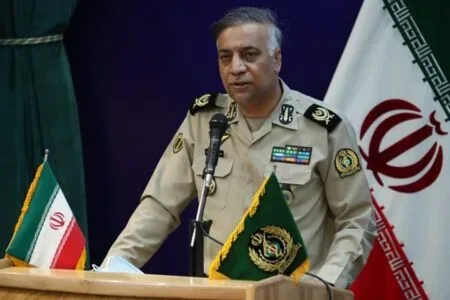
Details provided by various sources highlight the necessity of conducting an official and transparent investigation; especially since some official positions operate at high levels of this ministry. General Rahim Yaghoubi, head of the Ministry of Defense's Information Protection Organization, General Saeed Sadeghi Goughari, CEO of SATA, and Ziauddin Aghajanpour, head of the Ministry of Defense's Ideological and Political Organization, are recognized as the main and high-ranking circle of this network. General Seyed Majid Ibn al-Reza, as the current acting Minister of Defense in the fourteenth government, is one of the arms of this circle through appointments made and the assignment of sensitive positions to individuals in this network within the ministry's body.
Level One; Decision-Making Circle
At the top of this network, the names of General Rahim Yaghoubi, head of the Ministry of Defense's Information Protection, Brigadier General Saeed Sadeghi, head of SATA, Ziauddin Aghajanpour, representative of the Supreme Leader and head of the Ministry of Defense's Ideological and Political Organization, Ali Talebi, Deputy of Human Resources of the Ministry, Mehdi Riazi, brother of General Riazi, Deputy of the Armed Forces General Staff, and Ahad Amiri, the coordinator of the network with Ibn al-Reza, the acting Minister of Defense, are present. Alqasi Mehr, who previously held the position of Tehran Province Prosecutor and then the head of the Tehran Province Judiciary, is responsible for judicial pursuits against managers who have not cooperated with this network in coordination with Mohammad Babaei, another member of this network. Informed sources have stated that this level provides the necessary organizational cover for interfering in energy company appointments and putting pressure on managers.
Ahad
Amiri, who was previously responsible for coordinating this network with CEOs in the economic structure of SATA, has been transferred to the position of Deputy of Economic Affairs of the Ministry of Defense with the appointment of Seyed Majid Ibn al-Reza as acting Minister of Defense by his order and is responsible for coordinating the entire network with Ibn al-Reza. The name Mehdi Riazi, brother of one of the deputies of the Armed Forces General Staff, is also mentioned in connection with the Ghadir Investment Group's appointments committee. According to documents, information about managerial candidates is provided through this route to operational agents so that managers are pressured before or after appointment.
Regarding
Saeed Sadeghi, sources have noted that after taking over as CEO of the Armed Forces Social Security Organization (SATA), he clearly demanded the swift removal of newly appointed managers in affiliated petrochemical companies and the replacement of individuals introduced by influential figures connected to this corruption network; without the professional performance of the incumbent manager or the usual appointment formalities being the main criteria.
Level Two; Information Protection Experts of the Ministry of Defense and Operational Agents
At
the executive level, the names Ali Mazaheri, Mohammad Babaei, Mehdi Rabiei, and Ataei have been mentioned as information protection experts of SATA and the Armed Forces Information Protection. According to sources, these individuals form the communication link between the protection structure, company managers, economic intermediaries, and security institutions.
The key role of Ali Mazaheri in this network begins with knowing that he is an official employee of the Ministry of Intelligence and assigned to serve in the protection of the Ministry of Defense, tasked with pressuring managers through security case fabrication alongside other experts. Discovering ethical issues or any type of accusation that allows for security pressure on managers is part of the duty of the mentioned experts in this network. It was previously stated that Mehdi Riazi, by being present in the Ghadir Holding appointments committee, facilitates the coding process to the security branch to determine which managers can be controlled.
One
of the most serious accusations against this network is the direct request for currency amounts from individuals to sit in management positions of industrial companies.
What
clearly ties the role of key figures like General Yaghoubi to these requests is the official announcement of Yaghoubi's son as the recipient of these currency amounts.
According
to documents, in later stages, this group demands various privileges from appointed managers, and if managers refuse to cooperate with this network, the security pressure stage begins: summoning, inspecting the workplace or home, searching for documents, and creating cases that the same network later promises to resolve. In this way, the manager is first faced with a security threat and then is forced to accept the introduced contractor, intermediary, or buyer to escape the same case.

Level Three; Contracts, Product Sales, and Judicial Connection
Mohammad
Babaei, an employee of SATA's Information Protection, has been introduced in the received information as the link of this collection with parts of the judiciary, especially the circle associated with Judge "Alqasi Mehr". Informed sources remind that this connection is used to create or activate cases against managers and then make them dependent on the network.
The name Babaei has also been mentioned in connection with the sale of urea to Mohsen Barhani, a trader based in Turkey. The opposition of this network to holding product sale auctions or purchasing equipment in petrochemical companies is precisely in line with having control over the network's authority circle, which at times has been the reason for the dismissal of managers opposed to cooperating with the Ministry of Defense's corruption network.
The
described pattern is not just a financial case; it is a mechanism for gradually taking over management, contracts, and product sales of energy companies. A manager who is appointed with the support of the circle or controlled through case fabrication must later accept the desired contractors, assign product sales to specific intermediaries, and not resist new demands.
Now
the Ministry of Defense, SATA, the Ghadir Investment Group, and the judiciary must respond to these allegations: Have the currency demands been recorded and investigated? On what basis were the inspection permits for managers' homes issued? Who has profited from the limited sale of petrochemical products? Silence in the face of such claims will only add to the suspicion of turning protective tools into levers for contract acquisition and organized extortion.