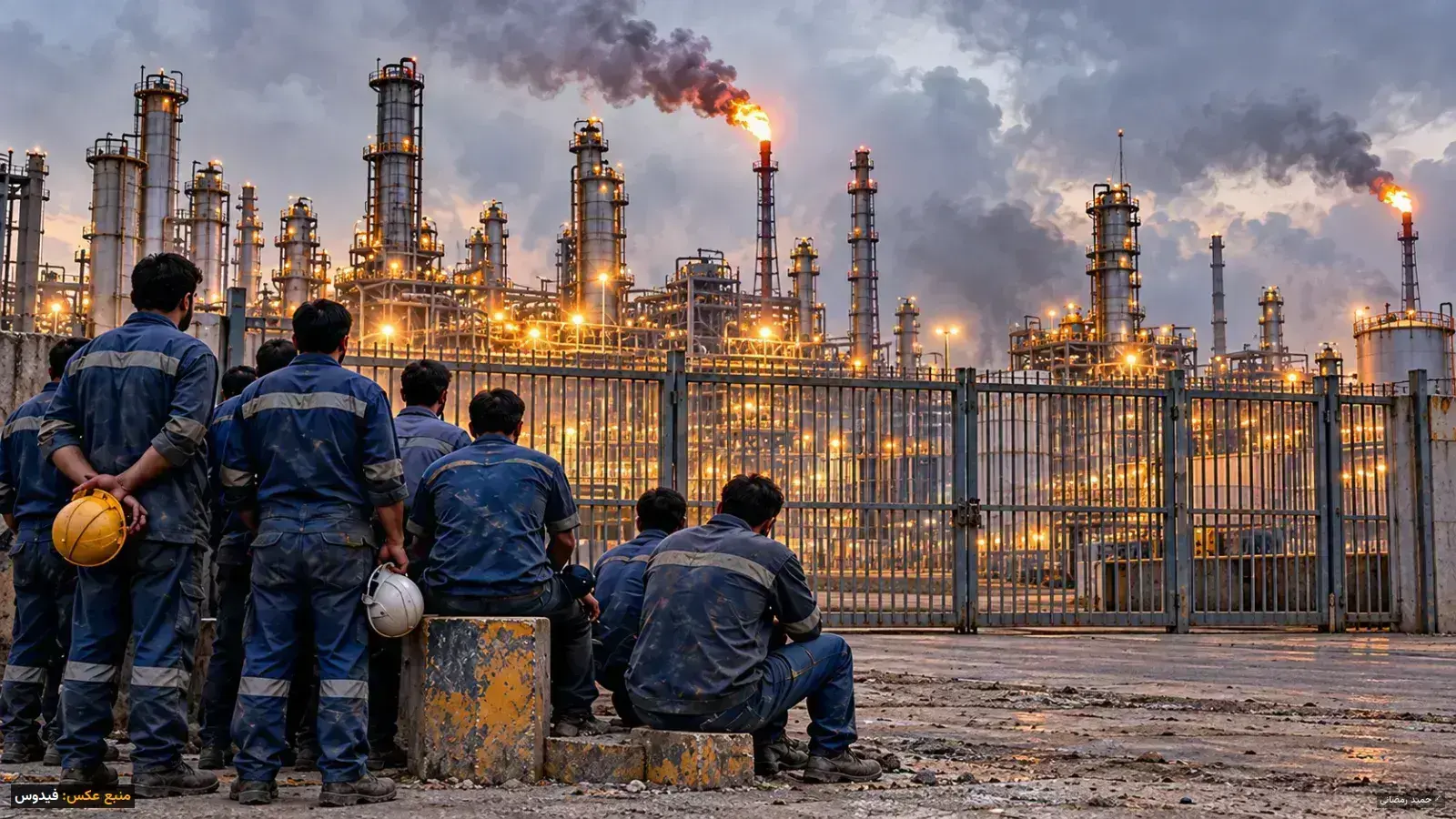
After months, production lines in a large part of the petrochemical industries have been reactivated, but hundreds of experienced workers remain outside the factories where they spent years of their lives. In Mahshahr, Bandar Imam, Asaluyeh, and Bushehr, workers who were "temporarily" laid off during attacks and due to unit closures were either dismissed or their return was conditioned on accepting new contracting agreements after production resumed.
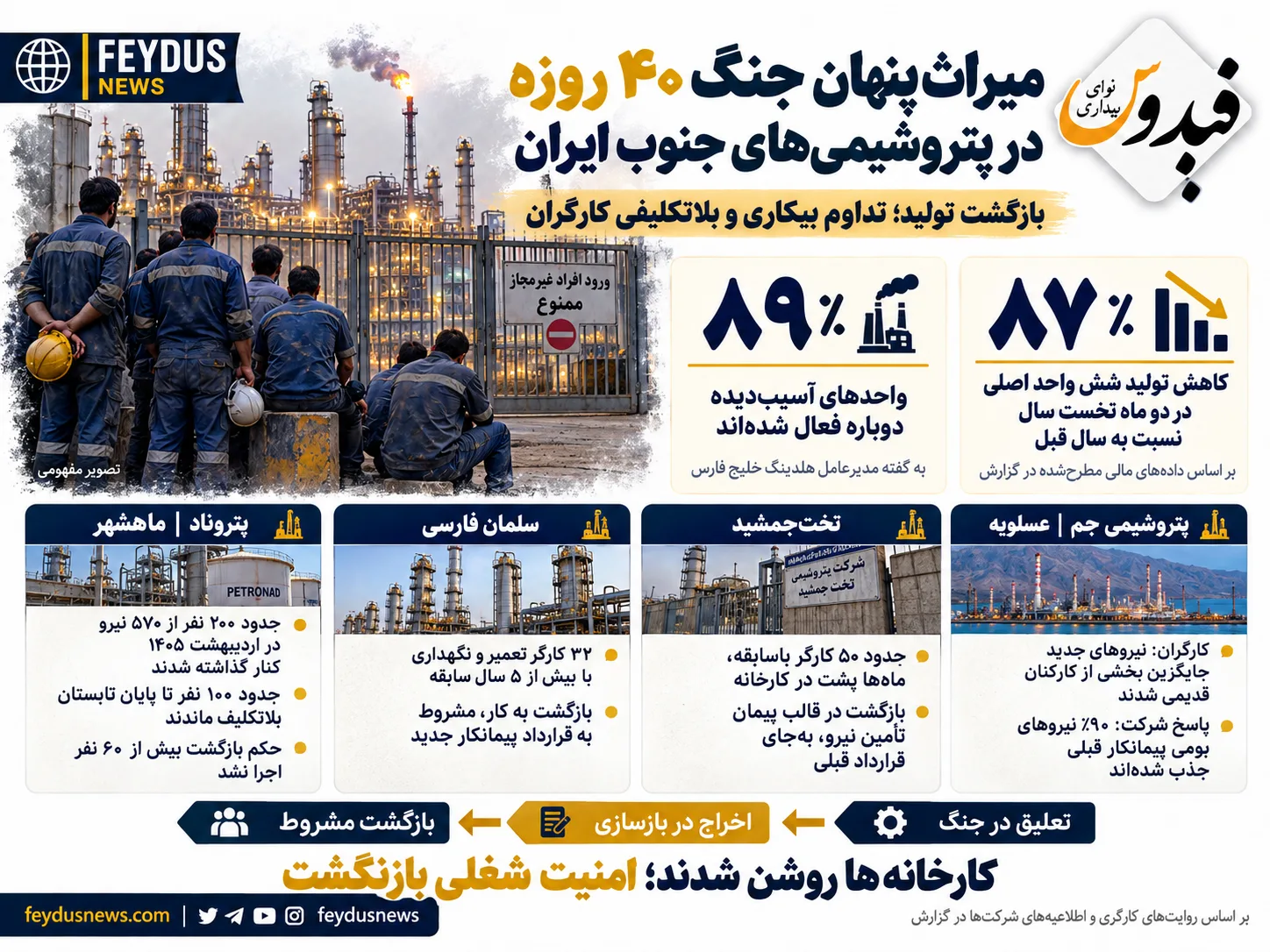
Examination of workers' narratives and company announcements shows that in several key complexes, including Petronad, Salman Farsi, Takht-e Jamshid, and Jam Petrochemical, a common pattern has repeated: contract suspension during the war, dismissal during reconstruction, and replacement of old workers with new and cheaper labor. This process, which workers call "silent cleansing of experienced workers," has occurred while industry managers report the return of 89 percent of production capacity.
However, the return of production has not meant the return of workers. Weak oversight by labor departments, multi-layered contracting structures, and lack of enforcement of return-to-work orders have left thousands of working families in southern Iran in a state of uncertainty.
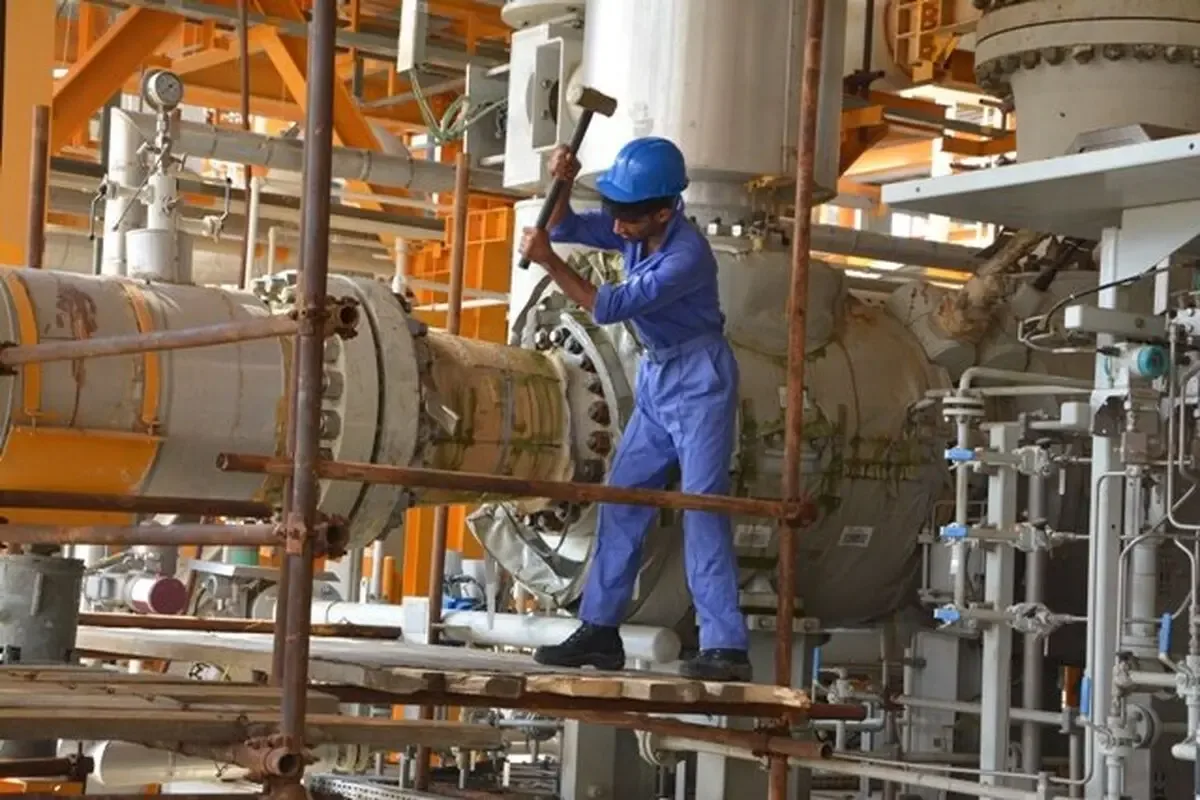
Petronad; A Clear Example of a Structural Crisis
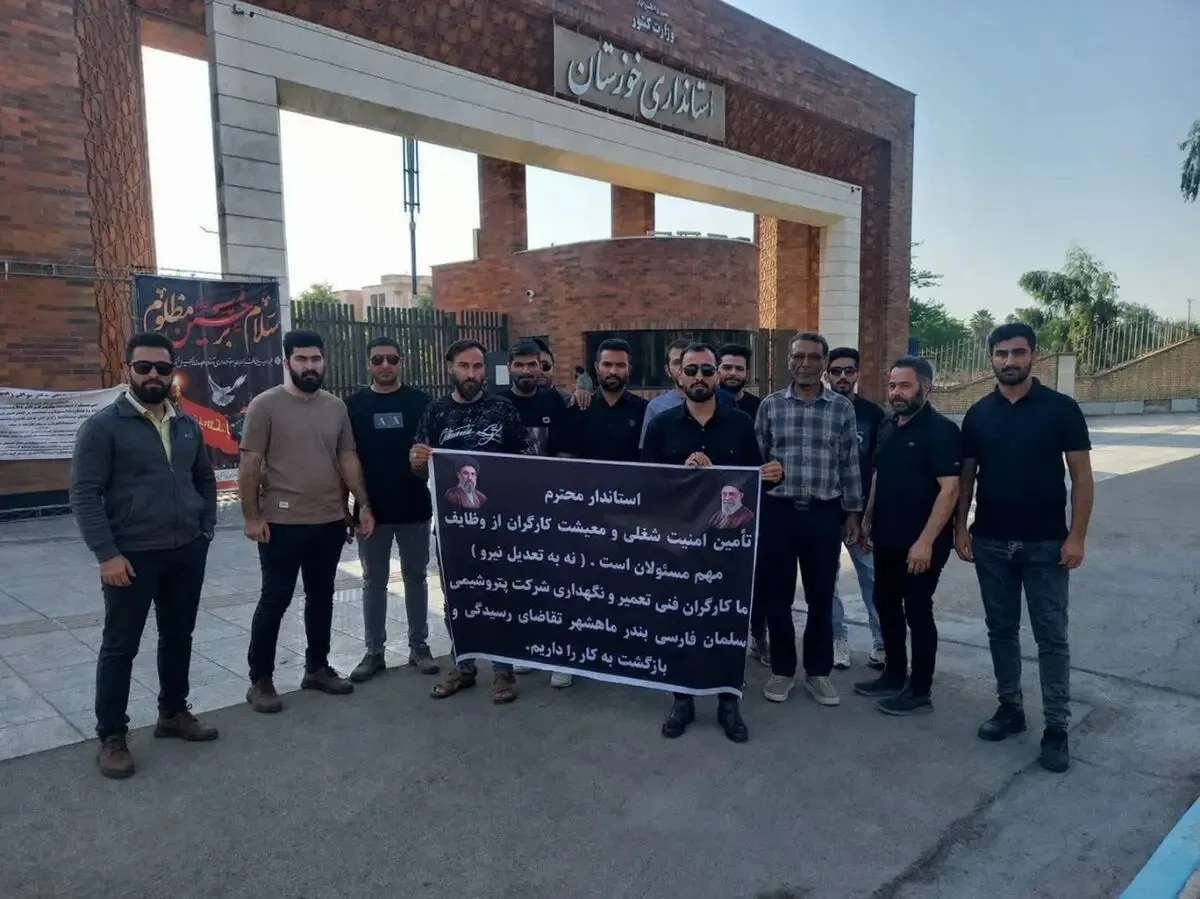
Petronad Mahshahr is one of the most prominent examples of this situation. About 200 out of a total of 570 personnel of this complex were laid off in May 1405, and by the end of summer, about 100 people remained in limbo. Workers say non-local forces are working with the same duties in the company, but experienced local workers are not allowed to return.
The labor department and Bandar Imam governor's office issued return orders for more than 60 people, but this order was not implemented. Petronad attributed the responsibility to the contractor and stated that the protesting workers were not "direct company employees." This response reveals the structural gap between the parent company, contractor, and worker; a gap that leaves the worker unsupported in crisis conditions.
Salman Farsi and Takht-e Jamshid; Conditional Return, Lost Job Security
In Salman Farsi Petrochemical, 32 maintenance workers with over five years of experience remained outside the complex after production resumed. Despite the labor department's ruling and letters from the governor's office, they were asked to return under a new contractor's agreement; a proposal that meant reduced job security for them.
In Takht-e Jamshid Petrochemical, about 50 experienced workers were prevented from entering the workplace for several months. Eventually, the labor department and company management announced that these forces could return, but with a different contract than before and under a "staffing contract." This pattern shows that even when there is an official decision for workers to return, its implementation comes with weaker contracts and lower wages.
Asaluyeh; Conflicting Narratives, Lack of Transparency
In Asaluyeh, workers in the restaurant and kitchen section of Jam Petrochemical announced that after the contractor's exit, some of the old forces were laid off and new individuals replaced them. Jam Company denied this narrative and stated that "90 percent of the local forces of the previous contractor" have been absorbed.
Without publishing the insurance list of employees before and after the contractor change, it is impossible to clarify this discrepancy. However, this very conflict between workers' narratives and the company's response shows that the lack of transparency in the petrochemical employment structure has paved the way for exploitation against workers.
According to data from the International Labour Organization (ILO), Iran's labor law does not set a specific limit for the number of temporary contracts in permanent jobs. This legal gap, along with multiple layers of contracting in the oil and petrochemical industries, has led workers to work for years without real job security.
During the war, this structure became a tool for quick suspension and dismissal of forces. In the post-war period, the same mechanism facilitated conditional returns, hiring new forces, and eliminating experienced workers.
Return of Production, Without Return of Job Security
The CEO of Persian Gulf Holding has announced that 89 percent of damaged units have been reactivated. In contrast, financial data shows that production in six main units in the first two months of the year has decreased by 87 percent compared to the previous year; a figure indicating the severity of the initial blow to production. However, the revival of unit activities has not led to the return of all workers.
In Mahshahr, reports of a dismissed worker attempting suicide were published; a bitter sign of the continued consequences of war, long after the explosions have ceased, indicating how the psychological pressure from dismissals and lack of return to work has driven some workers to the brink of taking their own lives.
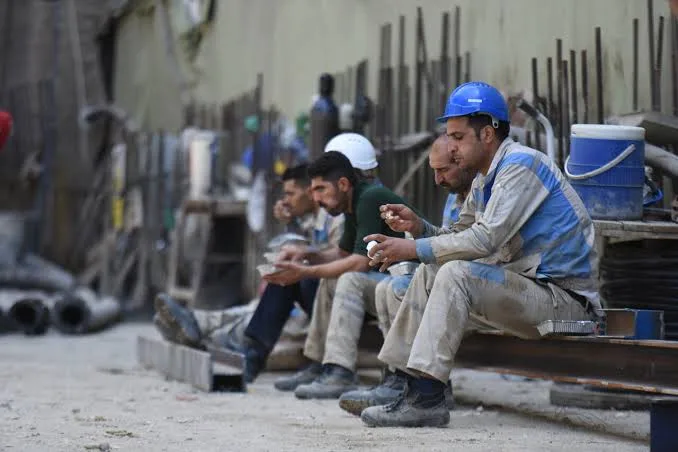
The 40-day war destroyed infrastructure, but post-war policies also faced the lives of southern Iranian workers with devastating consequences. Industrial reconstruction progressed rapidly, but the restoration of employment status did not keep pace. Contract suspensions, dismissals, conditional returns, expansion of contracting agreements, weak oversight by labor departments, and lack of transparency have revealed deep-rooted crises that are not limited to the war alone.
For a worker who, after ten years of specialized work, finds his factory reactivated but himself still left outside, "industry resilience" has no meaning. The main question is why, with the resumption of production activities, the employment status of some workers remains unstable and uncertain.