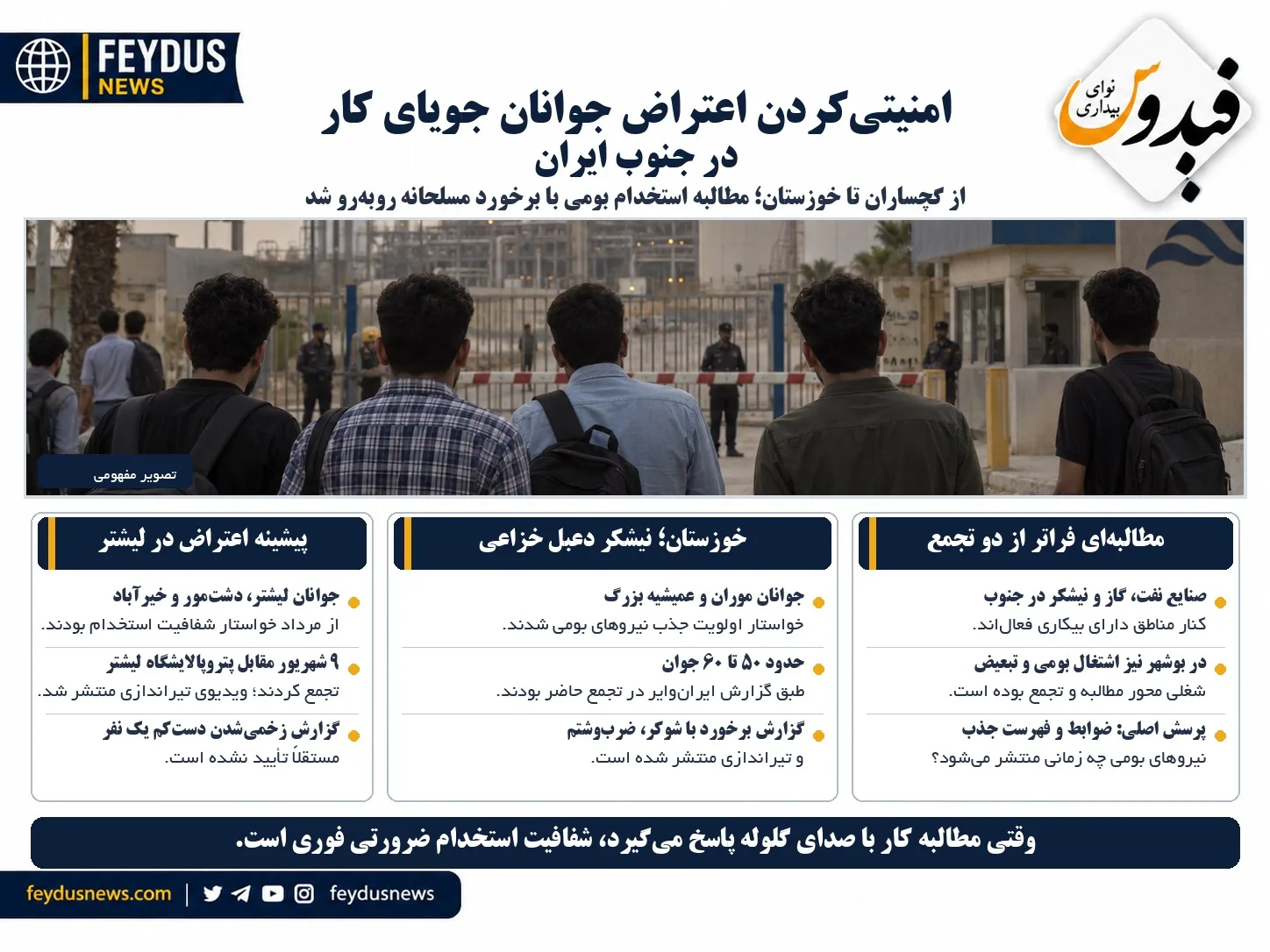
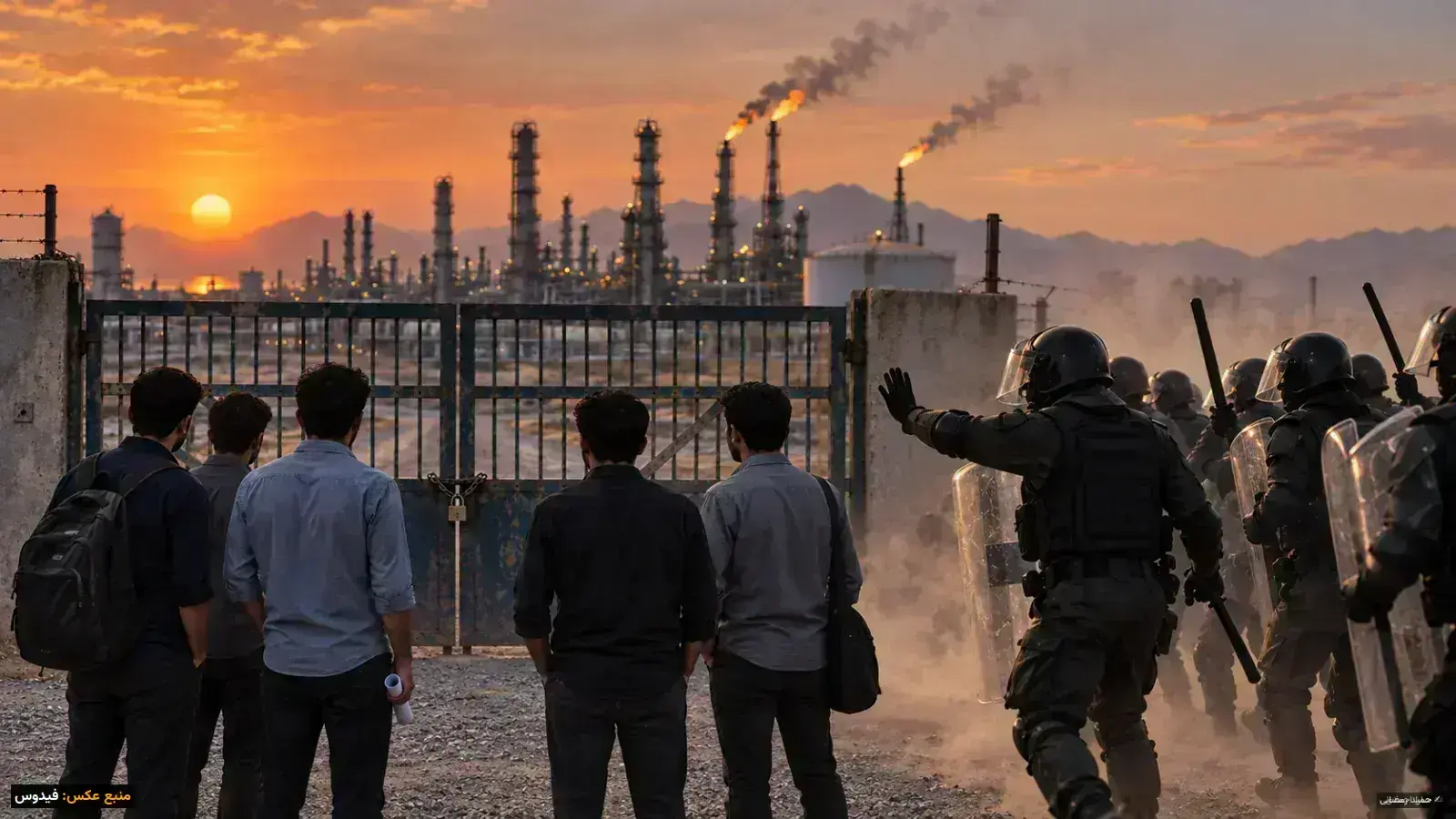
Recent images from southern Iran have once again presented a familiar scene to the public; young people seeking jobs gather in front of an industrial unit, and shortly after, armed officers enter the scene.
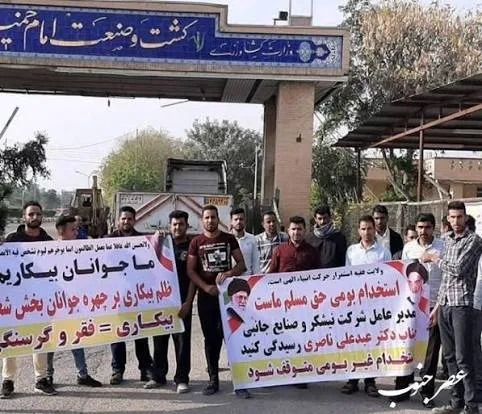
From Job Requests to the Presence of Armed Men
The common aspect of the two incidents is noteworthy. The initial issue was neither an armed conflict nor a protest with demands unrelated to daily life; the issue was "work". In Lishtar, the protest had started weeks earlier. The youth of Lishtar, Dasht-e-Mor, and Kheirabad had gathered in front of the refinery and the Gachsaran governorate in Mordad, demanding transparency in recruitment. Local officials also confirmed the essence of the protest against the recruitment method.
In Khuzestan, the youth of Moran and Amishiyeh say that large industries operate near their homes, but they do not benefit from job opportunities. The protest in front of the Dabel Khazaei Sugar Company did not stop even after the confrontation on the 9th of Shahrivar and continued in the following days.
These two incidents raise a serious question: why does the armed force enter the scene so quickly in response to a protest that begins with unemployment or recruitment methods? Two labor unions in the oil industry also condemned the shooting of job-seeking youth in reaction to the events in Gachsaran and Ahvaz, placing these two incidents side by side.
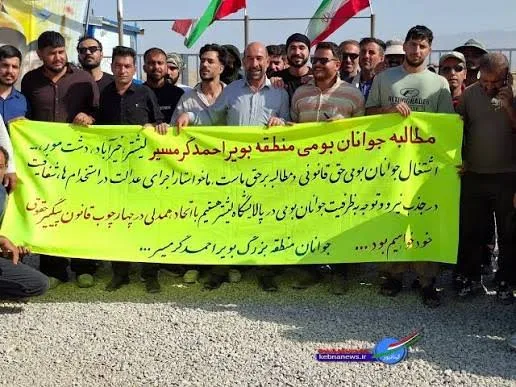
The Wealthy South and the Youth Left Behind by Industries
This discontent is not limited to Gachsaran and Khuzestan. In Bushehr, the heart of Iran's gas industry, local employment remains a serious demand. The governor of Bushehr requested the Minister of Oil in Mordad to increase the share of local forces in job and management opportunities. Simultaneously, protests about the recruitment method in Bushehr Petrochemical have been reported.
In Shahrivar, oil and gas workers in Asaluyeh, Kangan, and South Pars platforms gathered. Their demands included living conditions, payment reforms, and job discrimination. Human rights sources reported gatherings in at least 16 sectors and offshore platforms.
Bushehr also has a bitter experience in its memory. In Dey 1404, during the Kangan protests, videos of direct shooting at protesters were released. The Third Party Oil Workers Union later referred to the shootings in Kangan, Dayyer, Asaluyeh, and Parsian in their statements.
In Hormozgan, protests over employment and living conditions in industrial and port areas have a history, but in reviewing sources from recent months, no sufficient evidence was found to attribute shootings to recent gatherings in this province.
When Protests Become Security Issues Before Being Heard
The main issue in southern Iran may go beyond any single gathering. Khuzestan, Bushehr, Hormozgan, and Kohgiluyeh and Boyer-Ahmad host a large part of the country's oil, gas, petrochemical, refining, and port industries. Yet, the demand for local employment is repeatedly heard from these areas.
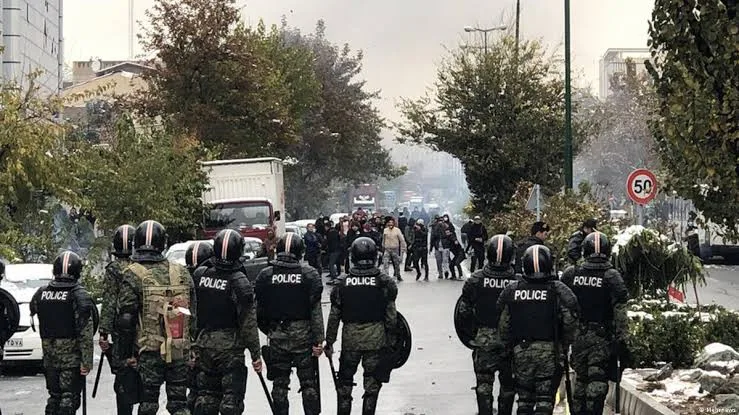
In such circumstances, the rapid presence of armed forces at a gathering of a few dozen people can deepen the gap between citizens and the government. Even if local officials consider a demand illegal or incorrect, the natural response to a dispute over recruitment should be explanation, publication of recruitment regulations, and dialogue with protesters, not turning the place of job demand into a display of weapons.
What was seen on the 9th of Shahrivar in Gachsaran and Khuzestan has revived the concern that in parts of southern Iran, social protests are met with a security perspective before being heard. A young person standing in front of a refinery or sugar company saying "I want work" may or may not be justified in their share of employment; this can be examined with law, statistics, and transparency.
But when the gap between a job request and the sound of gunfire is reduced to a few minutes, the issue is no longer about hiring at a factory. The issue is the government's approach to people living in one of the wealthiest regions of Iran, standing at the gates of industries for their share of that wealth.