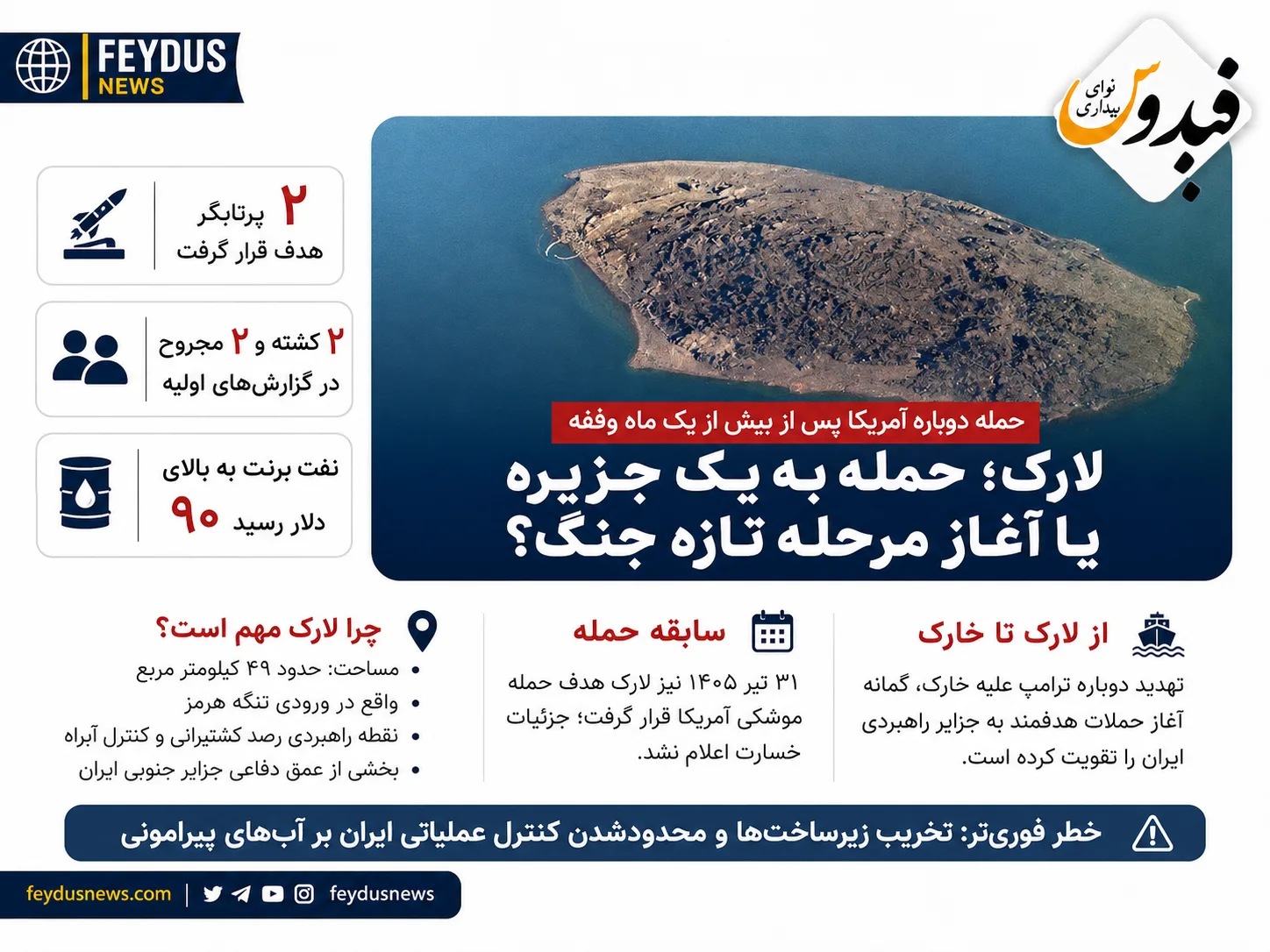
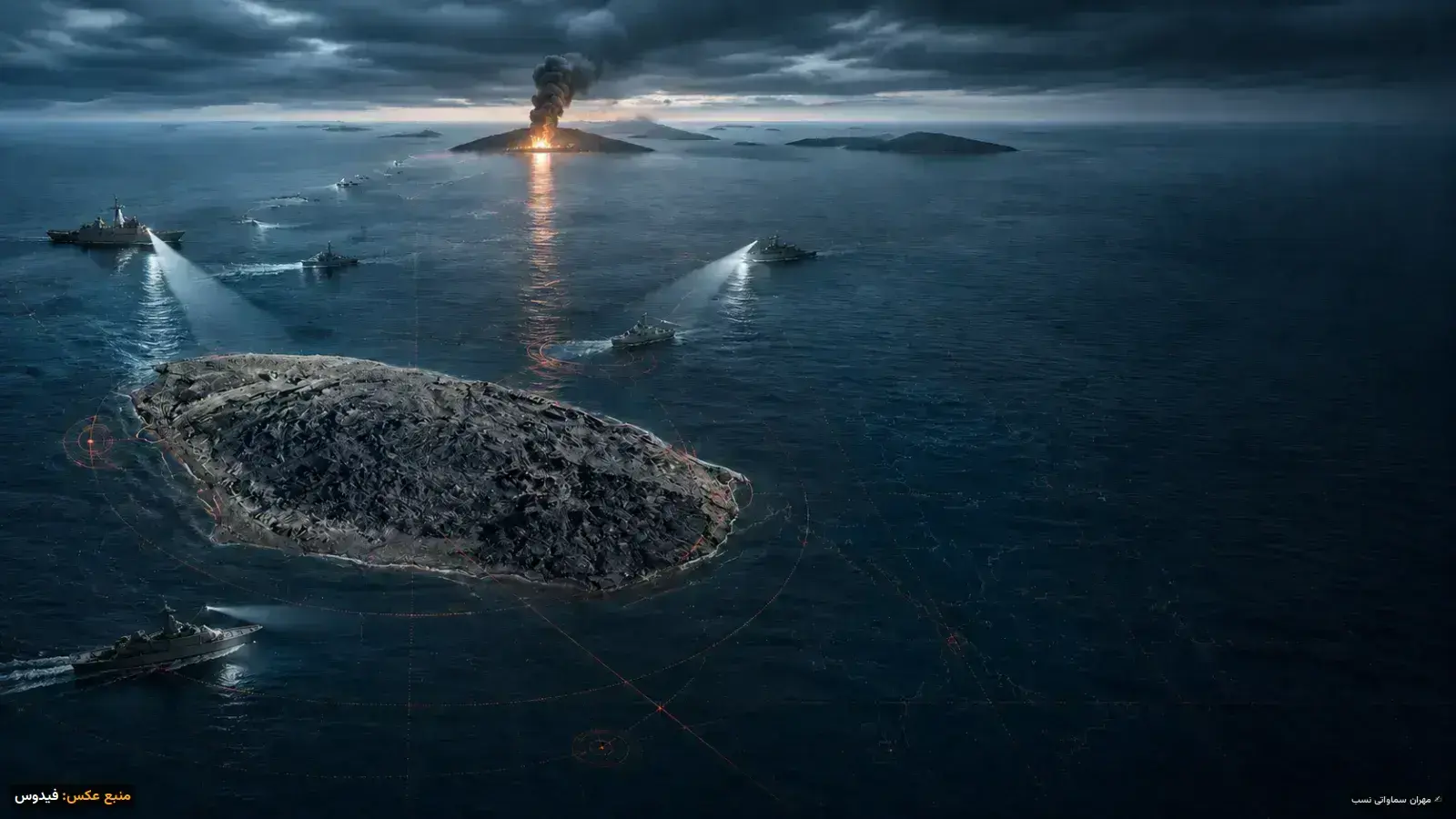
The recent U.S. attack on Larak Island cannot be considered merely a limited operation against two missile launchers. The strategic position of this island at the entrance of the Strait of Hormuz and its proximity to the commercial shipping route, along with the history of Iranian military equipment deployment, has turned Larak into one of the key points in the dispute over control of the Hormuz waterway.
The repetition of the attack after more than a month's hiatus and its coincidence with increased economic pressures and Donald Trump's new threat against Kharg Island strengthens the speculation that Washington may have started a new phase of targeted attacks on Iran's strategic islands. According to reports, American forces targeted two launchers on Larak Island on the evening of Sunday, August 8. An American official claimed that IRGC forces were preparing this equipment to launch sea mine-carrying rockets into the Strait of Hormuz.
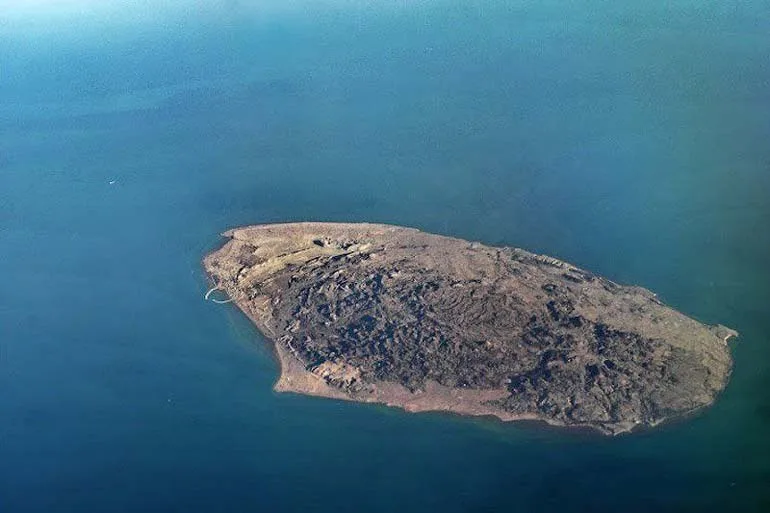
The IRGC confirmed the attack and reported casualties among military and civilian personnel. Initial domestic reports indicated at least two deaths and two injuries, although no independent final statistics have been released. In response, Iran reported missile and drone attacks on bases housing American forces in Jordan.
The Strategic Importance of Larak
Larak, with an area of about 49 square kilometers, is located between Qeshm Island and the waters entering the Strait of Hormuz. Its importance arises not from its population or economic capacity, but from its geographical location. The deployment of maritime surveillance, missile, and naval equipment in this area can enable monitoring of shipping routes and intervention in ship traffic. Larak is also part of Iran's defensive ensemble alongside Qeshm, Hormuz, Abu Musa, and the Tunbs, forming the defensive depth of the country's southern coasts.
From the U.S. perspective, the equipment stationed on Larak can support mine-laying operations, short-range missile attacks, and disruptions in shipping. From Iran's perspective, controlling this island is essential for maintaining deterrence leverage in the Strait of Hormuz. Before the war began, about one-fifth of the world's oil consumption passed through this strait, and any military confrontation in Larak can directly impact energy prices and shipping companies' decisions. Following the recent attack, Brent oil rose by more than three percent to over $90.
The weakening of Iran's military control over the Strait of Hormuz, which evidence suggests is decreasing, reaches a point with such attacks that fundamentally removes the Strait of Hormuz from the Islamic Republic's political leverage and completes the opportunity for U.S. control over the world's energy transit passage.
Repetition of Attacks and Their Consequences
Last night's attack was not the first targeting of Larak in the recent war. On July 31, 1405, Iranian sources also reported a U.S. missile attack and a loud explosion heard on the island. At that time, no official details about the targets and damages were released, but military analytical reports confirmed that Larak was targeted along the U.S. attacks on southern Iran's maritime and military infrastructure.
The repetition of the attack in a short interval shows that the U.S. considers Larak part of Iran's operational network for controlling the strait, not an isolated target. Meanwhile, the limited declared objectives may be an attempt to keep the conflict below the threshold of a large-scale operation. However, the return of attacks after a one-month hiatus increases the risk of turning limited operations into a chain of attacks against Iran's islands and coastal facilities.
Heshmatollah Falahatpisheh, former head of the National Security Commission of the Parliament, linked the attack on Larak to the U.S. government's economic policy, stating that Washington intends to make the Strait of Hormuz the main issue of the G20 economic powers summit. This interpretation coincided with Scott Besant, U.S. Treasury Secretary, announcing weekly secondary sanctions and cutting off Iranian banks and trade partners from the dollar financial system.
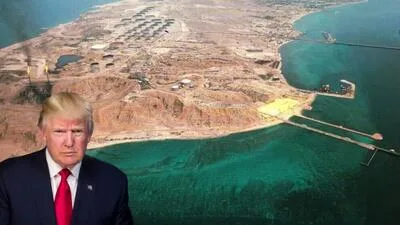
Concerns became more serious when Trump, after the attack on Larak, released an AI-generated video of Kharg Island's destruction, claiming the island was "being destroyed." There was no credible evidence of a new attack on Kharg, and U.S. military officials did not confirm it. Kharg's oil activities continued. However, the importance of this post was in its political message: the U.S. President once again placed Iran's main oil export terminal at the center of the threat. Trump had previously even suggested the possibility of "seizing" Kharg.
The combination of naval blockade, banking sanctions, reduced exports, and limited attacks could mean Washington's attempt to simultaneously erode Iran's economic capability and maritime deterrence. In such conditions, the islands become more militarily vulnerable, and the cost of protecting, supplying, and rebuilding them becomes heavier.
However, there is still no reliable indication of a U.S. decision to occupy Iranian islands territorially, and the "loss of islands" in a legal and territorial sense remains an unproven scenario for now. The more immediate danger is the gradual loss of military and economic functionality, the destruction of infrastructure, and the limitation of Iran's operational control over surrounding waters. If the attack on Larak is a prelude to new attacks on Kharg, Qeshm, Hormuz, or other coastal points, the Islamic Republic will face its most serious test to maintain effective security and sovereignty over the southern islands.