BREAKING
Beyond Energy

From Petrochemicals to Steel; What Remains of the Rikhtegaran Brothers' Empire?

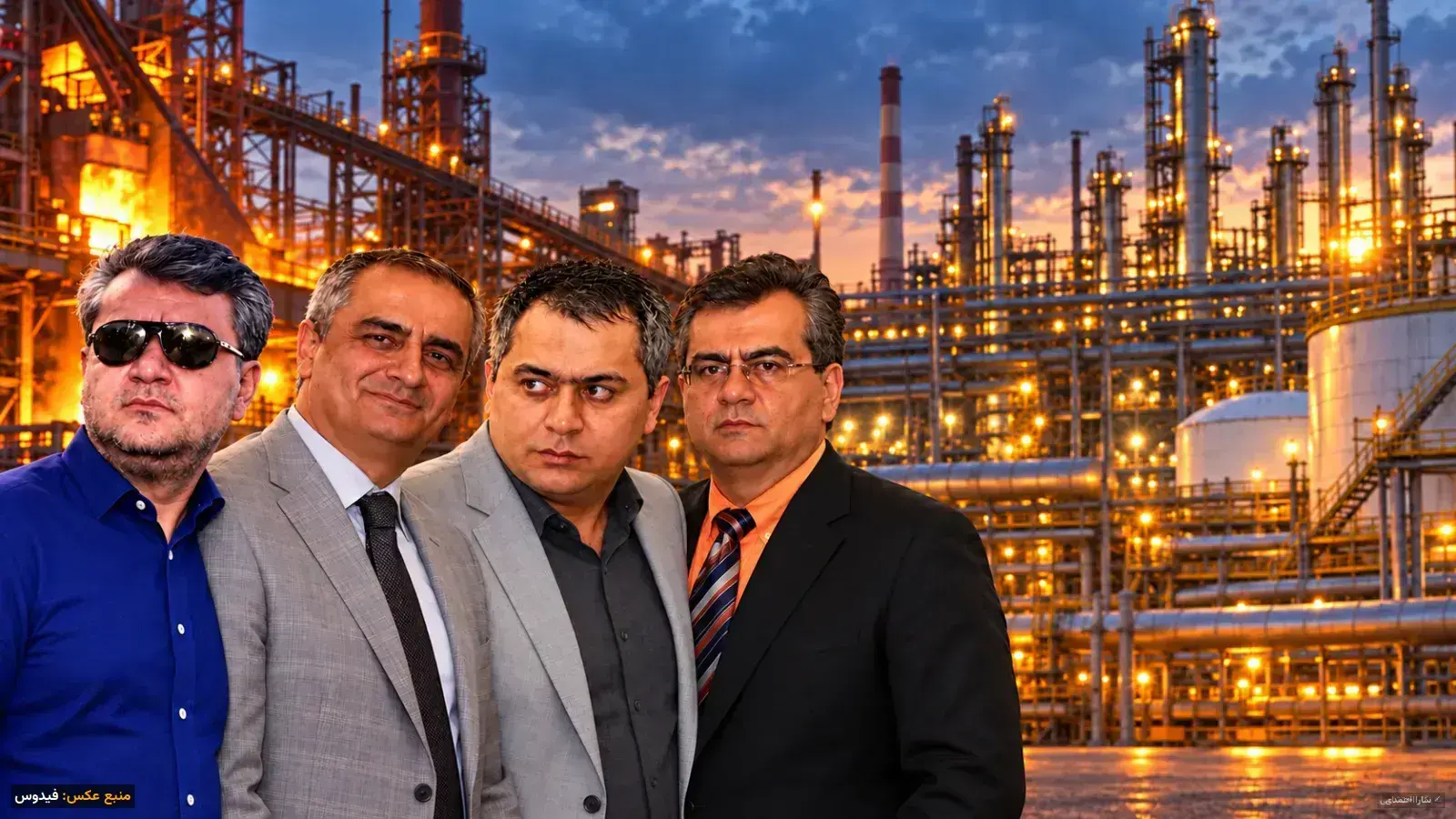
More than a decade after the conviction of the Rikhtegaran brothers on charges of disrupting the economic system, their economic empire, which included petrochemical, steel, and banking industries, has significantly changed and mostly turned into a collection of legal disputes and claims. While some of their assets have been transferred to banks to settle debts, the impact of this family's economic activities is still visible in the legal and financial records of major Iranian companies.

From Petrochemicals to Steel; What Remains of the Rikhtegaran Brothers' Empire?

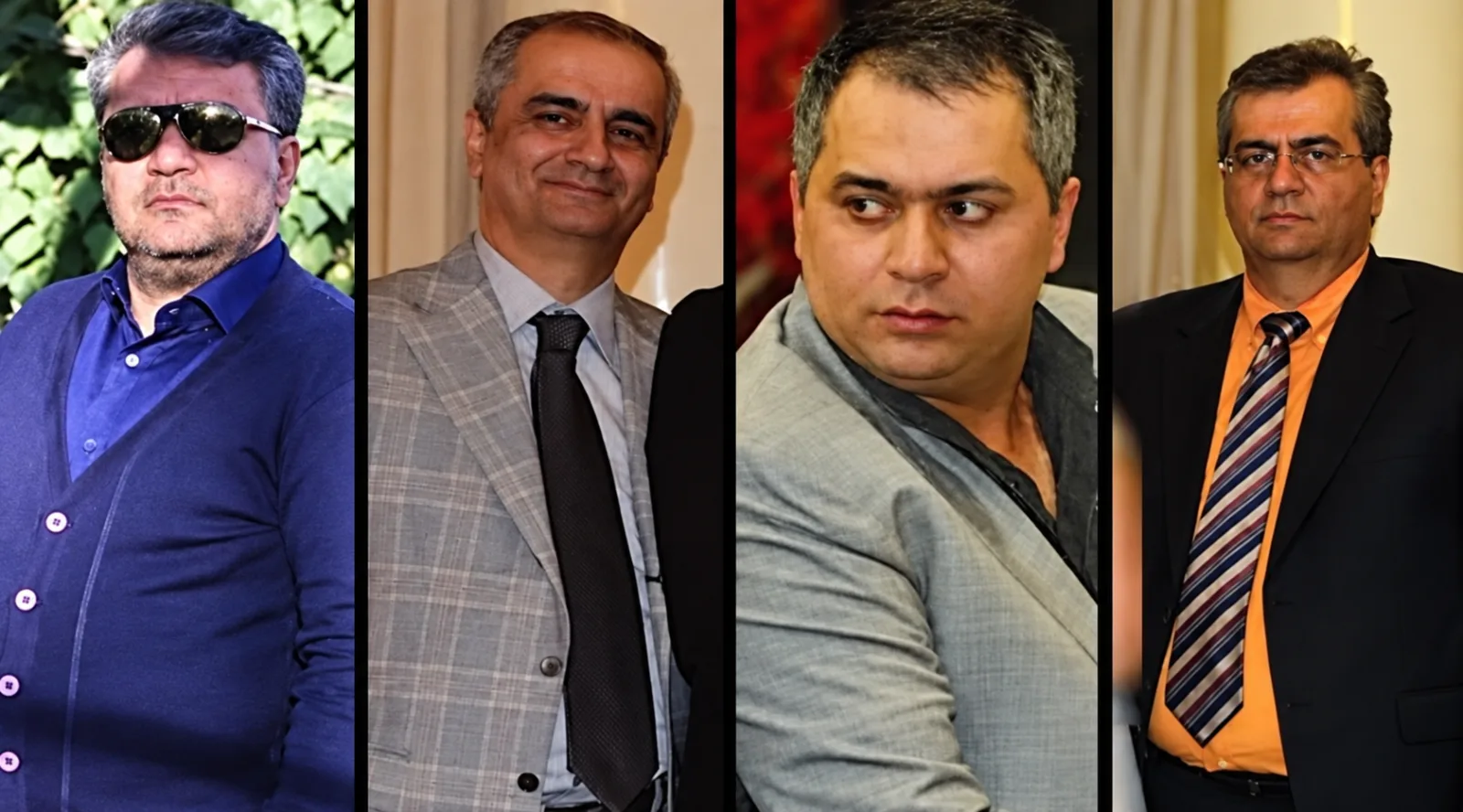
More than a decade after the judicial case against the Rikhtegaran brothers began, their name still appears in the financial statements, legal cases, and claims of some of Iran's major companies. However, a review of the latest published information shows that the economic empire that once extended from Isfahan and Bistoon petrochemicals to Sarmayeh Bank, steel, automotive, construction, and trade no longer operates with its previous ownership structure.

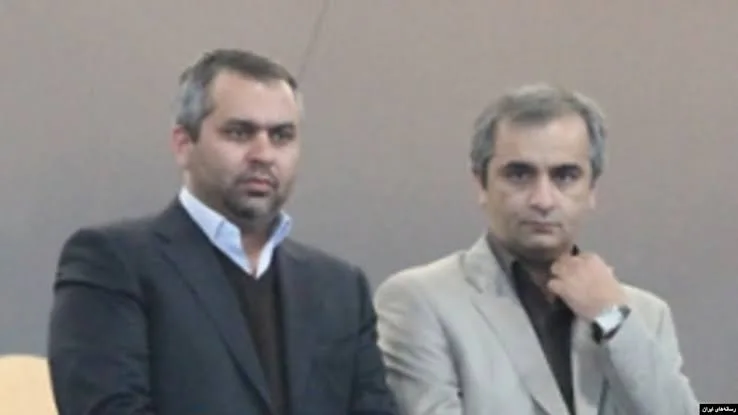
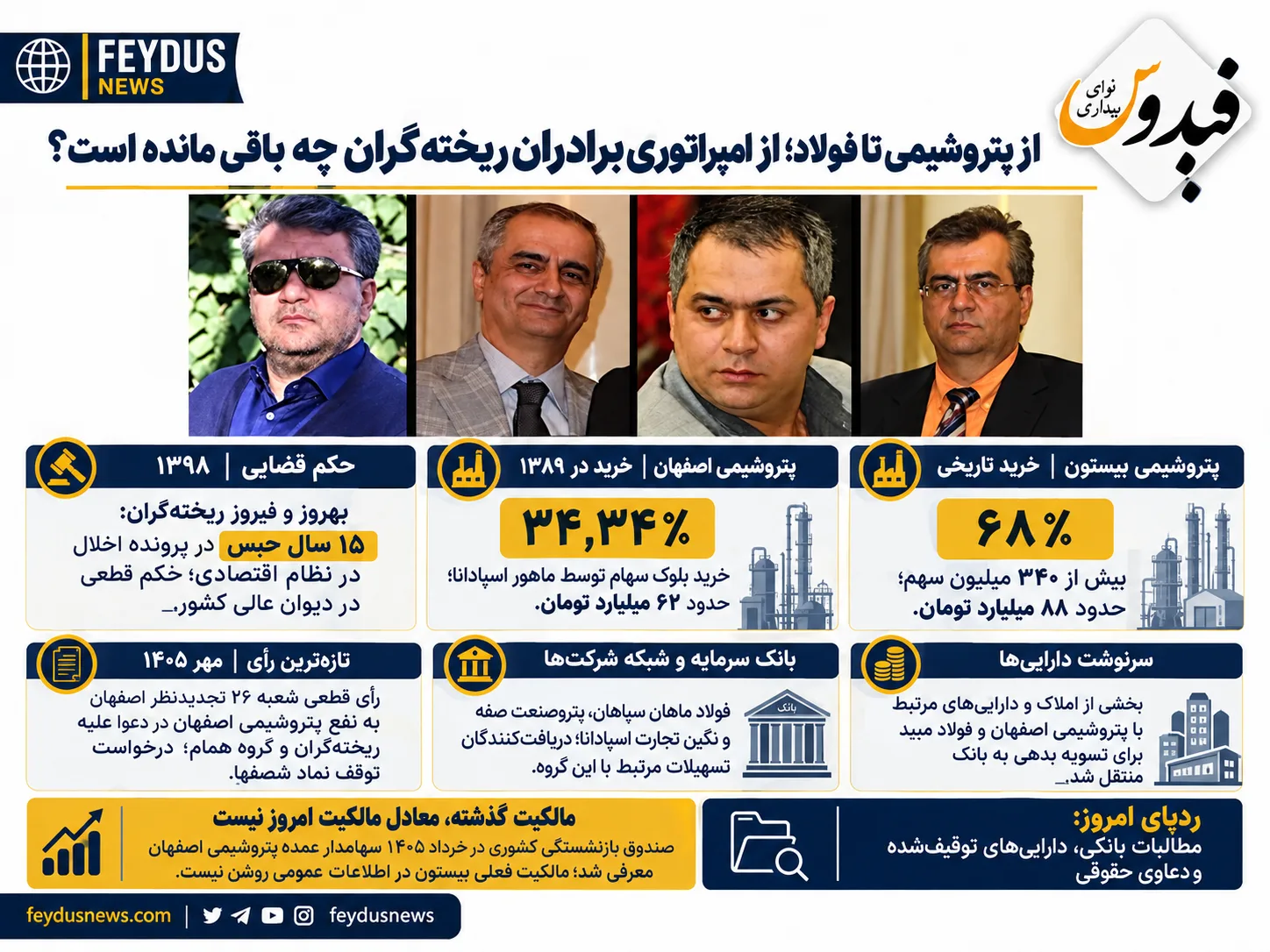
 Behrooz and Firooz Rikhtegaran were sentenced to 15 years in prison in 1398 in a case related to disrupting the economic system, and the Tehran prosecutor's representative announced that this sentence was finalized in the Supreme Court. However, the economic impact of the network of companies associated with them still remains, and the latest example is the final verdict of the Isfahan Court of Appeal in Mehr 1405 in one of the petrochemical cases against the Rikhtegaran brothers and the Hamam group.


Petrochemicals; From Ownership of Two Complexes to a Multi-Million Dollar Dispute

The Rikhtegaran's entry into the petrochemical industry was one of the most important aspects of their economic expansion. In 1389, Mahoor Spadana Automotive Industries Company, one of the companies associated with this group, purchased a 34.34 percent block of Isfahan Petrochemical for about 62 billion tomans. During the same period, the Rikhtegaran group acquired a 68 percent block of Bistoon Petrochemical, including over 340 million shares belonging to the National Petrochemical Company, for approximately 88 billion tomans.
 However, the current state of Isfahan Petrochemical is fundamentally different from that period. In the extraordinary general assembly of this company in Khordad 1405, the "National Pension Fund" was introduced as the major shareholder, and the Rikhtegaran case was examined not as ongoing managerial ownership, but as one of the most important legal disputes of the company.

 This case reached a new point in Mehr this year. Isfahan Petrochemical announced that Branch 26 of the Isfahan Court of Appeal issued a final ruling in favor of the petrochemical company in its lawsuit against the Rikhtegaran brothers and the Hamam group. The financial significance of the ruling was such that the company requested the suspension of the "Shasfha" symbol from the over-the-counter market.


Based on the published information about the company's financial statements, the Rikhtegaran case has been one of the main ambiguities in the auditing of Isfahan Petrochemical for years. Therefore, today's relationship between the Rikhtegarans and this company should be viewed more as a collection of disputes, claims, and contested assets rather than "controlling ownership."

 Regarding Bistoon Petrochemical, historical documents confirm the purchase of 68 percent of the shares by the Rikhtegarans, but in the publicly reviewed sources, there is no new and reliable document indicating that this amount of shares is still directly owned by Behrooz or Firooz Rikhtegaran in Mehr 1405. Therefore, attributing current ownership of Bistoon to them is not reliable without examining the company's registration chain.


Steel, Automotive, and Banking; A Network with Interconnected Resources
 The Rikhtegaran's activities were not limited to petrochemicals. "Mahan Sepahan Industrial Development Group" at its peak included a collection of companies such as Mahan Sepahan Steel, Mahoor Spadana Automotive Industries, Mahan Industrial Electricity Development, trading and construction companies, and Isfahan and Bistoon Petrochemicals.


 One of the main links in this network was Sarmayeh Bank. Reports related to the bank case show that companies like Mahan Sepahan Steel, Petro Sanat Safa, and Negin Tejarat Spadana were recipients of loans from this bank associated with the Rikhtegarans. In one of the latest published lists of bank debtors, the Rikhtegarans' name still appeared in connection with hundreds of billions of tomans in remaining debt.

According to the prosecutor's representative in the Sarmayeh Bank court sessions, this bank betrayed the trust of 14 trillion tomans of educators' assets; 47 percent of Sarmayeh Bank's shares belonged to the Educators' Reserve Fund and 38 percent to the Rikhtegaran group (the Rikhtegaran brothers). According to the list provided by Abdolnaser Hemmati, the Rikhtegaran brothers are the eleventh largest debtor to Bank Tejarat, owing 745 billion tomans to the said bank.


 Previously, Sarmayeh Bank managers had also stated that some of the properties and assets associated with the Rikhtegarans, including assets in Isfahan Petrochemical and Meybod Steel, had been transferred to the bank to settle debts. This indicates that some of the assets that were once part of the Rikhtegaran economic network have been removed from their direct control through bank claims collection or legal actions.


The Former Empire; Today's Ownership Still Needs Clarification 

The image derived from the available information in Mehr 1405 is different from the image of the Rikhtegarans at the beginning of the 1390s. During that period, this family's name simultaneously appeared in banking, petrochemicals, steel, automotive, construction, paper, and trade, forming a network of intermediary companies. Voice of America also described the scope of this family's activities in 1398 from petrochemicals and automotive to construction and banking.

Today, however, not all companies that were once subsidiaries or associated with the Rikhtegarans can be considered the current assets of this family. Some assets have been seized or transferred to settle debts, some have been the subject of legal disputes, and there is insufficient public information about the current ownership of some old companies.

Nevertheless, the October ruling of the Isfahan Court of Appeal shows that the Rikhtegaran economic case is still not closed after more than a decade. What remains of their economic network is now more traceable in claims files, seized assets, and multi-billion toman legal disputes than in the managerial seats of major companies.
 

⚖️ حق پاسخ محفوظ است. فیدوس این خبر را پس از دریافت پاسخ، اصلاحیه یا تکذیبیهٔ مستند، به‌روزرسانی می‌کند.
ارسال پاسخ رسمی / درخواست اصلاح / تکذیبیه
اطلاعات تماس شما محرمانه است و منتشر نمی‌شود. پاسخ پس از بررسی تحریریه ذیل خبر نمایش داده می‌شود.

دیدگاه‌ها

هنوز دیدگاهی ثبت نشده؛ اولین نفر باشید.

ثبت دیدگاه
دیدگاه شما پس از بررسی و تأیید تحریریه منتشر می‌شود.