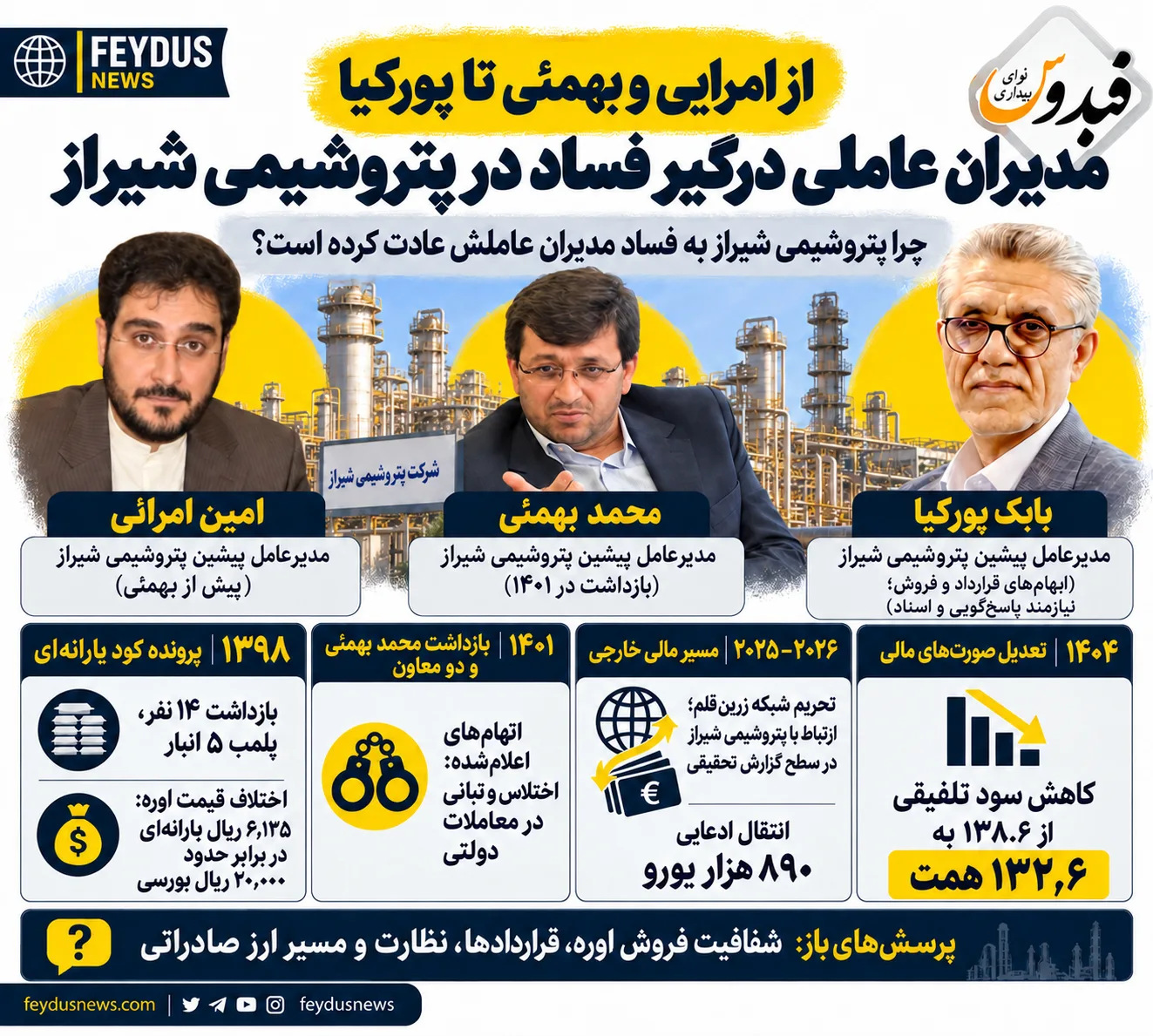
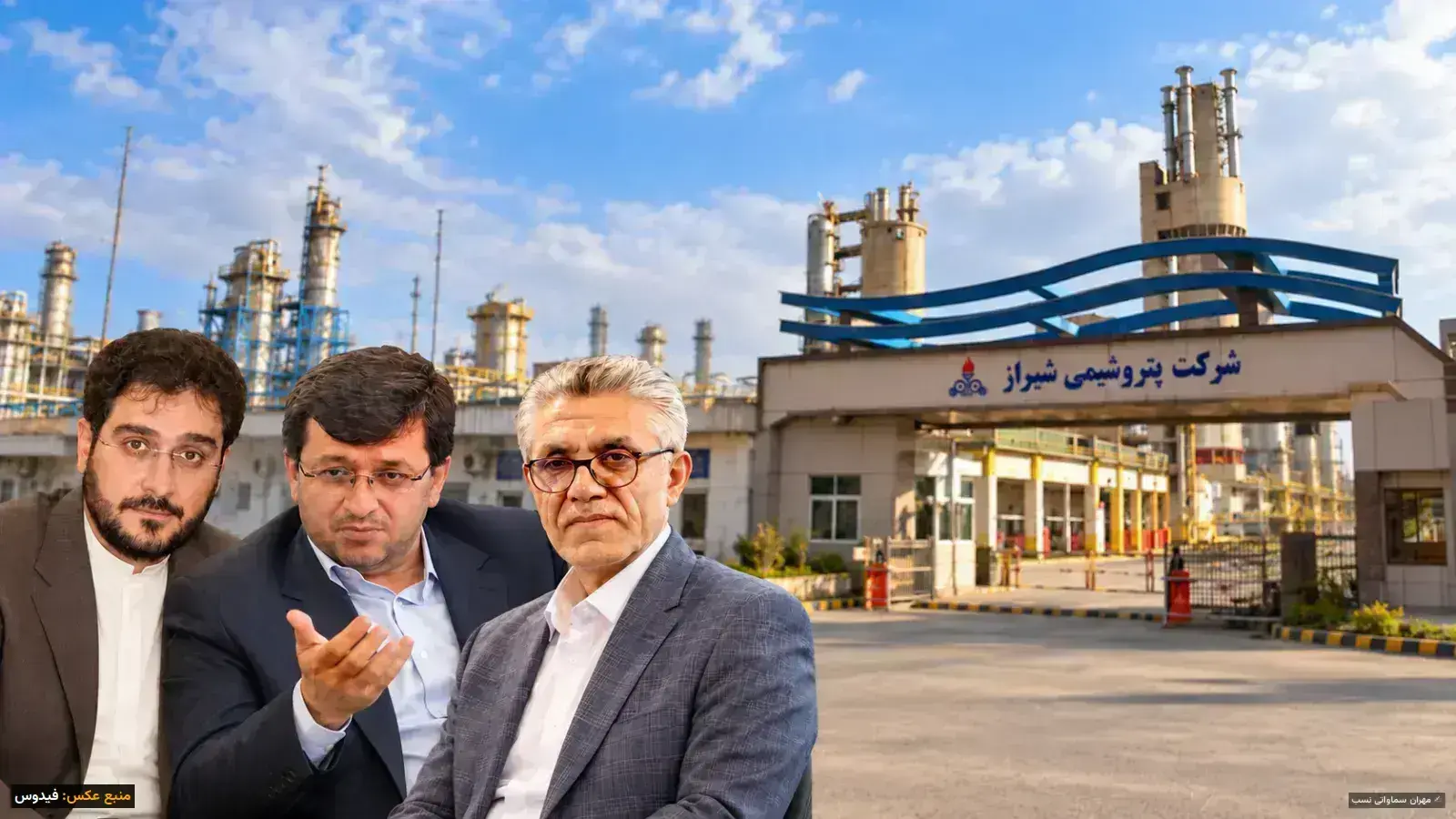
Shiraz Petrochemical, the first petrochemical unit in Iran and one of the most important industrial enterprises in Fars, has repeatedly been at the center of financial, judicial, and oversight cases in recent years; from the subsidized fertilizer brokerage network in 2019 to the arrest of the CEO in 2022 and recent reports about foreign financial pathways of this complex, it is not facing a "single case" but a recurring pattern of structural corruption; a pattern that ties together weak oversight, price discrepancies, and opaque financial networks.
In the years when the discrepancy between subsidized and free-market urea prices increased the economic incentive for the company's management network's corruption. This price gap has repeatedly resulted in corruption cases involving the company's managers, such that despite successive changes in the company's CEOs, the same pattern from Amin Emraei's management period, which led to a peak in managerial violations, to Mohammad Behmei, who eventually turned into a judicial case with charges of embezzlement and corruption, continues under other CEOs as well. The appointment of Babak Pourkia has also, during his tenure as CEO, continued the cycle of corruption in contracts and the sale of the company's products through rent-seeking.
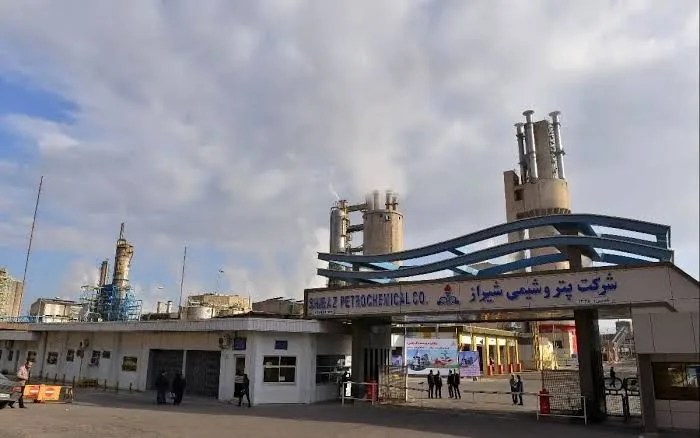
Shiraz Petrochemical started operating in the early 1960s as Iran's first chemical fertilizer production unit and later became one of the largest producers of urea and ammonia in the country. Being situated in four critical points of Iran's economy—gas feedstock, urea exports, export-derived foreign currency, and subsidized fertilizer distribution—has structurally exposed it to rent-seeking, collusion, and misuse.
First Case; Subsidized Fertilizer Brokerage Network (2019
In September 2019, the head of Fars Judiciary announced the arrest of 14 employees of the petrochemical company and brokers. According to the judicial official, this network diverted subsidized fertilizer from the official route and introduced it to the free market. Five warehouses were sealed, and the company confirmed in an official statement that six lower-level employees were involved in this network.
At that
time, petrochemical companies were obliged to supply urea at 6,125 rials, while the stock market price was about 20,000 rials. This discrepancy effectively created a lucrative black market. This case revealed that the fertilizer distribution structure in Shiraz is vulnerable and that there is potential for the formation of internal-external networks. Despite the arrests, the final verdict for all defendants is not publicly available, so the only confirmed part of the case is the existence of the network and the involvement of employees.
Second Case; Arrest of Behmei and Overlooking Emraei's Corruption
On November 15, 2022, Seyed Kazem Mousavi, head of the Fars Judiciary, announced that the then CEO of Shiraz Petrochemical, Mohammad Behmei, and two of his deputies were arrested in the execution of a judicial order from the State Employees Prosecutor's Office. The official charges are embezzlement and collusion in government transactions.
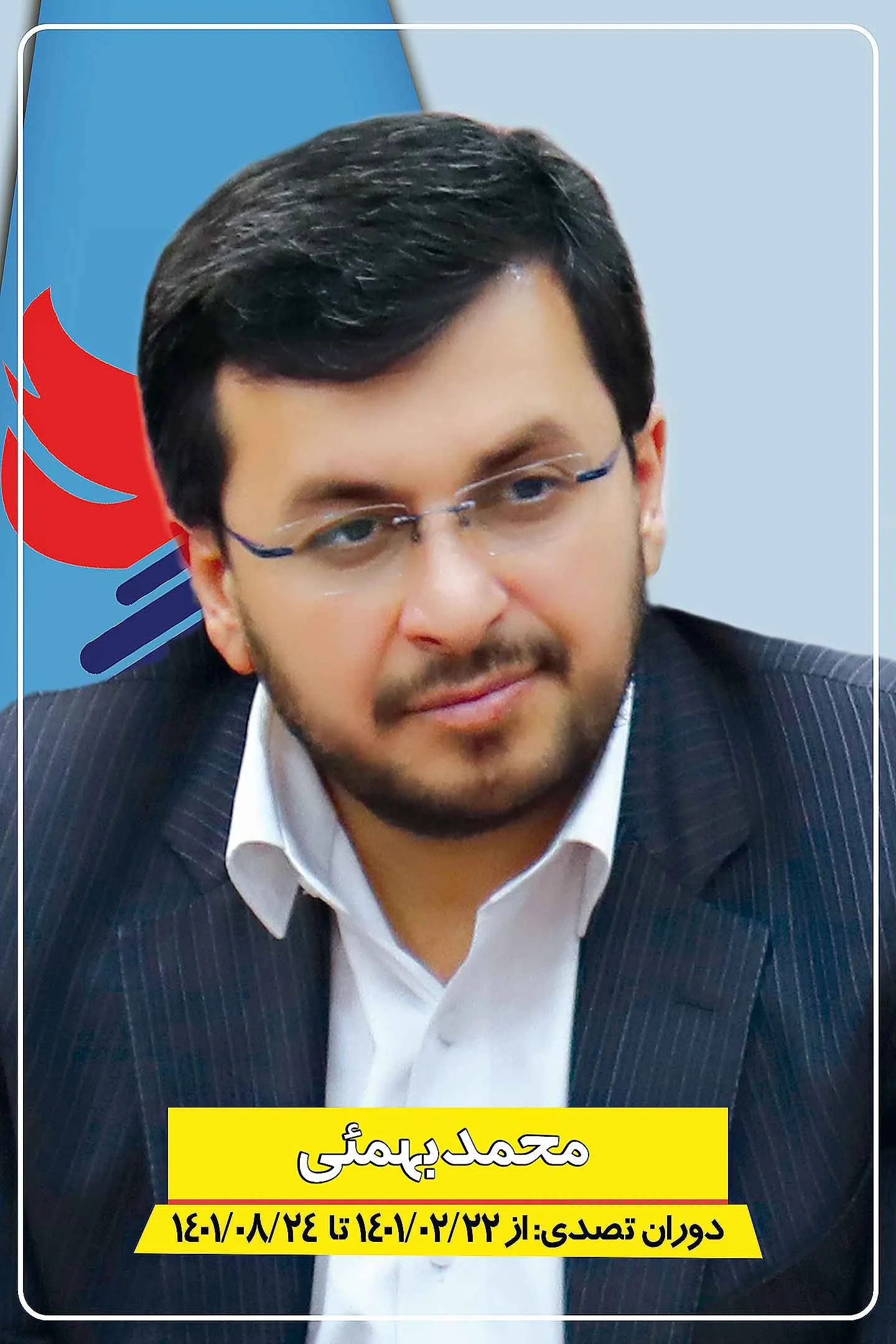
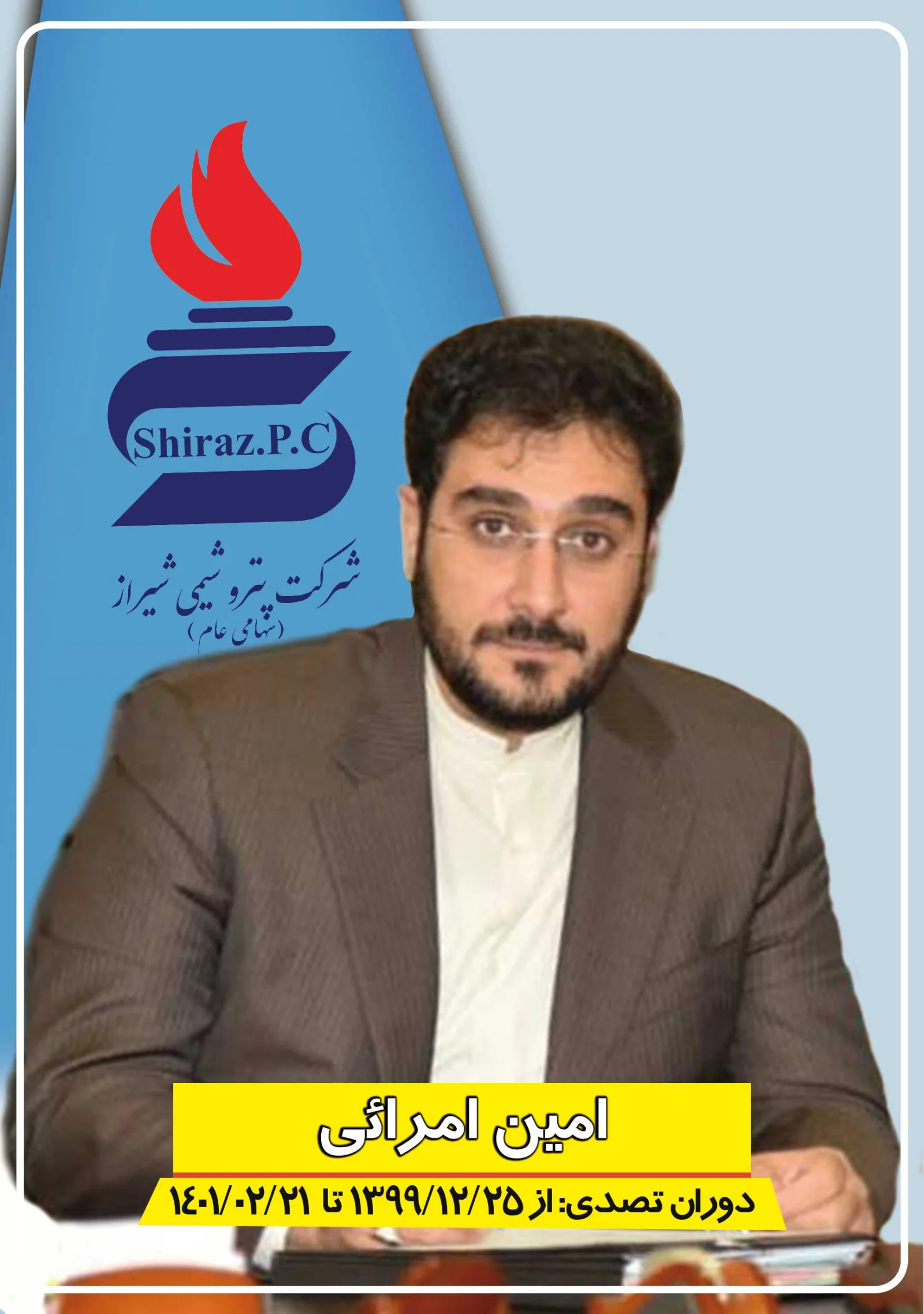
This arrest quickly made headlines because just a few weeks earlier, the CEO had been honored as an "exemplary exporter." Other energy sector reports spoke of a "big urea case" and mentioned million-dollar figures, but official documents only confirmed those two charges. The important point was the effort to conceal part of this corruption during Amin Emraei's management period, who played a key role in forming this corruption network before Behmei. Despite the exposure of his corruption in Shiraz, he continued to advance in other companies while maintaining the same corruption pattern.
Third Case; Foreign Financial Pathways and the Zarrin-Ghalam Network (2025–2026)
On June 6, 2025, the U.S. Treasury Department sanctioned the financial network of the Zarrin-Ghalam brothers, a network that used front companies in the UAE and Hong Kong to transfer billions of dollars related to the sale of Iranian oil and petrochemical products. The published documents revealed that Nasser Zarrin-Ghalam, through the UAE company Moderate General Trading, conducted operations to transfer or launder funds related to Shiraz Petrochemical Company. The report mentioned the transfer of 890,000 euros from China to Germany. The sanction against the Zarrin-Ghalam network is official; however, the direct connection of Shiraz Petrochemical with this network remains at the level of investigative reporting, and there is no independent judicial ruling regarding the company.
Financial Ambiguities; Heavy Adjustment of Financial Statements (2025–2026)
The audited financial statements for 2025 showed that the company's consolidated profit decreased from 138.6 trillion rials to 132.6 trillion rials, an adjustment of approximately 6,040 billion rials. Simultaneously, asset items, retained earnings, and receivables were also revised.
An industry
that has fallen under the shadow of mistrust Shiraz Petrochemical today faces three main consequences: public mistrust due to recurring cases, high oversight risk in fertilizer distribution and urea transactions, and external pressure resulting from sanctions on financial networks related to Iran's petrochemical industry. This
complex, once a symbol of the country's industrial development, is now at the center of a recurring pattern of corruption, a pattern that shows how weak oversight and opaque structures can lead a key industry into a cycle of financial, judicial, and managerial crises.