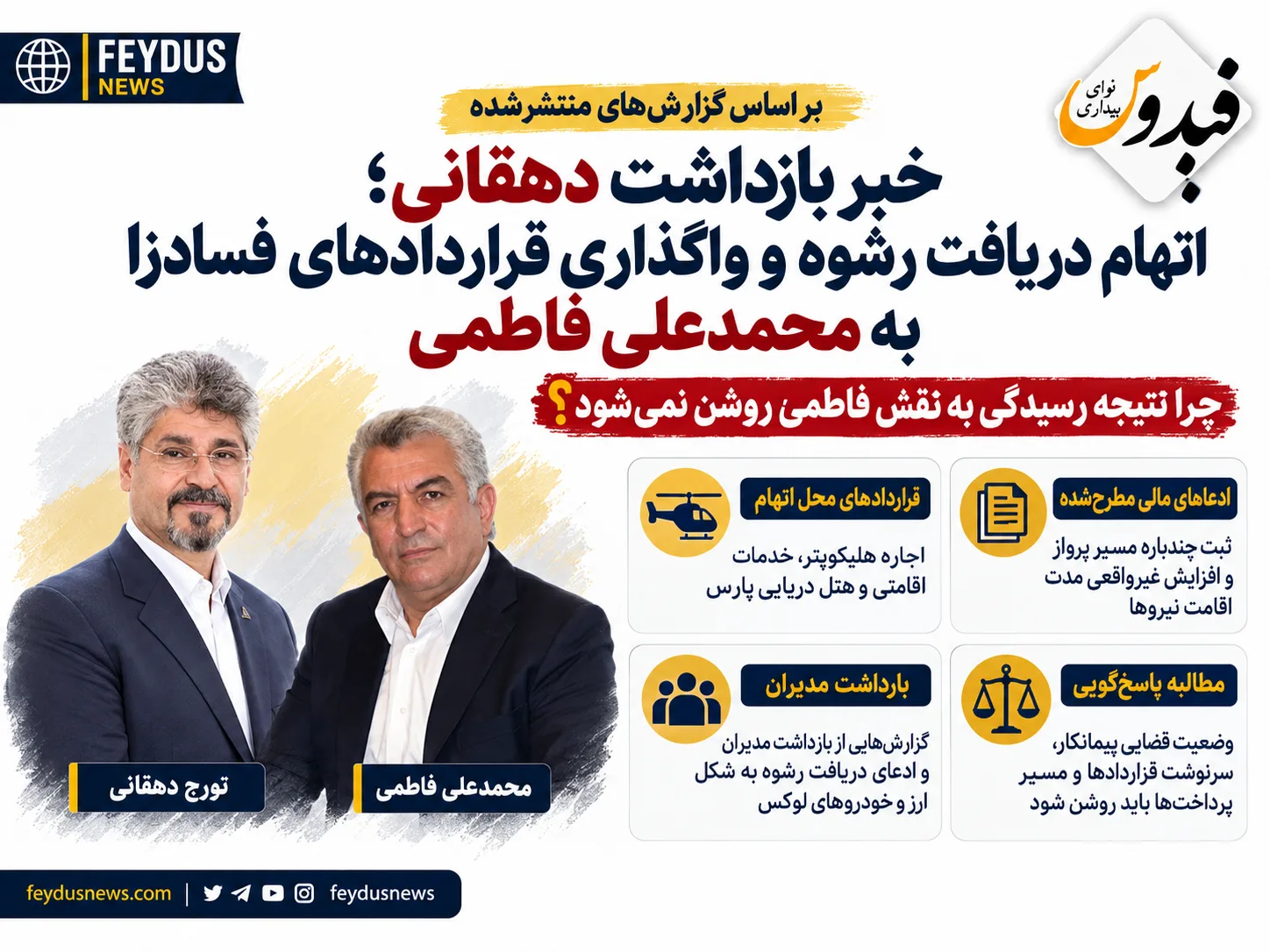
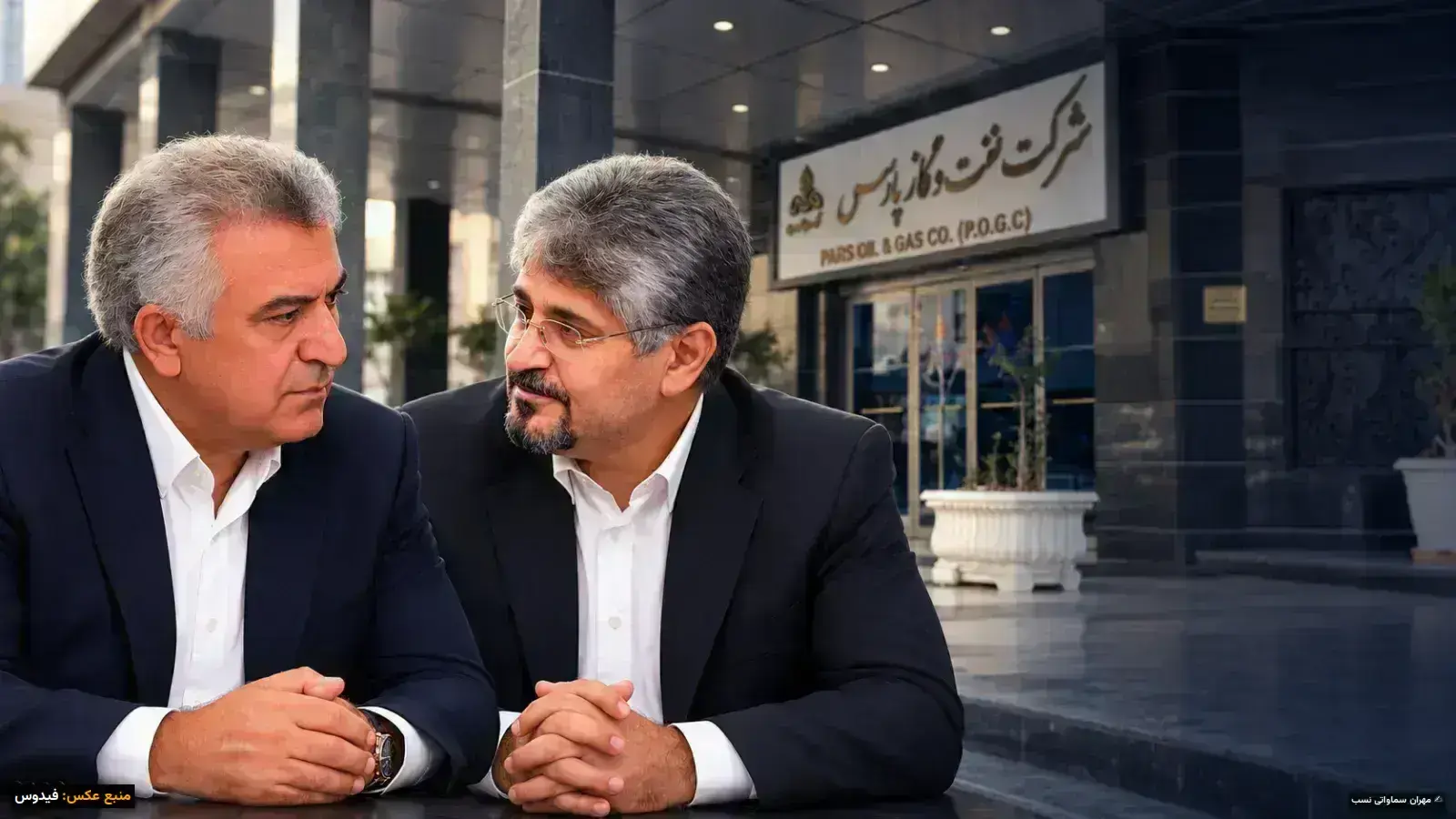
The news of Touraj Dehghani's arrest, the CEO of Pars Oil and Gas Company, on charges of corruption in contracting agreements, has once again drawn attention to the relationships between the managers of this company and Fateh Sanat Holding and its owner Mohammad Ali Fatemi; a contractor whose name and related companies appear repeatedly in numerous reports concerning disputed energy industry contracts. Feydus had previously reported on Dehghani's arrest and two other managers in connection with the contracts of this group. The CEO, during the period of leading Pars Oil and Gas Company, effectively became the executive arm of the corrupt energy contractor Mohammad Ali Fatemi and by taking a share from the contracts awarded to Fatemi and direct bribes, led the company to losses, inefficiency, and widespread corruption.
Prior to Dehghani's arrest, the detention of some managers
of this company led to the detainees confirming Dehghani and Fatemi's role in the contracts under
review and confessing to receiving bribes in the form of currency and luxury cars from Fatemi.
Managers are arrested; the fate of the contractor remains unclear
The main point of criticism is the handling of both sides of the contract. When the accusation of collusion between the manager and the contractor is raised, announcing the arrest of managers without explaining the other party to the transaction presents an incomplete picture of the case. Security and judicial authorities must clarify how Fatemi's role has been examined, what decisions have been made regarding the companies associated with him, and what the outcomes of the investigations are..
The exclusion of the main factor behind numerous corruptions
in various companies and limiting arrests to mid-level managers proves the reality that it seems Fatemi, despite any level of corruption, still enjoys judicial immunity. A strange issue
that practically extends the corruption of this contractor to other companies. The continuation of contracts between
Pars Oil and Gas and Mohammad Ali Fatemi's subsidiary companies is another strange issue. If
the reason for the arrest of the company's managers was their role in corrupt contracts with Fatemi, why haven't the original contracts
been annulled and why has Fatemi, despite managerial changes, maintained his influence in this company?
One of the most problematic contracts Fatemi had with Pars Oil and Gas, which led to the arrest of managers of this company and Dehghani, is the provision and rental of helicopters, accommodation services, and the "Pars Sea Hotel." In the same report, claims of repeated flight path registration and unrealistic extension of staff stay duration were raised..
The obvious corruption for which responsibility does not only fall
on the final signatory of the payment. It must be clarified who prepared the invoice,
which unit received the service, and which managers approved the payment.
Effective investigation means tracing the money to the final recipient, announcing the amount of damage and how it will be recovered, and explaining why the contractor, who is the bribe payer and corrupt party,
remains immune from judicial prosecution.
Fatemi's temporary arrest and his restricted access to some oil companies indicate that the judiciary is aware of his role in these numerous corruption cases, so it must be clarified why this individual still has the ability to sign new contracts and expand his influence in various energy sector companies.
Warnings that were published before the arrest news
The history of warnings also increases the responsibility of supervisory
bodies. Feydus, in a report dated the 6th of Dey 1404, wrote about efforts to finalize the contract
for the purchase of "CRA" materials with Tio Energy Company and its connection to contracts terminated about ten
years ago. The same report, while mentioning the arrest of managers, questioned
Dehghani's performance in explaining the company's contractual relationships. These claims are media allegations, but they show that ambiguities had been made public before the recent news..
Bolton News also warned in Ordibehesht 1404 about the proposal to rent a worn-out accommodation barge
at a cost of over 80 million euros. The Ministry of Oil must explain how the published warnings
were reviewed and why it has been unable to prevent the continuation of Fatemi's corruption in contracts.

The scope of reports about Fatemi also includes contracts in Marun, Bushehr, and Bandar Abbas refinery. The repeated mention of a contractor in various corruption cases clearly shows that an individual, by receiving informational and contractual rent, has turned into a family cartel in the energy sector.
The Pars Oil and Gas case should not fade from public attention with a few
news of arrests and CEO changes. The judiciary must announce the status of the charges, the decisions made, and the outcome of the investigation into the role of contractors.
The Ministry of Oil is also obliged to respond regarding the contracts and disputed payments.
Addressing corruption is assessable when it is clear what violation has been proven, who has been responsible, and how much public resources have been recovered. Silence on these matters erodes the credibility of the claim to fight corruption..