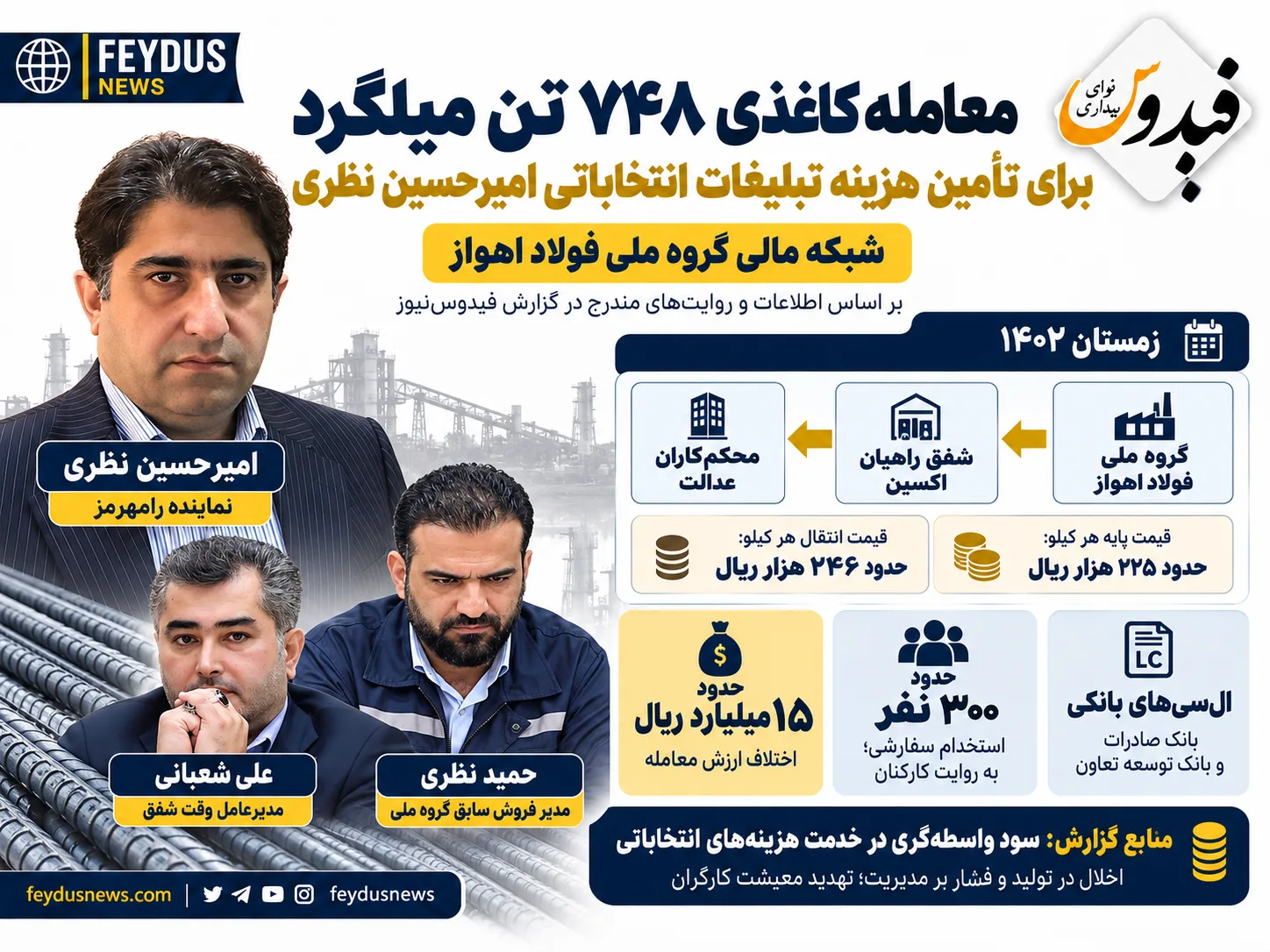
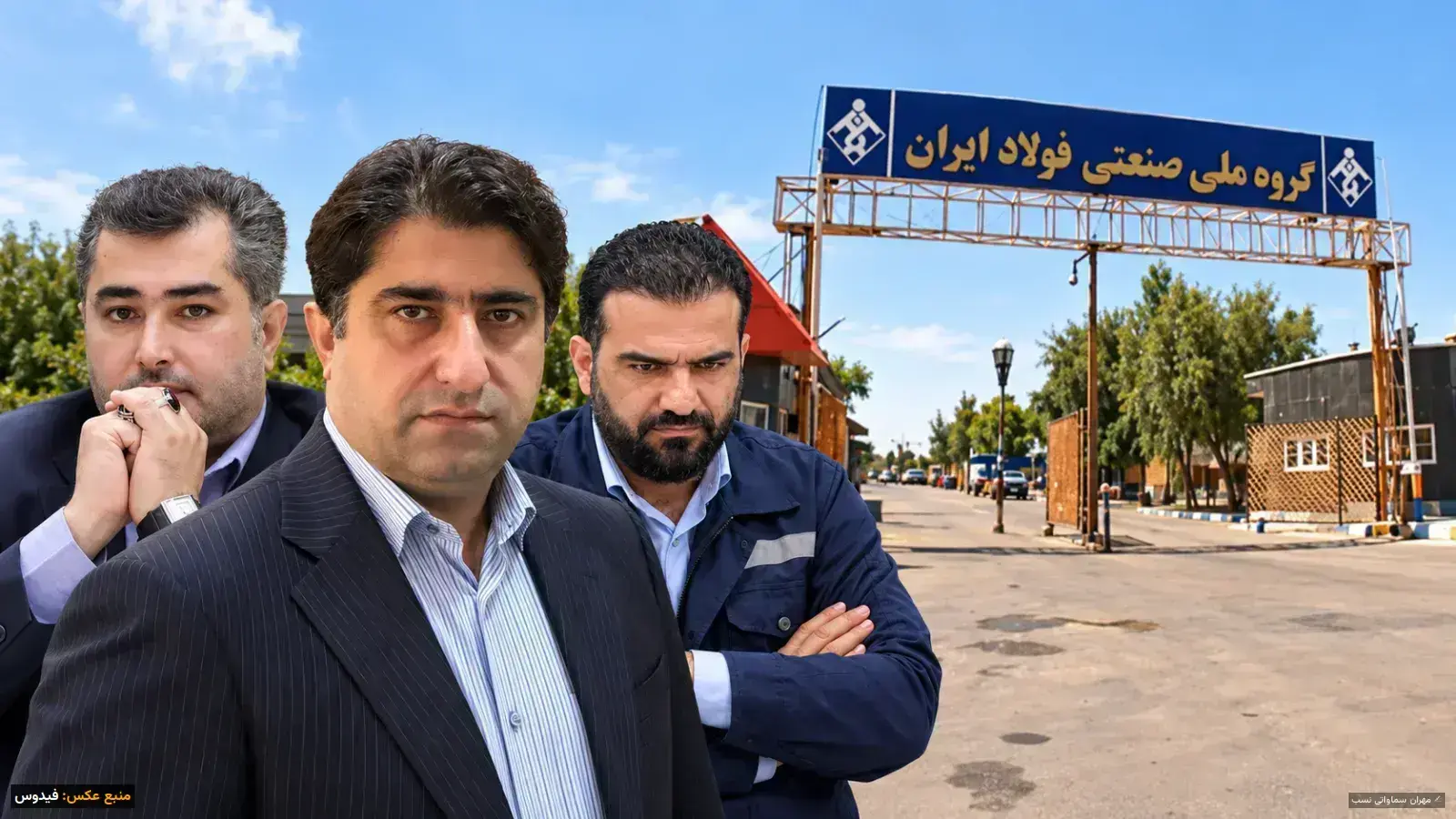
Amid the production crisis and managerial instability in the Ahvaz National Steel Group, commercial documents and multiple narratives from within the factory reveal a shocking picture of an organized corruption network. This network, consisting of former managers, commercial intermediaries, and political circles, has exploited cheap LCs, custom hirings, and production disruptions to use the factory's resources to fund the election expenses of Ramhormoz representative, Amirhossein Nazari. This report examines the dimensions of a structural corruption directly targeting the livelihood of thousands of workers.
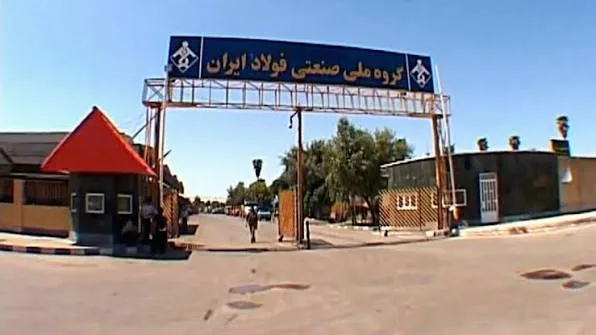
Managers Removed; Network Remains
Hamid Nazari, former sales manager of the National Group, Ali Shabani, then CEO of Shafagh, and Sadegh Mirzadeh are the three main pillars of this network. According to employees, these individuals have targeted workers' livelihoods by delaying the supply of raw materials, putting pressure on production units, and creating tension on the lines. Their return to the management structure and the revival of a network that has benefited for years from LC rent, brokerage, and non-transparent transactions is evident.
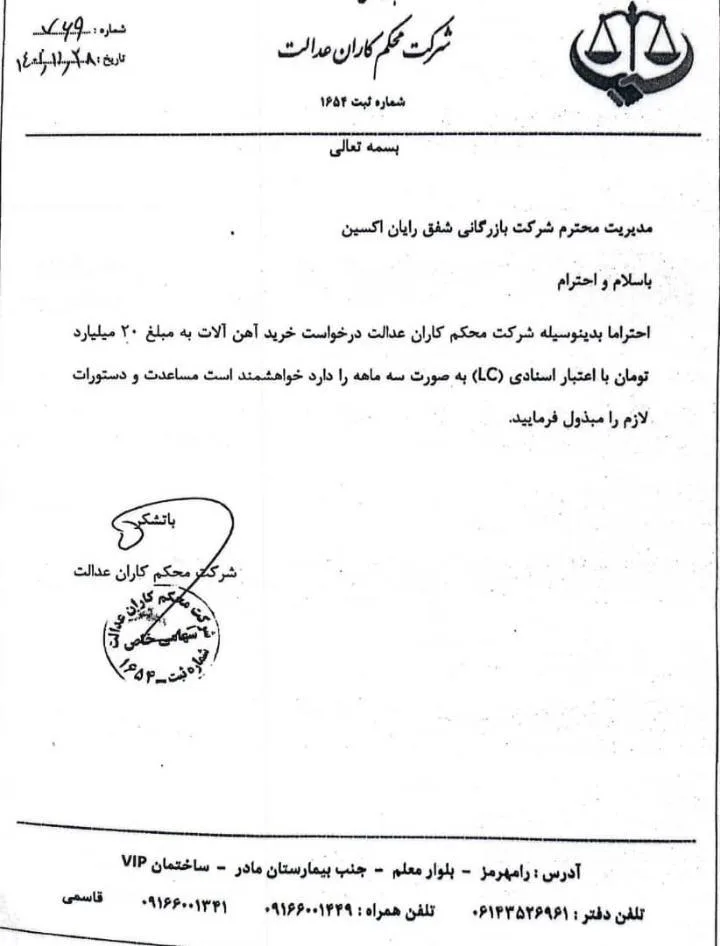
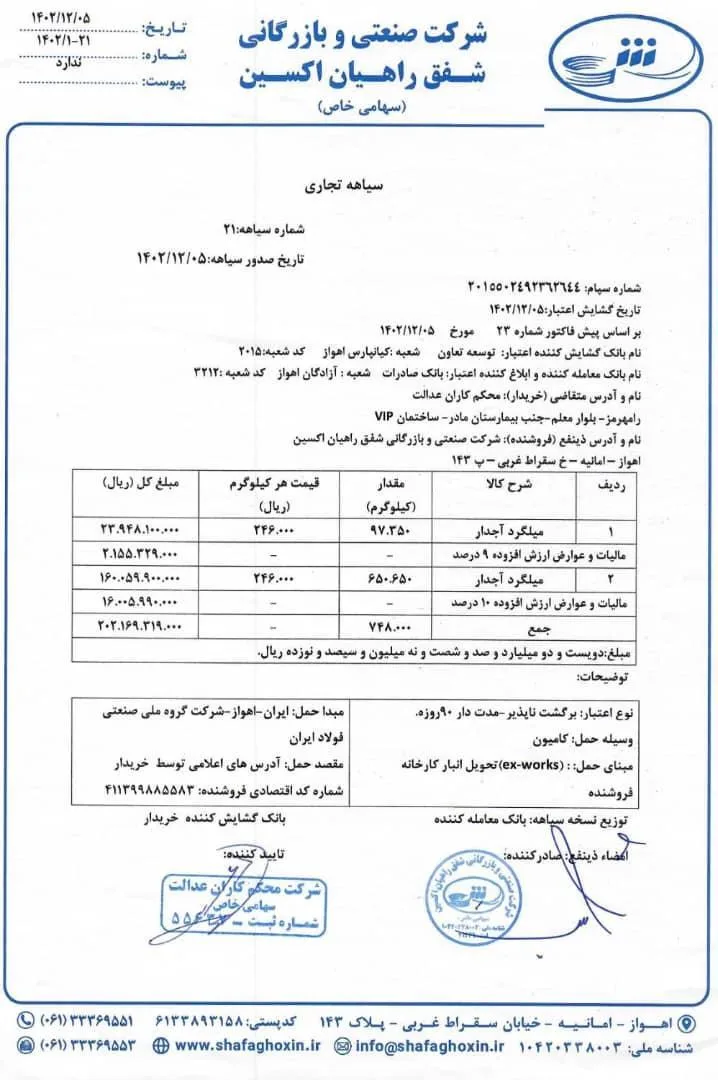
Custom Hirings; Factory or Election Headquarters?
One of the main aspects of this case is the hiring of about 300 custom personnel in the National Group, an action carried out under direct pressure from Amirhossein Nazari, effectively turning the factory into a political backyard. These hirings were not based on production needs but aimed at creating a social and political base for the representative. Workers say these personnel have not only imposed a heavy financial burden on the factory but in many cases lack the necessary expertise and have themselves become a factor in reducing productivity.
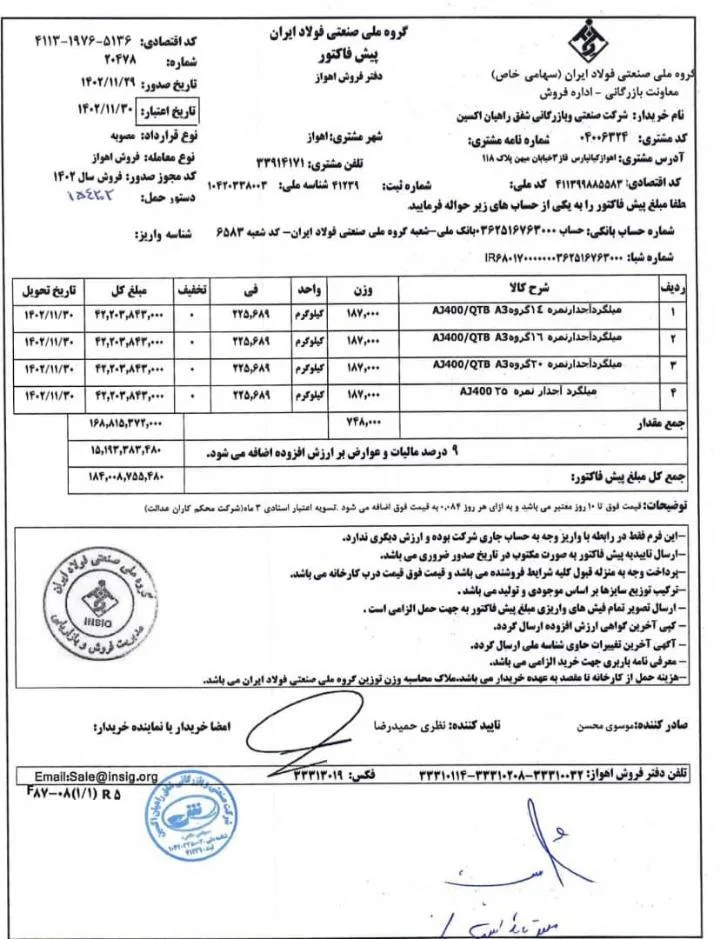
A History Explaining Today's Crisis
The Ahvaz National Steel Group has a long history of ownership crises and corruption. After privatization and transfer to the Amir Mansour Arya group, this factory became entangled in the infamous three-thousand-billion-rial corruption case. Years of labor protests, widespread arrests, production halts, and frequent managerial changes have made this complex a symbol of structural corruption in Iran's industry. In such a context, the formation of influence networks, brokerage, and misuse of factory resources is not an incident but a continuation of a historical trend.
Workers' Livelihoods at Risk
While the factory has resumed production after months of stoppage, any disruption in the management of raw material supply or product sales directly threatens the workers' livelihoods. Thousands of families in Ahvaz, Ramhormoz, and Ramshir have tied their livelihoods to this factory, but a network of former managers and political circles continues to try to create a crisis to pave their way back. A series of organized behaviors, including brokerage, misuse of LCs, custom hirings, and political interference in factory management, is evident. These behaviors indicate a structural corruption that directly threatens workers' livelihoods and the future of the Khuzestan steel industry.