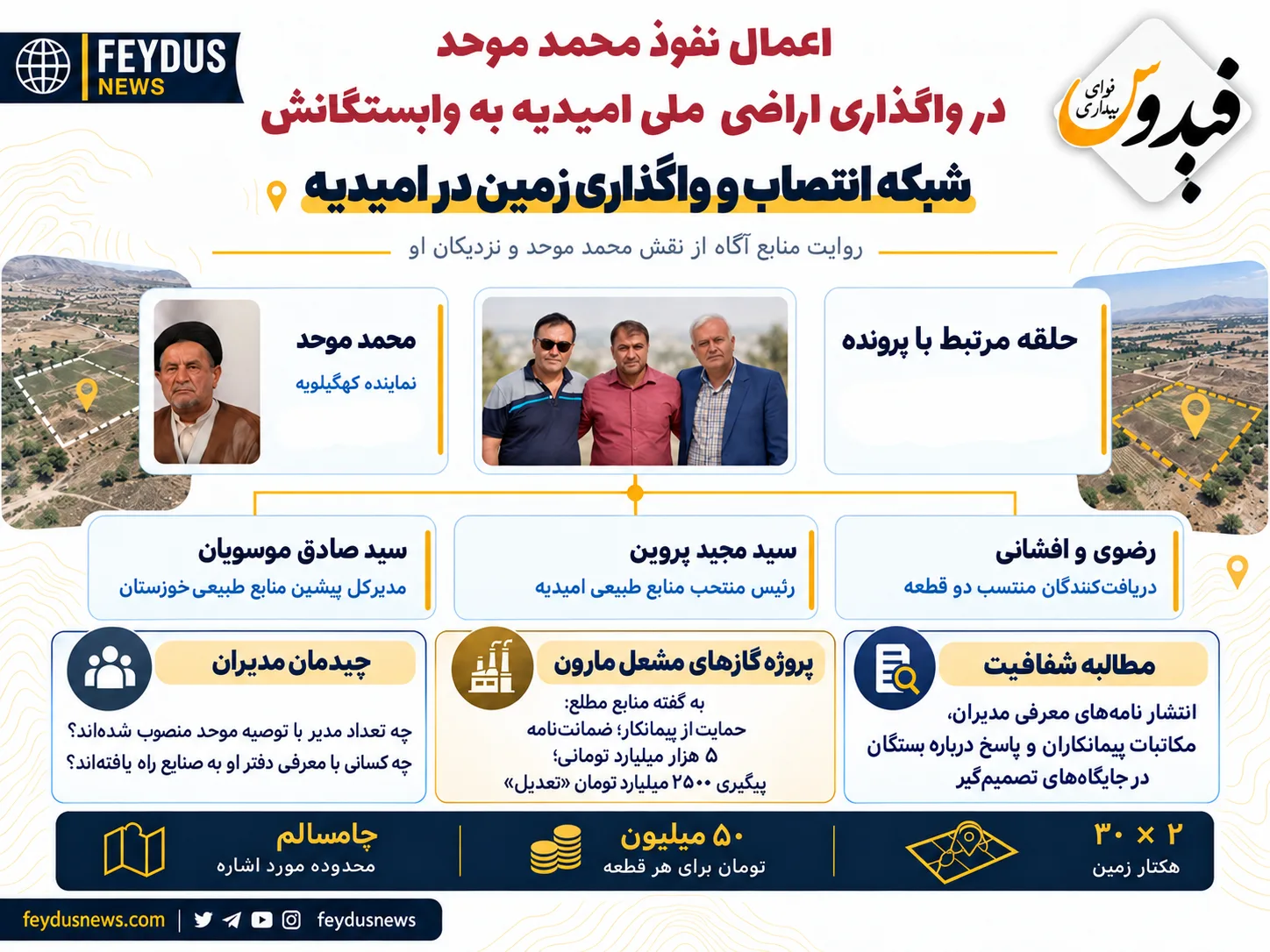
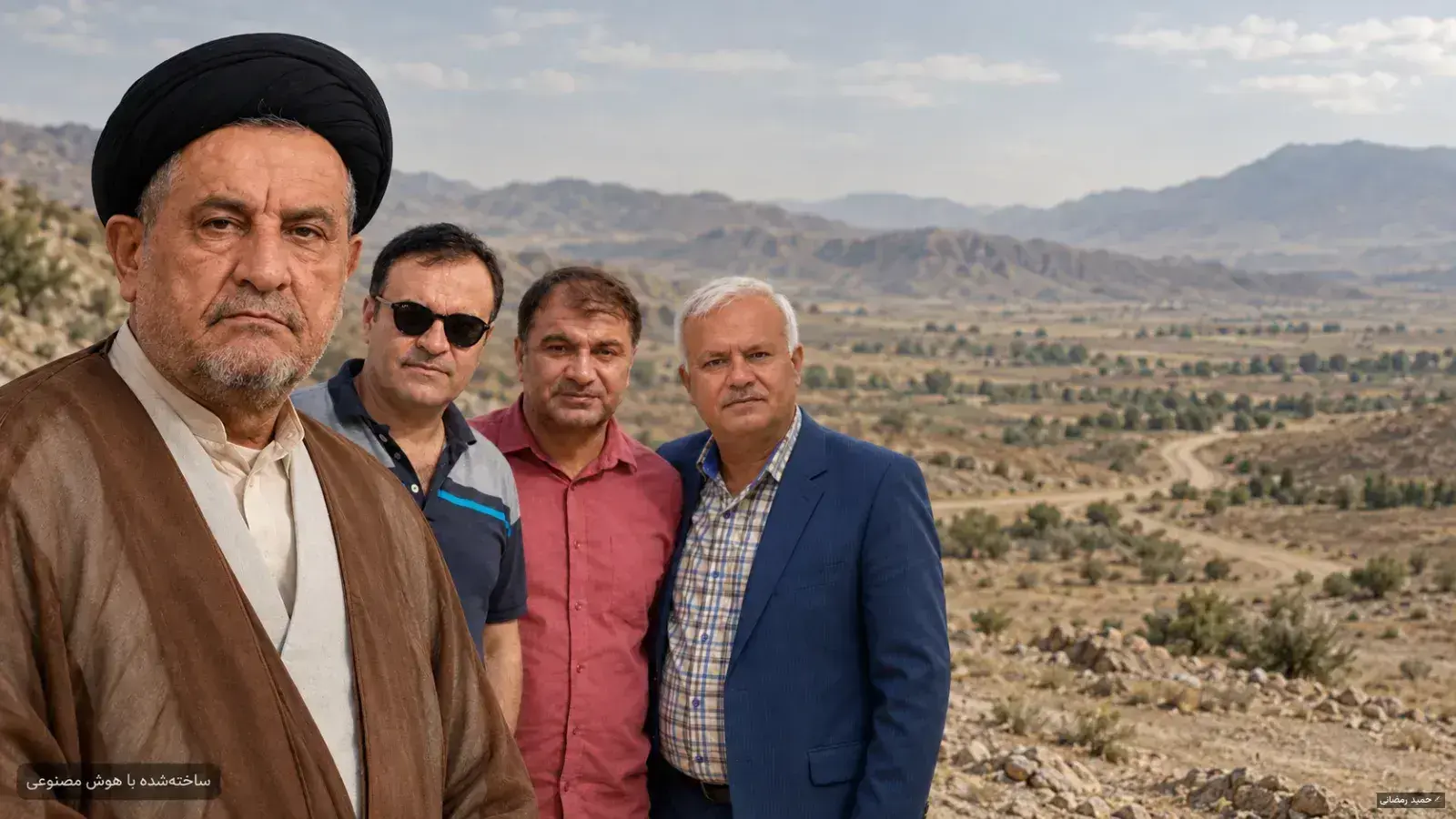
The intervention of Seyyed Mohammad Movahed in arranging managers and close associates has once again made headlines in a case related to public resources. This time, the issue is the allocation of two 30-hectare plots of land in Omidiyeh to individuals whom informed sources identify as relatives of the representative of Kohgiluyeh. According to these sources and based on the documents of this case, Seyyed Majid Parvin played a role in the process of allocating these lands after being appointed as the head of Omidiyeh's Natural Resources; an appointment that informed sources attribute to Movahed's influence and the cooperation of Seyyed Sadegh Mousavian, the former director-general of Khuzestan's Natural Resources..
The mentioned documents indicate the allocation of two plots from behind the Pardis of Omidiyeh's Azad University to the village of Chah-Salem to Seyyed Kamel Razavi and Seyyed Hossein Afshani. According to informed sources, the price set for each 30-hectare plot was 50
million tomans. These sources say the lands were among national lands and pastures, and Razavi and Afshani have family ties with Movahed. Razavi works in the heavy transport equipment services of oil, and Afshani is active in the oil goods warehouse of Omidiyeh.
The issue is not just the price of the two plots. If the head of a department is appointed with political backing and then makes a decision about allocating public lands to close associates of the same political circle, the entire decision-making process should be reviewed: who proposed the appointment, who registered the land request, which expert determined the price, and under whose signatures were the permits issued? The allocation documents provide a complete picture when placed alongside appointment orders, plot maps, price assessments, and payment receipts.
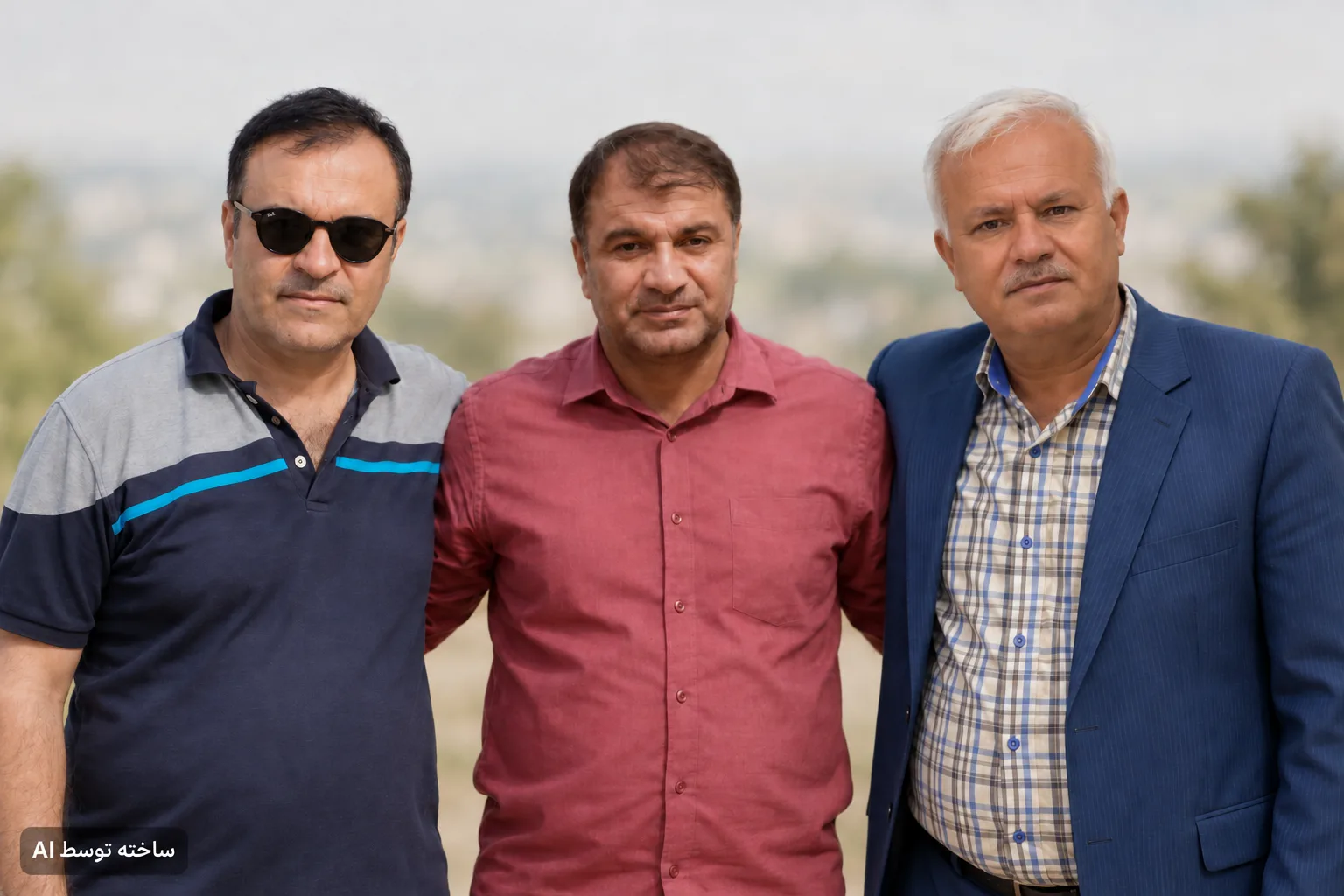
Familial Appointments and Allocation Authority
According to informed sources, Seyyed Sadegh Mousavian and Seyyed Majid Parvin also have family ties with Movahed, and the influence of the Kohgiluyeh representative played a role in Parvin's appointment.
Arranging managers close to the representative is not an issue limited to Omidiyeh. In Kohgiluyeh and Boyer-Ahmad, criticisms about the role of representatives' offices in introducing managers, hiring staff, and distributing economic opportunities have continued. The name Movahed has also been mentioned alongside other provincial representatives in these criticisms; especially regarding the question of how many managers have been appointed on his recommendation and who has been introduced by his office to administrations or industries. The Omidiyeh case can provide a tangible answer to the consequences of such interference: the decision of an appointed manager about land that belongs to the public..
A Pattern Extending to Industrial Contracts
The sphere of influence attributed to Movahed has not been limited to administrative appointments. In the project of collecting Maroon flare gases, informed sources have reported Movahed's and his close circle's involvement in supporting the contractor. In that case, efforts to prevent the seizure of a five-thousand-billion-toman guarantee and pursue the payment of another 2500 billion tomans under the title of "adjustment" were raised. Introducing representatives' affiliates to the contractor's projects was also part of the project sources' narrative. Each case's documents must be reviewed separately, but their common aspect is clear: the potential use of political influence to impact appointments, contracts, and the distribution of public resources.
Over several terms of representation, Movahed has become one of the influential figures in Kohgiluyeh politics. Such widespread influence should be accompanied by appropriate transparency: publishing letters of introduction for managers and staff, announcing meetings and correspondence related to contractors, and providing clear answers about relatives employed in decision-making positions. Without this information, people cannot determine whether decisions are made based on criteria or on relationships with political and electoral circles.
In the Omidiyeh case, a specific response starts from the Khuzestan Natural Resources Department: what are the plot numbers and registration status of the two plots, how was the price of 50 million tomans for each determined, and who approved the allocation? Movahed, Parvin, Mousavian, Razavi, and Afshani must also respond to the roles and relationships mentioned. The documents of this case should be subject to public scrutiny to clearly and accurately determine each individual's responsibility in the appointment and allocation.