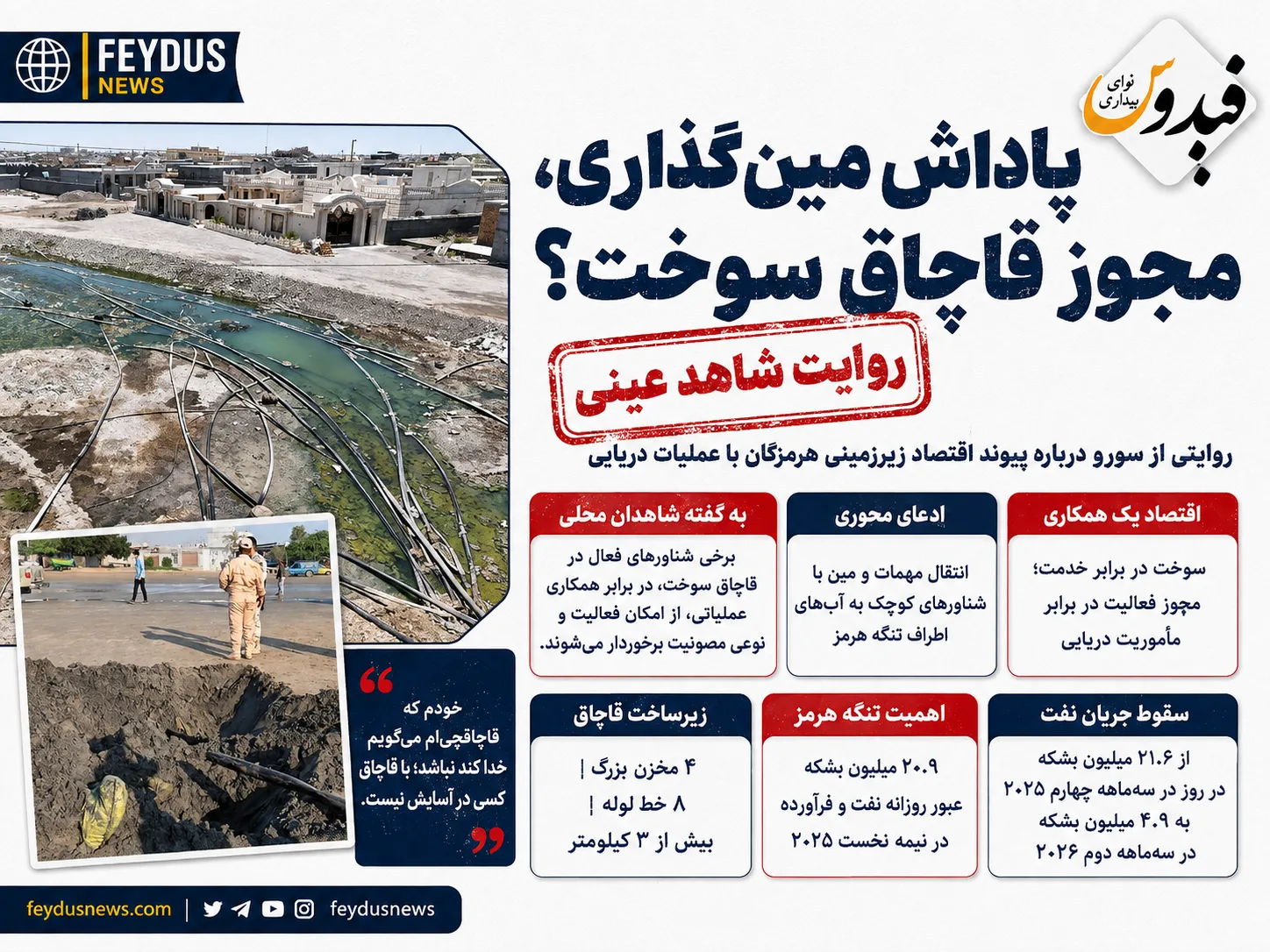
A local witness, who has worked for years in the Hormozgan maritime smuggling network, speaks in detail about a mechanism where certain vessels and fuel smuggling operators gain the ability to operate and a form of immunity in exchange for operational cooperation with military entities. The most significant part of his narrative involves using some local networks to transfer equipment and ammunition — including mines — to the waters around the Strait of Hormuz. However, with intensified mine-laying operations in the Strait of Hormuz in summer 2026, its examination has gained importance beyond a local case.
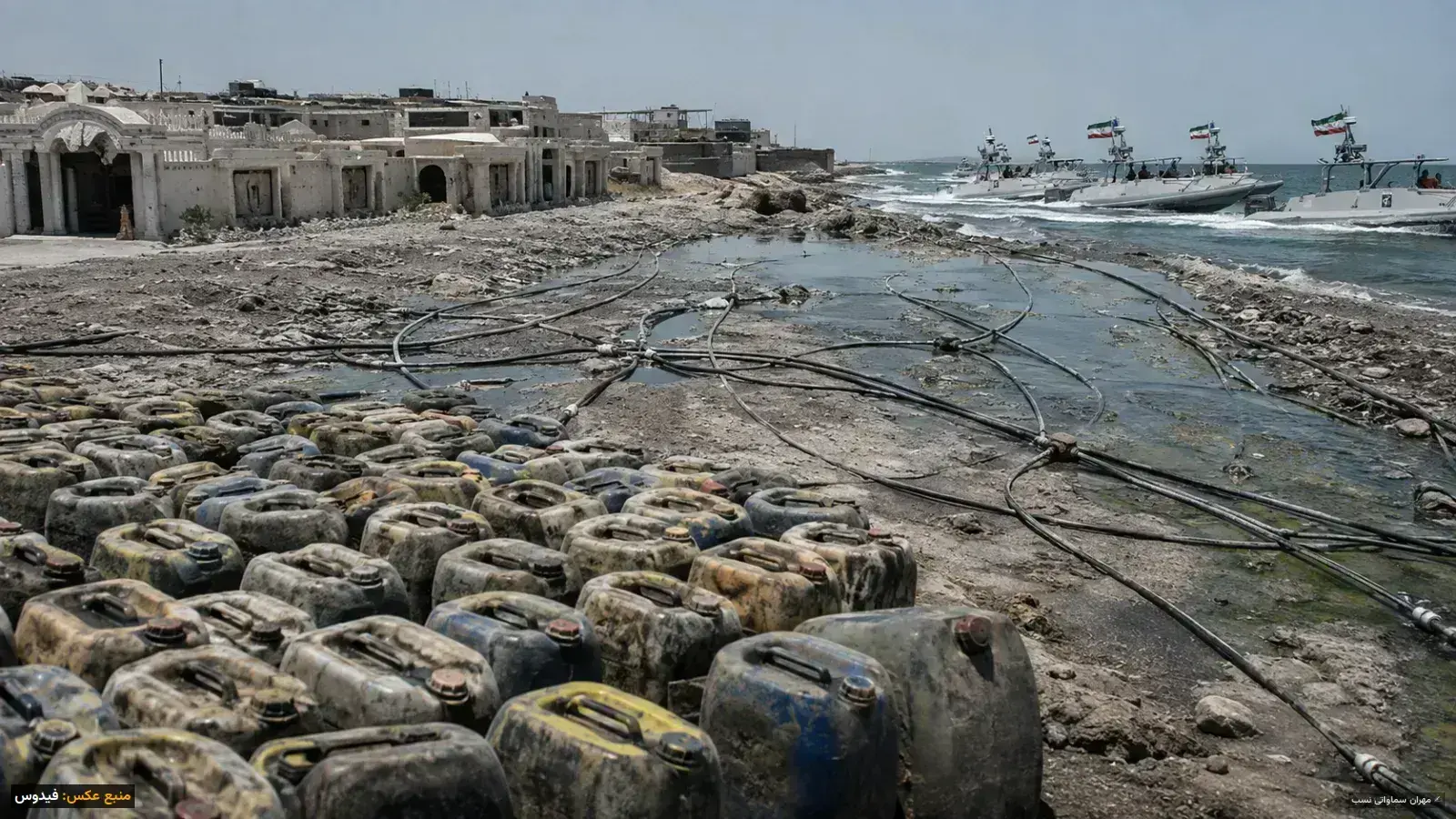
In the Soro neighborhood, along the coast of Bandar Abbas, where many families' lives have been tied to the sea for generations, fuel smuggling is not just the story of a few boats. In a narrative provided by several informed local individuals, the line between the informal economy of organized smuggling and security and military activities has gradually blurred.
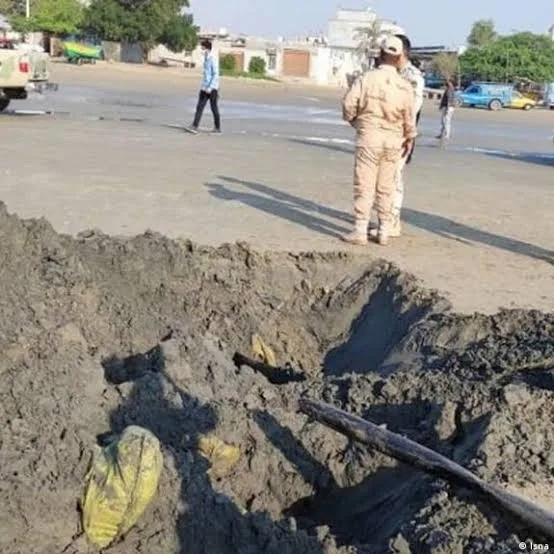
According to this witness, some boats and local vessels involved in illegal fuel transfer have at times been allowed to operate without serious interference, and in return, part of the network has been utilized for transporting military equipment and conducting maritime missions.
In one of the most sensitive parts of the interview, he stated that some individuals have transported 'ammunition' and even 'mines' by boat to the sea, with a specific directive from the IRGC command to issue smuggling licenses in exchange for mine-laying.
The Strait Faces Mines Again
In recent months, the Strait of Hormuz has once again become one of the world's most dangerous geopolitical points. Reuters reported on 31 August that new US attacks on Iranian targets on Larak Island occurred after observing threats related to mine-laying operations. The Associated Press also reported that US forces targeted positions where, according to American officials, IRGC forces were preparing to use rockets and naval mines.
Just days before, after extensive clearing operations, it was announced that existing mines in international shipping routes in the strait had been cleared. Reuters reported on 25 August that the mine-clearing operation of the international route had been completed, and simultaneously warned of Iran's re-mining.
Therefore, the fact that naval mines are part of Iran's current capabilities and tactics in the Strait of Hormuz is no longer merely a theoretical scenario. However, a different question remains: how are these mines transferred to the water, and who are the individuals at the lowest logistical chain? The narrative of Soro, Bandar Abbas, becomes significant precisely at this point.
"Boats Everyone Thinks Are for Fuel"
The interviewed witnesses jointly say that some vessels that appear to be part of the smuggling network have a different relationship with military and naval forces.
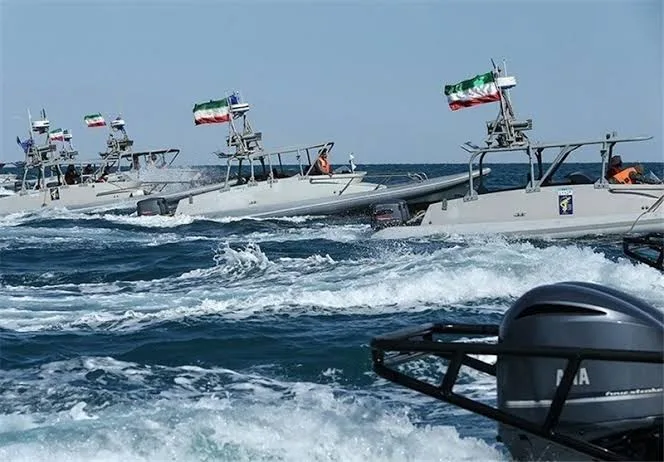
In the eyewitness interviews, there were repeated mentions of boats belonging to or associated with the IRGC, border guards, and coast guards that are stored or moved in the residential area of Soro, and a network of local individuals is used for missions beyond fuel smuggling.
According to one of the witnesses: "Even ammunition… even border and coast guard boats… even mines that they took and dropped in the sea." This sentence is the heart of the eyewitness narrative in the report.
What has been shown from the CENTCOM command center's cameras during the war with the Islamic Republic of Iran indicates that the use of small vessels for mine-laying is technically compatible with the known doctrine of the IRGC Navy.
The US Naval Institute, in its analysis of the "Iranian Gray Zone Navy," has written that the IRGC fleet relies on a large number of small, fast vessels and a stockpile of naval mines, and this combination can severely disrupt navigation in Hormuz.
Another analysis from the same institute explains that Ashura-class small boats are used for the rapid transfer of a limited number of mines, meaning mine-laying does not necessarily require a large, easily identifiable mine-laying ship.
The Economy of Cooperation; Fuel in Exchange for Service
The witness's narrative has another layer. He does not say all smugglers are IRGC members, nor does he say all fuel-carrying boats transport mines. He is more limited but structural: among the large economy of Hormozgan smuggling, some networks enjoy support or leniency, and this privilege can be given in exchange for cooperation with security and military structures.
According to him, sometimes smuggling activity in a certain area is halted, but specific groups still have the opportunity to operate. At other times, after a meeting or decision by local officials, permission to work is granted again.
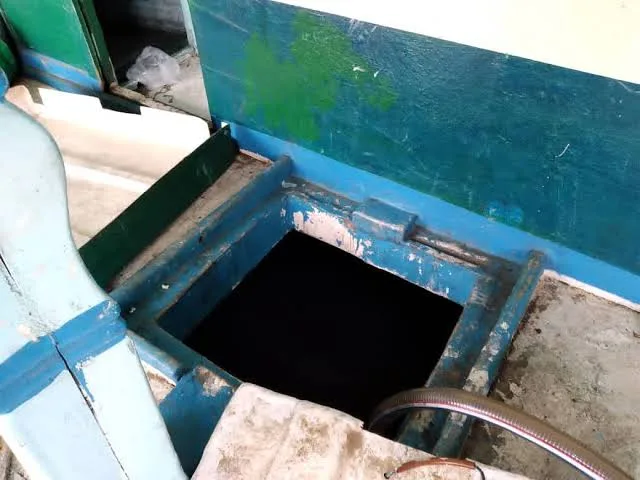
In one part of the interview, the witness claims that after a roughly two-month period when fuel smuggling in the Soro neighborhood of Bandar Abbas was halted, the local border command recently allowed the resumption of activities in exchange for mine-laying services and identifying commercial ships in the Strait of Hormuz, which they reported to security entities, given to these fuel smugglers.
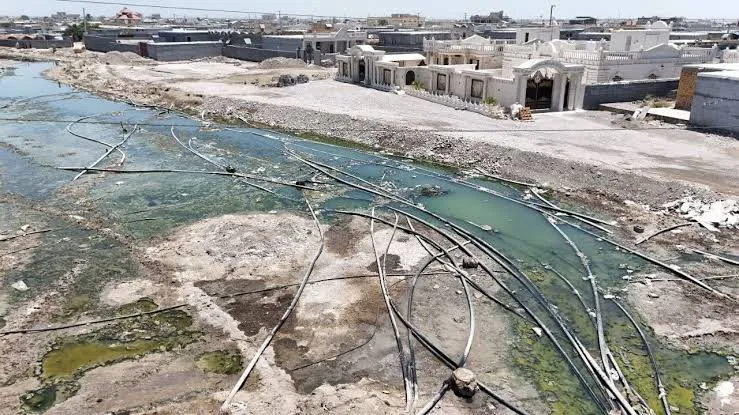
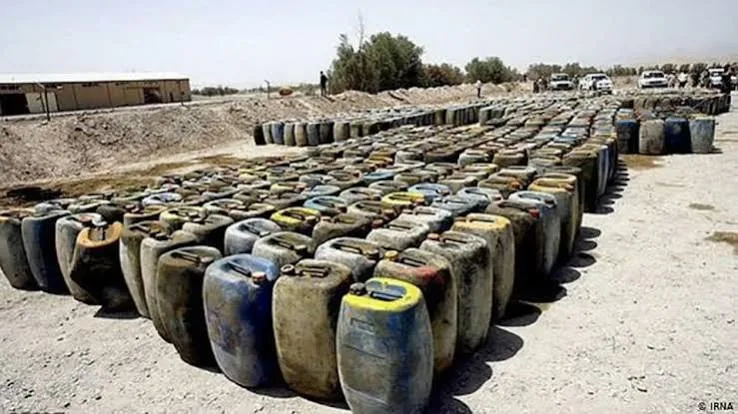
The existence of a very extensive fuel smuggling economy in Hormozgan is undeniable. In April 2025, the head of the Hormozgan judiciary announced the discovery of an underground network on the coast of Qeshm, which included four large tanks and eight pipelines over three kilometers long, transferring fuel directly from land to vessels.
The scale of such infrastructure shows that maritime fuel smuggling is not necessarily the scattered activity of a few individuals with jerry cans and boats. In some cases, we are dealing with logistical networks, tanks, pipelines, and multiple vessels.
Reuters has also previously reported that the severe price disparity caused by energy subsidies and the devaluation of the Iranian currency creates a significant economic incentive for fuel smuggling from this country. This is the economic environment that can turn the 'license to operate' into a highly valuable commodity.
When Law Enforcement Becomes Selective
Another witness speaks about what can be called 'operational immunity.' He talks about vehicles and vessels that, according to him, face different restrictions from ordinary people due to their connections with security entities or influential individuals.
In local narratives accompanying this case, it is also said that some vehicles active in the fuel network travel on roads with unconventional, tampered, or no license plates, and their fatal accidents do not necessarily lead to proportionate judicial action, which such a procedure is specifically the official policy of the Hormozgan judiciary, coordinated with the IRGC and national intelligence.
Soro; Where the Shadow Economy Has Entered Daily Life
A significant part of the interview is not about the IRGC or mines at all; it is about the fuel smuggling neighborhood of Bandar Abbas under the supervision of individuals like Pardel and Hassan Bipool.
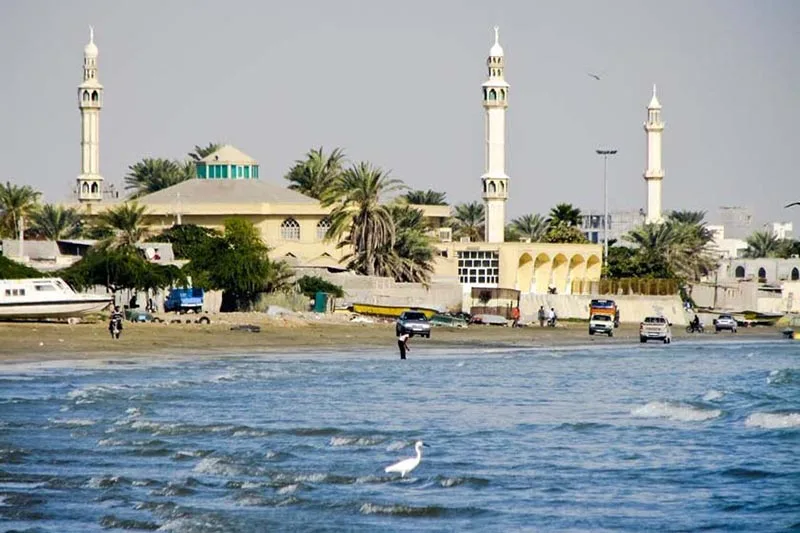
The witness, who does not deny involvement in smuggling, says it is due to the compulsion and economic conditions of this southern Iranian province overlooking the Strait of Hormuz that jobs go to non-natives, and they are forced to resort to fuel smuggling to make a living. In parts of the conversation, with a clear contradiction, he speaks of an economy he was once part of but now considers destructive for the local community.
He says that once a limited number of people were involved in smuggling, but gradually, smuggling money entered the daily interactions of this neighborhood. His narrative is a mix of anger, confession, conversational exaggerations, and social observations.
But the social theme of his words is clear: when an illegal economy becomes one of the main sources of income for a coastal community, it not only changes the job market; it also changes the system of prestige, power, social relations, and people's relationship with the government.
In a notable sentence, he says: "I, who am a smuggler, say God forbid it exists… with smuggling, no one is at peace." Perhaps this sentence more than many of the issues raised in the interview shows the nature of the Hormozgan contradiction. People caught in an economy that is both illegal and, for some, the only quick path to income.
Why Can a Local Smuggler Be Useful for a Military Force?
From a military perspective, the potential use of civilian networks has clear advantages. An official navy is traceable. Its bases are known. Its large vessels are tracked by satellites, reconnaissance aircraft, and intelligence systems.
But thousands of fishing boats, commercial dhows, and small local vessels are another matter. A vessel carrying fuel today may not appear much different from dozens or hundreds of other boats in the area.
In military literature, this situation is part of the 'gray zone' warfare, a space between fully civilian activity and overt military operations where attributing an action to the government becomes more challenging.
The IRGC Navy has long been noted by analysts for its reliance on asymmetric tactics, fast vessels, operational dispersion, and surprise. The illegal coastal economy has been able to become a hidden infrastructure for asymmetric warfare.
A Cheap Mine, a Very Expensive Crisis
The importance of the issue is determined by geography. The Strait of Hormuz is not just a local waterway in southern Iran. The US Energy Information Administration estimated that in the first half of 2025, about 20.9 million barrels of oil and petroleum products passed through this route daily, equivalent to about one-fifth of global liquid petroleum consumption and about one-quarter of global maritime oil trade. More than 20 percent of global LNG trade also passed through this strait.
After the 2026 crisis, these figures have plummeted. Recent EIA data shows that oil flow from Hormuz, which was about 21.6 million barrels per day in the fourth quarter of 2025, has decreased to about 4.9 million barrels per day in the second quarter of 2026.
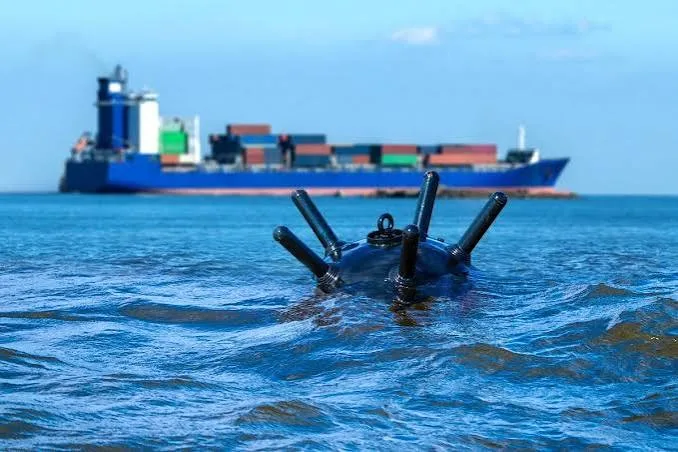
These numbers show why even a limited number of mines can have an effect far greater than their production and deployment cost. A naval mine is the weapon of a poor army against an expensive fleet: its cost-to-effect ratio is highly asymmetric.The historical experience of the Persian Gulf also shows this. In 1988, the American ship USS Samuel B. Roberts struck an Iranian mine, an incident that led to the extensive Praying Mantis operation.
For this reason, even the possibility of mines is enough for ships, insurers, and energy companies to change their behavior. To create economic disruption, it is not necessarily required for dozens of ships to sink; sometimes, it is enough for the world not to know where the next mine is.
A Claim Made More Sensitive by the 2026 Crisis
The timing of the Soro testimony is of particular importance. In the final days of August, the US and Iran once again exchanged direct fire after more than a month, and one of the stated reasons for the US attacks was to prevent the re-deployment of mines in Hormuz.
On September 1, shipping data also showed that the movement of cargo ships in the strait remained very low. Reuters reported that only five ships crossed the waterway in one day, and no liquid tankers were recorded among them.
In such circumstances, any credible information about the logistical chain of mine-laying gains very high informational and news value, but it is precisely this importance that raises the standard of proof.
The Government Seizes on One Hand; Witness Speaks of Selective Support
One of the complexities of this case is that the Iranian government officially presents itself as combating fuel smuggling. This claim is not entirely fabricated. Iranian security and judicial forces have repeatedly seized smuggling vessels and cargoes in recent years. For example, in 2025, Hormozgan officials announced the discovery of an extensive network of tanks and underground fuel transfer lines in Qeshm.
In other cases, vessels carrying millions of liters of fuel have been seized. So the more precise question is not "Does the government not confront any smugglers?" The available evidence does not support such a statement. The more important question is: Is law enforcement selective?
Are groups lacking political and security connections arrested and their cargoes confiscated, while networks with security or military functions are allowed to continue operating? This is exactly what the Soro witness's narrative raises.
Smuggling as a Reward System
The model the witness describes resembles more of a privilege economy. The government does not necessarily need to pay an official salary to a local collaborator. It can give him something much more valuable: the right to operate in a forbidden market. In such a model, selective law enforcement itself becomes a tool of payment.
Someone who is allowed to export subsidized fuel at a higher price across the border profits from the price difference. The government does not need to provide this money directly; the rent from the price difference acts as a reward.
If, in return, the individual is asked to provide information, move a vessel, transfer equipment, or perform another mission, an informal relationship between economic rent and security service is formed.
This model of 'patronage' and networking for access to resources is not distributed based on general rules but based on loyalty, connection, and service provision.
"Don't Bring the Military Boat Near My House"
One of the most shocking parts of the testimony is not about money or mines. It is about the fear of ordinary people. The witness recounts the protests of local residents who do not want vessels associated with the IRGC stationed near their homes because they fear that in the event of a military attack, their homes could also be targeted or become victims of explosions.
In his words, people ask why the "IRGC boat" should be placed near their homes when it could put civilian families at risk of attack. This part of the narrative has taken on a different meaning in the current military conditions in southern Iran.
When military equipment or operations mix with civilian infrastructure, distinguishing the battlefield from the residential area becomes more difficult, and the cost is not necessarily borne by those who have decided to merge these two spaces.
The IRGC has a known history and capability of using small vessels and naval mines. American officials have recently reported new efforts to deploy mines, military operations against related targets have been conducted, and ship passage through Hormuz has been severely disrupted.
From Soro to Hormuz; A Case Worth Further Investigation
"The IRGC gives smugglers licenses in exchange for mine-laying," another witness with a history of activity in the Hormozgan maritime smuggling network said. Part of the illegal fuel economy in Soro is linked with security and military structures, and some of its operators have provided logistical services, including the transfer of military equipment, in exchange for the ability to continue smuggling. The most sensitive part of his statement relates to mine transportation.
What makes this report in September 2026 an issue of international importance is the simultaneous event occurring a few kilometers away in the waters of Hormuz. Mines are no longer a hypothetical threat; ship traffic has plummeted. The US has attacked positions related to mine-laying efforts.
The IRGC Navy still has a recognized capability for asymmetric warfare with small vessels. And a strait that is normally one of the world's most important energy arteries has once again demonstrated how a relatively cheap weapon can disrupt multi-billion-dollar global trade.
At the lowest link of this chain, the boats of Hormozgan's underground economy have become part of the war logistics in exchange for the right to smuggle. Then the story of Soro will no longer be the story of a neighborhood or even a province.
It will be the story of a mechanism where the law can simultaneously be a tool of punishment and reward, where a smuggler can be a criminal one day and an operational asset the next, and where a few small local boats are at the intersection of Iran's black economy with one of the world's most sensitive military fields.