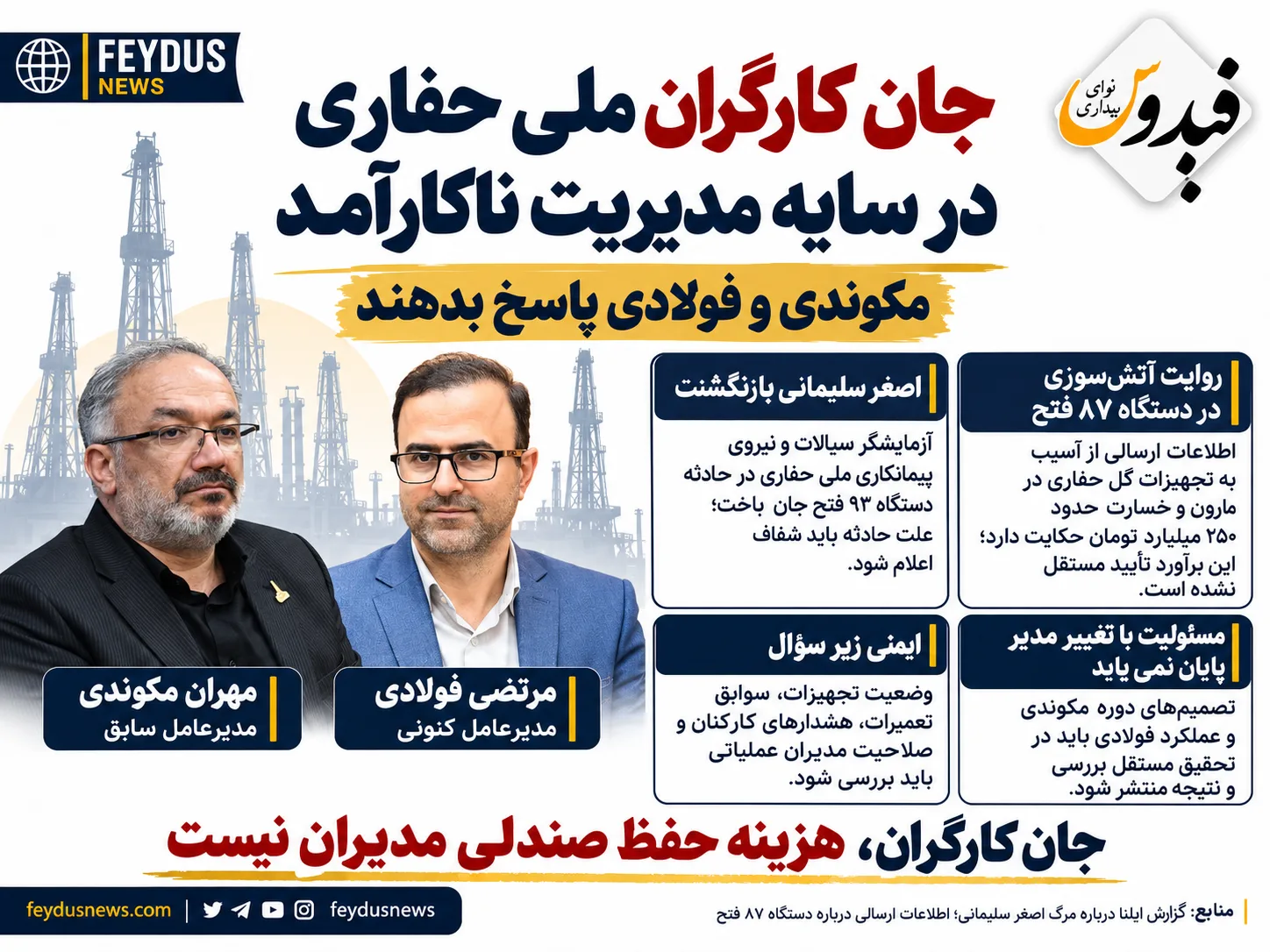
The death of Asghar Soleimani, a worker at the National Drilling Company, and a fire in another device have highlighted the necessity of an independent review of safety and the track record of the company's managers.
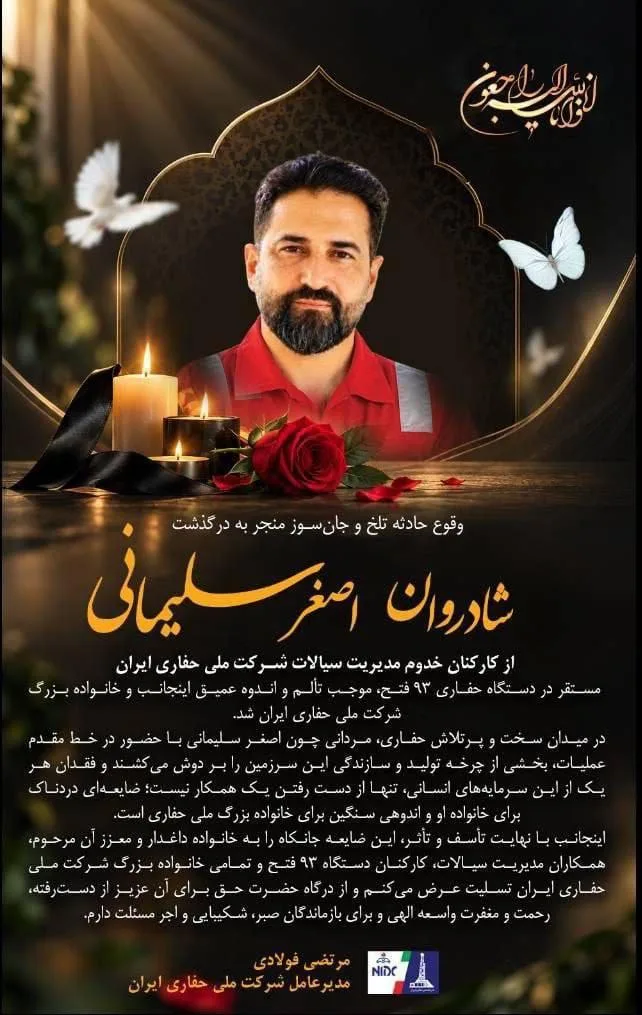
Asghar Soleimani, a fluid tester and a contractor of the National Drilling Company of Iran, lost his life in the incident involving drilling rig 93 Fath; a worker who went to work to earn a living and never returned home. The news of his death was reported by ILNA, but the details of the cause of the incident were not disclosed in the same report. Behind this brief news, there is a family that has the right to know what happened, who was responsible for ensuring safety, and whether this death could have been prevented.
According to the narrative sent for this report, Soleimani was involved in an accident during the relocation and setup of the device. This narrative places the deadly incident of device 93 alongside the fire in device 87 Fath in the Marun area; two events that, according to the information providers, occurred about two weeks apart. They speak of damage to mud tanks and mud purification equipment and a loss of about 250 billion tomans.
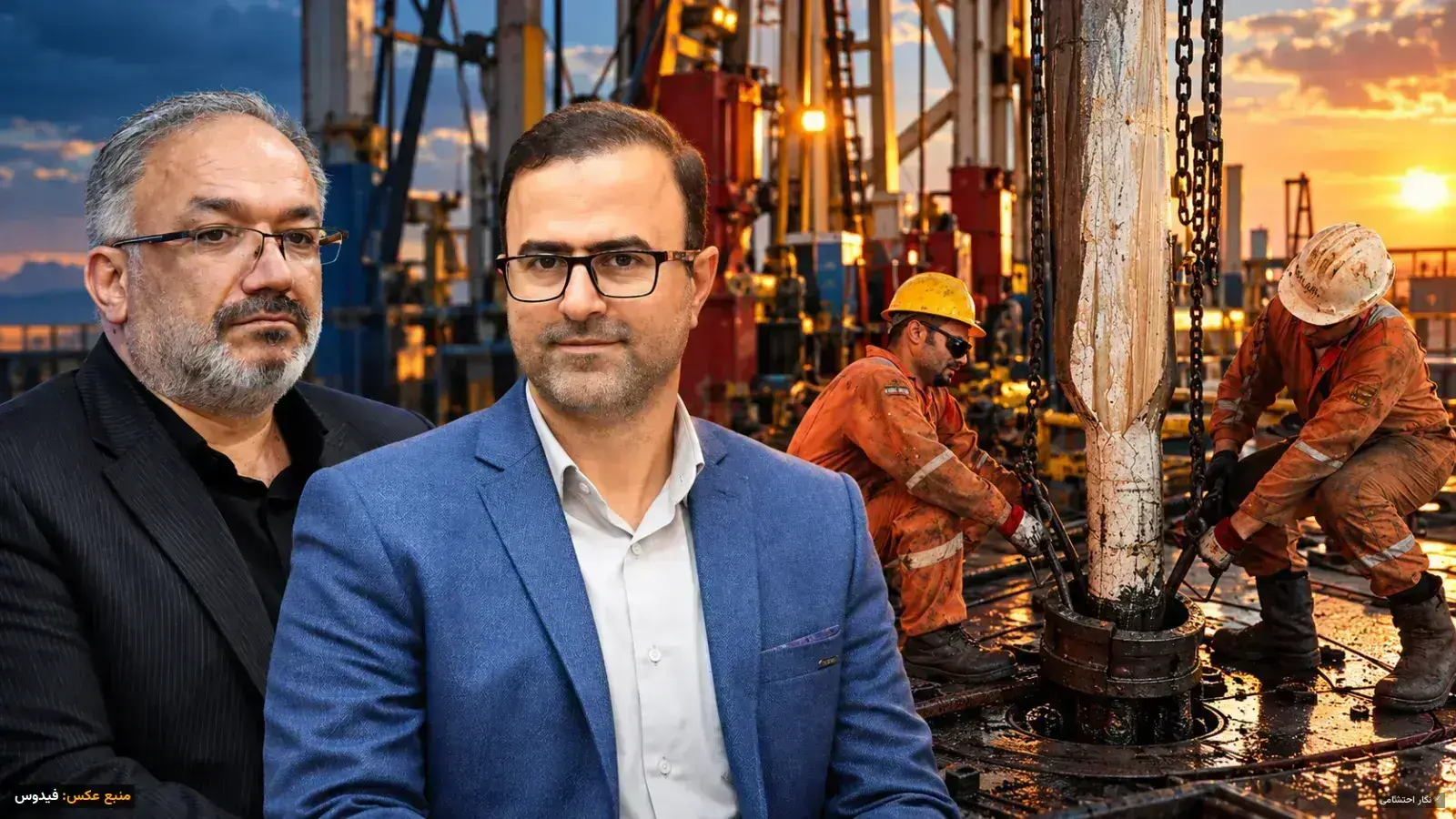
These incidents once again raise the issue of managerial inefficiency in this company during the tenure of the last two CEOs, Makvandi and Fouladi. CEOs whose appointments were not based on the technical capabilities needed to manage this company but were the result of political corruption and lobbying, and therefore both CEOs are seen as symbols of widespread corruption, collusion, and disregard for workers' lives and workplace safety.
Widespread dissatisfaction among workers in recent years has directly pointed the finger of blame at Makvandi's management. A CEO who, despite being dismissed, still plays the role of godfather in this organization, with some appointments and contracts in the field of safety provision and equipment renewal being carried out under his and his appointed managers' supervision.
On the other hand, the appointment of Fouladi as the new CEO is said by informed sources to be a continuation of Makvandi's path, turning the CEO position into one of ceremonial meetings, political dealings, and ineffective presence in company affairs.
The death of an operational force alone is enough for the company's management to explain the working conditions, supervision of operations, and equipment status. Soleimani's family and his colleagues deserve a clearer response than ceremonial expressions of regret and sorrow.
From Makvandi to Fouladi; Changing Managers Without Accountability for Track Records
Morteza Fouladi was appointed as the CEO of the National Drilling Company by the order of the CEO of the National Iranian Oil Company in November 1404. Before him, Mehran Makvandi held this responsibility. Therefore, examining the current state of the company must include both the decisions of the current period and the managerial legacy of the previous period; from the selection of operational managers to repairs, parts supply, and addressing safety warnings.
In the critical narrative provided for this report, political appointments, behind-the-scenes relationships, and the preference for loyalty over professional competence are identified as factors weakening the company. These accusations must be addressed by reviewing decrees, individuals' backgrounds, contracts, and oversight reports. Managers who defend the integrity of their performance should enable such a review; publishing track records is a practical response to accusations of nepotism and corruption.
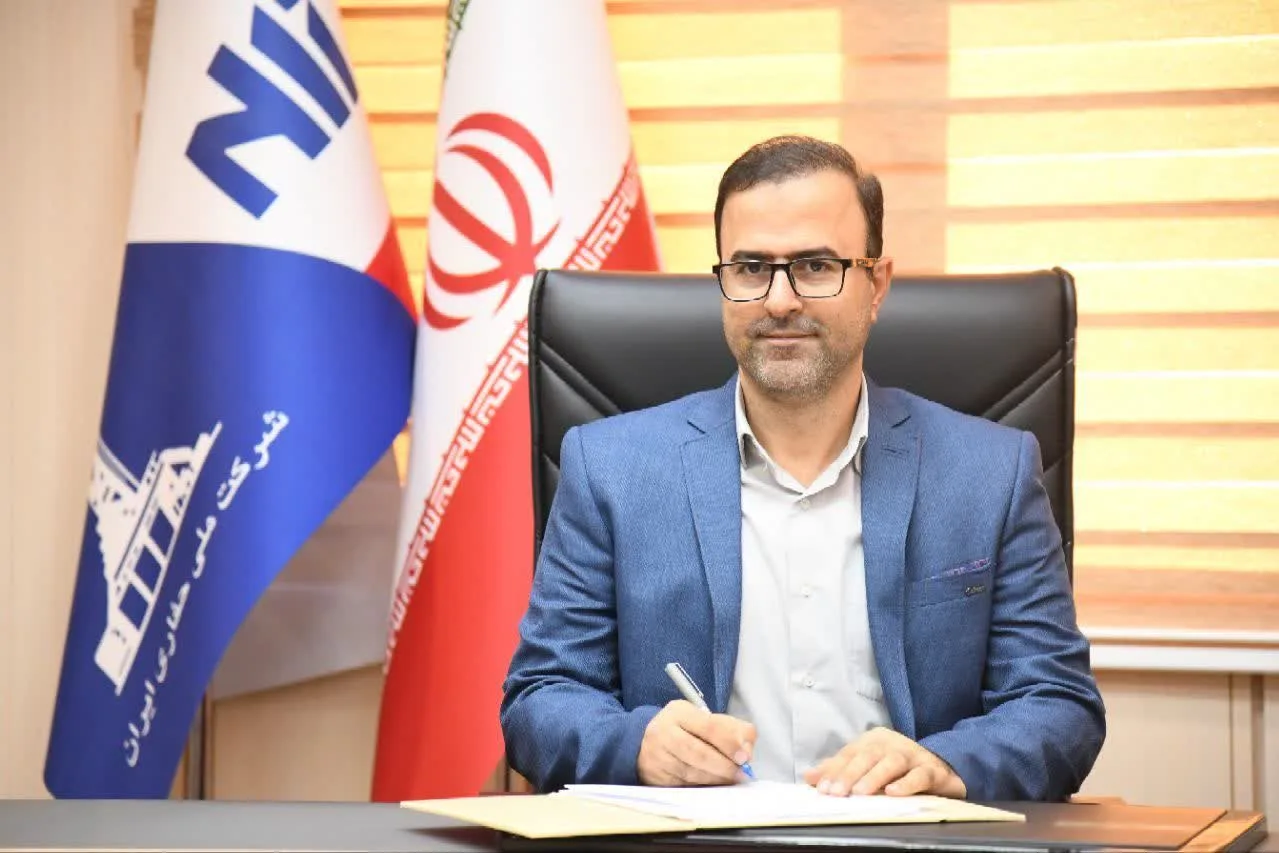
The discussion about Fouladi's background suitability for the company's technical responsibility was raised even before his appointment. "Mizenaft" in a critical report, emphasized his background in security and transportation and questioned his technical competence to manage National Drilling. This media assessment does not in itself prove the cause of any incident, but it raises the question of the criteria for selecting the CEO more seriously: what assessment of managerial ability and technical knowledge was done to entrust the administration of this operational complex?
National Drilling cannot be managed with ceremonial visits and displays of connections with influential figures. The value of management should be seen in the quality of operations, the health of employees, and the ability to prevent the recurrence of incidents. Wherever relationships replace competence, the first cost is borne by the employees present in the field of operations.
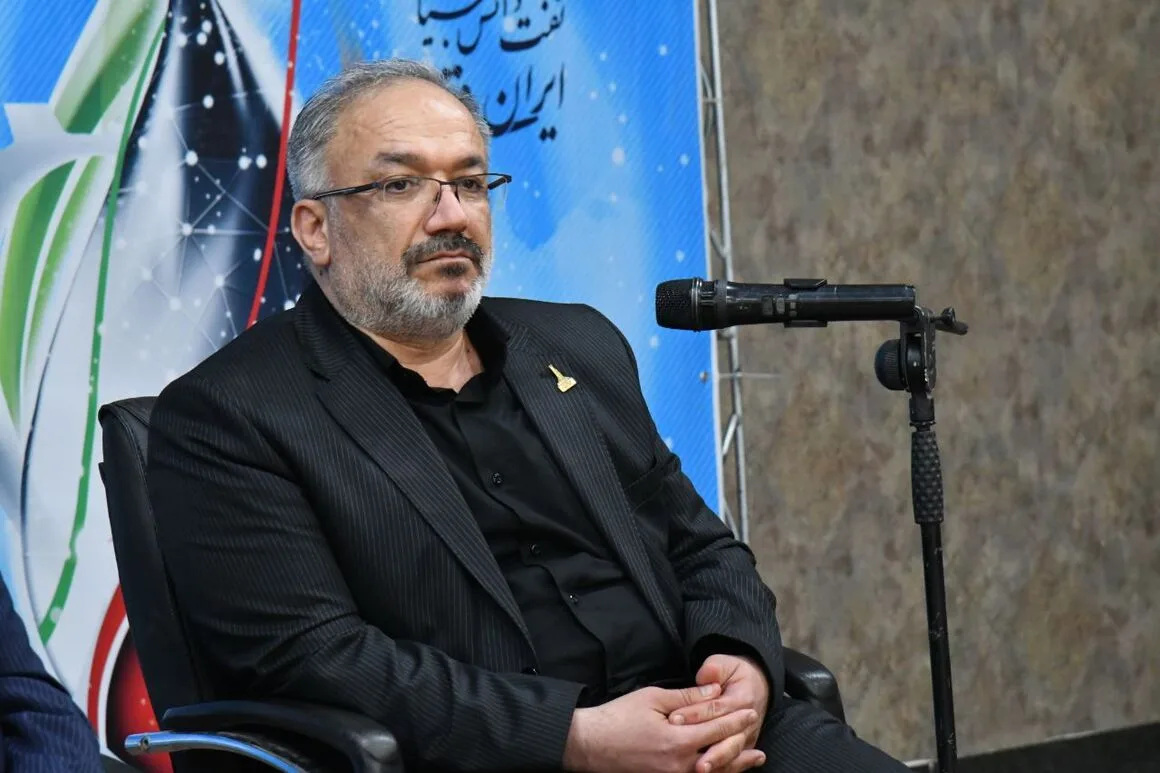
Makvandi, too, is not exempt from accountability for the decisions of that period after his tenure as CEO ends. Just as Fouladi cannot attribute all problems to the past. The current manager's responsibility includes identifying lingering dangers, correcting wrong decisions, and preventing the continuation of unsafe conditions.
A manager whose tenure was filled with corruption cases and a rise in safety incidents in the workplace, to show that Makvandi deliberately sacrificed the safety of workers' lives for the economic interests of his close circle, which was evident in the deliberate failure to renew outdated equipment and the use of defective and low-quality parts with the aim of profiting from the procurement of updated equipment.
Safety Cannot Be Ensured with Condolence Messages
The main concern of the employees and workers of the National Drilling Company is precisely this issue of equipment obsolescence, declining standards, and neglect of technical conditions. To clarify these concerns, the inspection records of devices 87 and 93, repair times, recorded defects, and decisions of the relevant officials must be published. Attributing the incident to equipment weakness or managerial error requires technical review; the concealment of such information also hinders accountability.
The questions are clear: What evaluation was conducted before the start of operations? Who authorized the continuation of work? Were employees warned about the dangers? If a defect was recorded, what action was taken to address it? Answers to these questions must be based on documentation and also examine the role of managerial decisions.
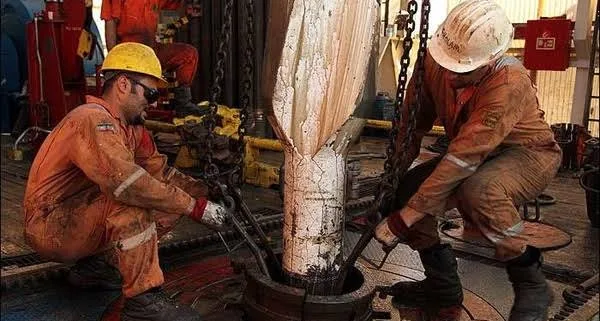
Reducing the review to the behavior of the last worker present on the scene creates an incomplete picture of responsibility. It must be determined how the work plan, team composition, supervision, equipment supply, and addressing defects were managed. If negligence occurred in any of these links, the organizational position of individuals should not prevent its disclosure.
Regarding the alleged fire of device 87, management must clarify the event, the time of occurrence, the extent of damage, and the amount of loss. The figure of 250 billion tomans, if confirmed, requires an explanation of the calculation method and preventive measures taken before the incident. Silence does not resolve ambiguity and does not restore employee trust.
Asghar Soleimani will not return; however, the responsibility towards his family and the workers who still go to work remains. Today's demand is for an independent investigation, publication of the results, support for the deceased's family, and immediate correction of identified defects. The National Iranian Oil Company and supervisory bodies must also explain how they have overseen the selection and performance of National Drilling managers.
Makvandi and Fouladi's track records should be evaluated by this criterion: what impact have their decisions had on safety and the actual working conditions? The management seat cannot be a place of enjoying authority and immunity from accountability. Workers' lives are not an acceptable cost to preserve managers.