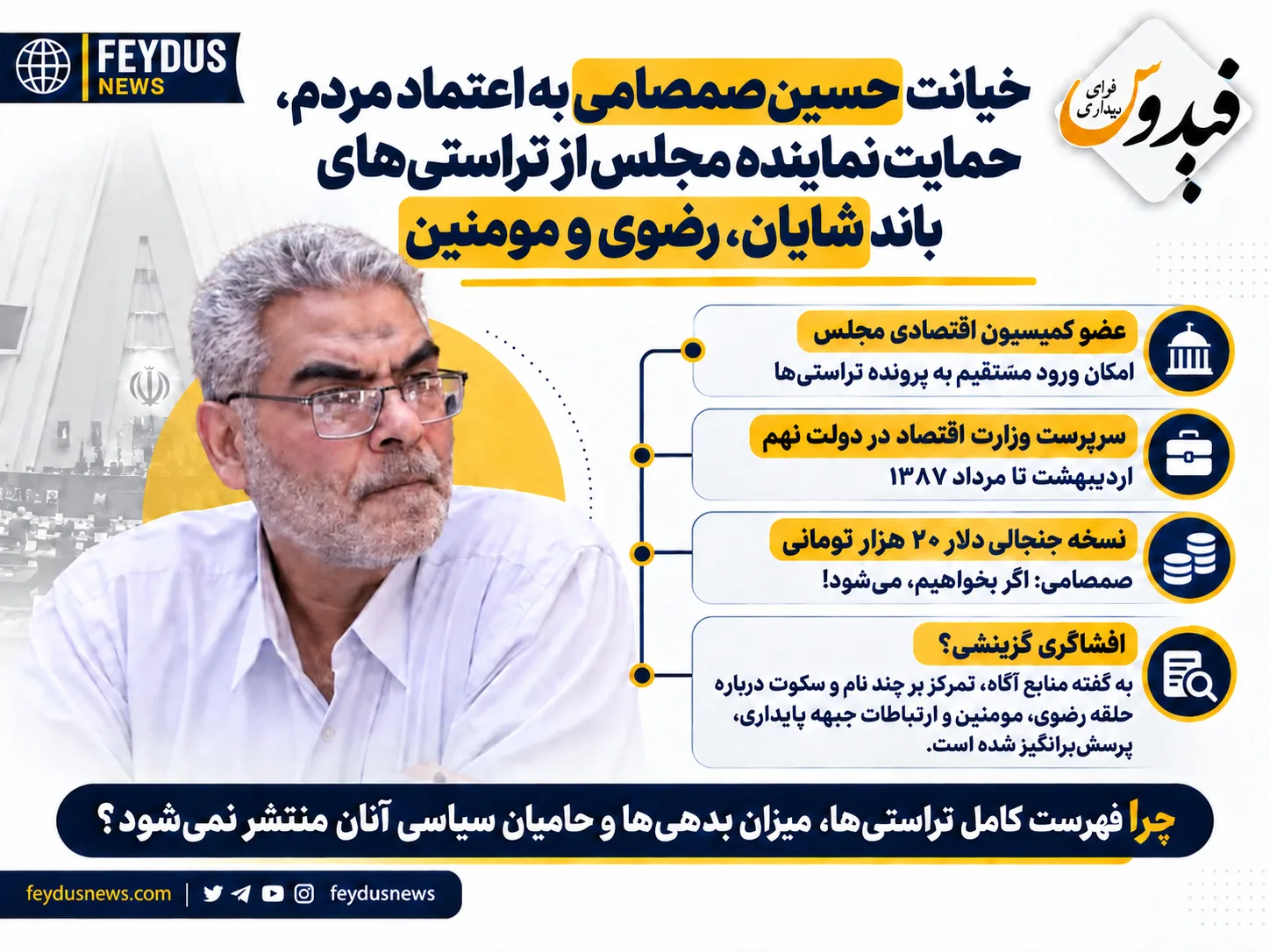
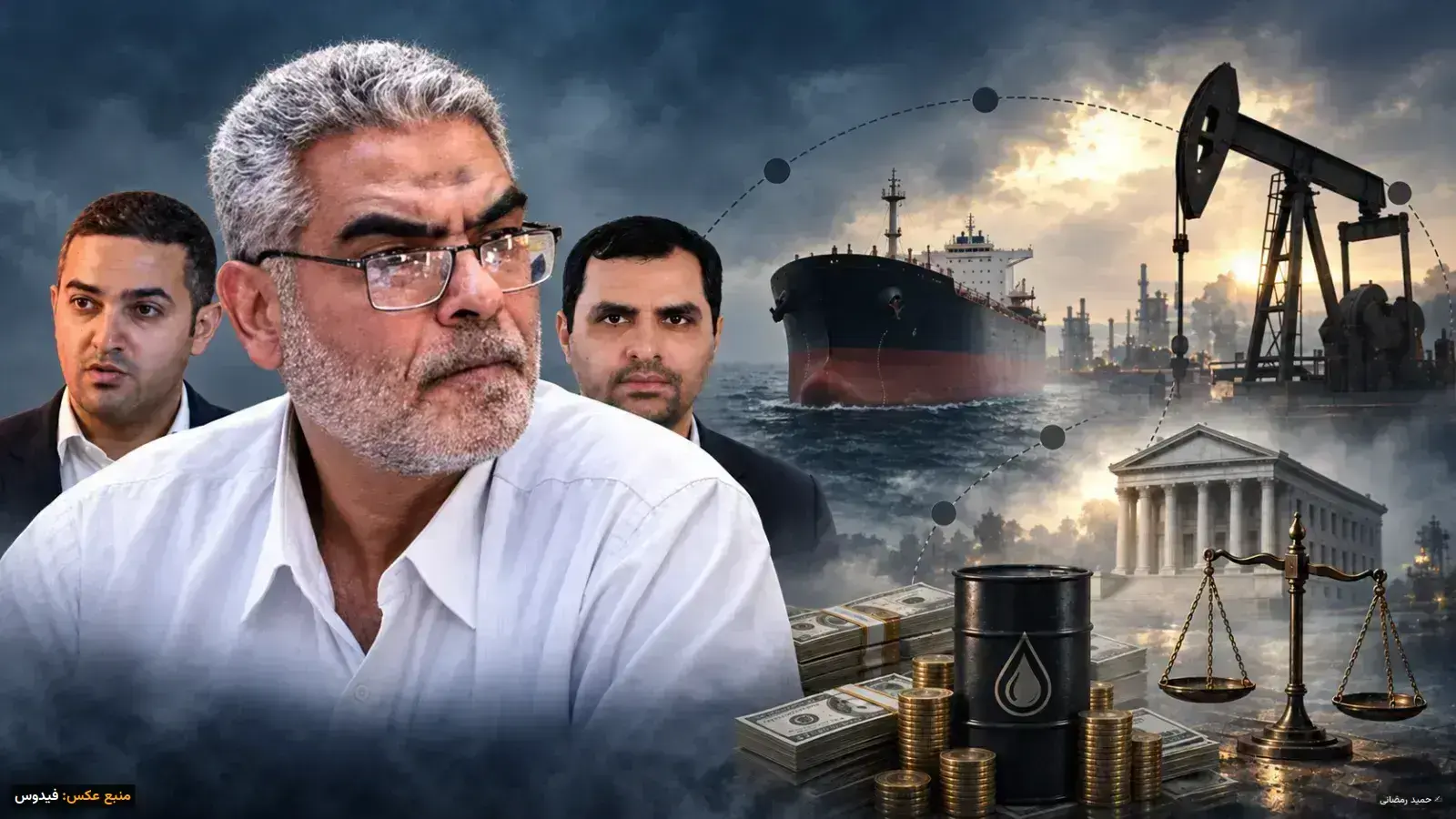
Hussein Samsami's renewed involvement in the oil trust case raises serious questions about the direction and scope of this parliament member's revelations, beyond merely being an economic stance. According to informed sources, Samsami is deliberately trying to highlight the names of only one or two defendants to keep figures like Rouhollah Razavi, the son-in-law of Majid Motaghifar, the spokesperson of Jebhe Paydari, and Mohammad Hadi Momenin hidden..
Figures whose connections with Sadegh Mahsouli link the trust corruption case to Jebhe Paydari. Based on this narrative, limiting the revelations to a few specific names could be a way to divert public attention from the main network of political and financial connections in the case and keep its link with Jebhe Paydari hidden..
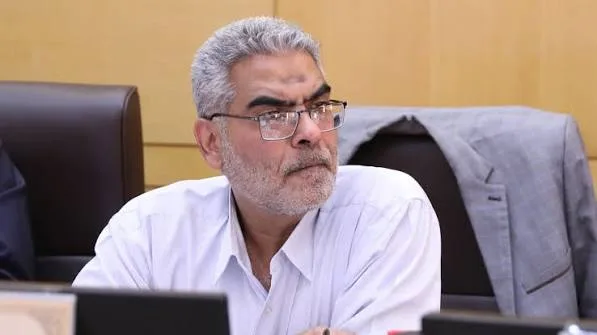
Samsami is a representative of Tehran and a member of the 12th Parliament's Economic Commission; a commission that, due to its direct responsibilities related to currency policies, the banking system, the return of export revenues, and oversight of public resources, has the potential to effectively engage with the trust case. He has also, relying on this position, spoken of the existence of a "network of influence" in the process of selecting trustees and has called on the Ministry of Oil to respond regarding the amount of unreturned oil money, the method of selecting intermediaries, and the continuation of cooperation with indebted trustees..
Samsami has stated that there is not even an accurate and documented figure for the total amount of unreturned oil money, and the Central Bank has not provided clear information about the number of trustees and their debts. But if he is seeking full transparency, why does he only highlight the names of a limited number of defendants and not speak about the political connections of other figures involved in this case?
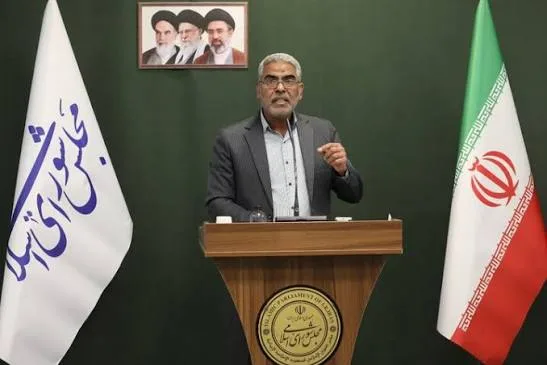
An Economist from the Heart of Ahmadinejad's Government
Samsami is not a newcomer to the economic structure of the Islamic Republic. In the ninth government, he was the Secretary of the Economic Commission of Mahmoud Ahmadinejad's government and after the resignation of Davood Danesh-Jafari, he became the acting Minister of Economic Affairs and Finance in May 2008. His tenure as acting minister lasted about three months, and in August of the same year, Shamseddin Hosseini replaced him as the Minister of Economy..
Therefore, Samsami is not only familiar with the structure of the Ministry of Economy, the Central Bank, and the mechanism for returning currency resources, but he has also been present at the highest level of the government's economic apparatus for a time. Such a background makes it impossible to consider his current positions on trustees as merely the words of a representative uninformed about the country's financial and currency mechanisms. He should well understand that delivering oil, receiving money, transferring currency, and continuing cooperation with indebted intermediaries are not possible without decision-making and support at various managerial and political levels..
The public remembers Samsami's name mostly in connection with the controversial "20,000 Toman Dollar" plan. Contrary to the summarized reprints, he did not directly say, "We order the dollar to become 20,000 tomans." The origin of this narrative was a video released in January 2025. In that conversation, Seyed Yaser Jebraeili asked Samsami: "Can we bring the dollar rate to 20,000 tomans today or not?" Samsami replied: "If we want, it can be done." Jebraeili also attributed the realization of this rate to the presence of "political will.".
Therefore, a more accurate interpretation is that Samsami confirmed the possibility of arbitrarily and mandatorily reducing the exchange rate to 20,000 tomans; a response that met with widespread reactions from economists, with critics considering it an example of reducing the complex currency crisis of the country to a political decision..
Complete Revelation or Diversionary Operation?
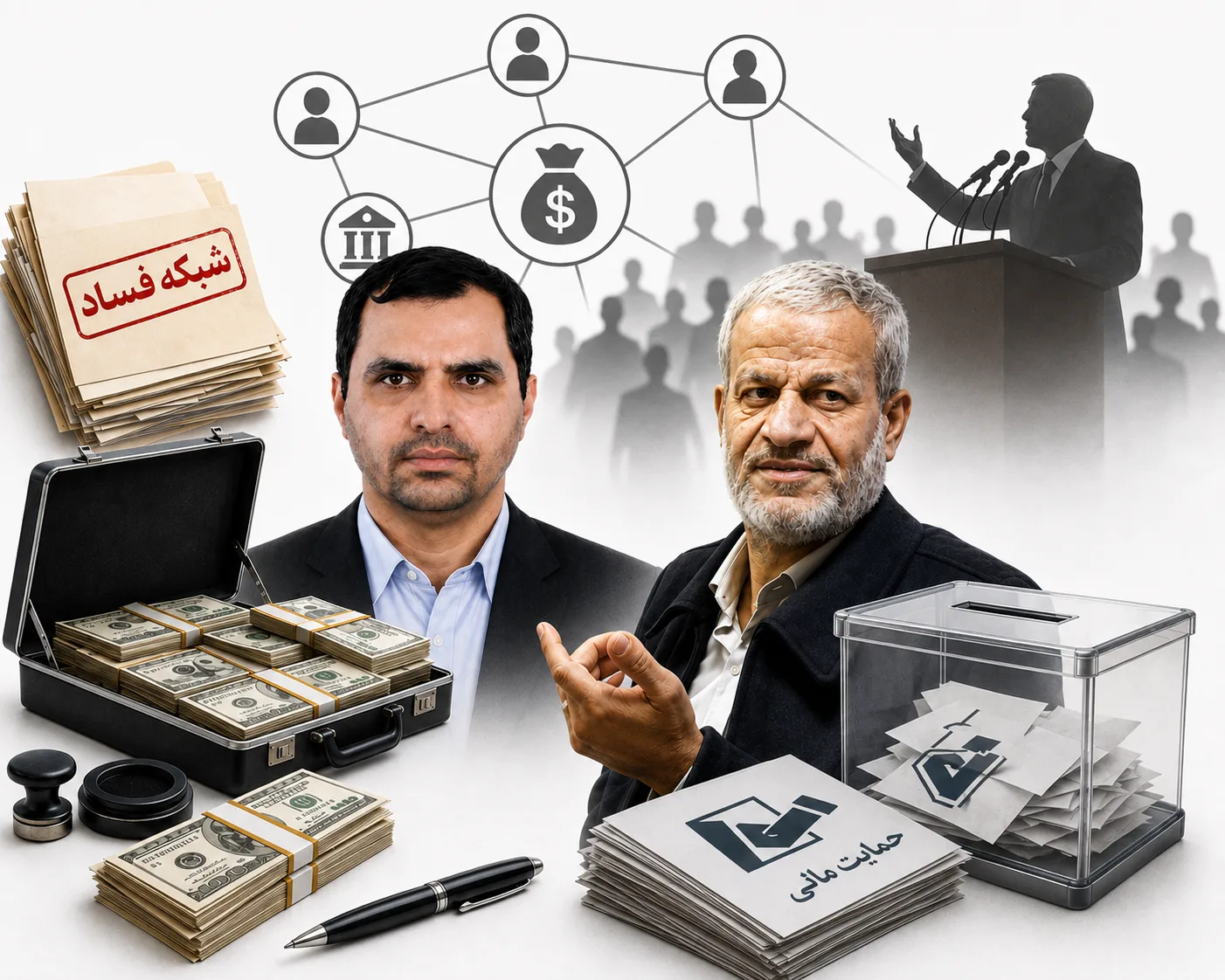
Now, this same representative has entered the trust case with anti-corruption rhetoric. The parliament's involvement in this case is essential, but the fight against corruption is credible only when all individuals, companies, and their political supporters are examined without discrimination. One cannot bring one or two trustees to the forefront of the news while remaining silent about networks that have gained the capacity to sell oil through family connections, party affiliations, and the support of influential figures..
According to informed sources, Rouhollah Razavi, after marrying the daughter of Majid Motaghifar, the spokesperson of Jebhe Paydari, has gained a significant position in the field of oil and the sale of export shipments. Alongside him, the name of Mohammad Hadi Momenin is also mentioned; a person whose debt in the trust case is reported to be around two billion dollars. The connection of this circle with Sadegh Mahsouli, the central figure and secretary-general of Jebhe Paydari, raises serious questions about the link between the financial resources obtained from oil sales and the political network of Paydari. These issues require the publication of official documents and direct responses from the named individuals..
The bigger ambiguity lies in the claim that one of the trustees close to this faction, contrary to the Supreme National Security Council's resolution to stop delivering oil to debtors, has received permission to sell several million barrels of oil. If this report is accurate, Samsami must clarify whether the name of this group is also on the Economic Commission's investigation list and why he has not yet taken a clear stance on it..
Samsami now faces a serious test. He can demand and publish the complete list of trustees, the amount of oil delivered, the debt of each entity, the guarantees, new permits, and their political supporters. Otherwise, the suspicion will grow that the recent uproar is not for cleaning up the oil sales network, but for eliminating rivals, diverting public attention, and keeping a circle connected to Jebhe Paydari safe..