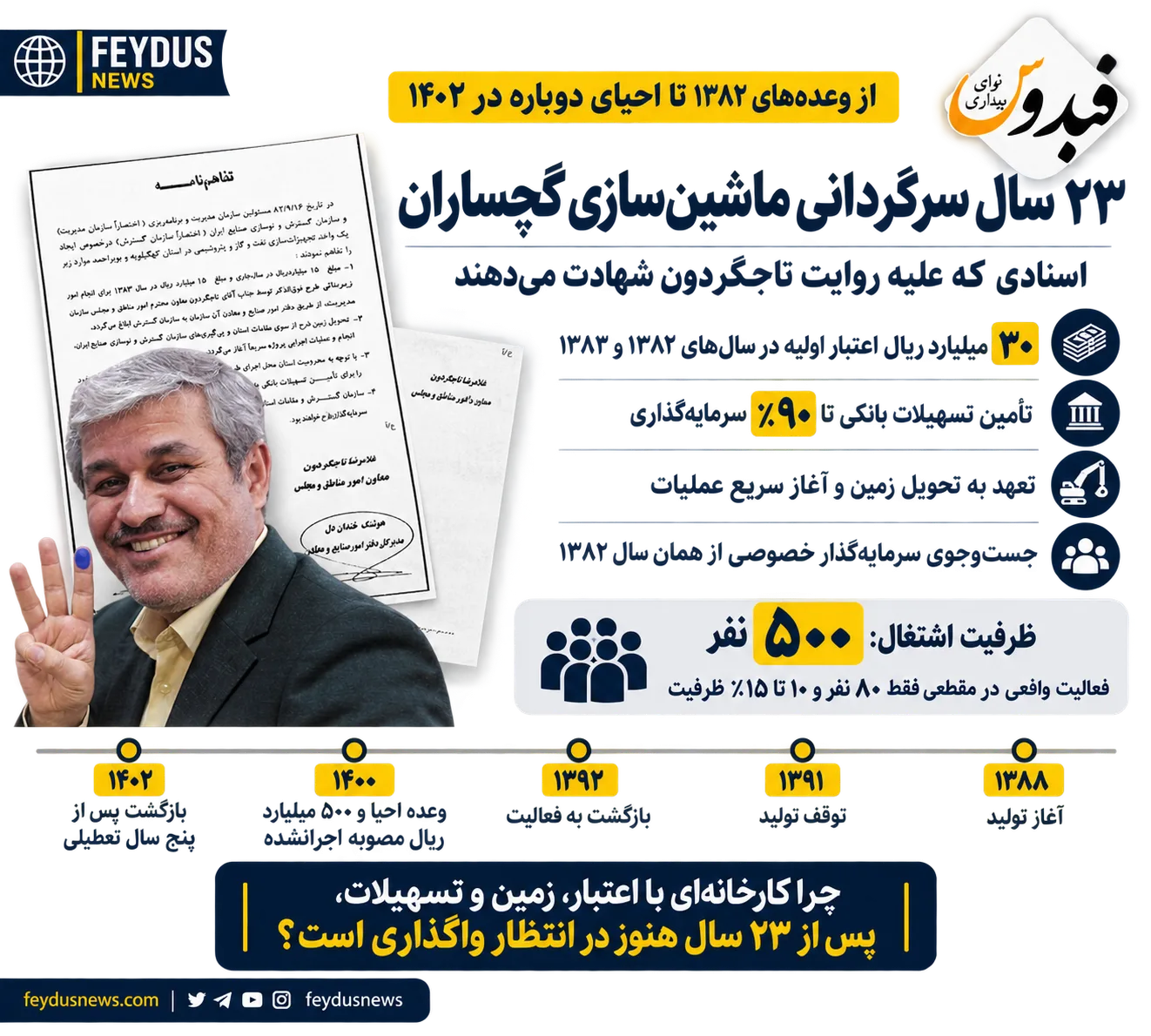
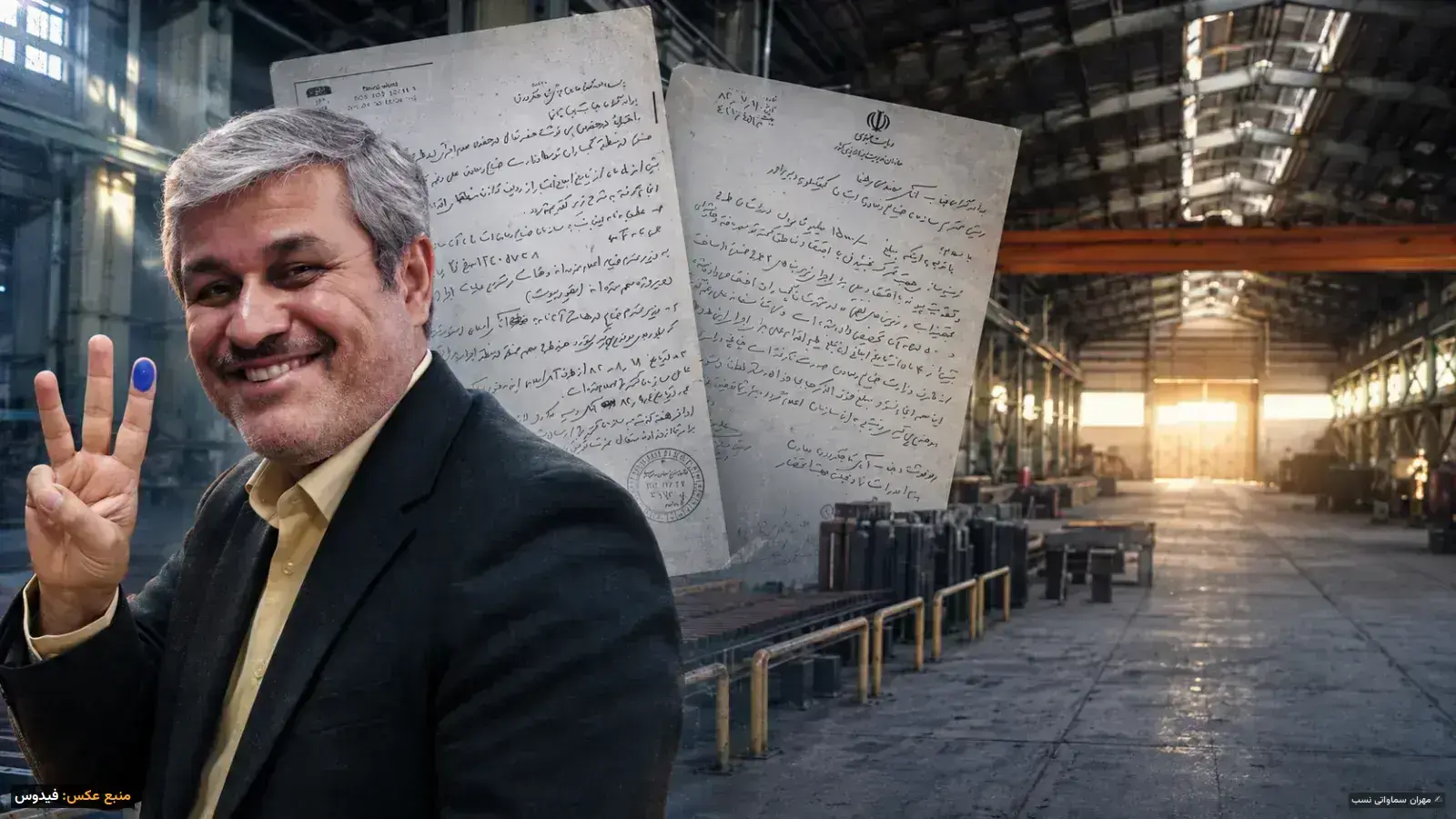
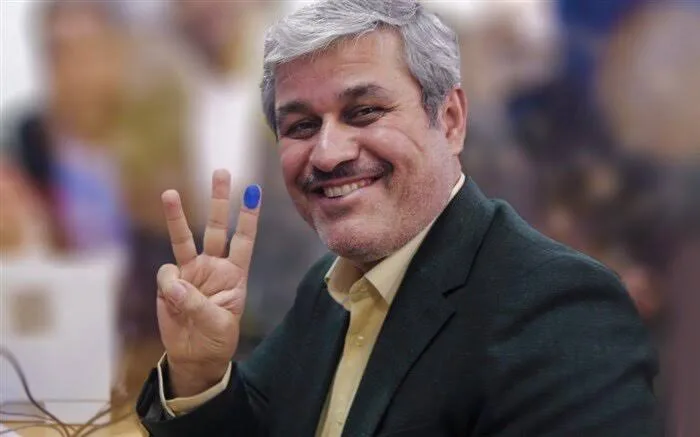
Gholamreza Tajgardoon has recently released documents from the year 2003 regarding the establishment of the Gachsaran Machinery Manufacturing factory and speaks of his role in pursuing this project; documents that apparently aim to showcase part of his record in the industrial development of Gachsaran. However, a close reading of these letters, alongside the fate of the factory, presents a different picture: a project that more than two decades ago had allocated funds, land, bank facilities, and even private sector participation, is still a subject of "revival" and "transfer". Tajgardoon himself now speaks of the "years of uncertainty" of this complex.
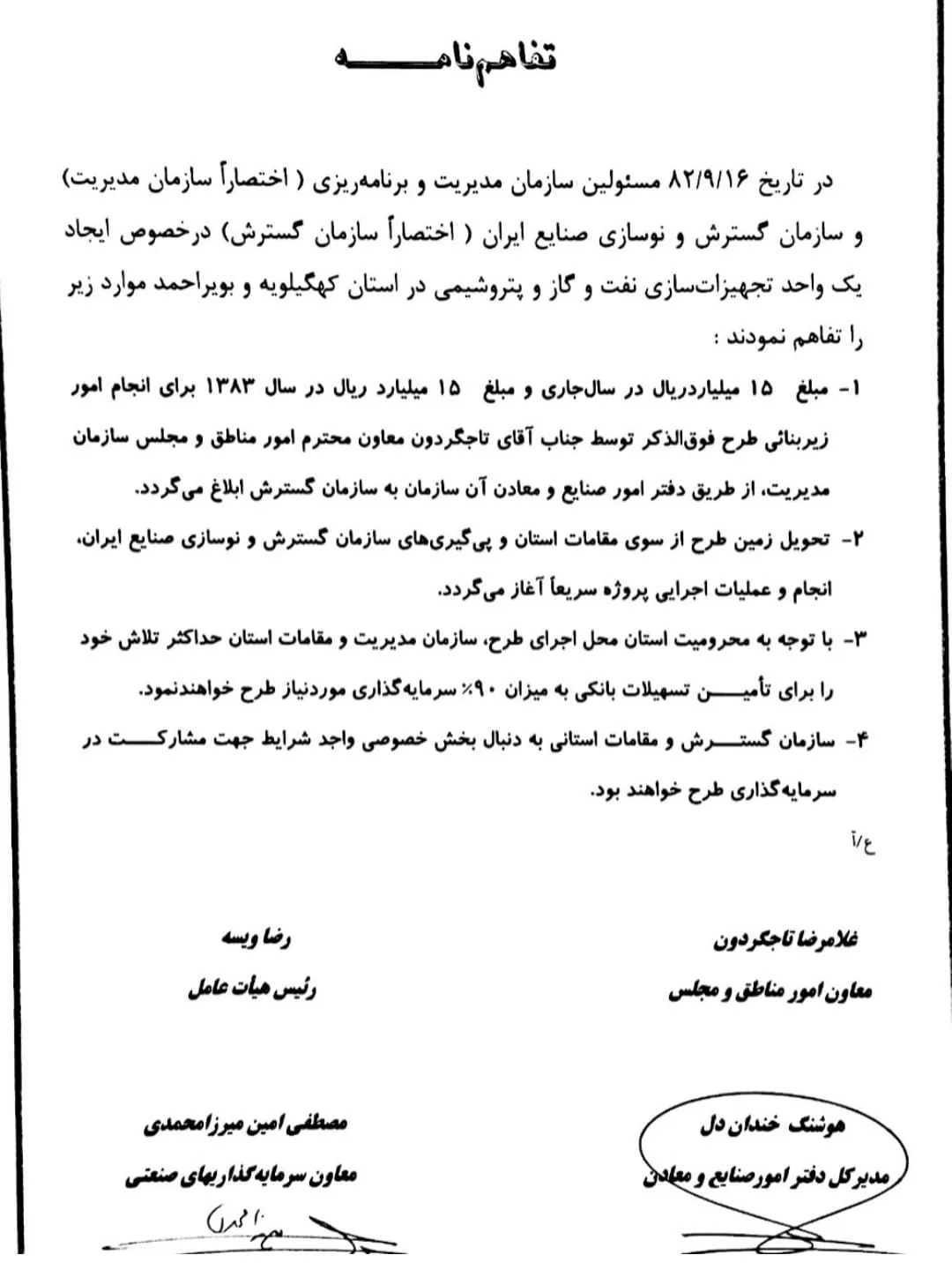
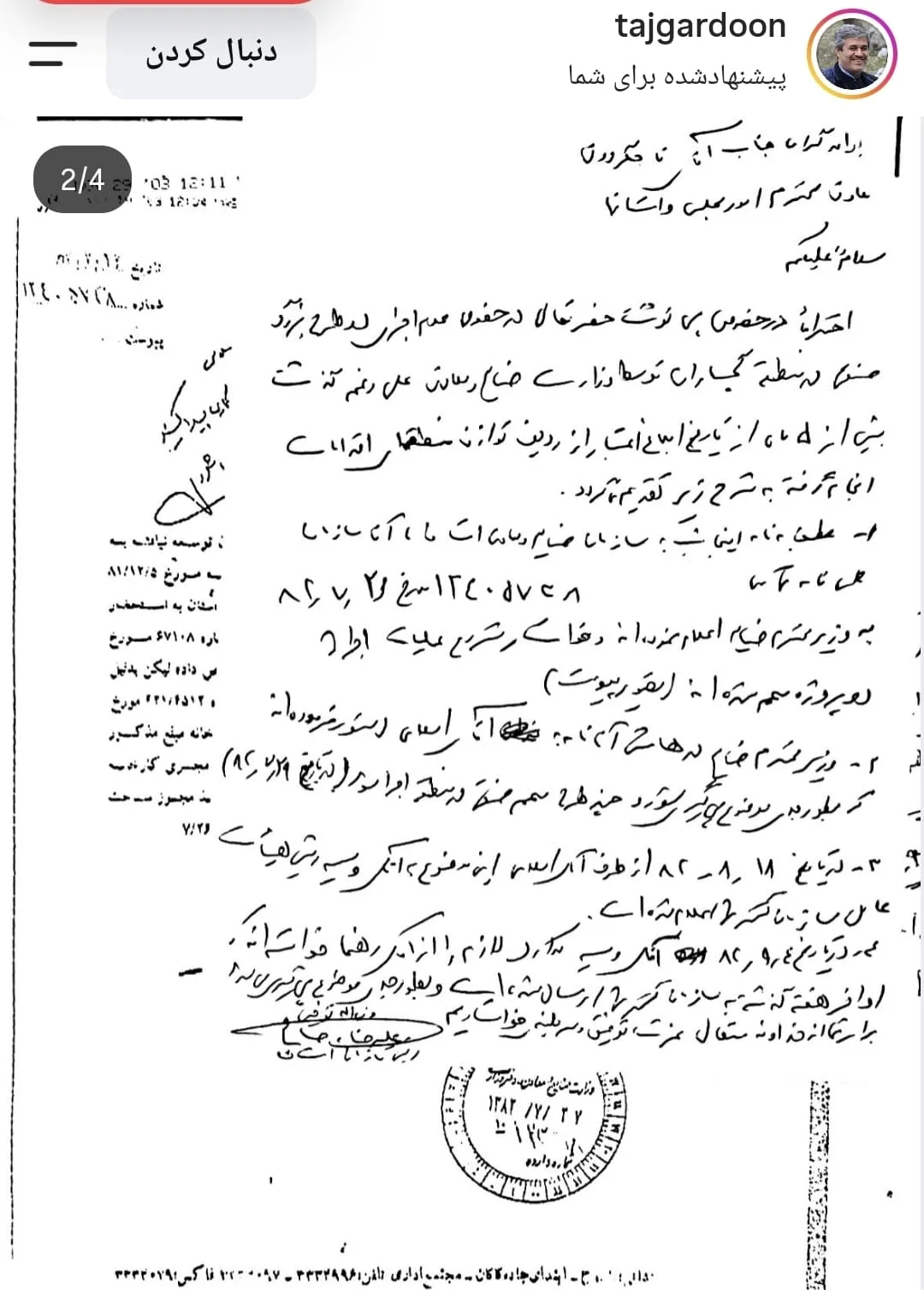
The second clause asks provincial officials to deliver the project land so that operations can "immediately" commence. In the third clause, the Management Organization and provincial officials commit to securing bank facilities up to 90 percent of the required project investment.
However, perhaps
the most crucial part for understanding today's situation is the fourth clause: the Development Organization and provincial officials
were tasked from the year 2003 to seek qualified private sector partners for
investment participation.
Fabricated Achievements from a 23-Year-Old Project
So the question is clear: when 23 years ago, funds, land, bank facilities, and even private sector participation were included in the project's roadmap, why is the factory's rescue today again tied to finding a private investor?
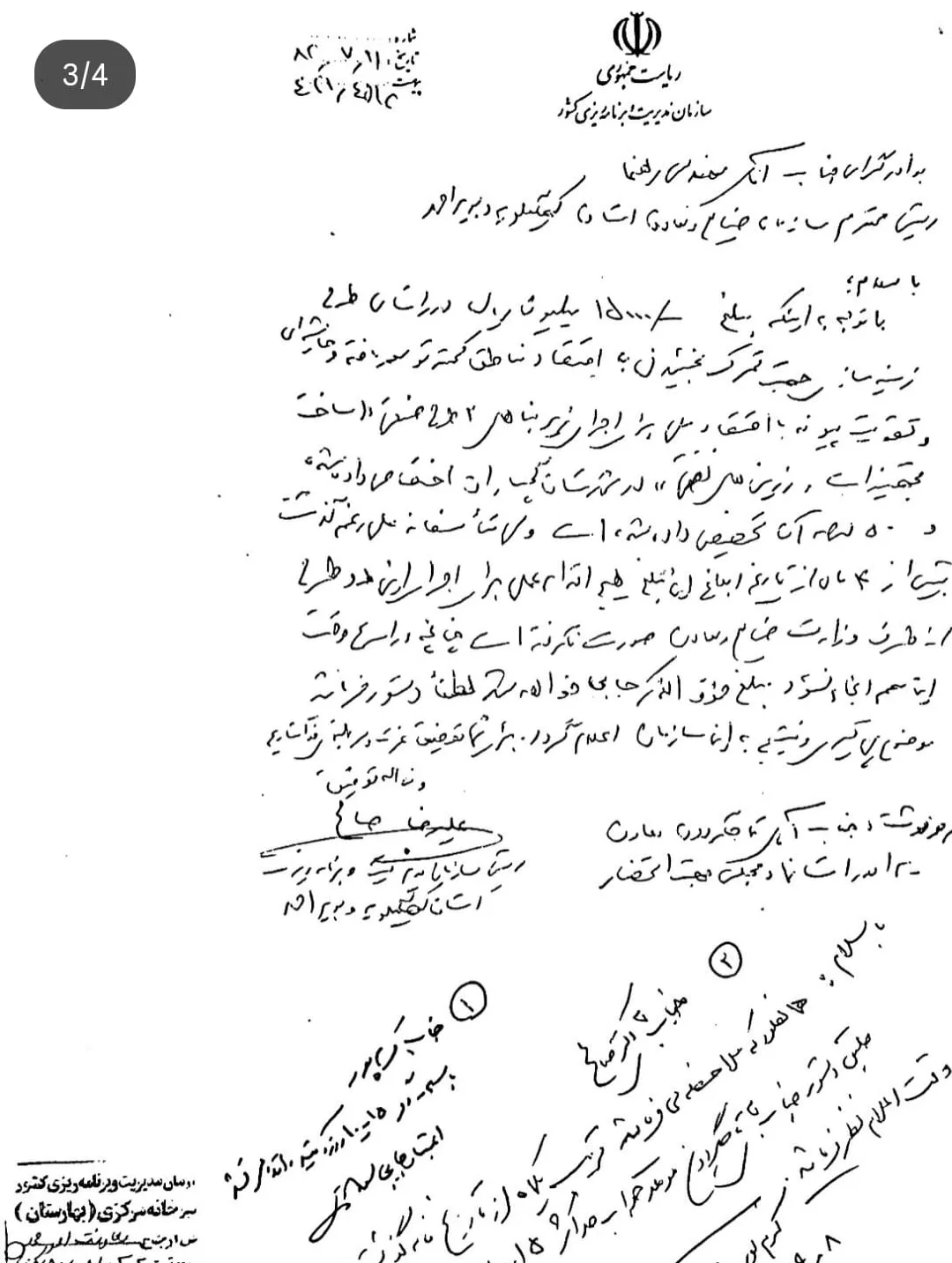
Two other published letters add to the importance of this question. Correspondence from the Management and Planning Organization shows that the issue had moved beyond a local proposal and entered the formal administrative process, budget allocation, and project implementation follow-up. In one of the correspondences, the figure of 15 billion rials is mentioned again, and multiple administrative references on the letters indicate that the file was circulating at various managerial levels.
Therefore,
these documents are more a record of the "start of a project" than of "building a factory," for which answers about the outcome must be provided.
The subsequent
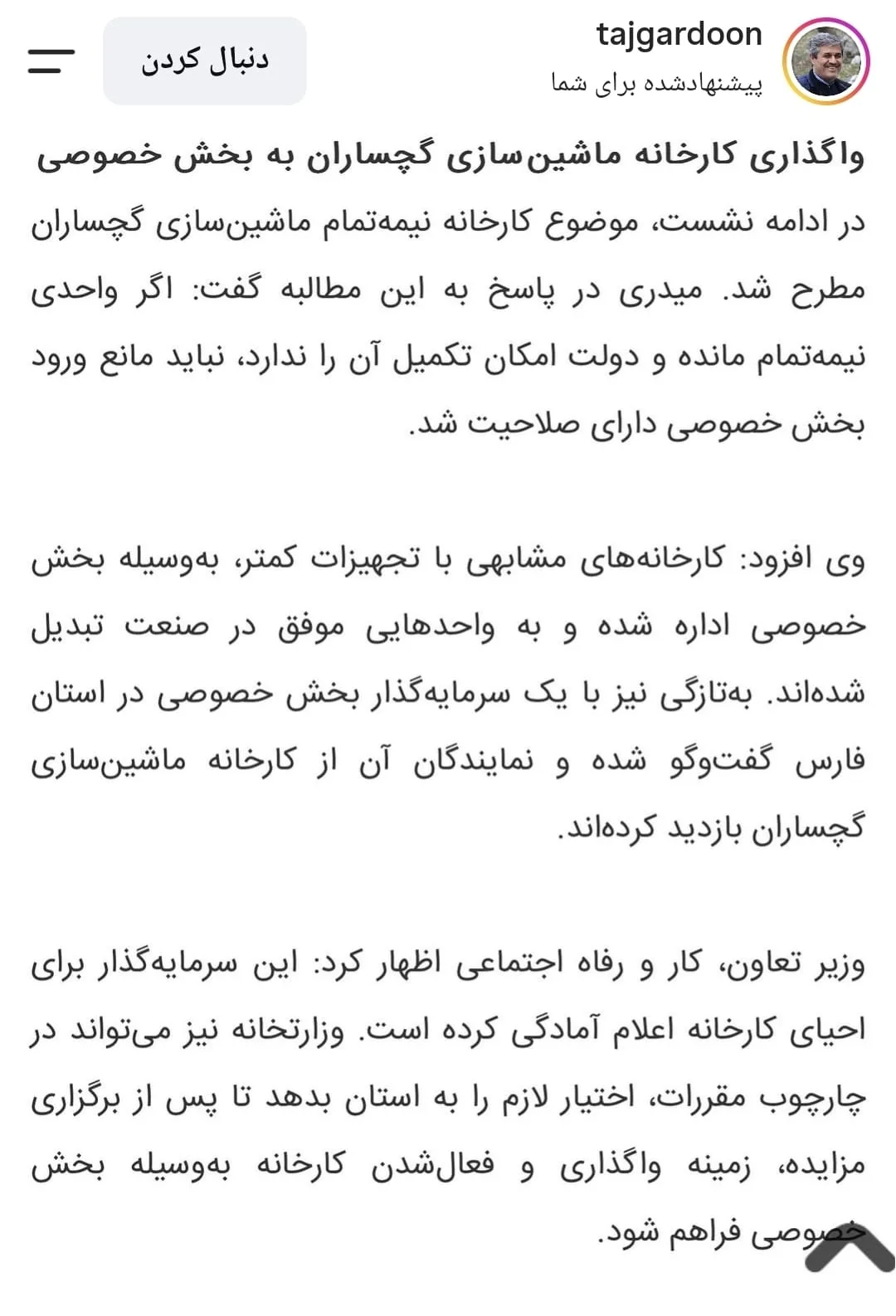
fate of the factory is also noteworthy. An IRNA report states that the factory entered the production circuit in 2009, exited production in 2012, and resumed operations in 2013; however, accumulated debt, lack of market, and legal issues once again led to its closure. The same report states that the factory once operated at only about 10 to 15 percent capacity, and despite having the potential to employ about 500 people, only about 80 people were directly and indirectly employed there.
Tajgardoon's Effort to Share in Success and Conceal Project Failure
This history
turns the publication of the 2003 letters into a political and managerial question.
Tajgardoon cannot only present the first page of this file as his record and ignore the subsequent pages. If being present at the start of the project indicates his political and managerial role, the public has the right to ask what the result of this influence and pursuit has been over the following two decades?
The main
contradiction is here: in 2003, it was supposed to deliver the land, start operations immediately, provide financial resources, and bring in a private investor; in 2026, there is still talk of transferring the factory to a private investor to end the "years of uncertainty".